CATEGORY: Brow Tinting
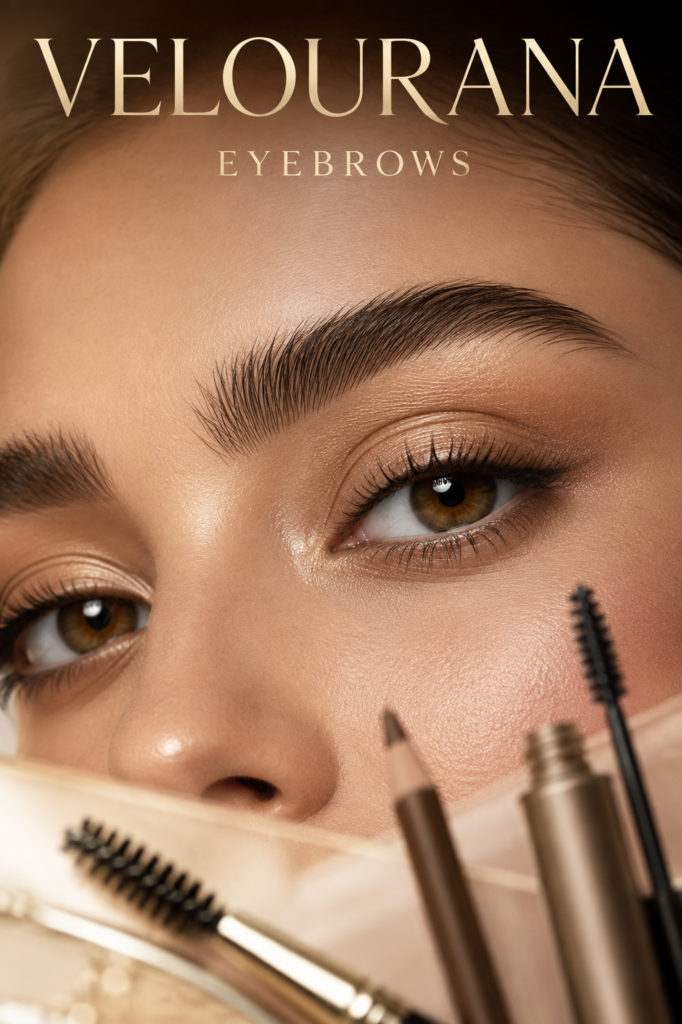
Eyebrow color is easy to underestimate because it tends to be considered secondary to shape. Yet two brows with exactly the same density and architecture can look completely different when their hairs differ in color intensity. Darker hairs create stronger boundaries and more obvious texture, while pale or translucent hairs can visually disappear against the skin. Brow tinting works within this relationship between color and perception.
The treatment can make brows appear fuller without physically increasing their density. It can strengthen a fading tail, bring fine perimeter hairs into view, soften the contrast created by scattered gray strands, or establish enough definition that daily brow makeup becomes optional rather than essential.
These changes explain why tinting has become an established part of modern brow grooming. It occupies a useful middle ground between completely untreated brows and heavily constructed cosmetic brows. The natural hair remains central to the finished look, but its presence is amplified.
Understanding how to achieve a flattering result requires more than selecting a brown dye and applying it to the eyebrow. Color depth, undertone, natural density, skin contrast, hair texture, facial proportions, and personal preference all influence whether the finished brows appear harmonious.
Why Brow Hair Can Look Sparser Than It Really Is
When people describe their brows as thin, they are often describing what they see rather than the actual number of hairs present. A close examination may reveal numerous fine hairs that simply lack enough pigment to contribute strongly to the visible brow.
This phenomenon is common around the front, upper edge, lower perimeter, and tail. Some hairs may be blonde or translucent from root to tip, while others become lighter toward their ends. Sun exposure can also contribute to visible variation.
Because the eye interprets contrast as part of density, pale hair against similarly toned skin becomes difficult to distinguish. Once that hair is tinted, the brow can appear thicker even though its physical structure has not changed.
This distinction matters when deciding how to groom sparse-looking eyebrows. Removing hair to create a cleaner outline can sometimes make the problem worse. Fine hairs that appear insignificant before tinting may become important once their color is intensified.
Tinting can therefore function almost like a diagnostic stage in brow design. It reveals more of the natural growth pattern, allowing subsequent shaping decisions to be based on what is actually present.
This is particularly useful for brows that have been repeatedly tweezed. During regrowth, emerging hairs may be fine and difficult to see. Coloring them can sometimes make the developing shape easier to evaluate.
Understanding Depth Rather Than Simply Choosing Darker Brows
One of the easiest mistakes in brow tinting is assuming that more color automatically means better definition. Definition depends on contrast, but excessive contrast can become visually heavy.
A person with very fair coloring may need only a modest increase in depth before the brows become clearly visible. Someone with dark hair and strong facial contrast may tolerate considerably deeper brows without the result appearing dominant.
The goal is therefore proportionality.
Hair color provides an important reference but should not dictate an exact match. Natural brunettes do not necessarily need brows as dark as the deepest sections of their hair. Blonde individuals do not necessarily require a literal blonde tint if slightly deeper neutral or taupe tones create more effective definition.
People with dyed hair present another consideration. Brows do not always need to imitate an artificial scalp color precisely. Someone with dramatically lightened hair may prefer slightly deeper brows because they provide facial structure. Someone with vivid or unusually warm hair may choose a more neutral brow to prevent the overall appearance from becoming overly coordinated.
Age can also affect preferred contrast. Some people find that slightly softer brows complement changes in hair and complexion over time, while others deliberately maintain stronger definition because it frames the eyes.
There is no mathematical rule that determines the ideal depth. The most useful principle is to consider how the brows function within the entire face.
Undertones and the Difference Between Similar Brow Colors
Two shades labeled medium brown can look surprisingly different. One may contain warm golden or reddish tones, while another may be distinctly cool or ashy. A third may sit closer to neutral.
These undertones can determine whether a tint looks integrated or artificial.
Warm shades can complement certain auburn, golden, copper, and warm brunette colors, but excessive warmth can produce an orange or reddish impression. Cool brow shades can work beautifully with ash brown, cool brunette, silver, and certain blonde colors, yet an excessively gray result can appear flat on warmer complexions.
Neutral shades offer flexibility but are not automatically appropriate for everyone.
Natural brow hairs also influence the finished tone. Tint does not operate on an empty surface. It interacts with the existing color beneath it. A formula applied to pale blonde hairs may produce a different visual result from the same formula applied to medium brown hairs.
The surrounding skin affects perception as well. High contrast between skin and brows makes color appear stronger, while lower contrast can make the same depth seem softer.
This is why professional color selection is often more nuanced than looking at a shade chart. The final brow exists within a complex combination of hair, skin, light, and neighboring features.
The best tint does not necessarily announce its undertone. Instead, the temperature feels sufficiently harmonious that attention remains on the brows themselves.
How Tinting Changes the Front, Arch, and Tail
Different sections of an eyebrow contribute differently to its visual character.
The front establishes where the brow begins and strongly affects whether the overall appearance feels soft or block-like. Natural brow fronts often contain hairs growing upward with visible spaces between them. Making these hairs darker can create greater density, but excessive color on the skin or overly intense processing can make the front appear unusually solid.
The central body generally contains greater density and often needs less visual reinforcement. This section carries much of the brow's natural weight.
The arch influences expression and structure. Fine hairs surrounding the highest point can affect how pronounced the arch appears. Tinting them may reveal a shape that previously seemed flatter.
The tail is frequently where tinting produces one of its most satisfying changes. Tail hairs tend to become finer and may be naturally lighter. When they lose visual contrast, the brow appears shorter. Tinting can restore their visibility and produce a more complete taper.
Recognizing these differences encourages a more sophisticated understanding of brow tinting. The eyebrow is not one uniform strip of hair. Its density, direction, thickness, and visibility change from beginning to end.
A flattering tint respects these transitions rather than trying to make every part equally intense.
The Relationship Between Skin Staining and Hair Tinting
Immediately after some tinting treatments, eyebrows can look significantly stronger because pigment is visible not only on the hairs but also on the skin beneath them.
This temporary skin color can mimic the appearance of brow powder or pencil. It may make gaps look smaller and edges appear sharper. For someone who enjoys a defined cosmetic brow, this initial effect can be appealing.
However, skin and hair do not retain color in the same way. The skin's surface is continually renewed and exposed to washing, skincare, oils, perspiration, and friction. Consequently, superficial staining generally fades more quickly than color deposited on the brow hairs.
Understanding this prevents disappointment when the appearance softens after the first few days. The tint has not necessarily failed. Instead, the temporary skin component may be disappearing and revealing the longer-lasting hair result beneath it.
Some people actually prefer the brows after this initial softening because the effect becomes less graphic and more natural.
Expectations should therefore distinguish between the immediate post-treatment appearance and the settled result. Photographs taken immediately after tinting may not accurately represent how the brows will look throughout most of the wear period.
This distinction is particularly important for anyone choosing tinting primarily because they want gaps in the skin to remain filled. Tint can enhance the appearance of sparse areas, but it cannot permanently substitute for hair where no hair exists.
Tinting Mature and Graying Brows
Changes in brow color can occur gradually with age. Individual hairs may become gray, white, silver, or simply less pigmented. Density and texture can change at the same time, creating a brow that appears softer or less uniform than it did previously.
Tinting can restore contrast, but the objective does not have to be making the brows look exactly as they did decades earlier.
A softer shade may provide enough definition to frame the eyes while remaining harmonious with silver or gray scalp hair. In other cases, retaining some visible gray creates an attractive connection between the brows and the rest of the hair.
White and resistant hairs can sometimes respond differently to color than surrounding hairs, which makes formulation and processing especially important. Trying to compensate by choosing an excessively dark tint can produce an uneven result if other hairs absorb more color.
Mature skin also deserves thoughtful handling. The brow area may be more delicate, and aggressive preparation or unnecessary friction should be avoided.
The broader aesthetic principle is balance. Stronger brows can bring welcome structure to the face, but darkness is not synonymous with youthfulness. Excessively heavy brows can sometimes create more contrast than desired.
Tinting is most successful when it restores visibility while respecting the individual's current coloring rather than attempting to reproduce an earlier version of it.
Tinting Brows That Are Already Naturally Dark
Brow tinting is often associated with blonde or light brows, but naturally dark eyebrows can also benefit in certain circumstances.
Dark brows may contain lighter tips, unevenly colored areas, gray strands, or sun-lightened sections. Tinting can create a more consistent overall impression. It can also make fine hairs at the perimeter more visible if those hairs are lighter than the main body.
However, the margin for excessive depth is smaller. A naturally dark brow can quickly become visually dominant if additional color creates an almost solid appearance.
For this reason, dark brows may benefit more from tonal refinement than dramatic deepening. The objective could be consistency rather than intensity.
Texture is particularly important here. Dense dark brows often look most attractive when individual hairs remain distinguishable. When too much pigment accumulates on the skin beneath them, that texture can temporarily disappear and the brow may look flat.
A controlled tint allows the natural dimensionality of the hair to remain visible.
People with very dark brows may also discover that shaping and styling provide a greater transformation than color. Tint should be selected because there is a genuine color-related objective, not simply because it is part of a popular brow service.
How Brow Tinting Fits Into a Low-Makeup Routine
One of the strongest practical reasons for brow tinting is convenience. Brows often require daily attention because they provide such noticeable structure to the face. Even people who wear little makeup may use a pencil or tinted gel simply because their natural brow hairs are difficult to see.
Tinting can reduce this dependency.
When the natural hairs become sufficiently visible, brushing them into position may be enough for an everyday look. A clear gel can provide hold without introducing additional pigment. If small gaps remain, makeup can be limited to those areas rather than applied across the entire brow.
This can make morning routines faster while preserving a groomed appearance.
Tinting can also be useful during warm weather, exercise, swimming, or travel, when maintaining conventional brow cosmetics may be inconvenient. Because the color is associated with the hair itself, the brow retains definition without needing to be redrawn after ordinary makeup removal.
This does not make tint permanent or maintenance-free. The color will fade, hairs will shed, and new growth will appear. Nevertheless, the period between treatments can provide a useful reduction in daily cosmetic effort.
For people who enjoy elaborate makeup, tinting remains useful for a different reason. It creates a clearer underlying structure on which more detailed brow work can be built.
Convenience and artistry are therefore not mutually exclusive. The same treatment can serve both depending on how it is incorporated into the routine.
Preserving Natural Texture After Tinting
Texture is one of the qualities that makes eyebrows look convincingly natural. Individual hairs catch light differently, overlap one another, and grow in varying directions. Tinting should enhance this structure rather than necessarily concealing it.
After color has increased the visibility of the hairs, brushing can have a surprisingly strong effect. Upward movement at the front can create openness, while controlled diagonal positioning through the body emphasizes the natural arch. The tail can be directed outward to preserve a clean taper.
The newly visible hairs may reveal that less makeup is required than previously assumed.
This is particularly relevant to modern brow styling, which often celebrates visible hair rather than treating the eyebrow as a solid graphic shape. Tinting supports this aesthetic because the definition originates primarily from actual strands.
A brow gel or wax can subsequently control direction without covering the texture with opaque pigment. Where additional density is required, fine cosmetic strokes can be placed selectively rather than filling the entire area.
The result is dimensional because different forms of definition coexist. Tint provides the base color, natural hairs provide texture, styling provides direction, and makeup—when used—provides targeted correction.
This layered approach usually produces more flexibility than relying on one technique to accomplish everything.
Fading, Regrowth, and the Changing Appearance of Tint
Tinted eyebrows do not remain visually static. Their appearance evolves from the moment the treatment is completed.
Initially, color may appear deeper because both hairs and surrounding skin can retain pigment. After cleansing and normal skin renewal, the result usually becomes softer. Over subsequent weeks, individual hairs fade at different rates and naturally shed.
New growth introduces untreated hairs into the brow. Because eyebrow hairs do not all grow and shed simultaneously, this transition tends to occur gradually rather than creating an obvious line between tinted and untinted areas.
Skincare routines can influence how quickly the surrounding appearance changes. Cleansing, exfoliation, oils, active skincare ingredients, sun exposure, and other factors can affect temporary surface staining and the overall perception of the tint.
Rather than expecting identical intensity throughout the entire period, it is more realistic to view tinting as a gradually evolving cosmetic treatment.
Some people prefer the fresh, highly defined stage. Others prefer the softer appearance several days later. Understanding personal preference can help determine the appropriate initial intensity.
Retinting too aggressively simply because the brows are no longer at maximum darkness can lead to unnecessary processing. The better question is whether the brows still provide the desired degree of definition.
Maintenance should respond to appearance rather than anxiety about preserving a perfectly constant result.
Safety, Sensitivity, and Responsible Product Use
Any cosmetic treatment close to the eyes deserves careful attention. Brow tinting involves chemical colorants, and inappropriate products or careless application can cause irritation or other adverse reactions.
Products should be used only according to their intended purpose and manufacturer instructions. Scalp hair color should not be assumed to be appropriate for eyebrow use merely because both involve hair.
Patch testing should be taken seriously when directed by the product or professional protocol. Allergic sensitivity can occur, and previous uneventful use does not guarantee that sensitivity will never develop.
The condition of the skin should also be considered. Broken, inflamed, irritated, or recently sensitized skin around the brows may not be an appropriate surface for cosmetic treatment. Other recent brow or facial procedures can also influence how the area responds.
During professional treatment, hygiene and controlled application are fundamental. Tint should remain where it is intended rather than being allowed to migrate toward the eyes.
Burning, significant itching, unusual swelling, or persistent irritation should not be dismissed as an expected part of brow tinting. Appropriate removal and medical advice may be necessary depending on the reaction.
Beauty treatments are most successful when aesthetic ambition is accompanied by respect for the biology of the area being treated. The proximity of brows to the eyes makes responsible product choice especially important.
Creating Brows That Still Look Like Your Own
The most compelling brow tint is often one that does not immediately reveal how the effect was achieved. People may notice that the eyes appear more framed or that the brows seem fuller without identifying tinting as the reason.
This subtlety comes from working with natural characteristics rather than against them.
A naturally soft brow can remain soft while becoming more visible. A strong brow can retain its boldness without becoming unnaturally dark. Gray hairs can be blended without necessarily disappearing completely. Fine tails can gain definition without being transformed into rigid lines.
Personal preference remains central. Some people genuinely enjoy dramatic, dark brows, and tinting can support that aesthetic. Others want only enough pigment to eliminate the need for daily pencil.
Neither approach is inherently superior. What matters is intentionality.
Brow trends change repeatedly. Thin brows, highly sculpted arches, dense brushed-up brows, laminated textures, and softer natural shapes have each moved through periods of popularity. Natural facial proportions, however, remain individual.
Tinting becomes particularly valuable when it is separated from the pressure to reproduce a fashionable template. Instead of asking what brows are currently supposed to look like, the more useful question is what additional visibility would do for the brows already present.
That perspective encourages restraint and makes the treatment more adaptable over time.
Brow Tinting as Part of Thoughtful Grooming
Brow grooming is ultimately an exercise in proportion. Removing too much hair can weaken natural structure. Adding too much pigment can overwhelm the face. Styling too rigidly can eliminate movement and texture. Tinting works best when it contributes only what is missing.
For pale brows, that may be visibility. For uneven brows, it may be tonal consistency. For gray brows, it may be blending. For a fading tail, it may be definition. For someone tired of daily brow makeup, it may simply be convenience.
Once the objective is clear, tinting becomes easier to understand as a targeted grooming technique rather than a universal solution.
Its most distinctive advantage is that it makes use of existing hair. Fine strands that previously disappeared become part of the shape. Natural density becomes easier to appreciate. The brow can look more complete without necessarily looking more made-up.
Combined with thoughtful shaping and restrained styling, tinting can produce brows that appear polished while retaining individuality.
The result does not need to be perfectly symmetrical, intensely dark, or sharply outlined. It needs to make sense within the face.
That is ultimately the strength of brow tinting: a relatively small adjustment in color can reveal structure that was present all along, allowing natural brows to become clearer, fuller-looking, and more expressive without losing the characteristics that make them individual.
THE END VELOURANA
 Discover More From Our Family of Websites
 ZodiacBearing (Astrology, Tarot, Numerology, Angel Numbers & Spiritual Guidance)
 Velourana (Beauty, Makeup, Hair Care, Skincare & Beauty Tips)
 HavenBearing (Home, Living, Organization, Décor & Everyday Inspiration)
 PawBearing (Pet Care, Dog Breeds, Animal Health, Training & Pet Products)
 PsyCatherine (Notes From the Journal of a Psychologist on Real Life)