
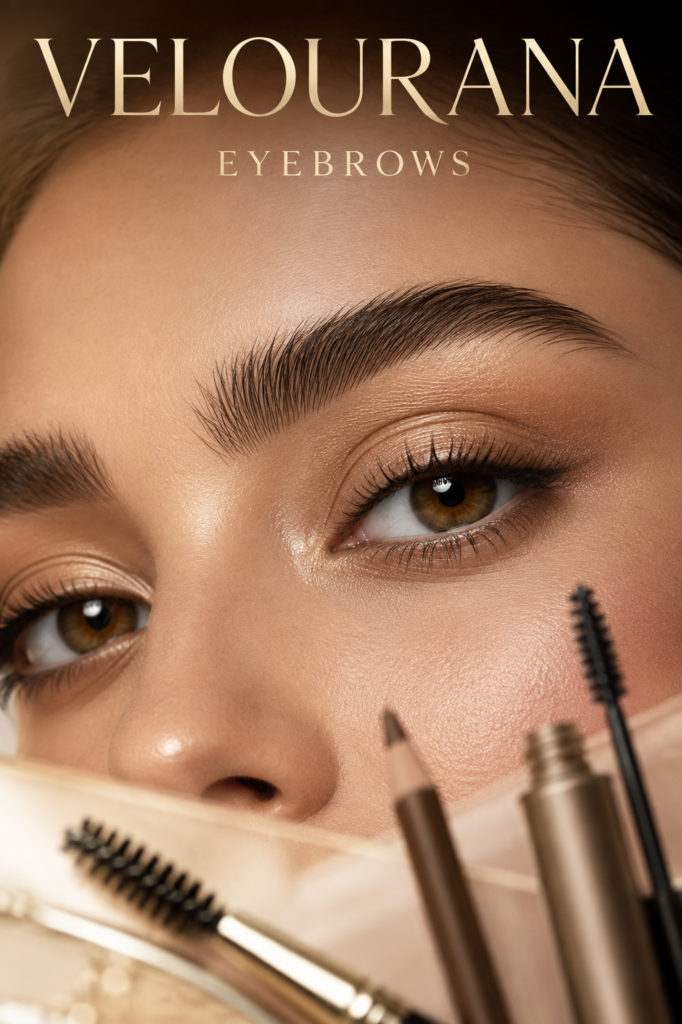
CATEGORY: Brow Shaping
Brow shaping is often described as the simple act of removing unwanted eyebrow hairs, yet the most successful results depend on something far more considered. A well-shaped brow is an exercise in proportion. It involves understanding the natural architecture of the eyebrow, the relationship between the brow and the surrounding features, the direction in which individual hairs grow, and the visual effect produced when thickness, length, height, and curvature are altered.
This is why two brows that have been groomed equally neatly can produce completely different impressions. One may appear effortless and harmonious, while another may seem overly thin, sharply drawn, short, heavy, or disconnected from the face. The difference is rarely neatness alone. It is usually the quality of the underlying shape.
Modern brow shaping has gradually moved away from the idea that everyone should pursue the same fashionable eyebrow. Instead, the strongest approach begins with what already exists. Natural growth provides important information about where the brow wants to sit and how it interacts with the eye socket, forehead, temples, and bridge of the nose. Shaping then becomes a process of refinement rather than reconstruction.
Understanding this distinction is particularly important because eyebrow hair grows slowly compared with many other types of facial hair. Removing a few hairs in the wrong place can change the apparent balance of the brow for weeks. Removing too many repeatedly may eventually make restoration more difficult. Thoughtful shaping therefore values restraint as much as precision.
The Architecture of a Brow
Although eyebrows vary enormously, their basic visual structure can be divided conceptually into a beginning, body, arch area, and tail. These areas should not look like separate pieces. They flow continuously into one another, but recognizing them helps explain why small changes can have such a significant effect.
The inner portion of the brow, often called the head, generally contains hairs that grow upward or diagonally. It establishes the visual distance between the eyebrows and influences how broad or narrow the bridge of the nose appears. When this area is excessively removed, the brows can appear too widely separated. When it is made very dense or extended too far inward, the expression can seem visually concentrated toward the center of the face.
Moving outward, the body usually contains the greatest concentration of hair. It creates much of the brow's thickness and provides the transition toward the highest point. Maintaining enough density through this region is important because an overly narrow middle section can make the eyebrow look fragile or artificially sculpted.
The arch is not simply the highest hair on the eyebrow. It is the area where the brow gradually reaches its greatest elevation before changing direction toward the tail. Some natural eyebrows have an obvious arch, while others are comparatively straight. Attempting to impose a dramatic arch on naturally straight brows often requires removing substantial amounts of hair and may produce a shape that conflicts with the underlying bone structure.
The tail completes the line. It usually becomes progressively narrower as it extends toward the temple. Its length, height, and direction strongly influence the overall impression of the eye area. A tail that descends excessively can visually pull the outer eye downward, while a tail shortened too aggressively may leave the brow looking incomplete.
Good shaping considers all of these regions simultaneously. The goal is not to perfect each section independently but to create continuity between them.
Natural Growth Is the Starting Point
Before deciding what to remove, it is useful to observe the eyebrows without makeup and without immediately brushing them into an idealized position. Natural growth reveals characteristics that can otherwise be hidden.
Some hairs grow vertically at the front before turning diagonally through the body. Others grow almost horizontally. Certain eyebrows contain a pronounced downward-growing upper edge, while others naturally sweep upward. Cowlicks, gaps, scars, sparse areas, and differences in density are common.
These characteristics should influence the shaping strategy.
A brow with naturally sparse lower growth, for example, may not tolerate extensive removal beneath the arch. Doing so could leave insufficient density to create a continuous lower boundary. Conversely, a naturally dense brow may permit more refinement while retaining substantial visual weight.
Natural asymmetry also deserves attention. Human faces are not perfectly symmetrical, and eyebrows commonly differ in height, curvature, density, or growth direction. Trying to force them into mathematically identical forms can sometimes exaggerate rather than disguise these differences.
The more practical objective is visual balance.
One eyebrow may require slightly less removal because it naturally sits higher. Another may need its tail preserved because it is inherently shorter. The final brows can look harmonious without having precisely identical measurements.
This principle changes brow shaping from a pursuit of duplication into an exercise in compensation. The question becomes not whether every point matches perfectly, but whether the two brows appear balanced when viewed as part of the entire face.
Proportion and the Traditional Brow Reference Points
Brow mapping systems frequently use reference lines extending from the nose toward the brow. These measurements can be useful because they provide an initial framework for considering where the brow might begin, arch, and end.
Traditionally, the beginning is estimated using a vertical or near-vertical line from the outer area of the nostril toward the inner brow. The arch may be considered in relation to a diagonal passing from the nose through or near the outer portion of the iris, depending on the mapping method. The endpoint is often estimated using a diagonal extending from the nose toward the outer corner of the eye.
These references should be treated as guides rather than immutable laws.
Facial anatomy differs too much for a single formula to produce the ideal result on everyone. Nose width, eye spacing, brow bone structure, forehead dimensions, and natural eyebrow growth can all alter how these theoretical points appear in practice.
Someone with naturally close-set eyes may benefit visually from a slightly different brow beginning than someone with widely spaced eyes. A naturally short eyebrow may not contain enough hair to reach a textbook endpoint. A low, straight brow may look unnatural if excessive hair is removed merely to place an arch at a predetermined mathematical position.
Mapping is therefore most effective when combined with visual judgment.
The measurements provide orientation. Natural anatomy determines how literally those measurements should be followed.
Thickness Changes the Entire Character of the Brow
Brow thickness has a powerful effect on facial appearance because it changes the visual weight surrounding the eyes.
A fuller brow can create definition while maintaining softness, particularly when the edges remain natural rather than sharply carved. A thinner brow exposes more skin around the eye and brow bone, producing a different sense of openness and refinement. Neither approach is universally superior.
The appropriate thickness depends partly on natural growth. When someone has dense eyebrows, preserving much of that density often creates the most convincing result. Dramatically thinning a naturally substantial brow can leave visible follicles, irregular regrowth, or a shape requiring constant maintenance.
Similarly, attempting to create an extremely thick eyebrow from naturally sparse growth may require significant cosmetic filling. This can work beautifully as a makeup choice, but it is different from shaping the natural eyebrow itself.
Thickness also needs continuity. A common shaping problem occurs when the front remains very broad but the body suddenly narrows. Unless this transition is intentional, the eyebrow can appear divided into a rectangular beginning followed by a thin line.
A smoother progression usually looks more integrated. The brow can remain relatively full through the inner and central areas before gradually becoming narrower toward the tail.
The lower edge plays a particularly important role in controlling apparent thickness. Removing hairs beneath the brow can create greater definition without sacrificing as much density as removing heavily from both upper and lower boundaries. However, even this familiar approach should not become a rigid rule. Some brows require minor refinement along the upper edge, especially when isolated hairs disrupt the overall silhouette.
What matters is understanding what each removed hair contributes to the shape.
Finding an Arch Without Manufacturing One
The arch attracts disproportionate attention in brow shaping. It is often treated as the defining feature of an attractive eyebrow, leading people to search for a precise point where the brow should suddenly rise and descend.
Natural arches rarely work this way.
In most successful shapes, the arch is created by a gradual transition. The brow rises gently through the body, reaches its highest region, and then tapers toward the tail. Even highly angled eyebrows generally benefit from some continuity rather than an abrupt triangular peak.
The natural upper boundary can help identify where this transition already exists. Brushing the hairs into their usual direction often reveals a subtle elevation somewhere in the outer half of the eyebrow. Preserving and refining that area can produce a convincing arch without extensive reconstruction.
The location of the arch also affects expression.
An arch positioned very close to the center can create a rounded or surprised appearance. Moving the highest point farther outward tends to elongate the brow and can create a more extended eye-area effect. A very high arch appears more dramatic, whereas a low arch or almost straight line tends to look calmer and more understated.
None of these effects exists independently of the face. Eye shape, brow bone, forehead proportions, and natural hair pattern all influence the result.
For this reason, the most flattering arch is frequently the one that requires the least contradiction of the eyebrow's natural trajectory.
The Importance of the Brow Tail
Because the front and arch receive so much attention, the tail is sometimes treated almost as an afterthought. Yet its direction can determine whether the entire eyebrow appears lifted, elongated, shortened, or visually heavy.
A balanced tail normally narrows progressively. The transition should feel like the natural conclusion of the brow rather than a separate thin extension.
Over-removing the tail can make the eyebrow appear disproportionately short. This can draw visual attention toward the center of the face and reduce the horizontal framing created by the brows. Repeated removal is especially problematic because the outer eyebrow may already be naturally less dense than the body.
An excessively long tail can create the opposite effect. If it extends too far toward the temple or descends significantly below the level suggested by the rest of the eyebrow, the eye area may appear visually pulled downward.
Direction matters as much as length.
A gently elevated or relatively horizontal tail can support an open appearance around the outer eye. A steep downward tail creates a stronger descending line. Neither is automatically wrong, but shaping should recognize the expression each creates.
When determining whether hairs around the tail should be removed, viewing the entire face is often more informative than examining the eyebrow at extremely close range. Close inspection reveals individual hairs; distance reveals proportion.
Upper and Lower Brow Boundaries
A longstanding beauty rule suggests that eyebrows should primarily be shaped from underneath and never from above. The idea has some practical value because aggressive removal along the upper edge can alter the natural brow line quickly. Nevertheless, treating it as an absolute rule is unnecessary.
The upper boundary contributes substantially to the natural character of the eyebrow. Preserving it generally helps retain fullness and authenticity. However, isolated hairs growing clearly outside the main shape may be removed when doing so improves definition without lowering the brow excessively.
The lower boundary typically offers more opportunity for shaping. Refining hairs beneath the body and arch can reveal the natural curvature and create a cleaner relationship between the brow and eyelid.
The critical issue is restraint.
Removing one row of hairs can sometimes change the shape dramatically. Removing another may transform the entire thickness or arch. This is why shaping gradually is safer than attempting to establish the final boundary immediately.
The edges also do not need to be perfectly geometric. Real eyebrow hairs create slight irregularities, and preserving some softness can prevent the result from appearing stamped onto the face.
This is especially relevant when the brow will later be filled with pencil, powder, pomade, or pen. Makeup can add precision temporarily. Hair that has been removed cannot be restored instantly.
Choosing a Hair-Removal Method
The shape itself should ideally be decided before the removal technique. Tweezing, threading, waxing, and other professional methods are tools for executing a design rather than substitutes for designing it.
Tweezing provides individual control and is particularly useful when only a small number of hairs need to be removed. Because each hair can be evaluated separately, it supports conservative shaping and maintenance.
Threading can remove multiple hairs efficiently while creating defined boundaries. The quality of the result depends heavily on technique and on the practitioner's interpretation of the intended shape.
Waxing can clear larger areas rapidly and may be convenient for dense growth around the eyebrow. Precision remains important because removing too broad an area can alter the shape immediately.
Some people combine methods, using a broader technique to remove obvious surrounding growth and tweezers for final refinement.
Regardless of method, the fundamental design questions remain the same: which hairs belong to the intended brow and which genuinely sit outside it?
Removing hair simply because it is accessible can gradually shrink the eyebrow over repeated grooming sessions. Maintaining a mental or mapped boundary helps prevent this progressive over-shaping.
Trimming and the Illusion of Shape
Not every hair that appears outside the desired outline needs to be removed from the root. Sometimes the issue is length rather than position.
Long eyebrow hairs can extend beyond the boundary when brushed upward or outward, making the brow appear untidy even though their follicles are located exactly where density is needed. Carefully trimming excessive length can refine the silhouette while preserving fullness.
This distinction becomes particularly important in brows with long, coarse, or curly hairs.
Aggressive trimming, however, can create its own problems. Cutting many hairs extremely short may expose gaps that were previously covered by overlapping growth. It can also produce blunt ends that stand visibly away from neighboring hairs.
The brow should therefore be observed in its normal resting position before trimming decisions are made. Brushing all hairs vertically upward and cutting everything that rises beyond a rigid line can remove more length than necessary because many hairs naturally lie diagonally once returned to position.
Controlled trimming respects the direction in which the hair will actually be worn.
In some cases, brow gel alone may control long hairs sufficiently without trimming them at all. Shaping is ultimately about the finished appearance, not about performing the maximum number of grooming techniques.
Facial Features and Brow Shape
Eyebrows frame the eyes, but their influence extends across the entire upper face. Their length, spacing, thickness, and curvature interact with other features and can alter perceived proportions.
A strongly curved brow introduces more vertical movement. A straighter brow emphasizes horizontal direction. A longer brow can visually extend the eye area toward the temples, while a shorter brow concentrates attention centrally.
The distance between the brow and eye also matters. A naturally low brow creates a compact eye-area structure. Removing substantial hair from underneath can increase visible space, but excessive removal may sacrifice density and produce a shape inconsistent with the brow bone.
A naturally high brow already provides more open space around the eyelid. Creating an unnecessarily elevated arch can exaggerate this distance.
Face-shape classifications are sometimes used to prescribe specific eyebrows, such as angled brows for round faces or softer brows for angular faces. These concepts can provide inspiration, but they simplify a much more complex relationship.
Two people classified as having the same face shape may have completely different eyes, brow bones, nose proportions, hair density, and natural brow positions. Their ideal shaping strategies may therefore be very different.
Individual anatomy is more useful than category labels.
Symmetry Without Obsession
Perfect symmetry is an appealing idea because eyebrows appear as a pair, but natural facial asymmetry makes absolute duplication unrealistic.
One eyebrow may begin slightly higher. One arch may naturally be stronger. Hair density may differ from side to side. Even muscular movement can affect eyebrow position, particularly when one side of the forehead is more expressive.
Attempting to correct every difference through hair removal can lead to a cycle in which increasingly large portions of both brows disappear. A person removes hair from the fuller brow to match the thinner one, then adjusts the second brow to match the newly altered first, continuing until both are significantly smaller than intended.
A better strategy is to identify which differences are visually important and which disappear when the face is viewed normally.
Small variations often contribute to a natural appearance. Makeup can also compensate for minor differences without permanently changing the hair pattern.
Photographs can be useful because they provide a different perspective from the mirror, but they should not become an invitation to pursue pixel-level symmetry. Camera angle, lighting, lens distortion, and facial expression can all exaggerate differences.
The objective remains harmony, not mechanical duplication.
Avoiding Progressive Over-Shaping
Many overly thin eyebrows are not created during a single dramatic grooming session. They develop gradually.
A few hairs are removed to clean the lower edge. During the next session, new growth is mistaken for unwanted hair and removed again. The boundary slowly moves upward. Similar changes occur at the inner brow and tail until the original shape becomes difficult to remember.
This is one reason a defined shaping plan is valuable.
Allowing sufficient growth between major reshaping sessions can reveal the actual natural boundaries. Constantly removing every emerging hair makes it difficult to distinguish new growth within the desired eyebrow from genuinely unwanted growth outside it.
When uncertain about a hair, leaving it temporarily is usually the more reversible choice.
This principle becomes particularly important around the arch and tail, where a small number of hairs may provide structural continuity. Removing them can create gaps that subsequently require makeup.
Brow shaping rewards patience because hair growth itself is part of the design material.
Shaping for a Natural Finish
A natural-looking brow does not necessarily mean an untouched eyebrow. It means that grooming remains believable in relation to the person's actual hair growth and facial structure.
The inner brow can retain some softness rather than forming a rigid vertical wall. The body can maintain sufficient density to support the arch. The tail can narrow gradually. Minor variations in the outline can remain visible.
This approach also creates flexibility for makeup.
A well-preserved natural brow can be styled softly one day and more dramatically another. Pencil can sharpen the tail, powder can add density, gel can lift the hairs, and pomade can create stronger definition. When the underlying eyebrow has been shaped extremely narrowly, those options become more dependent on drawing entirely outside the natural hair.
Fashion changes, but eyebrow regrowth takes time. Preserving a strong underlying structure therefore provides greater adaptability.
The most sophisticated shaping often looks surprisingly subtle. The viewer notices the eyes and the overall balance of the face rather than immediately noticing that the eyebrows have been heavily groomed.
Brow Shaping as Refinement Rather Than Reinvention
Successful brow shaping begins with observation. The natural eyebrow already contains information about suitable thickness, curvature, direction, and placement. Mapping and proportional principles can clarify that information, but they work best when interpreted rather than followed mechanically.
The process is ultimately selective. Some hairs genuinely obscure the intended outline and can be removed. Others contribute to density even if they do not sit perfectly. Some long hairs need controlling rather than extracting. Some asymmetry is better balanced with styling or makeup than permanent removal.
Understanding these distinctions creates a more sustainable approach to eyebrow grooming.
A carefully shaped brow does not need to conform to a universal template. It needs to make sense on the face where it exists. When proportion, natural growth, and restraint guide the process, shaping can enhance definition while preserving the individuality that makes each pair of eyebrows distinctive.
THE END VELOURANA
 Discover More From Our Family of Websites
 ZodiacBearing (Astrology, Tarot, Numerology, Angel Numbers & Spiritual Guidance)
 Velourana (Beauty, Makeup, Hair Care, Skincare & Beauty Tips)
 HavenBearing (Home, Living, Organization, Décor & Everyday Inspiration)
 PawBearing (Pet Care, Dog Breeds, Animal Health, Training & Pet Products)
 PsyCatherine (Notes From the Journal of a Psychologist on Real Life)

