CATEGORY: Brow Pens
Eyebrows rarely grow with perfect symmetry, density, and definition. Even naturally full brows can contain small gaps, areas where individual hairs grow in different directions, or tails that become progressively finer. For decades, brow makeup largely approached these variations through filling: pencils deposited color, powders created soft shadows, pomades built stronger shapes, and tinted gels emphasized existing hairs. The brow pen introduced a different philosophy. Rather than primarily coloring an area of the brow, it can imitate the appearance of individual hairs.
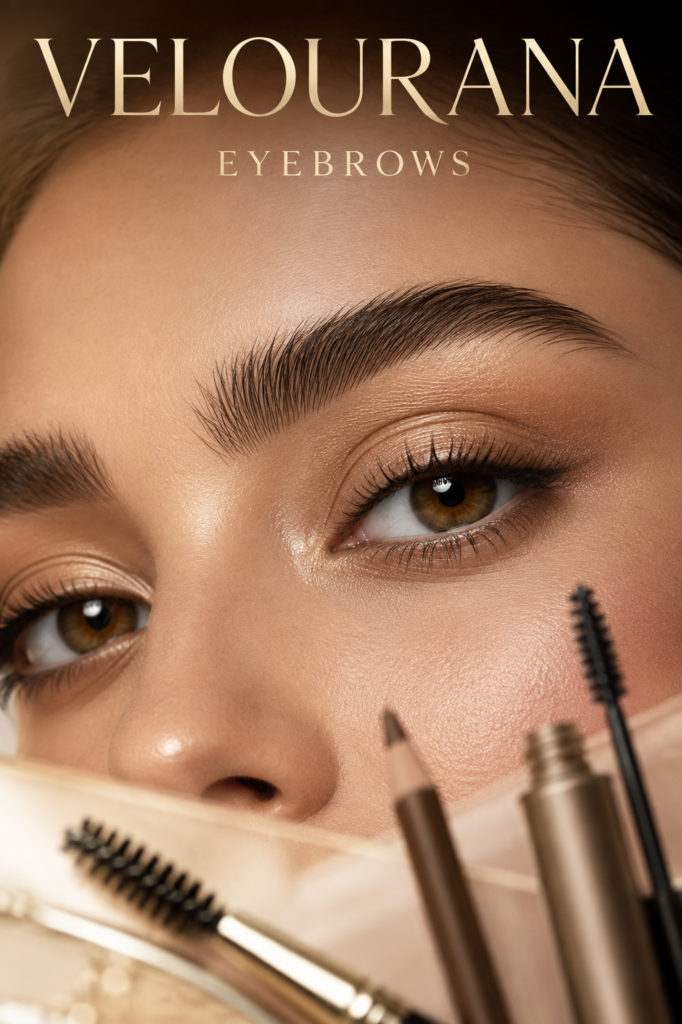
That distinction explains much of the modern appeal of brow pens. Most are liquid or ink-style eyebrow cosmetics equipped with extremely fine applicators designed to produce narrow strokes. Some have a single flexible point, while others use forked or multi-pronged applicators capable of creating several fine marks at once. Applied with controlled pressure and in the direction of natural hair growth, those marks can visually integrate with real eyebrow hairs rather than simply creating a background of pigment.
The effect is sometimes described as resembling microblading because both aesthetics emphasize fine, hair-like lines. They should not, however, be confused. Cosmetic brow pens place temporary makeup on the surface of the skin, whereas professional microblading involves introducing pigment into the skin using specialized equipment. A brow pen therefore offers a removable makeup effect rather than a semi-permanent cosmetic procedure.
This temporary quality is part of its versatility. A person can make the brow slightly fuller one day, more structured another day, or leave it virtually untouched except for one sparse section. Brow pens make this possible because their strength is not necessarily dramatic pigmentation. Their strength is precision.
Why Brow Pens Create a Different Kind of Definition
Traditional brow products frequently work by creating an impression of density. A powder darkens the skin visible between hairs. A pencil can shade the same area while also defining the perimeter. Pomade can establish an even stronger shape. These methods remain useful, but a brow pen approaches sparse space differently.
Instead of treating a gap as an area that needs to be colored, the pen allows that space to be broken into individual marks resembling hairs. The distinction may sound subtle, but visually it can be significant.
Consider a naturally dense brow containing a small gap near the arch. Filling the entire region with opaque color may solve the gap while simultaneously making the surrounding brow appear heavier. A few carefully positioned pen strokes can instead introduce the illusion of missing hairs while leaving the surrounding skin visible.
Visible skin is important to natural-looking eyebrow makeup. Real brows are rarely continuous blocks of color. They consist of individual hairs separated by tiny spaces, with density changing from one part of the eyebrow to another. When makeup preserves some of those irregularities, the result can appear more believable.
The front of the brow demonstrates this especially clearly. Natural hairs near the inner brow often grow upward or diagonally and may be relatively dispersed. Drawing a strong vertical boundary at the beginning of the eyebrow can therefore make makeup obvious. Fine pen strokes can reproduce the lighter, separated appearance of this area more convincingly.
Toward the arch, hairs commonly become denser and change direction. The tail may narrow and contain fewer hairs. Successful brow-pen application responds to those transitions instead of repeating identical strokes from beginning to end.
The goal is not simply to draw lines. It is to understand what those lines are representing.
The Importance of Applicator Design
The character of a brow pen depends heavily on its applicator. Fine brush tips and felt-style tips are common, and their flexibility, width, ink flow, and shape influence the marks they produce.
An extremely fine single tip offers considerable control because each simulated hair can be positioned separately. This can be useful when only a few gaps need correction or when the tail requires precise reconstruction. It also allows the user to vary direction gradually as the natural growth pattern changes.
Flexible tips can create different stroke thicknesses depending on pressure and angle. A featherlight touch may produce an extremely delicate mark, while stronger pressure can create a wider or more saturated line. This responsiveness can make the application realistic, but it also means technique matters.
Multi-pronged pens take another approach. Their tips are divided into several points intended to create multiple parallel strokes. They can cover larger sparse areas quickly and may help produce a textured effect. However, repeatedly stamping an identical multi-line pattern can become recognizable as makeup. Slight changes in positioning, direction, and pressure are generally needed to prevent mechanical repetition.
Ink flow is equally important. Too little product reaching the tip can cause broken or faint marks. Excessive flow can create thick lines, pooling, or unexpectedly dark spots. Many liquid brow products are designed to balance pigment with sufficient translucency so individual strokes remain visible without immediately becoming opaque.
Storage and preparation can also influence performance. Product-specific instructions vary: some manufacturers recommend shaking their pens before application, and some specify particular storage orientations to maintain flow. The individual manufacturer's directions should therefore take precedence over assumptions based on another pen.
Whatever the applicator design, control becomes easier when the user thinks of the pen as a miniature drawing instrument rather than a conventional coloring tool.
Creating Hair-Like Strokes That Follow the Brow
The most convincing brow-pen work usually begins with observation rather than application. Natural eyebrow hairs do not all point toward the temple. Their direction changes across the brow.
At the inner portion, hairs may rise relatively vertically. Moving outward, they often begin leaning diagonally. Through the body and arch, the angle can become progressively more horizontal. Toward the tail, hairs generally follow the narrowing shape of the brow.
A pen stroke that follows those patterns can disappear visually among existing hairs. A stroke traveling against them is more likely to look drawn.
Length matters as well. Extremely long uninterrupted lines rarely resemble eyebrow hairs. Shorter marks usually integrate more naturally because they imitate the dimensions of individual hairs and preserve small areas of visible skin.
Pressure should generally remain light. Liquid pigment can appear considerably darker once deposited than it looks while the tip is moving. Beginning softly allows density to be increased gradually. Starting with strong pressure leaves less room for correction.
This is particularly important at the front of the eyebrow. A heavily saturated inner brow can dominate the face and create a squared appearance. A few dispersed upward strokes generally preserve softness more successfully.
The body of the brow can tolerate somewhat greater density because natural hairs are often more concentrated there. Even so, drawing every possible space is unnecessary. The pen works best when it supplements what already exists.
At the tail, precision becomes important again. A sparse tail can sometimes be visually extended, but an excessively long or sharply drawn tail may change the apparent proportions of the eye area. Following the natural trajectory of the existing brow tends to produce the most harmonious result.
The pen therefore rewards restraint. The objective is not to demonstrate how many strokes can be drawn but to determine how few are necessary.
Shade Selection and the Illusion of Real Hair
Precision alone cannot create convincing brows if the color looks disconnected from natural hair. Brow-pen shade selection involves more than deciding whether someone is blonde, brunette, red-haired, gray-haired, or dark-haired.
Depth and undertone both matter.
A shade that is substantially darker than the eyebrow can make every individual stroke conspicuous. Instead of disappearing into the brow, the marks become visible lines. A shade that is excessively light may fail to create enough contrast to correct sparse areas.
Undertone can be equally influential. Some brown pigments lean warm and can appear reddish against naturally neutral or cool brow hairs. Others are strongly ashy and may look gray against warmer coloring. The most natural result usually comes from a shade that relates closely to the visible brow hair rather than relying solely on the color of the hair on the scalp.
Hair coloring introduces another consideration. Someone with dyed blonde hair may still have naturally deeper brows. Matching the pen exactly to the artificial hair color could make the eyebrows unexpectedly pale. Conversely, using a very dark brow shade simply because the natural roots are dark may create more contrast than desired.
The overall relationship between brows, hair, skin, and makeup matters more than rigid matching rules.
A softer shade can be particularly effective at the front of the brow, where natural density tends to look lighter. Greater definition can then be concentrated through sparse areas, the arch, or the tail. Some makeup styles deliberately use more than one brow shade to create dimension, although a single well-chosen pen can achieve a sophisticated result when pressure is varied intelligently.
Another important factor is oxidation or drying. Liquid brow formulas can sometimes appear different after they have set on the skin. Testing the shade and allowing it to dry before judging its final appearance can therefore prevent surprises.
Skin Preparation Changes the Result
Because brow pens deposit pigment partly on exposed skin between hairs, the condition of that surface can affect application.
Very oily skin can make some formulas spread, become less distinct, or wear away more quickly. Heavy skincare products, sunscreen, foundation, or emollient creams around the brows can create a similarly slippery surface. At the opposite extreme, very dry or flaky skin can interrupt a fine line and make pigment catch unevenly.
This does not mean the eyebrow area needs to be aggressively stripped or dried. It simply benefits from being reasonably clean and balanced before precise pen work begins.
If foundation or complexion products are used around the brows, excessive layers can also interfere with fine strokes. A brow pen generally performs most predictably when the applicator has a stable surface rather than a thick film of creamy makeup beneath it.
The relationship between skincare and brow makeup deserves attention because eyebrow skin is still facial skin. Strong rubbing, harsh cleansing, or repeated attempts to erase mistakes can irritate the area. Precision makeup should not require aggressive treatment of the skin.
Once strokes have been applied, allowing them to set before repeatedly brushing or layering additional products can also help preserve their shape. Drying time varies according to formula, so manufacturer instructions remain useful.
Brow Pens and Other Brow Products
A brow pen does not necessarily replace pencils, powders, gels, or pomades. Each product creates a different visual effect, and combinations can often produce more dimensional brows than any single formula.
Pencils are excellent for shaping and soft shading. Their texture can make them forgiving, particularly when the objective is to establish an overall silhouette. Powders create diffused density and are useful when brows need broad areas of subtle fullness. Pomades offer stronger definition and can produce highly sculpted shapes. Gels primarily interact with brow hairs themselves, adding hold, texture, tint, or volume depending on the formula.
Pens specialize in detail.
That makes them particularly useful as finishing products. A softly shaded brow can be given additional realism with a few pen strokes through the front or sparse sections. A clear or tinted gel can then arrange the natural hairs so they integrate with the drawn strokes.
The order is not universal because product formulas differ. Very waxy products, for example, may prevent a liquid pen from adhering properly if applied underneath. Conversely, aggressively brushing gel through freshly drawn strokes may disturb them. Experimentation with compatible formulas is therefore more useful than treating one sequence as mandatory.
For minimalist makeup, the pen may be all that is necessary. Someone with naturally full brows and only two or three gaps may find that additional products create unnecessary heaviness.
For substantially sparse brows, a combination can be more efficient. Soft background shading can establish overall density while pen strokes restore texture. This avoids the laborious task of drawing every apparent hair individually while retaining a realistic surface.
Correcting Sparse, Uneven, or Over-Tweezed Brows
Sparse brows are one of the situations in which brow pens become especially valuable. Sparse areas expose more skin, providing space where fine cosmetic strokes can imitate missing hairs.
The temptation is to fill every empty area uniformly. Yet natural density is rarely uniform. Reconstructing believable brows requires attention to the remaining growth pattern.
If the inner brow is sparse, upward strokes can create the impression of additional hairs without establishing a hard front edge. If the arch contains a gap, diagonal strokes can connect surrounding hairs visually. If the tail is thin, progressively narrower strokes can continue its natural direction.
Uneven brows present a different challenge. Human faces are not perfectly symmetrical, and eyebrows should not necessarily be forced into identical shapes. Attempting to correct every millimeter of difference can result in progressively larger brows as each side is repeatedly adjusted to match the other.
A pen permits smaller corrections. A missing section can be subtly reconstructed without redrawing the entire eyebrow.
Over-tweezed brows can similarly benefit from texture rather than heavy filling. When only a few natural hairs remain, however, drawn strokes need careful spacing. Packing them too closely can turn the brow into a dark mass, defeating the purpose of a hair-like technique.
It is often more convincing to preserve slight irregularity. Real eyebrow hairs vary subtly in thickness, length, direction, and spacing. Makeup that reproduces some of that variation tends to appear less artificial.
Longevity, Water Resistance, and Everyday Wear
One reason brow pens have become useful beyond editorial or highly detailed makeup is the development of longer-wearing liquid formulas. Many modern products are marketed as water-resistant, waterproof, smudge-resistant, or extended-wear cosmetics.
These descriptions should not automatically be treated as interchangeable. Actual durability varies by formula, skin type, environment, skincare, perspiration, and application.
A product that performs exceptionally on dry skin may behave differently on an oily forehead during humid weather. Water resistance also does not necessarily mean a brow will remain unchanged after rubbing, cleansing, swimming, or prolonged exposure to moisture.
The advantage of a well-performing pen is that its fine marks can remain relatively crisp throughout normal daily activity. Because the effect relies on individual strokes, deterioration may become noticeable if those strokes blur together or disappear selectively.
Application technique affects durability. Excessive layering can sometimes create a surface film more vulnerable to disruption, while thin, properly dried strokes may wear more naturally. Applying liquid brow color over oily skincare can also reduce adherence.
Removal at the end of wear should remain gentle. Long-wearing makeup may require an appropriate cleanser or makeup remover, but vigorous scrubbing around the eyebrows is unnecessary. The objective is to dissolve and lift the cosmetic rather than mechanically abrade the skin.
The Difference Between Brow Pens and Microblading
The visual vocabulary surrounding brow pens frequently borrows the word "microblading," which can create confusion. Cosmetic brow pens and professional microblading can both aim to create the appearance of individual eyebrow hairs, but they are fundamentally different.
A brow pen is makeup. Its pigment sits on the skin surface and is intended to be removable.
Microblading is a semi-permanent cosmetic procedure in which pigment is introduced into the skin using specialized manual equipment. It involves considerations such as practitioner training, hygiene, healing, pigment behavior, skin response, and aftercare that simply do not apply to ordinary surface makeup.
Calling a cosmetic product a "microblading-effect pen" generally describes its intended appearance, not its mechanism.
This distinction matters because the temporary nature of a brow pen is actually one of its advantages. Shapes, colors, and preferences change. A removable product allows the wearer to experiment without committing to a semi-permanent result.
It also permits daily adaptation. Brows can be softer for minimal daytime makeup, more structured for evening makeup, or selectively corrected according to how the natural hairs happen to sit on a particular day.
For someone curious about the appearance of hair-stroke brows, a cosmetic pen can therefore provide a way to explore the aesthetic without confusing makeup with a professional procedure.
Developing Control Without Making Brows Look Drawn On
Brow pens can initially feel less forgiving than pencils because liquid marks are precise. That precision, however, becomes an advantage once hand pressure and stroke direction are understood.
A common source of artificial-looking results is attempting to outline the brow first and then fill the enclosed shape. That approach treats the eyebrow as a graphic object rather than a collection of hairs. While sharply defined brows can be an intentional makeup style, it does not exploit the pen's greatest strength.
Another problem is repetition. Twenty identical strokes positioned at the same angle can resemble a pattern. Natural brows contain gradual directional changes and slight irregularities. The hand should therefore respond to the brow rather than repeating a mechanical flick.
Excess pressure is equally noticeable. If every mark is dark and thick, the distinction between individual simulated hairs disappears. Light pressure preserves separation and makes additional layers possible.
The most effective improvement often comes from simply stopping earlier. Brows viewed from a few centimeters away in a mirror can appear incomplete because tiny gaps remain visible. At normal conversational distance, those gaps frequently contribute to realism.
Periodically viewing both brows from farther away can therefore reveal whether additional pigment is genuinely necessary.
Symmetry should also be judged globally rather than stroke by stroke. One brow may naturally sit slightly higher or have a different arch. Small differences are part of facial structure. Brow makeup can create balance without eliminating individuality.
Brow Pens as a Modern Approach to Eyebrow Makeup
The popularity of brow pens reflects a broader shift in eyebrow aesthetics. Definition no longer has to mean opacity. Fullness does not have to mean a solid silhouette. Structure can be created through detail.
This makes the brow pen unusually adaptable. It can add two hairs to an otherwise untouched eyebrow or participate in a complete sculpted makeup look. It can restore visual density to a sparse tail, soften the appearance of an uneven front, or introduce texture over pencil or powder.
Its effectiveness ultimately depends less on how much product is applied than on where each mark is placed.
A successful brow pen should support the natural architecture of the eyebrow rather than conceal it. The existing hairs provide the blueprint: their direction suggests the angle of the strokes, their color informs shade selection, their density determines how much additional pigment is necessary, and their natural irregularity prevents the finished brow from becoming excessively perfect.
When those signals are respected, the pen becomes more than another filling product. It becomes a precision instrument capable of creating the visual suggestion of hair itself.
That is the defining quality of the category. Brow pens offer controlled, temporary, highly detailed enhancement while preserving the texture that makes eyebrows look like eyebrows rather than makeup drawn in their place.
THE END VELOURANA
 Discover More From Our Family of Websites
 ZodiacBearing (Astrology, Tarot, Numerology, Angel Numbers & Spiritual Guidance)
 Velourana (Beauty, Makeup, Hair Care, Skincare & Beauty Tips)
 HavenBearing (Home, Living, Organization, Décor & Everyday Inspiration)
 PawBearing (Pet Care, Dog Breeds, Animal Health, Training & Pet Products)
 PsyCatherine (Notes From the Journal of a Psychologist on Real Life)