
CATEGORY: Brow Lamination
Brows have always responded to the beauty ideals of their era. At different moments they have been dramatically thin, sharply arched, heavily filled, softly powdered, deliberately natural, or brushed upward into a full and almost feathery shape. Brow lamination belongs to this continuing evolution, but its popularity reflects something more specific than another temporary preference for a particular silhouette. It offers a way of reorganizing the existing brow hairs themselves, creating the impression of greater fullness and deliberate structure without relying entirely on makeup.
The result can look strikingly polished while still being created from a person's own brow hair. Individual hairs that naturally point downward, cross over one another, grow sideways, or refuse to remain in a chosen position can be redirected into a more consistent arrangement. Once the hairs lie in a coordinated direction, areas that previously appeared irregular may look more evenly covered and the entire brow can acquire greater visual width.
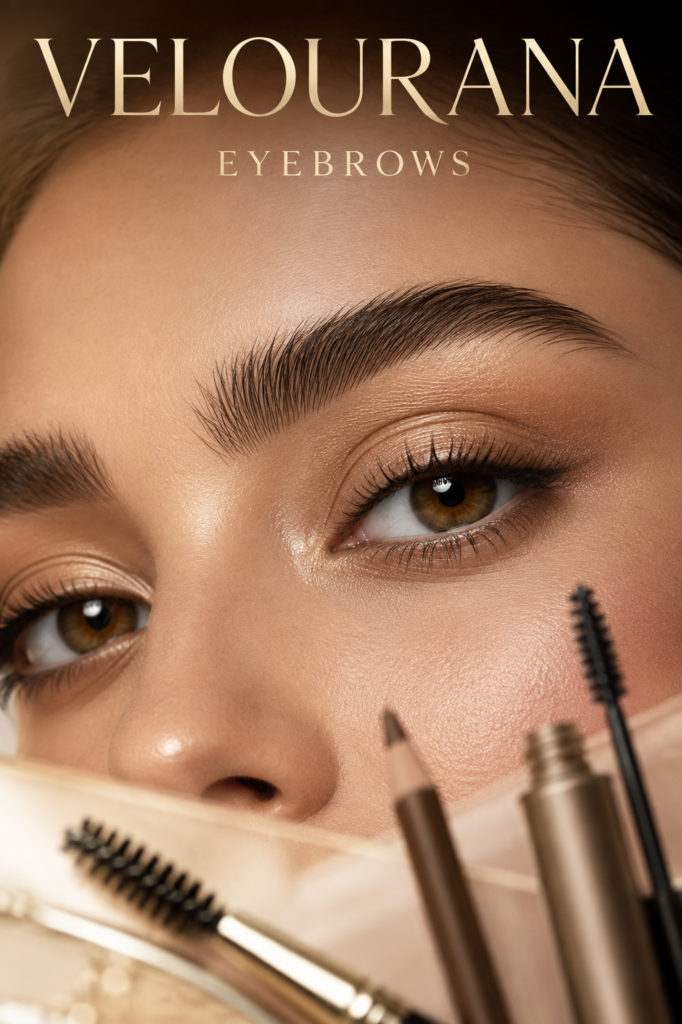
This explains why lamination has become closely associated with the contemporary brushed-up brow. Yet the treatment is considerably more versatile than the dramatic photographs often used to represent it. A laminated brow does not necessarily need to stand vertically or appear intensely sculpted. Depending on the natural hair, desired result, treatment technique, and subsequent grooming, the finish can range from softly controlled to conspicuously lifted.
Understanding brow lamination therefore requires looking beyond the immediate before-and-after effect. It is a chemical grooming treatment applied to hair in a particularly delicate area of the face. Its success depends not only on achieving an attractive shape on the day of treatment but also on maintaining the condition of the brow hair and surrounding skin while allowing the result to grow out gracefully.
What Brow Lamination Actually Changes
Brow lamination is sometimes described as a perm for the eyebrows, although the visual objective differs from the curling normally associated with traditional hair perming. Instead of creating curls, the process makes brow hairs temporarily more flexible so that they can be repositioned into a chosen direction.
Untreated eyebrow hairs have their own growth patterns. Some rise naturally from the inner brow and gradually turn outward. Others grow predominantly sideways. Coarse hairs may point downward at the tail, while individual hairs can grow in directions that conflict with the surrounding brow. These characteristics are perfectly normal, but they influence how defined or full a brow appears.
Ordinary brow gel changes the position of these hairs primarily through styling and hold. Lamination works differently because it temporarily alters the hair's internal structure. Professional systems typically involve a sequence of chemical formulations designed first to soften and relax the hair sufficiently for repositioning and then to help establish it in its new arrangement.
The precise chemistry varies between professional systems, which is one reason instructions supplied by the manufacturer matter. Processing time cannot safely be assumed to be identical from one formulation to another.
Once treated, the hairs become more cooperative during daily grooming. They can generally be brushed into the intended shape more readily than before. This does not mean that every hair becomes permanently fixed like a rigid surface. A well-laminated brow still consists of individual hairs, and those hairs retain movement. The treatment instead makes their directional arrangement considerably easier to control.
The visual transformation can be surprisingly substantial because hair direction influences perceived density. Imagine several long brow hairs lying horizontally across one another. They may occupy a relatively narrow vertical area even though there is a reasonable amount of actual hair. Redirecting those hairs diagonally upward allows them to cover more visible space. The brow consequently looks wider and potentially fuller without additional hairs having appeared.
This distinction is central to realistic expectations. Brow lamination cannot create follicles, replace missing hair, or permanently increase density. What it can do is use existing length and coverage differently.
Why Laminated Brows Can Appear Fuller
The impression of fullness created by lamination depends heavily on optical organization.
Natural eyebrows are rarely perfectly uniform. Hair density changes across the brow, growth direction varies, and the underlying skin may be more visible in certain places. When hairs overlap randomly or point downward, their collective outline can look narrower than their actual length would suggest.
Lamination redistributes that visual mass.
Longer hairs can be directed across small sparse-looking spaces. Downward-growing hairs can be lifted so that they contribute to the upper boundary of the brow. Inner hairs can be encouraged upward, while hairs through the arch can be positioned diagonally rather than vertically. The tail can be arranged outward to preserve length and refinement.
The effect is especially noticeable when the brow contains plenty of hair but lacks natural uniformity. Someone may initially assume that the brow is sparse when the real issue is that the hairs are growing in several competing directions.
This is also why photographs of lamination can occasionally exaggerate what the treatment realistically achieves. Immediately after professional styling, hairs may be carefully separated, brushed into their most expansive arrangement, and photographed under lighting that emphasizes definition. The appearance several days later may be softer once the client begins washing and grooming normally.
That softer stage is not necessarily treatment failure. Lamination is better understood as increased styling flexibility than as a permanent freeze-frame of the salon result.
The most convincing outcomes tend to respect the brow's anatomy. Inner hairs can rise more noticeably, but forcing every hair vertically upward may produce an unnecessarily severe appearance. Through the middle and outer sections, a diagonal or outward direction frequently complements the natural shape more effectively.
The objective is not simply maximum height. It is controlled distribution.
The Relationship Between Lamination and Brow Architecture
Successful brow grooming is partly an exercise in proportion. Brow width, arch position, tail length, density, and direction all interact with the surrounding features.
Lamination changes several of these perceptions simultaneously.
Brushing hair upward can increase apparent brow thickness. Extending outer hairs can emphasize length. Redirecting hair around the arch can make the highest point appear cleaner or more pronounced. Separating inner hairs can create the airy texture associated with contemporary feathered brows.
For this reason, the treatment should not be considered independently from shaping.
Removing hair immediately because it falls outside a familiar pre-lamination outline can be a mistake. Once the hairs have been repositioned, the useful boundaries of the brow may change. Hair that previously looked untidy may suddenly contribute to a desirable fuller shape.
A thoughtful approach therefore evaluates the laminated arrangement before deciding how much surrounding hair should be removed. Conservative shaping often preserves more options, particularly for clients attempting to recover from previous over-tweezing.
The same principle applies to trimming. Laminated hairs may suddenly reveal their full length because they are no longer folded or angled across one another. This can make them look unexpectedly long.
Aggressive trimming may create a neat result immediately but cause difficulties later. As lamination gradually fades and the hairs return toward their natural growth direction, excessively shortened hairs can produce gaps, blunt edges, or uneven texture.
Length is one of the resources that makes lamination effective. Removing too much of it can undermine the very fullness the treatment was intended to create.
Different Brow Types Respond Differently
There is no universal laminated brow because natural eyebrows vary considerably.
A person with fine, flexible brow hairs may achieve a soft lifted effect with relatively subtle processing and styling. Someone with thick, coarse, resistant hairs may require a different professional approach. Brows containing long hairs can produce dramatic expansion, while shorter hairs may create a more restrained transformation.
Density matters as well.
Dense brows often respond beautifully because there is enough hair to redistribute across the desired shape. Lamination can organize that density so that the brow looks intentional rather than heavy.
Moderately sparse brows can sometimes benefit because existing hairs become more strategically positioned. However, substantial areas with no hair cannot be concealed indefinitely simply by redirecting neighboring strands.
Very curly or irregular brow hair presents another interesting case. Lamination may make the pattern more manageable, but the condition of the individual hairs becomes especially important. Chemical treatment should not be viewed as a method for repeatedly forcing compromised hair into submission.
Previous cosmetic treatments also matter. Tinting, bleaching, lightening, and other chemical services can affect the resilience of brow hair. The more chemical history the hair has, the more carefully additional processing should be considered.
Skin condition is equally relevant because the treatment takes place directly above the skin. Irritated, injured, recently exfoliated, or unusually reactive skin requires caution. A treatment designed for brow hair should never be treated as though the surrounding skin were irrelevant.
The Difference Between Lamination and Everyday Brow Styling
The popularity of strong-hold brow products has made it possible to imitate aspects of lamination temporarily. Brow gels, waxes, soaps, and styling products can all lift hair and create separation.
The distinction is duration and hair behavior.
With ordinary styling, the natural resistance of the hair remains essentially unchanged. A downward-growing hair may need substantial product every morning to keep it lifted. Once the product is washed away, the hair returns to its usual direction.
After successful lamination, that same hair should generally be easier to reposition. Daily styling may still be desirable, but less effort can be required to achieve a coordinated shape.
This makes lamination attractive to people who like brushed brows but dislike repeatedly fighting stubborn growth patterns.
However, temporary styling has an important advantage: it is temporary. Someone uncertain about a dramatically lifted brow can experiment with gel before committing to a chemical service. This provides useful information about preferred direction, thickness, and overall visual balance.
A brow that looks attractive when softly brushed diagonally may not benefit from being styled straight upward. Conversely, someone with naturally unruly brows may discover that the structured effect makes the entire eye area appear more open and deliberate.
Experimentation before treatment can therefore clarify the aesthetic goal.
The Importance of Processing Control
Because brow lamination creates a visible cosmetic effect, it can be tempting to focus almost entirely on shape. Hair integrity deserves equal attention.
The treatment relies on controlled chemical processing. More processing does not automatically produce a better or longer-lasting result. Excessive exposure can compromise the hair, leaving it dry, weakened, frizzy, unusually soft, or vulnerable to breakage.
Eyebrow hairs are small, and their position on the face makes damage particularly noticeable.
This is why professional judgment matters. Hair thickness, previous treatments, product system, manufacturer's directions, and visible response all influence appropriate processing.
Trying to extend treatment time merely because the hairs seem resistant can be counterproductive. The objective is sufficient flexibility to permit controlled repositioning while preserving healthy-looking texture.
Overprocessed brows may initially appear highly compliant because the hairs have become extremely soft. That should not be confused with an ideal result. Healthy lamination should preserve the appearance of actual hair rather than producing brittle or distressed strands.
The same caution applies to repeated services. Lamination gradually wears away while eyebrow hairs also progress through their natural growth cycle. Repeating treatment too frequently can expose already processed portions of the hair to unnecessary additional chemical stress.
A sensible maintenance schedule should therefore be based on the condition of the brows and professional product guidance rather than simply on the desire to maintain maximum lift continuously.
What the Finished Brow Should Look Like
There is no requirement that laminated brows resemble a row of perfectly parallel hairs.
In fact, excessive uniformity can sometimes make them appear artificial.
The most sophisticated results often preserve controlled variation. Inner hairs may be lighter and more vertical. The body of the brow can transition diagonally toward the arch. The tail can gradually turn outward. This directional progression reflects natural eyebrow anatomy while making the overall shape cleaner.
Texture should remain visible.
Individual hairs are part of what distinguishes lamination from a heavily drawn brow. Even when tint or pencil is added, retaining some visible separation helps preserve dimension.
The amount of lift should also correspond to the available hair length. Very long hairs brushed completely upright can make the brow disproportionately tall. The same hairs angled slightly outward may provide fullness without overwhelming the eye area.
Similarly, a naturally dense brow may require less expansion than a moderate-density brow. Lamination should not automatically mean making every eyebrow as large as physically possible.
Balance remains more important than extremity.
Lamination, Tinting, and Additional Brow Services
Brow lamination is frequently combined with other grooming services because each addresses a different component of the finished appearance.
Lamination changes direction and manageability. Shaping refines the external boundaries. Tint can deepen visible hair color and sometimes make fine or lighter hairs more noticeable.
Together, these effects can create a substantial transformation.
The combination must nevertheless be approached thoughtfully because multiple treatments can increase chemical exposure or skin sensitivity. Compatibility and sequencing depend on the specific professional products being used, and manufacturer's instructions should take precedence over generalized routines encountered online.
Tinting can make laminated brows look dramatically denser because hairs that were previously difficult to see become more obvious. This can be useful for someone whose brow density is greater than it initially appears.
It can also make an already strong brow look considerably heavier. Color intensity should therefore be chosen with the finished architecture in mind rather than considered separately.
Makeup remains optional. Lamination does not eliminate the usefulness of pencils, powders, pens, or gels. Instead, it can change where those products are needed.
A person who previously filled the entire brow may discover that only a small genuinely sparse area needs enhancement after lamination. This can produce a more dimensional result because actual hairs remain the dominant visual element.
Caring for the Brow After Lamination
Aftercare should follow the instructions supplied by the qualified professional and the specific treatment system used. This matters because formulations differ and generalized internet rules are not a substitute for manufacturer guidance.
Beyond any immediate treatment-specific restrictions, long-term care is largely about treating the brow hair gently.
Repeated rubbing, harsh cleansing, aggressive exfoliation directly over the brow, and unnecessary mechanical stress can work against healthy-looking hair. When cleansing the face, the eyebrow area does not need to be scrubbed vigorously.
Brushing should also be controlled. A spoolie can restore the desired arrangement, particularly after sleeping or washing, but there is little benefit in repeatedly dragging a brush through the hairs with excessive force.
Conditioning products recommended for use with a particular lamination system may help support the appearance and flexibility of the treated hairs. It is important, however, not to assume that every oil, serum, or household product is appropriate around the eyes simply because it is described online as nourishing.
The skin surrounding the brow deserves the same consideration. Persistent redness, swelling, blistering, burning, or significant irritation is not simply part of achieving a beauty result and should not be ignored.
How Lamination Gradually Changes
One of the most useful expectations to establish is that lamination does not suddenly disappear on a particular day.
The effect evolves.
Initially, the brows may be exceptionally easy to position and can look very polished. As time passes, individual hairs gradually regain more of their natural behavior while new hairs emerge through the normal growth cycle.
This can create a mixed stage in which some hairs remain strongly responsive to styling while others behave more naturally.
That transition is normal.
Daily brushing becomes particularly useful during this period because it visually integrates hairs at different stages. A light styling product may also help maintain cohesion when the original lamination effect has softened.
Eventually, enough natural growth and relaxation occurs that another treatment may be considered. The appropriate timing should depend on hair condition rather than an inflexible calendar.
If the brows still look dry or stressed, allowing additional recovery is more sensible than immediately pursuing another dramatic result.
Beauty maintenance is most successful when preservation is treated as part of the aesthetic rather than as an obstacle to it.
Brow Lamination as a Modern Grooming Choice
The enduring appeal of lamination comes from the fact that it works with an existing feature rather than replacing it.
It reveals how much eyebrow appearance depends on direction.
A brow can contain exactly the same number of hairs before and after treatment yet appear substantially fuller, wider, cleaner, and more balanced simply because those hairs occupy space differently.
That makes lamination particularly relevant to contemporary beauty, where visible hair texture is often celebrated rather than completely concealed beneath makeup.
At the same time, the treatment should not be reduced to the exaggerated vertical brow frequently associated with social media trends. The underlying technique can support numerous aesthetics. A softly groomed executive brow, a natural feathered brow, a bold editorial brow, and a subtly lifted everyday brow can all involve lamination while looking distinctly different.
The best result is therefore not necessarily the most obvious one.
It is the result in which hair direction, density, facial proportions, grooming preferences, and hair condition have been considered together.
When approached this way, brow lamination becomes less about forcing the eyebrow into a fashionable template and more about discovering how its existing hairs can be arranged most effectively. That distinction gives the treatment greater versatility and makes it useful beyond any single brow trend.
THE END VELOURANA
 Discover More From Our Family of Websites
 ZodiacBearing (Astrology, Tarot, Numerology, Angel Numbers & Spiritual Guidance)
 Velourana (Beauty, Makeup, Hair Care, Skincare & Beauty Tips)
 HavenBearing (Home, Living, Organization, Décor & Everyday Inspiration)
 PawBearing (Pet Care, Dog Breeds, Animal Health, Training & Pet Products)
 PsyCatherine (Notes From the Journal of a Psychologist on Real Life)

