
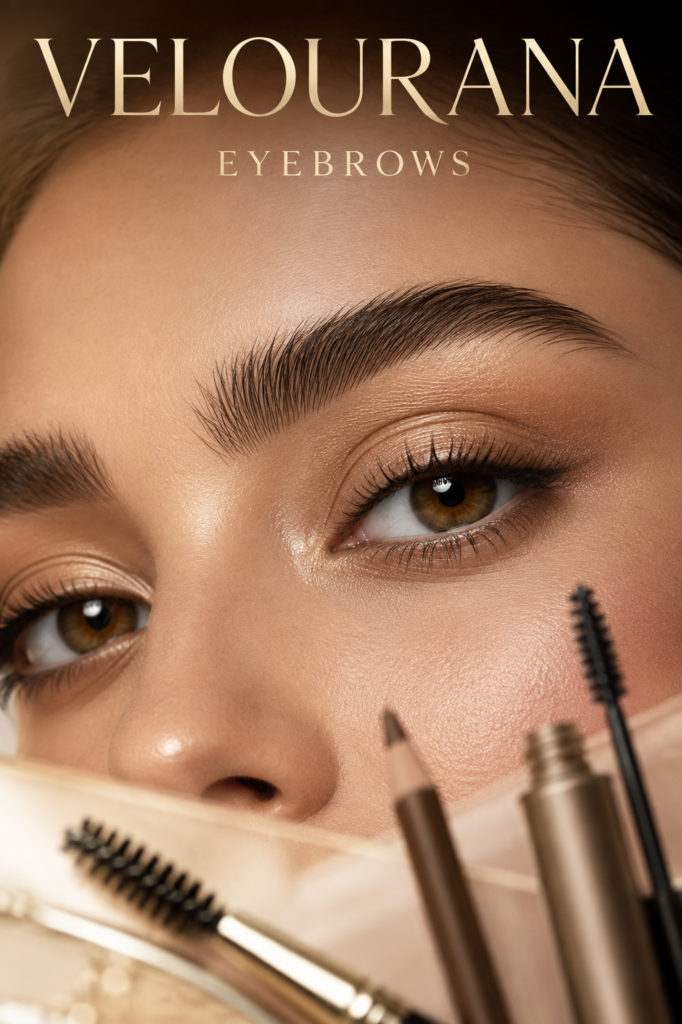
CATEGORY: Brow Lamination
The immediate transformation produced by brow lamination receives most of the attention. Before treatment, the eyebrow may contain hairs that cross, droop, curl, or disappear visually into the body of the brow. Afterwards, those same hairs can appear lifted, separated, and remarkably orderly. The brow looks wider, the arch clearer, and the overall eye area more structured.
Yet the quality of a lamination should not be judged only during the first hours after the service.
The more revealing test is how the brows behave as days and weeks pass.
A successful treatment should remain aesthetically useful as it softens. The hairs should be capable of being groomed into attractive positions without appearing progressively more damaged. New growth should be manageable alongside previously treated hair, and the brow should eventually transition back toward its natural state without requiring aggressive corrective grooming.
This longer perspective changes the way brow lamination should be understood. It is not simply an appointment that creates an instant photograph-ready result. It is a temporary alteration of eyebrow hair followed by a period of styling, care, gradual relaxation, and natural renewal.
For anyone considering regular lamination, learning how to manage this complete cycle is as important as choosing the initial brow shape.
Why the First Result Is Not the Final Everyday Result
Freshly laminated brows can look unusually sleek and controlled. Every hair has just been positioned deliberately, and professional finishing products may enhance shine, separation, and definition.
That appearance is useful for demonstrating what the treatment has accomplished, but it should not necessarily be regarded as the exact look the brows will maintain every hour for the following weeks.
Once normal cleansing and daily life resume according to the treatment provider's instructions, the brows usually acquire a more natural texture. The individual hairs remain easier to manipulate than before, but they are not supposed to behave like permanently glued strands.
This distinction is important because some people become concerned when their brows no longer look identical to the immediate salon photograph. They may assume the treatment has disappeared when it has actually entered its normal wearable stage.
Lamination changes manageability.
The practical advantage becomes evident in the morning when the hairs can be brushed into shape with considerably less resistance. Instead of spending time attempting to force a downward-growing section upward with layers of strong gel, the brow may respond to a few deliberate strokes of a spoolie and a modest amount of styling product.
This daily flexibility is one of the treatment's most valuable characteristics.
Developing a Natural Direction Rather Than Maximum Lift
The dramatic vertical brow has become visually synonymous with lamination, but maximum upward direction is only one styling possibility.
Eyebrows naturally change direction from beginning to end. The hairs nearest the nose commonly grow more vertically. Moving toward the center, they gradually angle outward. Around the arch and tail, horizontal movement becomes increasingly important.
Respecting this progression can make laminated brows look more sophisticated.
The inner brow can be brushed upward and slightly outward to create openness. Through the body, the angle can become progressively more diagonal. At the tail, directing hairs outward rather than vertically helps preserve a tapered silhouette.
This produces lift without making the entire eyebrow appear rectangular.
Someone who enjoys a more editorial appearance can deliberately increase the vertical emphasis. Someone who prefers discreet grooming can keep the hairs closer to their natural direction while benefiting from their improved manageability.
The treatment therefore provides a styling range rather than prescribing one finished shape.
Understanding this can also prevent unnecessary trimming. If long hairs appear excessive when pushed straight upward, changing their angle may solve the problem immediately. Cutting them should not automatically be the first response.
Once shortened, the hair cannot be restored until it grows again.
The Role of Daily Brushing
A spoolie is one of the simplest tools for maintaining laminated brows, but technique influences the result.
Randomly brushing every hair straight upward can exaggerate irregularities. Instead, brushing can follow the intended architecture of the brow.
The inner section generally benefits from greater lift. The center can be directed upward and outward. The arch can be refined through diagonal movement, while the tail is guided toward the temple.
This takes very little time once the preferred pattern becomes familiar.
Brushing also helps when the brow becomes temporarily disorganized during sleep. Laminated hairs can move, particularly when pressed against a pillow. Their increased styling flexibility means they can generally be returned to position without difficulty.
The objective is not repeated manipulation throughout the day. Excessive brushing adds unnecessary mechanical stress. Once the hairs are arranged satisfactorily, they can largely be left alone.
A gentle approach is particularly relevant if the hair begins to feel dry. Treated eyebrow hairs should not be handled as though they were indestructible simply because they are short.
Small hairs can still break.
Recognizing Healthy-Looking Versus Stressed Brow Hair
An attractive laminated brow should retain the visual qualities of healthy hair.
The strands should remain distinguishable and flexible. They may feel different from untreated hair, particularly shortly after the service, but they should not progressively develop an obviously brittle, excessively frizzy, or damaged appearance.
Dryness deserves attention because chemical processing can affect the hair's condition. If individual hairs begin to look rough, kinked, unusually fragile, or prone to breaking, repeatedly pursuing stronger styling is unlikely to improve the situation.
This is one reason treatment intervals matter.
The visible lift may fade before every portion of previously treated hair has disappeared. Brow hairs grow and shed according to individual cycles, meaning the brow can contain hairs with different treatment histories at the same time.
Repeated processing therefore requires judgment.
A calendar alone cannot reveal whether a particular brow is ready for another service. Hair condition, previous treatment, additional chemical services, and the specific lamination system all need consideration.
A qualified professional should evaluate these factors rather than treating the shortest possible interval as a universal target.
Supporting the Appearance of Conditioned Brows
The beauty industry frequently surrounds chemically treated hair with the language of nourishment, repair, hydration, oils, proteins, and conditioning. Some of these concepts are relevant to brow care, but they should be approached without assuming that any product described as natural or moisturizing is automatically suitable for use near the eyes.
Products specifically recommended by the treatment professional or manufacturer provide a more reliable starting point.
The aim of conditioning is primarily cosmetic maintenance: helping treated hairs remain smooth, flexible, and healthy-looking as the lamination effect gradually changes.
Care also includes what is avoided.
Repeatedly exposing the brow area to unnecessarily harsh cleansing can make maintaining a polished appearance more difficult. Vigorous rubbing with towels or cleansing cloths can create mechanical stress. Strong cosmetic treatments used on the surrounding skin may also be inappropriate close to recently treated brows.
Because skincare routines vary considerably, clients using intensive exfoliating products, prescription treatments, or professional facial procedures should discuss the brow area with an appropriately qualified professional rather than assuming all treatments can be layered without consideration.
Healthy-looking lamination depends on the relationship between hair care and skin care, not on either one in isolation.
Makeup After Brow Lamination
One appealing aspect of lamination is that it can reduce the amount of makeup required to create a defined brow.
Before treatment, a person may use pencil or powder to compensate for areas where hairs lie flat or overlap. Once those hairs are lifted and redistributed, some apparent gaps can become less noticeable.
This provides an opportunity to reconsider the makeup routine rather than automatically applying the same quantity as before.
A fine brow pencil can be reserved for genuinely sparse areas. Hair-like strokes can reinforce the existing direction without covering the texture produced by lamination. A brow pen can create similar targeted definition when used carefully.
Powder can provide softness but may reduce the visible separation between individual hairs if applied heavily. This is not inherently undesirable; it simply creates a different aesthetic.
Clear or tinted gel can be useful when additional hold is wanted. Even laminated brows may benefit from styling product, particularly as the treatment begins to soften.
The key is that makeup becomes complementary rather than compensatory.
Lamination has already reorganized the physical hair. Makeup can then refine color, fill actual gaps, or increase definition without needing to manufacture the entire brow shape.
Tint and the Illusion of Greater Density
When brow tint accompanies lamination, the change in perceived density can be especially dramatic.
Many eyebrows contain hairs that are lighter, finer, or less visible than expected. Darkening appropriate hairs can make the brow appear more populated even though no additional hair has been created.
Combined with directional repositioning, this produces two simultaneous optical effects: more of the existing hair becomes visible, and that hair occupies a broader, more organized area.
The transformation can therefore be significant.
However, intensity should remain proportional to the desired aesthetic. A strong tint on a dense laminated brow may create a much bolder result than expected. Someone seeking natural softness may prefer less visual weight.
Color also changes how the brow relates to complexion, eye makeup, and hair color. A laminated shape already attracts attention because of its texture and lift. Adding substantial darkness increases that emphasis further.
The most refined brow designs consider these variables together rather than treating lamination, tint, and shaping as unrelated services.
Managing Sparse Areas Realistically
Lamination is often marketed using the language of fuller brows, but fullness can mean several things.
If a brow contains adequate hair that simply grows in an unhelpful direction, lamination may create an impressive increase in apparent density. If a small gap is surrounded by sufficiently long hairs, those hairs may be redirected so that the area becomes less noticeable.
Where follicles are absent across a larger region, however, lamination cannot produce actual coverage from nothing.
Recognizing this distinction prevents unrealistic expectations.
A person with genuine sparse areas may still enjoy lamination because it maximizes the usefulness of the hair that is present. Strategic makeup can then address remaining gaps.
This combination often looks more natural than attempting to create density entirely through pigment. The existing laminated hairs provide three-dimensional texture, while makeup performs a supporting role.
The approach is particularly useful when the objective is visual improvement rather than absolute uniformity.
Natural eyebrows are not perfectly symmetrical fields of identical hair. Some variation contributes to their realism.
Avoiding the Over-Trimming Cycle
One of the most common aesthetic temptations after lamination is trimming.
Once hairs are lifted, their complete length becomes obvious. A hair that previously curved sideways through the brow may suddenly extend well above the upper boundary when brushed vertically.
The immediate impulse can be to cut everything into a perfectly straight line.
That decision deserves caution.
Lamination is temporary, whereas trimming physically removes part of the hair. When the treatment relaxes and the shortened strand returns toward its natural direction, it may no longer reach the area it previously covered.
A brow that looked exceptionally neat immediately after trimming can therefore become patchier during the grow-out stage.
Excessive trimming can also produce blunt ends that interrupt the soft texture of a feathered brow.
This does not mean brow hair should never be trimmed. It means length should be evaluated in the context of natural growth direction and future behavior rather than only in the fully lifted position.
Often, changing the styling angle is enough to integrate a long hair without cutting it substantially.
Conservative grooming preserves flexibility.
The Grow-Out Period
Every temporary beauty treatment has a transition stage, and brow lamination is no exception.
As the weeks progress, the brow may contain a mixture of behaviors. Some hairs remain responsive to the laminated direction. Others begin returning toward their natural orientation. New hairs may emerge without having been treated at all.
This can make the brow look less automatically uniform than it did initially.
The solution is usually not to fight every new hair aggressively. Instead, daily grooming can visually blend the different stages.
A spoolie becomes particularly valuable here. By directing the brow as a whole into a coherent pattern, differences between newer and previously treated hairs become less obvious.
A modest amount of suitable brow gel can provide additional control.
The gradual transition can also reveal useful information. Someone may discover that they prefer the softer appearance of lamination after several weeks to the highly lifted initial finish. That knowledge can inform the styling of the next treatment.
Beauty routines become more personal when the wearer observes how the treatment actually behaves rather than repeatedly recreating a standard reference photograph.
When Brows Need a Rest
There can be a tendency with maintenance treatments to schedule the next appointment as soon as the effect begins to fade.
That approach overlooks the condition of the hair.
If brow hairs appear healthy and an appropriately trained professional considers retreatment suitable within the instructions of the product system, another service may be reasonable. If they appear excessively dry, weak, damaged, or unusually fragile, preserving the hair should take priority over restoring immediate lift.
Waiting is not a cosmetic failure.
The brow can still be groomed conventionally while recovering. Clear gel, pencil, powder, or other familiar styling methods can temporarily provide structure without repeating the same chemical process.
This is especially relevant when several chemical services have been combined. Tinting, bleaching, lightening, and lamination can each influence hair condition depending on the products and methods involved.
The brow should be evaluated as treated hair, not merely as a shape that needs constant correction.
Skin Comfort Matters as Much as Hair Appearance
The eyebrow occupies a sensitive location close to the eyes, and lamination products inevitably work in close proximity to skin.
Cosmetic ambition should never make significant irritation seem normal.
Some temporary sensations or mild reactions may occur with cosmetic services, but persistent burning, marked redness, swelling, blistering, or other concerning symptoms require appropriate attention rather than being accepted as the price of a stronger result.
Pre-service consultation matters because skin history and current condition can affect suitability. Recently irritated skin, damaged skin, or certain intensive skincare routines may require postponement or professional assessment.
Patch testing may also be recommended or required depending on the product system, professional practice, and local requirements.
The important principle is simple: an impressive brow is not successful if the surrounding skin has been unnecessarily compromised.
Choosing the Right Degree of Lamination
Brow lamination is sometimes treated as a binary choice: either the brows are laminated or they are not.
A more useful way to think about the aesthetic is in degrees of visible styling.
A subtle lamination focuses primarily on control. Hairs that previously pointed downward are redirected into a cleaner natural pattern. The brow becomes easier to groom, but someone unfamiliar with the treatment might not immediately identify what has been done.
A moderate finish introduces more visible lift and separation. The brow looks fuller and more contemporary while remaining adaptable to everyday makeup.
A dramatic finish emphasizes height, texture, and deliberate feathering. Individual hairs become a prominent part of the overall makeup design.
None of these is inherently superior.
The appropriate choice depends on natural density, hair length, facial proportions, professional environment, makeup preferences, and personal taste.
Someone who wears minimal makeup may find that an intensely laminated brow dominates the face. Another person who enjoys strong eye makeup may appreciate exactly that level of structure.
Personalization is what separates considered brow design from trend imitation.
Facial Expression and Brow Movement
Eyebrows are not static decorations. They participate continuously in facial expression.
They rise, contract, lower, and change position with emotion. A brow treatment should therefore be considered on a moving face rather than only in a still photograph.
Extremely rigid-looking styling can sometimes appear impressive in a close-up image but less natural during ordinary expression.
Maintaining visible hair texture and avoiding excessive product buildup can help laminated brows retain a sense of movement.
The underlying shape also matters. A dramatically altered arch can change the apparent expression of the face, making it look more surprised, stern, lifted, or intense.
Lamination itself does not permanently alter facial anatomy, but directional styling can influence these perceptions.
This is another reason thoughtful shaping is preferable to mechanically brushing every brow according to the same template.
The eyebrow should complement the person wearing it.
Long-Term Brow Strategy
For someone who intends to make lamination part of a regular grooming routine, the most useful perspective is long-term rather than appointment-to-appointment.
Hair preservation, conservative trimming, thoughtful shaping, appropriate treatment intervals, and gentle daily care all contribute to maintaining attractive brows over time.
It can also be helpful to allow the natural brow to guide the design.
Constantly removing hairs that fall outside an artificially narrow shape can gradually reduce the options available for future styling. Preserving useful density allows lamination to perform more effectively because there is more hair available to reposition.
This is particularly relevant for anyone recovering from years of over-tweezing.
As growth returns, the brow may initially look irregular. Lamination can sometimes organize that developing density and make the transitional period aesthetically easier, but patience remains necessary. Hair growth cannot be accelerated simply by styling the existing strands.
The goal is not perfection at every stage. It is gradual development of a brow that remains versatile.
The Lasting Appeal of the Laminated Brow
Beauty trends frequently become popular because they photograph well. Brow lamination certainly does. The separation of individual hairs creates texture, the lifted direction catches light, and the expanded silhouette can dramatically frame the eyes.
Its usefulness, however, extends beyond photography.
For people with stubborn, downward-growing, crossing, or irregular brow hairs, the treatment can simplify ordinary grooming. For people with naturally full brows, it can transform density into structure. For moderately sparse brows, it can maximize the visual contribution of every available hair.
Perhaps most importantly, it demonstrates how much can be achieved by reorganizing what is already present.
The modern laminated brow does not need to be enormous, vertical, glossy, or unmistakably treated. It can be quiet. It can simply appear balanced, fuller, and unusually well groomed.
As the most extreme versions of beauty trends inevitably change, this fundamental benefit remains relevant. Directional control is useful regardless of whether fashion currently favors dramatic feathering or softer natural brows.
A well-considered lamination therefore has value beyond the trend that popularized it.
Its success lies in understanding the brow as living hair with individual growth patterns, limited tolerance for chemical processing, and an important relationship with the face around it. Styling should enhance those characteristics rather than overwhelm them.
When the treatment, maintenance, and eventual grow-out are all handled with that perspective, brow lamination becomes a flexible grooming technique rather than a single fashionable look. The hairs remain recognizably individual, the shape remains adaptable, and the result can evolve naturally from polished initial lift into softer everyday structure.
That evolution is not something to resist. It is part of the treatment.
THE END VELOURANA
 Discover More From Our Family of Websites
 ZodiacBearing (Astrology, Tarot, Numerology, Angel Numbers & Spiritual Guidance)
 Velourana (Beauty, Makeup, Hair Care, Skincare & Beauty Tips)
 HavenBearing (Home, Living, Organization, Décor & Everyday Inspiration)
 PawBearing (Pet Care, Dog Breeds, Animal Health, Training & Pet Products)
 PsyCatherine (Notes From the Journal of a Psychologist on Real Life)

