
CATEGORY: Makeup Techniques
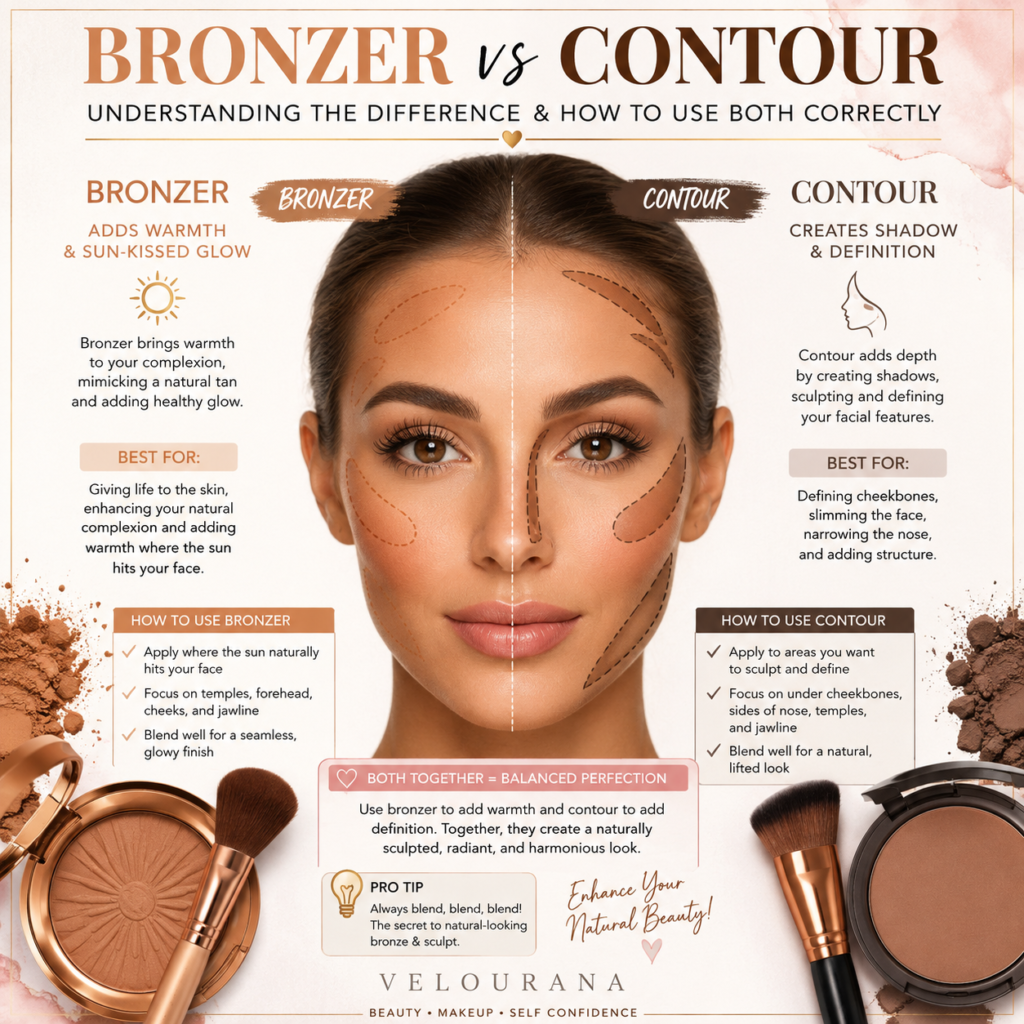
Bronzer and contour are two of the most misunderstood makeup products. Although they are often grouped together and sometimes even used interchangeably, they serve entirely different purposes. Applying bronzer where contour belongs—or contour where bronzer should go—can dramatically change the appearance of your makeup, often resulting in a look that feels unnatural or overly harsh.
Professional makeup artists understand that bronzer adds warmth, while contour creates depth. Mastering the difference between these two products is one of the easiest ways to elevate your makeup skills and achieve a naturally sculpted complexion.
This comprehensive guide explains what bronzer and contour are, how they differ, how to choose the right shades, where to apply them, and how to create balanced, flattering results for every face shape.
—
What Is Bronzer?
Bronzer is a cosmetic product designed to add warmth and dimension to the face. It mimics the healthy glow that the skin develops after spending time in the sun.
Unlike foundation, which creates an even complexion, bronzer restores warmth that can sometimes be lost after applying foundation and concealer.
A well-applied bronzer creates a fresh, healthy, sun-kissed appearance without looking orange or muddy.
—
What Is Contour?
Contour is designed to create shadows that define and sculpt facial features.
Instead of adding warmth, contour creates the illusion of depth by imitating the natural shadows that occur beneath the cheekbones, around the jawline, and along the sides of the nose.
When applied correctly, contour enhances facial structure without appearing obvious.
The goal is subtle definition rather than visible makeup.
—
Bronzer vs Contour: The Main Differences
Although they work together beautifully, bronzer and contour have very different functions.
Bronzer
- Adds warmth.
- Creates a healthy glow.
- Mimics sun-kissed skin.
- Uses warm or neutral tones.
- Applied where sunlight naturally hits the face.
Contour
- Creates shadows.
- Defines facial structure.
- Enhances bone structure.
- Uses cool or neutral tones.
- Applied where natural shadows occur.
Remembering this simple distinction helps avoid one of the most common makeup mistakes.
—
Choosing the Right Bronzer Shade
Bronzer should always complement your natural skin tone.
As a general rule, select a bronzer that is only one or two shades deeper than your natural complexion.
A bronzer that is too dark can appear muddy, while one that is too orange may look unnatural.
Warm golden or softly neutral tones generally provide the most realistic sun-kissed effect.
—
Choosing the Right Contour Shade
Contour should resemble the color of a natural shadow.
For this reason, cool-toned or neutral shades usually work best.
Avoid contour products with obvious orange or red undertones, as they may create an unnatural appearance instead of believable definition.
The ideal contour shade should blend into the skin rather than stand out.
—
Different Bronzer Formulas
Bronzers are available in several formulations.
Powder Bronzer
The most common option.
Advantages include:
- Easy blending.
- Suitable for oily and combination skin.
- Buildable application.
- Ideal for beginners.
—
Cream Bronzer
Cream bronzers provide a softer, more natural finish.
Especially suitable for:
- Dry skin.
- Mature skin.
- Natural makeup looks.
They blend seamlessly into liquid foundation.
—
Liquid Bronzer
Liquid bronzers create lightweight warmth and radiance.
Many people mix a small amount into foundation for an all-over healthy glow.
—
Different Contour Formulas
Contour products are also available in multiple textures.
Powder Contour
Easy to control and blend.
Excellent for everyday makeup.
—
Cream Contour
Produces softer, more realistic shadows.
Often preferred by professional makeup artists.
—
Stick Contour
Convenient for travel and precise application.
Allows accurate placement before blending.
—
Where to Apply Bronzer
Bronzer should be applied where sunlight naturally touches the face.
Typical areas include:
- Forehead near the hairline.
- Temples.
- Tops of the cheekbones.
- Bridge of the nose.
- Chin.
- Jawline.
Many makeup artists visualize the number “3” on each side of the face:
- Forehead.
- Cheek.
- Jawline.
This technique distributes warmth evenly.
—
Where to Apply Contour
Contour should follow the natural shadows of the face.
Common placement includes:
- Under the cheekbones.
- Along the temples.
- Sides of the forehead.
- Jawline.
- Under the chin.
- Sides of the nose.
The contour should remain subtle and well blended.
Harsh visible lines rarely look natural.
—
Face Shapes and Contouring
Different face shapes benefit from slightly different contour placement.
Round Face
Contour along the outer forehead and beneath the cheekbones to create the illusion of length and definition.
—
Square Face
Softly contour the jawline and temples to reduce angularity.
—
Oval Face
Minimal contour is usually sufficient, as oval faces are naturally balanced.
—
Heart-Shaped Face
Contour the forehead slightly while softly defining the chin to balance facial proportions.
—
Long Face
Apply contour closer to the hairline and under the chin to visually shorten facial length.
—
Choosing Bronzer and Contour According to Skin Tone
Fair Skin
Choose lighter, softly pigmented products.
Avoid deep brown shades that may appear harsh.
—
Light to Medium Skin
Neutral bronzers and cool beige contours generally work well.
—
Medium to Tan Skin
Golden bronzers provide beautiful warmth.
Medium cool-brown contours create realistic definition.
—
Deep Skin
Rich warm bronzers with red or bronze undertones complement deeper complexions beautifully.
Deep cool-brown contour shades provide subtle sculpting without appearing gray.
—
How to Apply Bronzer
A simple application method produces natural-looking results.
Step 1
Use a fluffy bronzer brush.
—
Step 2
Lightly tap away excess product.
—
Step 3
Apply bronzer gradually using circular motions.
—
Step 4
Blend thoroughly until no obvious edges remain.
Building color slowly is always easier than removing excess pigment.
—
How to Apply Contour
For contour:
Step 1
Use a smaller angled brush.
—
Step 2
Place contour directly beneath the cheekbone.
—
Step 3
Blend upward rather than downward.
Blending downward can drag the face visually.
—
Step 4
Soften every edge until the contour resembles a natural shadow.
—
Can You Use Bronzer Instead of Contour?
Sometimes, but with limitations.
A neutral bronzer can provide soft definition for everyday makeup.
However, bronzers with strong orange undertones rarely create realistic shadows.
For the most sculpted appearance, dedicated contour products remain the better choice.
—
Can You Use Contour Without Bronzer?
Absolutely.
Many natural makeup looks use contour alone for subtle definition.
Likewise, many fresh summer looks use bronzer without contour.
The two products complement each other but are not mutually dependent.
—
Common Bronzer and Contour Mistakes
Several common mistakes can affect the final result.
Avoid:
- Choosing overly orange contour shades.
- Applying bronzer too low on the cheeks.
- Creating harsh contour lines.
- Using excessive product.
- Neglecting blending.
- Applying contour with very large brushes.
- Forgetting to balance the forehead and jawline.
Soft transitions create the most believable results.
—
Brushes for Bronzer and Contour
Different brushes produce different effects.
For bronzer:
- Large fluffy brush.
- Rounded powder brush.
- Soft angled brush.
For contour:
- Small angled brush.
- Dense contour brush.
- Precision cream contour brush.
Using the correct brush often improves blending dramatically.
—
Final Thoughts
Bronzer and contour may appear similar, but they perform two very different roles in makeup. Bronzer brings warmth and vitality to the complexion, while contour creates subtle shadows that define and sculpt facial features. Understanding where each product belongs—and choosing shades that complement your skin tone—allows you to create balanced, natural-looking makeup with confidence.
Whether you prefer a soft everyday glow or more dramatic facial definition, mastering bronzer and contour techniques will help enhance your natural beauty without overpowering it. With careful placement, gradual application, and thorough blending, these products can transform your makeup routine into one that looks polished, harmonious, and effortlessly professional.
The End,
Velourana
 Discover More From Our Family of Websites
 ZodiacBearing (Astrology, Tarot, Numerology, Angel Numbers & Spiritual Guidance)
 Velourana (Beauty, Makeup, Hair Care, Skincare & Beauty Tips)
 HavenBearing (Home, Living, Organization, Décor & Everyday Inspiration)
 PawBearing (Pet Care, Dog Breeds, Animal Health, Training & Pet Products)
 PsyCatherine (Notes From the Journal of a Psychologist on Real Life)

