
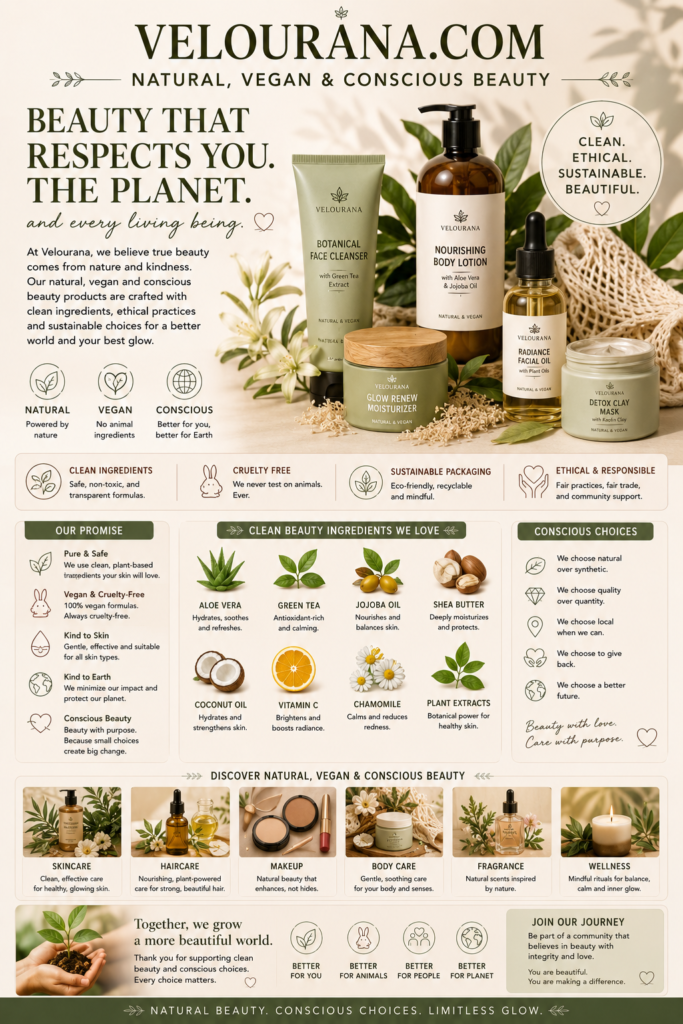
CATEGORY: Botanical Ingredients
Botanical ingredients have occupied a place in beauty traditions for centuries, long before modern cosmetic laboratories began isolating compounds, refining plant oils, stabilizing extracts, and combining botanical materials with sophisticated formulation systems. Flowers, seeds, leaves, roots, fruits, bark, herbs, and plant oils have all been incorporated into preparations intended to cleanse, soften, perfume, condition, or improve the appearance of skin and hair.
Modern botanical beauty, however, is very different from simply crushing a plant and applying it directly to the skin.
Today's cosmetic formulas can contain carefully processed botanical extracts alongside humectants, emollients, preservatives, emulsifiers, antioxidants, surfactants, and other ingredients selected to produce a stable and usable product. The plant component may be central to the formula, or it may play a supporting role within a much larger ingredient system.
Understanding this distinction helps remove much of the confusion surrounding natural beauty.
A botanical ingredient is not automatically gentle because it comes from a plant. A synthetic ingredient is not automatically harsh because it was created or modified in a laboratory. Plants contain chemically active substances, and their effects depend on concentration, extraction method, formulation, stability, and individual skin tolerance.
Botanical beauty becomes more useful when plants are appreciated for what they can realistically contribute rather than being surrounded by assumptions that natural automatically means safer, purer, or universally superior.
What Is a Botanical Ingredient?
In cosmetics, botanical ingredients are materials obtained from plants or derived through processing plant material.
They can originate from flowers, leaves, roots, stems, bark, seeds, fruits, kernels, herbs, grasses, and other botanical sources.
The resulting cosmetic ingredient can take many forms.
Plant oils are extracted from seeds, kernels, fruits, or other oil-bearing structures.
Butters are richer lipid materials obtained from particular plants.
Hydrosols are aromatic waters associated with certain distillation processes.
Extracts can be created using water, alcohol, glycerin, oils, or other extraction systems.
Powders may be produced by drying and processing plant material.
Essential oils contain concentrated volatile aromatic compounds obtained from particular plants.
These categories are not interchangeable.
A rose essential oil, rose water, rose extract, and rosehip seed oil are chemically and functionally different materials even though their names may create the impression that they belong to one simple rose ingredient family.
Understanding the form of a botanical ingredient is therefore more useful than recognizing the plant name alone.
Plant Oils Are Among the Most Familiar Botanical Ingredients
Plant oils are widely used in skincare, hair care, body products, lip products, and cosmetics.
They primarily contribute lipids that can improve softness, reduce roughness, support spreadability, and create an emollient feel.
Different oils have different fatty-acid profiles and sensory characteristics.
Some feel relatively light and absorb quickly.
Others feel richer and remain more noticeable on the surface.
This means two botanical oils can behave very differently even when both are marketed as nourishing.
Jojoba is technically a liquid wax rather than a conventional triglyceride oil and is valued for its distinctive texture and stability.
Argan oil is frequently used in facial and hair products because it provides emollience without necessarily requiring an extremely heavy finish.
Sunflower seed oil appears in many moisturizers and body products.
Sweet almond oil is used extensively in emollient formulations.
Rosehip seed oil is associated with facial oils and treatment-oriented products.
Coconut oil has a much richer profile and can behave very differently depending on whether it is used on skin, hair, or within a formulated cosmetic product.
The important point is that botanical oils should not be treated as one category with identical properties.
Botanical Butters Provide Richer Emollience
Plant butters are commonly used when a richer texture is desired.
Shea butter is one of the best-known examples and appears in moisturizers, body creams, lip products, hand treatments, hair conditioners, and styling products.
Cocoa butter is another familiar botanical lipid used in rich cosmetic formulations.
Mango butter and other plant butters can provide additional options for formulators seeking particular textures and sensory characteristics.
These ingredients can improve softness and reduce the dry, rough feeling of skin by supplying emollient lipids and helping reinforce the occlusive character of a formula.
However, richer does not automatically mean better.
Someone with very dry body skin may enjoy a dense butter-based cream.
The same texture may feel excessive on an oily face.
Fine hair may become weighed down by a butter-rich styling product that works beautifully on coarse curls.
Botanical ingredients still need to be matched to the person and the application area.
Aloe Vera Illustrates the Appeal of Botanical Skincare
Aloe vera has become strongly associated with soothing and hydrating cosmetic products.
It appears in gels, moisturizers, after-sun products, masks, body lotions, cleansers, scalp products, and many other formulations.
Its popularity demonstrates an important feature of botanical beauty: certain plants develop strong cultural identities within cosmetics.
Aloe is associated with cooling and comfort.
Rose is associated with softness and luxury.
Chamomile is associated with calming care.
Green tea is associated with antioxidant skincare.
These associations can have a reasonable formulation basis, but the presence of a familiar botanical name does not reveal how much of the ingredient is present or how the complete formula will behave.
An aloe product can contain many other ingredients that determine its texture, preservation, stability, and overall effect.
The entire ingredient system matters.
Green Tea Has Become a Modern Botanical Favorite
Tea-derived ingredients are widely used in contemporary skincare.
Green tea extracts are particularly popular because tea naturally contains polyphenolic compounds that have attracted substantial cosmetic and scientific interest.
In a well-designed formula, green tea can contribute to an antioxidant-focused skincare strategy.
However, the phrase contains green tea does not tell the consumer the concentration, extraction quality, stability, or delivery characteristics of the ingredient.
This principle applies broadly across botanical cosmetics.
Recognizing a plant is only the beginning.
The formulation determines whether the ingredient is present in a meaningful and stable form.
Chamomile Is More Complex Than Its Gentle Reputation
Chamomile is frequently associated with soothing products and sensitive-skin marketing.
It can appear as an extract, oil-derived material, or component of various botanical blends.
Its reputation illustrates both the appeal and limitation of plant-based skincare.
A botanical can have properties that make it useful in formulas designed for comfort while still not being universally tolerated by every individual.
Plants contain biologically active substances.
People can react differently to them.
Someone with sensitive skin should therefore evaluate a chamomile-containing product according to the complete formula and personal response rather than assuming the presence of chamomile guarantees gentleness.
Natural ingredients deserve the same thoughtful evaluation as any other cosmetic material.
Calendula Is Commonly Associated With Comfort-Focused Formulas
Calendula appears in creams, balms, oils, baby-care products, and products marketed toward dry or delicate skin.
It is frequently used within formulations designed to create a soothing or comforting identity.
As with other botanical extracts, the final product matters more than the ingredient name alone.
A calendula balm built around rich oils and waxes will behave differently from a lightweight calendula lotion.
A cleanser containing calendula will have a completely different purpose from a leave-on facial cream containing the same botanical.
The plant name does not define the product category.
Formulation context does.
Rose Can Appear in Several Very Different Forms
Rose demonstrates why botanical terminology requires precision.
Rose water can contribute scent and a pleasant sensory character to certain products.
Rose extracts may be incorporated for other formulation purposes.
Rose essential oil contains concentrated aromatic components.
Rosehip seed oil comes from the fruit and seeds of rose plants and is a lipid ingredient with a very different composition.
These materials should not be treated as interchangeable simply because they share the word rose.
The same principle applies to many plants.
Orange fruit extract, orange peel oil, and orange flower water are different ingredients.
A botanical name may represent an entire family of cosmetic materials.
Consumers interested in natural beauty benefit from learning to distinguish these forms.
Oat-Derived Ingredients Can Support Comfort-Oriented Skincare
Oat ingredients appear frequently in products designed for dry, sensitive, or uncomfortable-feeling skin.
Depending on processing and formulation, oat-derived materials can contribute to products intended to support a softer and more comfortable skin feel.
They may appear in cleansers, moisturizers, bath products, body lotions, and specialized formulas.
Again, the complete product matters.
An oat cleanser can still be too cleansing for a particular person.
An oat cream may still contain another ingredient that someone dislikes.
Botanical identity cannot guarantee individual compatibility.
It provides information about one part of the formula.
Centella Has Become Prominent in Contemporary Skincare
Centella asiatica has become increasingly visible in modern beauty, particularly in products emphasizing soothing, hydration, and barrier-conscious routines.
The plant may appear under several ingredient names or through extracts and isolated components associated with it.
Its popularity shows how botanical beauty continues to evolve.
Natural beauty is not limited to traditional Western herbs or familiar kitchen ingredients.
Modern skincare draws on botanical traditions and plant research from many regions.
As global beauty markets interact, ingredients that were once strongly associated with particular local traditions can become internationally recognized.
This expansion creates greater variety but also increases the importance of accurate information.
Popularity should not be confused with universal suitability.
Licorice Root Is Used in Tone-Focused Formulas
Licorice-derived ingredients appear in products designed around brightness, visible discoloration, and overall skin tone.
Different components associated with licorice can be used depending on the formulation.
This illustrates another important aspect of botanical cosmetics.
Sometimes the useful cosmetic material is not simply a crude plant extract.
Specific components can be isolated, standardized, or processed to provide more predictable formulation characteristics.
Modern botanical skincare therefore exists on a spectrum.
At one end are relatively traditional oils, waters, and powders.
At the other are highly refined botanical-derived compounds incorporated into sophisticated cosmetic systems.
Both can legitimately belong to plant-focused beauty.
Willow Bark Demonstrates Why Natural Does Not Mean Inactive
Willow bark is often included in botanical formulas associated with clarifying or exfoliation-oriented skincare.
Its reputation provides a useful reminder that plants can contain chemically active substances.
Natural ingredients are chemistry.
A leaf, bark, seed, or flower is composed of many chemical compounds.
Extraction concentrates or separates some of these materials.
Cosmetic formulation then determines how they are delivered.
The idea that natural beauty exists outside chemistry is therefore misleading.
Botanical skincare is chemistry derived partly from biological materials.
Understanding this makes it easier to appreciate plants without romanticizing them.
Essential Oils Require Particular Care
Essential oils are among the most concentrated and misunderstood botanical ingredients used in beauty.
They contain volatile aromatic compounds extracted from plants and can provide fragrance and other formulation characteristics.
Because they are concentrated, they should not be treated as though they are equivalent to gentle plant waters or ordinary carrier oils.
Lavender essential oil is not the same as lavender-infused oil.
Peppermint essential oil is not the same as peppermint leaves in water.
Citrus essential oils are not equivalent to eating citrus fruit.
The concentration and route of exposure are completely different.
Some essential oils can irritate sensitive skin, and certain aromatic compounds may cause reactions in susceptible individuals.
The presence of essential oils should therefore be considered according to formulation, concentration, application area, and individual tolerance.
Botanical beauty becomes safer and more sophisticated when concentrated plant materials are respected rather than assumed to be harmless.
Fragrance Can Be Botanical and Still Be Fragrance
Natural beauty marketing sometimes distinguishes strongly between synthetic fragrance and scent derived from essential oils.
From the perspective of someone whose skin reacts to fragranced products, the distinction may not solve the practical problem.
A naturally aromatic ingredient can still contain fragrance compounds.
Someone who enjoys scented skincare may appreciate botanical aromas.
Someone who prefers fragrance-free products may need to evaluate essential oils and fragrant extracts as well as conventional perfume ingredients.
Natural origin does not make scent invisible to the skin.
Botanical Extracts Depend on Extraction Methods
A plant can yield different materials depending on how it is processed.
Water extracts may capture certain water-soluble components.
Oil infusions extract compounds compatible with the lipid medium.
Alcohol-based extraction can produce a different profile.
Glycerin and other solvents can also be used.
Temperature, processing time, plant quality, storage, and standardization can influence the resulting material.
This is why the phrase botanical extract is only a broad description.
Two extracts bearing the same plant name may not be chemically identical.
Cosmetic formulators select particular materials according to the desired function, stability, compatibility, and manufacturing requirements.
Concentration Matters
A botanical ingredient appearing on a label does not automatically mean it is present at a high concentration.
Cosmetic formulas can contain dozens of ingredients.
Some are needed in substantial amounts.
Others perform effectively at low levels.
A botanical extract may be present as a supporting ingredient rather than the foundation of the formula.
This is not necessarily deceptive.
Many cosmetic ingredients are intended to function at relatively small concentrations.
The problem occurs when marketing creates the impression that one attractive botanical is responsible for the entire product while the formulation itself tells a more complex story.
Consumers can benefit from viewing botanical claims as part of the formula rather than as proof of performance by themselves.
Botanical Ingredients Need Preservation Too
A common misconception suggests that natural skincare should be preservative-free.
Water-containing cosmetic products can support microbial growth if they are not preserved appropriately.
Botanical materials do not eliminate this problem.
In some cases, plant extracts can make preservation more challenging because they introduce additional organic material into the formulation.
Effective preservation is therefore an important part of responsible cosmetic development.
A preservative does not automatically make a botanical product less natural in any meaningful practical sense.
It can make the finished formula safer and more stable during normal use.
Homemade Botanical Beauty Has Different Risks
DIY beauty recipes can appear attractive because they seem simple, inexpensive, and natural.
Fresh fruit, herbs, teas, oils, honey, and other kitchen ingredients are frequently suggested for direct cosmetic use.
The difficulty is that home preparations do not automatically have the stability, preservation, controlled concentration, or testing associated with properly manufactured cosmetics.
A fresh water-based mixture can become contaminated.
Acidity can be unpredictable.
Essential oils can be added at inappropriate concentrations.
Raw plant materials can contain compounds that irritate the skin.
This does not mean every traditional preparation is inherently dangerous.
It means homemade and commercially formulated botanical skincare should not be treated as equivalent.
Plant Oils Should Be Selected According to Skin Feel
Facial oils are often discussed through claims about which oil is universally best for a skin type.
Real experience is more individual.
Some people enjoy lightweight oils that disappear relatively quickly.
Others prefer richer oils.
Some use oil only on dry areas.
Others dislike facial oils completely.
A plant oil can improve softness without replacing every function of a moisturizer.
Water-based hydration and lipid emollience are different aspects of formulation.
For dry skin, oil may work well over moisturizer.
For someone else, a complete cream may already provide enough lipids.
Botanical beauty should remain flexible.
Botanical Ingredients in Hair Care Serve Different Purposes
Plant-derived materials are not limited to facial skincare.
Hair products commonly contain botanical oils, butters, extracts, proteins, gums, and aromatic materials.
Argan, coconut, jojoba, avocado, sunflower, and other oils can appear in conditioners, masks, serums, and styling products.
Shea butter can contribute richness to products designed for coarse or textured hair.
Aloe-based ingredients may appear in lightweight styling formulas.
Botanical extracts can support product positioning and sensory characteristics.
The important question remains whether the complete formula suits the hair.
A product containing a fashionable oil can still be too heavy for fine hair.
A botanical conditioner can still provide insufficient slip for dense curls.
Ingredient origin does not replace performance.
Botanical Ingredients in Body Care Can Create Rich Sensory Experiences
Body care provides an ideal environment for many botanical ingredients because larger areas of skin often tolerate richer textures than the face.
Plant oils and butters can create substantial emollience.
Botanical extracts can contribute to the identity of lotions, creams, hand products, and bath formulas.
Aromatic plant ingredients can create distinctive sensory experiences.
This is one reason botanical beauty is strongly associated with spas and ritual.
Texture, scent, massage, and plant imagery combine to create an experience extending beyond basic moisturization.
There is nothing inherently wrong with this sensory dimension.
Beauty products can be functional and enjoyable simultaneously.
The important distinction is between sensory pleasure and evidence-based claims.
Botanical Lip Care Often Relies on Oils, Butters, and Waxes
Lip products frequently contain plant oils and butters because these ingredients can provide glide, softness, and occlusion.
Shea butter, cocoa butter, castor oil, jojoba-derived materials, and other botanical lipids may appear in balms and lip treatments.
Plant-derived waxes can also be used in certain formulas.
Someone seeking vegan beauty may need to evaluate waxes and other ingredients separately because botanical and animal-derived materials can appear in the same product category.
A botanical label alone does not establish vegan status.
Plant-Based Makeup Can Still Be Highly Technical
Botanical beauty does not stop at skincare.
Foundations, tinted moisturizers, lip products, cream blushes, primers, and other cosmetics can contain plant oils, waxes, extracts, and powders.
However, color cosmetics require complex formulation to achieve pigmentation, stability, wear, texture, preservation, and compatibility.
A foundation containing botanical ingredients is still a technologically formulated cosmetic.
This is a strength rather than a contradiction.
Plant-derived ingredients and modern cosmetic science can work together.
Natural beauty does not need to reject technology in order to retain a meaningful botanical identity.
Natural Does Not Automatically Mean Organic
Natural and organic are often used together in beauty marketing, but they are different concepts.
A botanical ingredient can be plant-derived without being organically cultivated.
Organic standards concern agricultural and certification practices according to specific systems.
A formula containing organic botanical ingredients can also contain other ingredients that are not organic.
The exact certification and product standard matter.
Consumers interested specifically in organic beauty should therefore look beyond general natural language.
Botanical Does Not Automatically Mean Vegan
Plants themselves are not animal-derived, but a botanical-focused product can contain additional ingredients from animal sources.
A cream can contain several plant extracts while also containing a non-vegan ingredient.
A lip balm can contain botanical oils alongside beeswax.
The botanical character of a product therefore does not determine its vegan status.
Someone seeking vegan botanical beauty needs to verify the complete formula.
Botanical Does Not Automatically Mean Cruelty-Free
Ingredient origin and animal-testing policy are separate questions.
A product can contain predominantly plant-derived ingredients while being associated with a company that does not meet a consumer's cruelty-free standard.
Conversely, a cruelty-free product can contain many synthetic ingredients.
Natural beauty and cruelty-free beauty can overlap, but neither guarantees the other.
Keeping these categories separate creates more accurate ethical purchasing.
Sustainability Requires More Than Plant Origin
Plant-based ingredients are sometimes assumed to be automatically environmentally preferable.
Agriculture requires land, water, energy, processing, and transportation.
Some botanicals may be abundant and efficiently produced.
Others can create sustainability challenges depending on cultivation methods, geographic concentration, harvesting practices, and demand.
Wild harvesting can create pressure on plant populations when poorly managed.
Intensive cultivation can affect ecosystems.
Extraction can require significant resources.
A plant origin therefore does not automatically guarantee a low environmental impact.
Responsible sourcing matters.
Traceability Can Strengthen Botanical Beauty
Knowing where ingredients come from can improve transparency.
Some brands provide information about agricultural regions, cooperatives, extraction methods, or supplier standards.
This can be particularly valuable for botanical ingredients closely associated with specific regions or communities.
Traceability can help consumers understand the journey between plant cultivation and finished cosmetic product.
However, attractive stories should still be evaluated critically.
A beautiful photograph of a farm is not automatically proof of comprehensive sustainability.
Meaningful transparency requires information rather than imagery alone.
Seasonal and Agricultural Variation Can Affect Botanicals
Plants are biological materials.
Their composition can vary according to variety, climate, soil, harvest time, growing conditions, and processing.
Cosmetic ingredient suppliers can use standardization and quality-control procedures to reduce this variability.
This is one reason commercial botanical extracts can differ significantly from homemade plant preparations.
Modern formulation attempts to create predictable products from naturally variable raw materials.
The combination of nature and technology is therefore central to contemporary botanical beauty.
Packaging Protects Botanical Formulas
Light, air, temperature, and repeated contamination can affect cosmetic ingredients.
Some botanical compounds are particularly vulnerable to oxidation or degradation.
Packaging can help protect the formula.
Opaque containers may reduce light exposure.
Pumps can limit repeated contact.
Air-restrictive systems can support certain sensitive formulations.
Antioxidants and other stabilizing ingredients may also be included.
A beautiful botanical formula still needs appropriate packaging if its qualities are to remain stable throughout normal use.
Freshness Is Not Always an Advantage
Natural beauty marketing sometimes associates freshness with purity.
In cosmetics, extreme freshness can create practical challenges.
A freshly prepared water-based product without adequate preservation may have a short and unpredictable usable life.
A professionally formulated product designed to remain stable for months can be safer and more convenient.
Stability is not evidence that a product is somehow less authentic.
It is part of cosmetic engineering.
Patch Testing Can Be Sensible With Botanical Products
People sometimes patch test potent synthetic treatments but assume botanical products can be applied freely.
Sensitive individuals can react to plant extracts, essential oils, fragrances, or other naturally derived substances.
Introducing a new product cautiously can therefore be useful regardless of whether its ingredients are botanical or synthetic.
The skin responds to chemical substances.
It does not respond to marketing categories.
More Botanicals Do Not Automatically Create a Better Formula
A long list of plant extracts can look impressive.
It can also make a formula unnecessarily complicated.
One carefully selected botanical at an appropriate concentration may be more useful than twenty extracts included largely for label appeal.
The number of plants in a product should not be treated as a quality score.
Formulation quality depends on how ingredients work together.
Minimal Botanical Formulas Can Be Effective
Some consumers prefer products with relatively short ingredient lists.
This can make formulas easier to understand and may be useful for individuals who prefer reducing exposure to unnecessary fragrance or multiple botanical extracts.
However, a short ingredient list is not automatically superior.
Complex formulations can be carefully engineered and highly effective.
The goal is not ingredient-count minimalism for its own sake.
It is purposeful formulation.
Botanical Beauty Can Combine Tradition With Modern Science
Many plants used in contemporary cosmetics have long histories of traditional use.
Modern science can investigate their composition, stability, extraction, and cosmetic potential in greater detail.
These two perspectives do not need to compete.
Traditional use can inspire investigation.
Scientific research can clarify which components are useful, how they behave, and what limitations exist.
The result can be a more mature approach to natural beauty.
Plants can be respected culturally without turning tradition into proof of every modern marketing claim.
Science can evaluate botanical ingredients without dismissing the historical knowledge that drew attention to them.
The Best Botanical Ingredient Is the One That Fits the Formula
Consumers naturally become interested in individual ingredients.
Green tea becomes fashionable.
Centella becomes fashionable.
Rosehip becomes fashionable.
Aloe becomes fashionable.
Another plant eventually takes its place.
Yet skincare does not succeed because one ingredient is currently popular.
The formula succeeds when its components work together and suit the person using it.
A beautifully formulated moisturizer with a modest botanical profile may outperform a product containing dozens of fashionable extracts.
A simple plant oil may be perfect for one person's routine and completely unnecessary for another.
The product should be evaluated as a whole.
Botanical Beauty Should Encourage Curiosity Rather Than Fear
Natural beauty is at its best when it encourages people to understand ingredients, sourcing, formulation, and the extraordinary chemical diversity of plants.
It becomes less useful when it divides cosmetics into supposedly pure natural ingredients and supposedly dangerous synthetic ones.
Nature is chemically complex.
Cosmetic laboratories work with that complexity.
Extracts are processed.
Oils are refined.
Formulas are preserved.
Ingredients are stabilized.
Textures are engineered.
These processes allow botanical materials to become practical modern cosmetics.
The relationship between plants and science is not a contradiction.
It is the foundation of much contemporary botanical beauty.
A Balanced Botanical Routine Does Not Need to Be Entirely Botanical
Someone who loves botanical ingredients does not need every component of every product to come from a plant.
A moisturizer may combine botanical oils with laboratory-developed humectants and emulsifiers.
A serum may contain a plant extract alongside established synthetic ingredients.
A cleanser may use plant-derived surfactants within a carefully preserved system.
Hybrid formulation can offer excellent performance.
The goal should be a product that works and aligns with personal preferences rather than an arbitrary pursuit of botanical purity.
Botanical Ingredients Can Make Beauty Both Functional and Enjoyable
Plants contribute more than one kind of value to cosmetics.
Some provide useful lipids.
Some contain compounds of cosmetic interest.
Some contribute texture.
Some provide scent.
Some create color or sensory character.
Others connect a product with cultural traditions, geographic regions, or personal rituals.
These qualities can coexist.
A botanical product does not need to make extraordinary promises to be worthwhile.
A body cream can simply feel beautiful.
A facial oil can provide enjoyable emollience.
A botanical cleanser can offer an appealing sensory experience while performing its basic cleansing function.
Beauty does not need to become medicine in order to have value.
Understanding Botanicals Creates Better Natural Beauty Choices
Botanical ingredients deserve neither automatic worship nor automatic dismissal.
Plants are sophisticated chemical systems containing compounds that can be useful, aromatic, irritating, soothing, unstable, nourishing, sensitizing, protective, or simply pleasant depending on the material and its use.
Modern formulation allows selected botanical materials to be transformed into stable, practical cosmetics.
The consumer benefits most from understanding the complete product.
What form of botanical is being used?
What role does it play?
Is the formula appropriate for the skin or hair?
Does the product contain fragrance or essential oils?
Does it require separate cruelty-free or vegan verification?
Does the sourcing align with personal sustainability priorities?
These questions create a far more useful approach than simply asking whether a product is natural.
Botanical beauty becomes richer when the plants themselves are taken seriously.
They are not decorative symbols of purity.
They are functional raw materials with complex chemistry, histories, limitations, and possibilities.
When that complexity is respected, botanical ingredients can occupy an important place in modern beauty without requiring exaggerated claims or fear of cosmetic science.
THE END VELOURANA
 Discover More From Our Family of Websites
 ZodiacBearing (Astrology, Tarot, Numerology, Angel Numbers & Spiritual Guidance)
 Velourana (Beauty, Makeup, Hair Care, Skincare & Beauty Tips)
 HavenBearing (Home, Living, Organization, Décor & Everyday Inspiration)
 PawBearing (Pet Care, Dog Breeds, Animal Health, Training & Pet Products)
 PsyCatherine (Notes From the Journal of a Psychologist on Real Life)

