
CATEGORY: Makeup Techniques
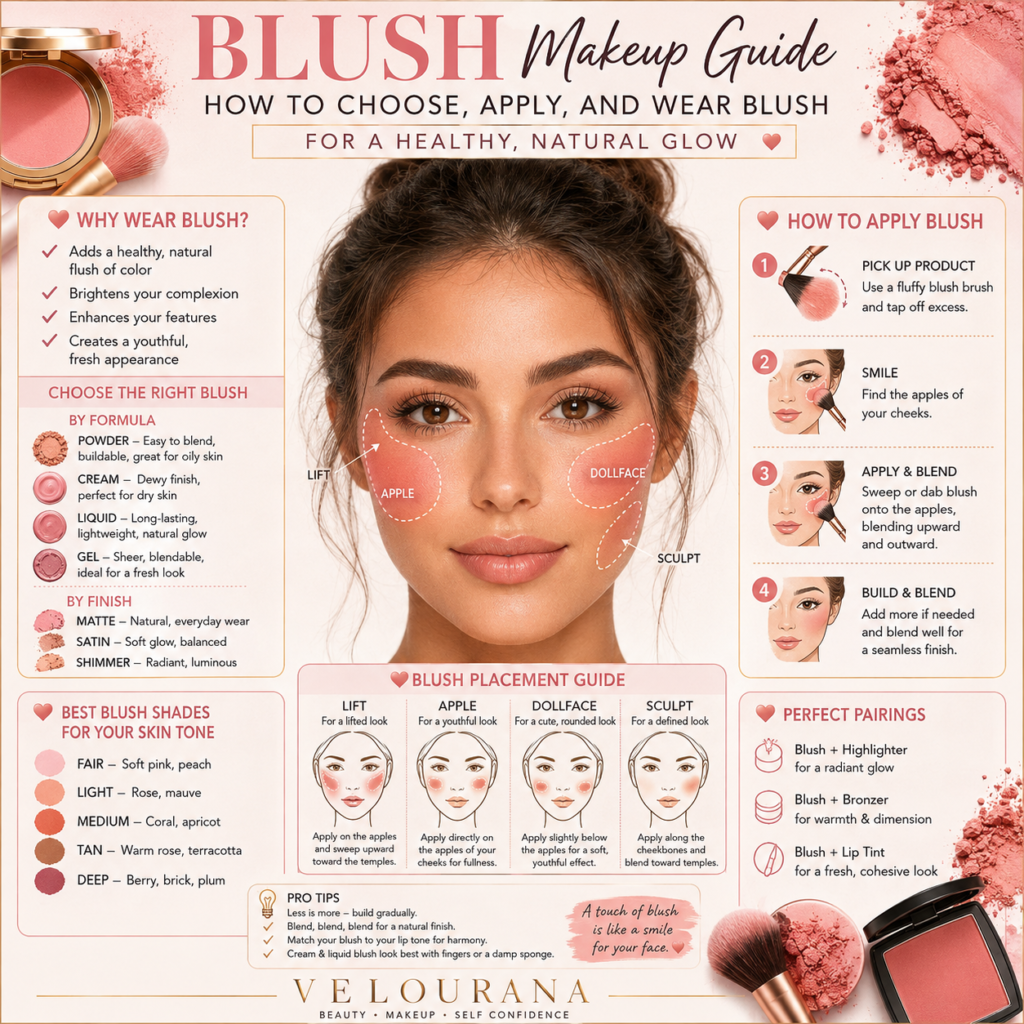
Blush is one of the oldest beauty products in history, yet it remains one of the most transformative cosmetics in modern makeup. A touch of blush can instantly brighten the complexion, restore youthful color, and create the appearance of healthy, radiant skin. Applied correctly, blush makes the face look fresh, vibrant, and naturally alive. Applied incorrectly, however, it can overpower the makeup or create an unnatural appearance.
Today’s beauty industry offers an incredible variety of blush formulas, finishes, and shades designed for every skin tone, skin type, and makeup style. Understanding how these products work—and where to apply them—is the key to achieving flattering, balanced results.
This comprehensive guide explores everything you need to know about blush, from choosing the right formula and color to mastering professional application techniques.
—
What Is Blush?
Blush is a cosmetic product used to add color to the cheeks, recreating the natural flush that appears after exercise, excitement, or exposure to fresh air.
While foundation and concealer even out the complexion, they also reduce much of the face’s natural color. Blush restores this healthy warmth and dimension, helping the complexion appear lively rather than flat.
Whether you prefer a barely-there tint or a more dramatic pop of color, blush plays an essential role in balancing the overall makeup look.
—
Why Use Blush?
Blush offers far more than simply adding color.
Its benefits include:
- Restoring a healthy complexion.
- Creating a youthful appearance.
- Adding dimension to the face.
- Softening heavy foundation.
- Enhancing facial balance.
- Complementing bronzer and contour.
- Creating a natural glow.
Many makeup artists consider blush one of the most important finishing touches because it brings life back to the face after foundation application.
—
Different Types of Blush
Blush is available in several formulas, each providing a different finish and application experience.
—
Powder Blush
Powder blush remains the most popular option.
Advantages include:
- Easy application.
- Buildable color.
- Suitable for oily and combination skin.
- Wide shade selection.
- Long-lasting wear.
Powder blush is often recommended for beginners because it is relatively easy to blend and control.
—
Cream Blush
Cream blushes have become increasingly popular due to their natural finish.
Benefits include:
- Skin-like appearance.
- Hydrating texture.
- Seamless blending.
- Fresh, radiant finish.
Cream formulas work particularly well for dry and mature skin.
—
Liquid Blush
Liquid blush provides lightweight, long-lasting color.
It is known for:
- Highly pigmented formulas.
- Natural-looking flush.
- Excellent longevity.
- Buildable intensity.
Because liquid blush is often very concentrated, only a small amount is usually needed.
—
Gel Blush
Gel blushes create a translucent wash of color.
Advantages include:
- Lightweight feel.
- Fresh appearance.
- Comfortable wear.
- Natural finish.
They are especially popular during warmer months.
—
Stick Blush
Stick blush combines portability with convenience.
Benefits include:
- Easy travel.
- Direct application.
- Creamy texture.
- Quick touch-ups.
Many stick blushes can also be used on the lips, making them versatile additions to a makeup bag.
—
Understanding Blush Finishes
Different finishes produce different makeup styles.
—
Matte Blush
Contains no shimmer.
Creates a natural, sophisticated appearance.
Ideal for everyday makeup.
—
Satin Blush
Offers a subtle sheen without visible sparkle.
Provides a healthy-looking complexion.
Suitable for nearly all skin types.
—
Shimmer Blush
Contains light-reflecting particles.
Adds radiance while enhancing cheekbones.
Often preferred for evening makeup.
—
Dewy Blush
Usually found in cream or liquid formulas.
Creates a fresh, glowing complexion.
Especially flattering on dry skin.
—
Choosing Blush According to Skin Tone
Selecting the correct shade is just as important as choosing the right formula.
—
Fair Skin
Soft shades generally look the most natural.
Popular options include:
- Baby pink.
- Soft peach.
- Light coral.
- Rose.
Avoid overly dark shades that may overwhelm the complexion.
—
Light to Medium Skin
Many shades work beautifully, including:
- Warm peach.
- Coral.
- Soft berry.
- Warm pink.
—
Olive Skin
Olive complexions often pair well with:
- Apricot.
- Warm coral.
- Terracotta.
- Dusty rose.
These shades complement the skin’s natural undertones.
—
Tan Skin
Richer colors become especially flattering.
Examples include:
- Warm rose.
- Deep coral.
- Burnt peach.
- Cinnamon.
—
Deep Skin
Highly pigmented shades provide beautiful contrast.
Popular choices include:
- Berry.
- Plum.
- Rich terracotta.
- Deep coral.
- Brick red.
—
Choosing Blush According to Skin Type
Dry Skin
Cream and liquid blushes generally provide the most natural finish.
They blend easily without emphasizing dryness.
—
Oily Skin
Powder blush usually performs best.
It helps control shine while providing long-lasting color.
—
Combination Skin
Both powder and cream formulas can work well depending on personal preference.
Some people even layer cream blush beneath powder blush for extended wear.
—
Mature Skin
Cream formulas often produce softer, fresher results because they do not settle into fine lines as readily as heavier powders.
—
Where Should Blush Be Applied?
Blush placement significantly affects the overall appearance of the face.
—
Apples of the Cheeks
Applying blush to the rounded part of the cheeks creates a youthful, cheerful appearance.
This classic placement remains one of the most popular techniques.
—
Higher Cheekbones
Applying blush slightly higher creates a lifting effect.
Many modern makeup artists favor this placement because it elongates the face.
—
Draping Technique
Draping extends blush from the cheeks toward the temples.
This technique creates soft sculpting while replacing some contour in natural makeup looks.
—
Across the Nose
Applying a small amount of blush across the bridge of the nose creates a fresh, sun-kissed appearance.
This technique has become especially popular in contemporary beauty trends.
—
Face Shapes and Blush Placement
Round Face
Apply blush slightly above the apples of the cheeks and blend upward.
This visually lengthens the face.
—
Square Face
Soft circular placement helps balance angular facial features.
—
Oval Face
Most blush placements work beautifully on oval faces due to their naturally balanced proportions.
—
Heart-Shaped Face
Apply blush slightly lower on the cheeks to balance a wider forehead.
—
Long Face
Focus blush horizontally across the cheeks rather than blending too high toward the temples.
This helps create visual width.
—
How to Apply Powder Blush
Step 1
Choose a soft blush brush.
—
Step 2
Lightly dip the brush into the product.
—
Step 3
Tap away excess powder.
—
Step 4
Smile gently to locate the cheeks if using traditional placement.
—
Step 5
Blend outward using light circular motions.
Building color gradually produces the most natural finish.
—
How to Apply Cream or Liquid Blush
Cream and liquid blushes are best applied before setting powder.
They may be blended using:
- Fingertips.
- Makeup sponge.
- Synthetic brush.
Use gentle tapping motions rather than rubbing to maintain smooth foundation underneath.
—
Can Blush Be Layered?
Yes.
Many makeup artists layer different blush formulas for longer wear.
For example:
- Apply cream blush.
- Set lightly with powder.
- Apply powder blush in a matching shade.
This technique helps lock color in place throughout the day.
—
Common Blush Mistakes
Several application errors can reduce the overall quality of makeup.
Common mistakes include:
- Applying too much product.
- Choosing an unsuitable shade.
- Placing blush too low on the face.
- Forgetting to blend.
- Using heavily glittered blush for daytime makeup.
- Applying powder blush over unset cream products.
Using a light hand usually produces the most flattering results.
—
Blush and the Rest of Your Makeup
Blush should complement—not compete with—the rest of your makeup.
When wearing bold eye makeup, softer blush often creates better balance.
Conversely, minimal eye makeup pairs beautifully with slightly more noticeable blush.
Lip color, bronzer, and blush should harmonize with one another to create a cohesive look.
—
How Long Does Blush Last?
Powder blush generally remains usable for two to three years when stored properly.
Cream and liquid blushes usually have a shelf life of approximately 12 to 24 months after opening.
Discard blush if you notice:
- Changes in smell.
- Separation.
- Mold.
- Unusual texture.
- Skin irritation.
—
Building a Blush Collection
A practical blush collection might include:
- Soft pink for everyday makeup.
- Peach for warm natural looks.
- Coral for summer.
- Berry for evening makeup.
- Cream blush for radiant skin.
- Powder blush for long-lasting wear.
This small selection provides versatility without requiring dozens of products.
—
Final Thoughts
Blush is much more than a simple pop of color—it restores vitality, balance, and dimension to the face. By selecting shades that complement your skin tone, choosing formulas suited to your skin type, and applying blush with thoughtful placement, you can achieve a naturally healthy complexion that enhances every makeup look.
Whether you prefer a barely noticeable flush or a bold statement, blush remains one of the easiest ways to brighten your appearance and create makeup that feels fresh, harmonious, and beautifully polished.
The End,
Velourana
 Discover More From Our Family of Websites
 ZodiacBearing (Astrology, Tarot, Numerology, Angel Numbers & Spiritual Guidance)
 Velourana (Beauty, Makeup, Hair Care, Skincare & Beauty Tips)
 HavenBearing (Home, Living, Organization, Décor & Everyday Inspiration)
 PawBearing (Pet Care, Dog Breeds, Animal Health, Training & Pet Products)
 PsyCatherine (Notes From the Journal of a Psychologist on Real Life)

