CATEGORY: Brassiness
Brassiness often seems to arrive suddenly. One week, blonde highlights still look creamy and dimensional; shortly afterward, they appear distinctly yellow. An ash brunette begins revealing copper through the mid-lengths. Gray or silver hair develops a warm veil that reduces its characteristic brightness. The transformation can feel abrupt, but the processes behind it have usually been developing gradually.
Hair color is never completely static. From the moment a coloring service is completed, the finished shade begins interacting with water, shampoo, heat, ultraviolet light, minerals, styling products, environmental particles, and the condition of the hair itself. Corrective pigments slowly diminish. The underlying warmth revealed during lightening becomes easier to see. Porous areas release color faster than healthier areas. Deposits can alter reflection and make the shade appear duller or warmer.
This is why sophisticated brassiness care begins long before a bottle of purple shampoo is opened.
Tonal products are useful, but they are only one part of maintaining color. The broader objective is to understand what the hair is doing, identify the actual unwanted undertone, protect the integrity of the fiber, and use corrective pigment with enough restraint to preserve dimension rather than replacing one imbalance with another.
Brassiness Begins with the Architecture of Hair Color
Every successful hair color is built upon a foundation.
When natural hair is lightened, its visible pigment changes progressively. Dark hair does not usually travel directly from brown to pale blonde. As pigment is removed, warmer underlying colors emerge. Depending on the starting depth, the hair may reveal red, orange, gold, yellow, or combinations of these tones before reaching the desired lightness.
A colorist planning a cool result must therefore work with two separate questions: how light the hair needs to become and how the exposed undertone should be refined once that level has been reached.
These questions are related but not identical.
Lightening controls depth. Toning controls the visual balance of the remaining warmth.
If hair is lifted to a pale yellow foundation, violet-based refinement may produce a cool or neutral blonde. If the foundation remains strongly orange, violet alone cannot create the same result. The underlying depth may simply be too dark for the intended pale shade.
This distinction explains many disappointing attempts at home brassiness correction. A person sees orange and assumes that a stronger toning shampoo will eventually make the hair ash blonde. Yet a deposit-only toning product cannot necessarily substitute for additional controlled lift when the foundation itself is too dark.
The opposite problem can occur as well. Hair that has already reached sufficient lightness may be repeatedly bleached because warmth is mistaken for darkness. This exposes the fiber to unnecessary chemical stress when the issue could potentially have been addressed through tonal refinement instead.
Understanding whether a problem involves depth, tone, or both is fundamental.
Artificial color adds another layer of complexity. Previously dyed brunette hair that is later lightened may expose residual warm artificial pigment as well as natural underlying pigment. Multiple coloring histories can create different responses through different sections of the hair. The result may be yellow at the ends, orange through the middle, and darker near the roots.
Brassiness is therefore rarely just “too much yellow.” It is the visible outcome of a color history.
The Color Wheel Matters, but Hair Is More Complicated Than a Diagram
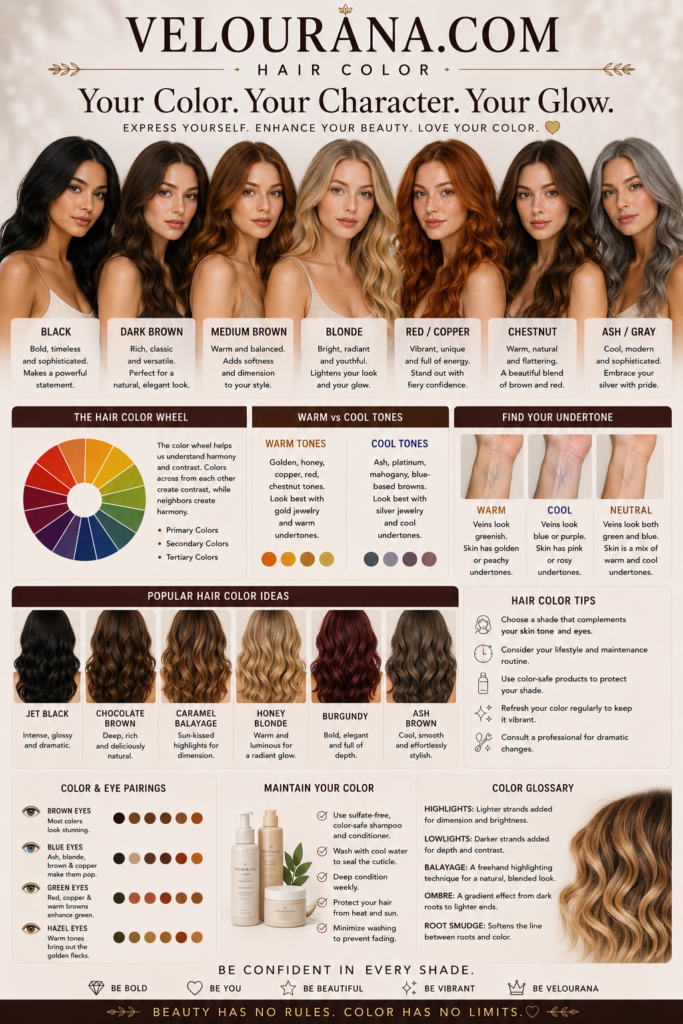
Complementary-color theory provides a useful framework for neutralization. Violet counterbalances yellow. Blue counterbalances orange. Green counterbalances red.
That principle is straightforward. Applying it beautifully requires more judgment.
A very pale yellow blonde does not necessarily need an intensely purple treatment. A small amount of violet may be sufficient to create a clean neutral result. Too much can make the hair appear lavender, gray, smoky, or dull.
Orange warmth generally responds more logically to blue-based correction. Yet orange exists in different intensities and depths. A subtle golden-orange cast in dark blonde hair is not equivalent to the saturated orange exposed when dark hair has been insufficiently lightened.
Red warmth creates still another situation. Green can neutralize red in color theory, but indiscriminate green pigment on hair can create unattractive muddy effects. Professional formulation becomes increasingly valuable when strong red or mixed undertones are involved.
The desired result must also be considered. Someone seeking icy platinum has a different tolerance for warmth from someone wearing champagne blonde. A beige blonde depends on carefully controlled warmth. Caramel highlights intentionally contain gold. Chestnut brunette may contain red or copper dimensions by design.
Neutralization should therefore be proportional to the desired aesthetic.
Color that is technically cool is not automatically beautiful. Excessive neutralization can remove luminosity and dimensional contrast, particularly when every strand is repeatedly saturated with corrective pigment.
The finest color often contains controlled tension between warm and cool elements. Neutral roots may transition into beige lengths. Cool brunette may contain softly warmer highlights. Silver may retain subtle natural variation instead of becoming uniformly blue-violet.
Brassiness care should preserve this complexity rather than flatten it.
Why Purple Shampoo Sometimes Works Brilliantly and Sometimes Does Almost Nothing
Purple shampoo has become nearly synonymous with blonde maintenance, but its effectiveness depends on whether violet pigment actually addresses the visible problem.
On pale blonde hair that has developed yellow warmth, a well-formulated violet shampoo can produce an obvious improvement. Temporary pigment remains on or near the surface of the hair and reduces the visual intensity of yellow through complementary-color interaction.
When the hair is orange rather than yellow, the result may be much less impressive. Violet does not directly oppose orange. A blue-based product may be more appropriate, depending on the depth and desired shade.
The condition of the hair also affects the outcome.
Porous blonde hair may absorb toning pigment rapidly. Highly processed ends can become violet or gray while less porous sections remain warm. This creates the paradox of hair that looks simultaneously over-toned and brassy.
Product strength varies dramatically as well. Some violet shampoos provide subtle maintenance, while others contain enough pigment to visibly alter pale hair after a short application. Treating all purple products as though they were interchangeable can therefore lead to inconsistent results.
Frequency matters for the same reason. Using a pigmented shampoo at every wash may be appropriate for some hair and excessive for other hair. If the unwanted yellow has already been neutralized, continuing to add violet does not necessarily improve the result.
There is also a cleansing issue. Shampoo is primarily a cleansing format. Hair that is dry, lightened, or fragile may not benefit from repeated intensive washing simply to obtain more pigment. A pigmented conditioner or mask may sometimes provide tonal support while contributing more softness and slip.
This does not make one format universally superior. It means the format should correspond to the condition of the hair as well as its color.
Toning products are most effective when treated as adjustable instruments rather than permanent fixtures in every wash.
Water Can Quietly Change the Appearance of Hair Color
Water is so ordinary that its influence on color is easily overlooked.
Every wash exposes hair to water, and the mineral composition of that water differs by location. Hard water can contain substantial levels of calcium, magnesium, and other dissolved minerals. Depending on the water source and plumbing system, additional metals may also be present.
Over time, deposits can accumulate on the hair. The effect may not always appear as an obvious coating. Instead, the hair can gradually lose brightness, feel rougher, become harder to style, or develop a muted tonal cast.
Light hair reveals these changes particularly easily. A small shift that would be visually inconspicuous on black hair may be obvious on platinum blonde.
Mineral accumulation can complicate toning because the color visible in the mirror may no longer reflect pigment alone. Adding more violet to hair that is dull because of deposits may not restore the crystalline brightness expected from a fresh toner.
This is where occasional clarifying or chelating care can become relevant. Clarifying products are designed to remove accumulated residues, while chelating formulas are specifically intended to help address certain mineral deposits. These treatments should still be chosen carefully for color-treated hair because aggressive cleansing can increase dryness or accelerate fading.
Water exposure matters in swimming pools as well. Chlorinated water and dissolved metals can interact with lightened hair in ways that alter appearance. The familiar greenish cast sometimes associated with swimming is not simply evidence that chlorine has dyed the hair green; metal deposits, particularly copper, can contribute to the phenomenon.
Hair that is regularly exposed to pools, sea water, intense sun, or mineral-rich tap water lives in a different environment from hair that encounters none of these conditions. Its color-care routine should reflect that reality.
The Relationship Between Shine and Perceived Brassiness
Color is not perceived independently of texture.
A smooth hair surface reflects light more coherently, creating gloss and making tonal variations appear deliberate. A roughened surface scatters light. The same general shade can therefore appear cleaner and richer when the hair is smooth and conditioned, and duller or warmer when it is dehydrated and weathered.
This is especially important for blonde, gray, and highlighted hair because these shades often depend heavily on luminosity. A pale beige blonde that reflects light beautifully can look expensive and multidimensional. When the surface becomes rough and matte, its warmer pigments may seem more dominant.
Improving condition does not chemically neutralize yellow or orange, but it can significantly improve how the existing color is perceived.
Conditioners help reduce friction and improve manageability. Masks can provide additional softness for hair requiring richer care. Leave-in conditioners and serums can improve slip and surface feel. Appropriate heat-protective products can reduce some of the stress associated with styling.
The challenge is avoiding the opposite extreme. Heavy layers of oil, silicone-rich styling products, dry shampoo, waxes, or other residues can reduce movement and clarity when they accumulate beyond what the hair needs. Hair can then appear coated rather than glossy.
Successful color care therefore seeks clean reflection rather than simply maximum product application.
The difference is visible. Healthy-looking shine gives dimensional color separation. Excessive residue blurs it.
Heat, Sunlight, and the Gradual Erosion of Cool Tones
Cool hair colors can be particularly demanding because the pigments responsible for their refined appearance may be relatively subtle. As those pigments diminish, naturally warmer undertones become more visible.
Repeated heat styling contributes indirectly by increasing stress on already processed hair. High temperatures can worsen dryness and affect the appearance and longevity of color. Hair that is regularly straightened, curled, or aggressively blow-dried may therefore require greater attention to thermal protection and temperature control.
The principle is not that color-treated hair must never encounter heat. It is that unnecessary thermal stress provides no advantage to color longevity.
Sunlight creates another form of exposure. Ultraviolet radiation can contribute to the degradation of both natural and artificial pigments. Hair frequently exposed to strong sun may fade differently from hair that spends most of its time indoors.
Seasonal color changes are therefore unsurprising. Blonde may become warmer after a summer involving beaches, swimming, frequent washing, and prolonged sunlight. Brunette color may lose richness and reveal more red or orange. Fashion shades can fade dramatically.
Physical protection such as hats can reduce direct exposure, while hair-care products designed for color-treated or sun-exposed hair may support the broader routine. No topical product should be interpreted as making hair completely immune to environmental change, however.
Color maintenance works through reduction of cumulative stress, not perfect isolation from ordinary life.
Why Over-Toning Can Be as Unattractive as Brassiness
When unwanted warmth becomes frustrating, the natural response is often to increase correction. Stronger purple shampoo is used more frequently. Toners are left on longer. Blue masks are applied repeatedly. Every sign of gold becomes something to eliminate.
Eventually, the color can lose its vitality.
Over-toned blonde may appear gray, violet, smoky, darkened, or strangely matte. Beige disappears. Highlights lose separation. Pale porous ends can become visibly lavender while warmer areas remain unaffected.
Brunette hair can also become muddy when excessive cool pigment is layered over an unsuitable foundation.
This happens because neutralization is not equivalent to brightness. Adding cool pigment changes tonal balance, but it does not automatically make hair lighter or clearer.
The most flattering result often contains enough warmth to prevent the color from appearing lifeless.
Professional colorists frequently formulate nuanced shades using combinations of cool, neutral, and warm components rather than relying on a single corrective pigment. Beige is a balance. Mushroom brunette is a balance. Champagne is a balance. Even many icy blondes retain minute amounts of warmth because completely eliminating yellow can push the result toward an artificial gray-violet appearance.
Home maintenance benefits from the same restraint.
A toning treatment should generally have a visible reason to be used. If the hair already looks balanced, ordinary conditioning may be more valuable than another corrective application.
Brassiness Across Blonde, Brunette, Highlighted, Gray, and Silver Hair
Although blonde receives most of the attention, brassiness is not limited to blonde hair.
Brunette color can become noticeably warm as cool or neutral artificial pigments fade. Lightened brunette hair often exposes orange or red-orange undertones, particularly when several levels of lift were required. Blue-based maintenance may help with some forms of orange warmth, but strong or uneven brassiness may require professional refinement.
Highlighted hair presents a different challenge because multiple depths coexist. Pale highlights may become yellow while the darker base retains red or orange warmth. Applying one corrective pigment indiscriminately can affect each area differently.
Balayage and other dimensional techniques create similar complexity. The beauty of these colors depends on contrast, so maintenance should preserve the relationship between light and dark rather than forcing every section toward one uniform tone.
Gray and white hair can also develop yellowing. Natural white hair contains little or no melanin, making discoloration from environmental exposure, product residue, heat, smoke, minerals, or other factors comparatively visible. Violet products can help counter yellow appearance when appropriate, but excessive use can tint white hair purple.
Silver hair created through chemical lightening and toning combines the challenges of very pale processed hair with the demands of maintaining a cool fashion tone. Because the hair often needs to be lightened substantially before silver pigment can appear cleanly, structural condition becomes especially important.
Each of these color families may be described as “brassy,” but their needs are not identical. The shared principle is diagnosis before correction.
When the Problem Is Fading Rather Than Brassiness
Sometimes hair appears warmer simply because the shade that once covered the warmth has faded.
Consider a brunette colored with a cool ash formula. As the deposited cool pigments gradually wash away, the natural or previously exposed warm foundation begins to dominate. The hair may not have developed a new problem; it has lost part of the formula that created the original balance.
A similar process occurs with toner on blonde hair. Toner modifies the appearance of the underlying lightened base. When it fades, the base becomes visible again.
This distinction is useful because endless use of pigmented shampoo may not recreate the richness and dimensionality of a full professional gloss or toner. At-home products can maintain tone, but they have practical limitations.
When hair looks generally faded, dull, uneven, or lacking in depth rather than merely slightly yellow or orange, a professional refresh may produce a more sophisticated result than increasingly aggressive home correction.
A salon gloss or toner can be selected according to the current foundation and desired finish. The formula can also be adjusted across different zones if necessary.
Maintenance products then become what they were intended to be: maintenance rather than substitutes for every future color service.
A Long-Term Philosophy for Clearer, More Stable Hair Color
Beautiful hair color lasts longest when maintenance is approached as preservation rather than constant correction.
The first priority is understanding the intended shade. Cool blonde, neutral blonde, beige blonde, caramel blonde, ash brunette, chocolate brunette, copper, gray, and silver all contain different relationships between warmth and coolness. Without a clear target, it is impossible to decide which tones are genuinely unwanted.
The second priority is identifying what has changed. Yellow, orange, red, fading, mineral buildup, dullness, and porosity can overlap visually, but they are not the same condition.
The third is protecting the hair itself. Color deposited onto severely compromised hair will often behave unpredictably. Maintaining softness, reducing unnecessary chemical overlap, moderating heat exposure, and treating wet hair carefully all support the visual longevity of color.
Only then does tonal correction become truly precise.
Purple, blue, and other corrective pigments are valuable because they allow the color to be adjusted without immediately repeating a full chemical service. Their effectiveness increases when they are used selectively and decreases when they become an automatic response to every perceived imperfection.
There is also value in allowing hair color to evolve naturally within reasonable boundaries. Fresh salon color has one character; several weeks later it may become slightly softer and warmer while remaining attractive. Not every tonal change requires intervention.
The most successful color maintenance does not produce hair that looks aggressively corrected. It produces hair that simply looks balanced.
Cool shades retain clarity without becoming flat. Beige remains luminous rather than yellow. Brunette keeps depth without drifting into unwanted orange. Gray and silver remain bright without acquiring a violet cast. Highlights maintain separation and dimension.
Brassiness is therefore best understood not as an isolated flaw but as information. It reveals something about the underlying pigment, the fading pattern, the water environment, the hair's porosity, the color history, or the maintenance routine.
Once that information is interpreted correctly, the solution becomes more precise.
The result is not merely less yellow or less orange. It is color that retains its intended personality for longer, supported by hair that remains conditioned enough to reflect light beautifully and resilient enough to tolerate the maintenance required by sophisticated coloring.
That is the difference between repeatedly fighting brassiness and genuinely understanding color care.
THE END VELOURANA
 Discover More From Our Family of Websites
 ZodiacBearing (Astrology, Tarot, Numerology, Angel Numbers & Spiritual Guidance)
 Velourana (Beauty, Makeup, Hair Care, Skincare & Beauty Tips)
 HavenBearing (Home, Living, Organization, Décor & Everyday Inspiration)
 PawBearing (Pet Care, Dog Breeds, Animal Health, Training & Pet Products)
 PsyCatherine (Notes From the Journal of a Psychologist on Real Life)