
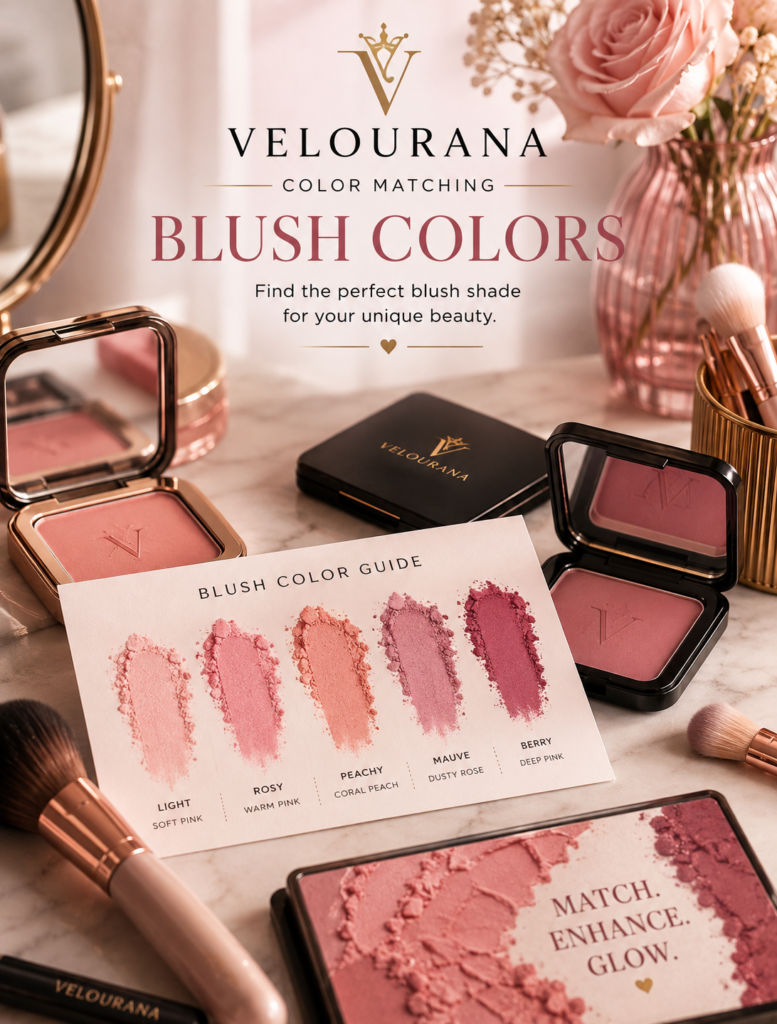
CATEGORY: Blush Colors
Berry blush can look intimidating before it ever touches the face.
In the compact, berry shades may appear intensely red, purple, raspberry, cranberry, blackberry, or almost wine-colored. Compared with familiar peach and soft pink blushes, they can seem unusually dark or saturated. This often leads people with lighter complexions to assume berry will overwhelm them, while people with deeper complexions may be directed toward berry simply because it is strong enough to remain visible.
Both ideas oversimplify what berry blush can do.
Berry is an exceptionally broad color family. A translucent raspberry is completely different from a deep blackberry. Cranberry contains a different balance of red and pink than plum. Mulberry may introduce brown or purple. Wine can become deep and sophisticated. Some berries are distinctly cool, while others contain enough red, brown, or warmth to work almost like a deep rose.
The amount applied changes them further.
A berry blush that appears dramatic at full opacity can become one of the most natural-looking colors on the face when used as a translucent wash.
Understanding berry therefore requires looking beyond darkness.
Color matching asks more useful questions.
How cool or warm is the berry?
How much red, pink, purple, blue, or brown does it contain?
How saturated is it?
How deep is your complexion?
And, most importantly, do you want the berry to imitate a natural flush or create a deliberately stronger cheek?
Why Berry Can Look So Natural
Natural flushing is not necessarily pale pink.
When blood flow becomes more visible beneath the skin, the resulting color can include red, raspberry, burgundy, or deeper rosy tones depending on the person’s complexion.
This is why berry blush can look unexpectedly realistic.
The compact may appear dark because the pigment is concentrated.
Once a tiny amount is diffused over the cheek, that concentration decreases dramatically.
What looked like blackberry in the pan may become a translucent reddish-pink veil.
This relationship between concentrated pigment and blended color is essential when choosing berry blush.
Berry Is a Family Rather Than a Single Shade
Imagine berry colors running through a spectrum.
Raspberry generally contains vivid red-pink with a cooler character.
Cranberry tends to be redder and slightly deeper.
Mulberry often introduces purple, brown, or muted characteristics.
Blackberry moves toward deep purple-red.
Wine introduces burgundy, red, purple, and sometimes brown.
Berry-rose remains closer to conventional blush.
These distinctions matter because each version interacts differently with undertone.
Someone who finds blackberry too purple may look beautiful in cranberry.
Someone who finds bright raspberry too vivid may prefer muted mulberry.
The solution is often another berry rather than abandoning the entire family.
Fair Skin Can Wear Berry
Fair skin does not need to avoid berry.
It simply creates stronger contrast with deep pigment.
The main issue is therefore concentration.
A heavily pigmented berry powder loaded onto a brush can overwhelm fair skin immediately.
The same color applied with a very light hand can create a convincing flush.
Sheer cream, liquid, and gel formulas can be particularly useful because the natural complexion remains visible through the pigment.
The result is color rather than coverage.
Fair Cool Skin and Raspberry
Fair cool complexions often have a natural relationship with raspberry.
The blue-red or cool pink characteristics of raspberry can echo the cool undertone already present in the skin.
Applied lightly, raspberry can create a fresh winter-flush effect.
This can sometimes look more natural than peach because the temperature is closer to the complexion.
For everyday makeup, choose a raspberry that can be diffused easily rather than an opaque formula that deposits intense color immediately.
Fair Warm Skin and Berry Contrast
Berry against fair warm skin creates more temperature contrast.
A distinctly blue raspberry may stand out against golden or peach undertones.
That contrast can be beautiful, particularly when the desired effect is bright, fresh cheek color.
If you want greater harmony, move toward cranberry, warm berry, berry-rose, or a berry containing subtle brown or red warmth.
These shades create a bridge between the depth of berry and the warmth of the complexion.
Fair Neutral Skin and Soft Berry
Neutral fair skin can often move easily between cool and warmer berry families.
A sheer raspberry can create freshness.
A muted cranberry can look sophisticated.
A soft berry-rose can become an everyday blush.
The most important consideration is often not undertone but pigment strength.
Because fair skin shows concentrated color quickly, application control remains central.
Medium Skin Brings Out Berry Beautifully
Medium complexions can support greater berry saturation without the blush immediately becoming dominant.
Raspberry, cranberry, mulberry, and berry-rose can all provide substantial color while still appearing integrated.
A berry that requires extreme restraint on fair skin may become an easy everyday shade on medium skin.
This does not mean applying it heavily.
It means the relationship between blush depth and skin depth has become closer.
Medium Cool Skin and Cranberry
Cranberry combines red with cool berry characteristics.
On medium cool skin, this can create a rich flush that feels connected to the complexion.
It has greater depth than traditional pink without becoming as purple as plum.
This makes cranberry particularly useful when soft pink feels too delicate but deep wine feels too dramatic.
It occupies the middle ground.
Medium Warm Skin and Warm Berry
Warm berry usually contains more red, brown, or muted warmth than blue-purple.
This can make it easier to integrate with golden or peach undertones.
Berry-rose, warm cranberry, and muted mulberry can all create rich color without looking sharply cool.
If stronger contrast is desired, however, a blue-based raspberry can deliberately brighten the complexion.
Again, matching and contrasting are both legitimate color strategies.
Berry on Olive Skin
Berry can be especially interesting on olive complexions.
Purple and red pigments interact strongly with yellow and green characteristics in the skin.
A blue-purple berry may appear more vivid against yellow-olive undertones.
A muted berry with brown or rose can look more integrated.
Raspberry can create brightness.
Mulberry can create sophistication.
Wine can create dramatic depth.
The exact result depends on whether the olive complexion leans warm, neutral, or cool.
Fair Olive Skin and Berry-Rose
Fair olive skin may find some very purple berries too contrasting for an understated everyday look.
Berry-rose can provide an easier transition.
The rose component retains enough natural redness to keep the blush connected with the complexion, while the berry adds richness.
A muted raspberry can work similarly.
The goal is not to remove coolness completely but to balance it with enough red or rose.
Medium Olive Skin and Mulberry
Mulberry can be exceptionally flattering on medium olive skin because it often contains a complex mixture of berry, purple, red, and brown.
That complexity can complement the equally complex color characteristics of olive skin.
Rather than appearing obviously pink or orange, mulberry creates deeper cheek definition.
It is particularly useful for autumnal, neutral, and sophisticated makeup palettes.
Deep Skin and the Power of Saturation
Deep complexions can make berry blush look extraordinary.
The pigment has enough depth and saturation to remain visible without relying on a pale white base.
Raspberry can become vibrant.
Cranberry creates rich red color.
Blackberry introduces cool depth.
Wine can become elegant and sculptural.
Mulberry can provide muted sophistication.
These shades demonstrate why blush for deep skin does not need to become excessively bright simply to show up.
Richness can provide visibility.
Deep Cool Skin and Blackberry
Blackberry contains deep red-purple characteristics.
Against deep cool skin, those characteristics can create natural harmony.
The blush may look extremely dark in the packaging, yet once diffused it can become a deep cool flush rather than an obvious purple patch.
This is particularly effective when the formula has strong pigment but good blendability.
The skin supplies enough visual depth to carry the color.
Deep Warm Skin and Cranberry
Cranberry can be a beautiful bridge for deep warm skin.
Its red component creates greater warmth than a strongly blue blackberry while retaining the richness associated with berry.
Warm berry, deep berry-rose, and red-wine shades can perform similarly.
If you want more contrast, move toward raspberry or plum-berry.
If you want harmony, increase red and brown influence.
Raspberry Is Berry at Its Brightest
Raspberry usually feels lively rather than earthy.
It combines pink and red with enough coolness to create a fresh appearance.
On fair skin, it can produce a delicate flush when applied sparingly.
On medium skin, it becomes more obviously rosy.
On deep skin, saturated raspberry can create brilliant cheek color.
Raspberry is particularly useful when traditional pink lacks enough depth but plum feels too dark.
Cranberry Adds More Red
Cranberry is often redder and slightly deeper than raspberry.
This can make it feel more grounded.
Because red is naturally associated with flushing, cranberry can look surprisingly believable once blended.
Warm complexions may find cranberry easier to integrate than a strongly purple berry.
Cool complexions can still wear it beautifully because the shade usually retains enough berry character to avoid becoming orange-red.
Mulberry Is More Muted
Mulberry often contains brown, purple, or muted red.
This makes it less bright than raspberry and less purely red than cranberry.
It can create an almost neutral berry effect.
For people who enjoy deep cheek color but dislike obvious brightness, mulberry is particularly useful.
It can also bridge blush and subtle cheek definition because the brown component gives the color more visual weight.
Blackberry Creates Cool Depth
Blackberry moves berry toward deep purple.
It is one of the cooler and darker members of the family.
On deep cool skin, it can look beautifully harmonious.
On warm skin, it creates stronger contrast.
On fair skin, it requires careful application but can produce an elegant translucent stain when used sparingly.
Blackberry is an excellent example of why dark pan color should not automatically be interpreted as unwearable.
Wine Blush Is Rich and Sophisticated
Wine combines red, burgundy, purple, and sometimes brown.
It can create a mature, elegant alternative to bright berry.
Wine blush works particularly well when the rest of the makeup contains similarly rich tones.
Burgundy lips.
Chocolate or plum eyes.
Deep neutral clothing.
However, wine does not need to be reserved for evening.
A sheer application can make it surprisingly wearable during the day.
Berry-Rose Is an Excellent Everyday Compromise
Berry-rose retains the familiar quality of rose while adding deeper berry saturation.
This can make it one of the easiest berry shades to wear.
It works particularly well for people who want more depth than traditional rose without moving into obvious purple or burgundy.
Across many skin depths, berry-rose can create a natural-looking transition between classic blush and deeper berry color.
Berry Versus Pink
Pink tends to feel lighter, fresher, or more conventionally youthful.
Berry introduces greater depth.
If pale pink disappears on your complexion, berry can create the same rosy family with more presence.
If berry feels too intense, moving toward raspberry-pink or berry-rose can soften it.
The two families overlap rather than existing as opposites.
Berry Versus Mauve
Mauve is generally more muted and grey-purple.
Berry usually contains greater red or pink saturation.
This means berry often brings more visible life to the complexion.
If mauve makes you look dull, a berry-mauve or raspberry may restore vitality while retaining a cool character.
If berry feels too bright, mauve can provide a softer alternative.
Berry Versus Plum
Plum leans more strongly toward purple.
Berry usually retains more obvious red or pink.
A blackberry shade may sit extremely close to plum, illustrating how cosmetic color families overlap.
When deciding between them, ask whether you want the cheek to read more red-pink or more purple.
That distinction is more useful than the product label.
Berry Versus Red Blush
Red blush can look cleaner and more direct.
Berry introduces blue, pink, purple, or brown complexity.
If pure red feels too strong, cranberry or berry-rose can soften the effect.
If berry looks too purple, moving toward red can restore warmth.
These neighboring color families provide useful adjustments when a shade is almost—but not quite—right.
Surface Redness Changes Berry
If your skin already contains significant visible redness, berry can intensify the rosy quality of the complexion.
Whether that is desirable depends on the look.
Some people enjoy emphasizing a naturally flushed appearance.
Others prefer using foundation to neutralize redness first so they can control exactly where the berry appears.
The same blush may therefore look dramatically different on bare skin and over a full-coverage base.
Berry Over Foundation
Full-coverage foundation creates a more neutral canvas.
Berry becomes more defined because less natural redness competes with it.
This can make application easier to control.
However, it can also make the blush appear stronger.
Begin lightly and build gradually.
Berry on Bare Skin
On bare skin, berry interacts with every natural color already present.
Freckles.
Redness.
Pigmentation.
Warmth.
Olive undertones.
This can create a particularly convincing stained effect, especially with sheer cream or liquid formulas.
The blush becomes part of the complexion rather than sitting visibly above it.
Berry and Bronzer Create Temperature Balance
Warm bronzer paired with cool berry creates an attractive temperature contrast.
The bronzer warms the perimeter of the face.
The berry adds cooler red-pink color to the cheeks.
This combination can create greater dimension than using warm blush and warm bronzer together.
On warm skin, bronzer can also help integrate a berry that otherwise feels very cool.
Berry Without Bronzer
Without bronzer, berry becomes the primary source of facial color.
This can create a clean, modern look.
A sheer berry cheek with minimal eye makeup and a neutral lip can appear fresh rather than dramatic.
The absence of additional warm cheek products allows the berry’s true character to remain visible.
Berry and Highlighter
Cool pearl and pink highlighters naturally reinforce cool berry shades.
Champagne and gold introduce warmth.
With cranberry or warm berry, champagne can create a particularly balanced transition.
With blackberry or plum-berry, an icy highlight creates a deliberately cool palette.
The desired effect determines which relationship works best.
Berry Blush With Berry Lips
A monochromatic berry palette can look sophisticated, but exact matching is unnecessary.
A raspberry cheek can pair with a deeper berry lip.
A wine blush can accompany a softer rose lip.
A blackberry cheek can work with muted plum.
Variation in depth keeps the face dimensional while maintaining color harmony.
Berry Blush With Nude Lips
A nude lip allows berry blush to become more prominent.
Warm nude creates temperature contrast with cool berry.
Rose nude provides a smoother connection.
Brown nude can make berry appear richer and more sophisticated.
This combination is useful when you want noticeable cheek color without a strong lipstick.
Berry With Red Lipstick
Blue-red lipstick naturally relates to cool berry blush.
Warm red lipstick creates more temperature contrast.
Because both red lipstick and berry blush can be visually strong, controlling blush intensity is important.
The cheek should support the lip unless a deliberately dramatic monochromatic effect is intended.
Berry With Cool Eye Makeup
Taupe, grey, plum, lavender, charcoal, and cool brown eye makeup naturally coordinates with berry.
The repeated cool characteristics create cohesion.
A muted berry can keep the look sophisticated.
A bright raspberry introduces more energy.
Berry With Warm Eye Makeup
Bronze, copper, gold, and warm brown eyes paired with berry cheeks create a more complex temperature relationship.
The eyes provide warmth.
The cheeks provide cool red or purple influence.
A neutral or rose lip can connect the two.
This is a useful example of color matching that relies on balance rather than uniformity.
Berry Can Change With Hair Color
Cool black, ash brown, silver, and cool blonde hair can reinforce the cool characteristics of berry.
Golden blonde, copper, auburn, and warm brunette hair create contrast.
A cranberry or warm berry can bridge that contrast more easily than blackberry.
Hair does not dictate the blush choice, but it affects the complete palette surrounding the complexion.
Clothing Can Emphasize Different Parts of Berry
Wear berry blush with blue or purple clothing and its cool qualities may appear more harmonious.
Pair it with green and the red component can become more noticeable because red and green create strong color contrast.
Warm beige, camel, and gold can make a cool berry appear cooler.
Black or white clothing provides a relatively neutral frame.
These effects are particularly relevant for photographs and formal makeup.
Formula Is Critical With Strong Berry Pigment
Highly pigmented berry powder can deposit more color than expected.
Sheer creams and liquids often provide greater forgiveness because they can be blended into a translucent layer.
Stains create another effect entirely: the color appears as though it belongs beneath the surface rather than sitting on top.
For someone experimenting with berry for the first time, controllable transparency can make the color much easier to understand.
Matte Berry Looks Deeper
Matte formulas absorb rather than reflect light, which can make berry appear denser.
This creates a sophisticated effect but may also increase the visual strength of the shade.
A matte wine blush can therefore feel considerably deeper than a luminous berry of similar pigment.
Application should account for that difference.
Luminous Berry Can Look Softer
A subtle luminous finish reflects light and can soften the apparent density of berry pigment.
This can create dimension and freshness.
However, strong shimmer changes the character completely and may emphasize skin texture.
Color and finish should therefore be evaluated separately.
Berry Is Best Built Gradually
With strong pigment, begin with less than you think you need.
Apply.
Blend thoroughly.
Step away from the mirror.
Then add more if necessary.
Berry blush often becomes stronger after it has been spread across the cheek because the eye perceives the entire colored area rather than the pigment on the brush.
Gradual application prevents accidental over-saturation.
When Berry Looks Too Purple
If berry becomes obviously purple against your complexion, move toward cranberry, warm berry, or berry-rose.
Increasing the red component reduces the violet impression.
Warm bronzer can also create balance.
This is particularly useful on golden or yellow-olive skin, where purple contrast may become especially visible.
When Berry Looks Too Red
If the shade appears more red than desired, move toward raspberry, mulberry, or blackberry.
These introduce cooler pink, purple, or brown characteristics.
A cooler lip or eye color can also change how the blush is perceived within the entire face.
When Berry Looks Too Dark
Before rejecting the shade, try applying significantly less.
Deep blush often looks dramatically lighter once diffused.
If even a tiny amount still creates excessive depth, move toward raspberry-pink or berry-rose rather than abandoning berry completely.
The family contains many levels of intensity.
When Berry Looks Ashy
Berry itself rarely creates ashiness unless the formula contains significant grey, white, or pale purple pigment.
This is more common with muted berry-mauve shades.
On deeper complexions, choose richer red-purple pigment without a chalky base.
Greater saturation often solves the problem.
Berry Can Create a Winter Flush or Summer Contrast
Berry is often associated with autumn and winter because of its connection with wine, plum, and deep red.
But bright raspberry can work beautifully in summer.
Against warm bronzed skin, cool berry creates lively contrast.
This demonstrates why seasonal rules should remain flexible.
Temperature and saturation matter more than the month on the calendar.
Use Berry for Natural Color or Deliberate Drama
For natural color, choose a berry that resembles the depth of your natural flush and apply it sheerly.
For sophistication, explore mulberry, berry-rose, or wine.
For brightness, choose raspberry.
For cool drama, move toward blackberry.
For warmth, increase cranberry, red, or brown.
One family can therefore create entirely different makeup identities.
Finding Your Best Berry
Start by identifying the dominant color inside the berry.
Is it pink-red raspberry?
Red cranberry?
Muted mulberry?
Purple blackberry?
Deep wine?
Then consider skin depth.
The deeper the complexion, the more saturation and depth it can generally carry before the blush appears highly contrasting.
Next consider undertone.
For harmony, relate the berry’s temperature to your complexion.
For contrast, deliberately choose the opposite direction.
Finally, control the application.
This is particularly important because berry pigment can change dramatically between concentrated and diffused forms.
Berry Demonstrates the Power of Color Matching
Berry blush is one of the clearest examples of why a color should never be judged only from its appearance in the compact.
A dark raspberry can become a delicate flush.
A dramatic blackberry can become sophisticated definition.
A cranberry can warm a cool complexion or harmonize with a warm one depending on its exact balance.
The skin transforms the pigment.
Application transforms it again.
Foundation, bronzer, lipstick, eyeshadow, hair, clothing, and lighting add still more relationships.
That may sound complicated, but it actually makes berry more flexible.
You do not need to fear the darkest-looking blush in the display.
You need to understand what colors it contains, how much pigment your complexion requires, and how sheerly or intensely you want to wear it.
Once those decisions become deliberate, berry stops being the intimidating blush reserved for dramatic makeup.
It becomes one of the richest and most adaptable color families available—capable of looking fresh, natural, romantic, sophisticated, or intensely dramatic simply by changing the shade and the way it is applied.
The End
Velourana
 Discover More From Our Family of Websites
 ZodiacBearing (Astrology, Tarot, Numerology, Angel Numbers & Spiritual Guidance)
 Velourana (Beauty, Makeup, Hair Care, Skincare & Beauty Tips)
 HavenBearing (Home, Living, Organization, Décor & Everyday Inspiration)
 PawBearing (Pet Care, Dog Breeds, Animal Health, Training & Pet Products)
 PsyCatherine (Notes From the Journal of a Psychologist on Real Life)

