
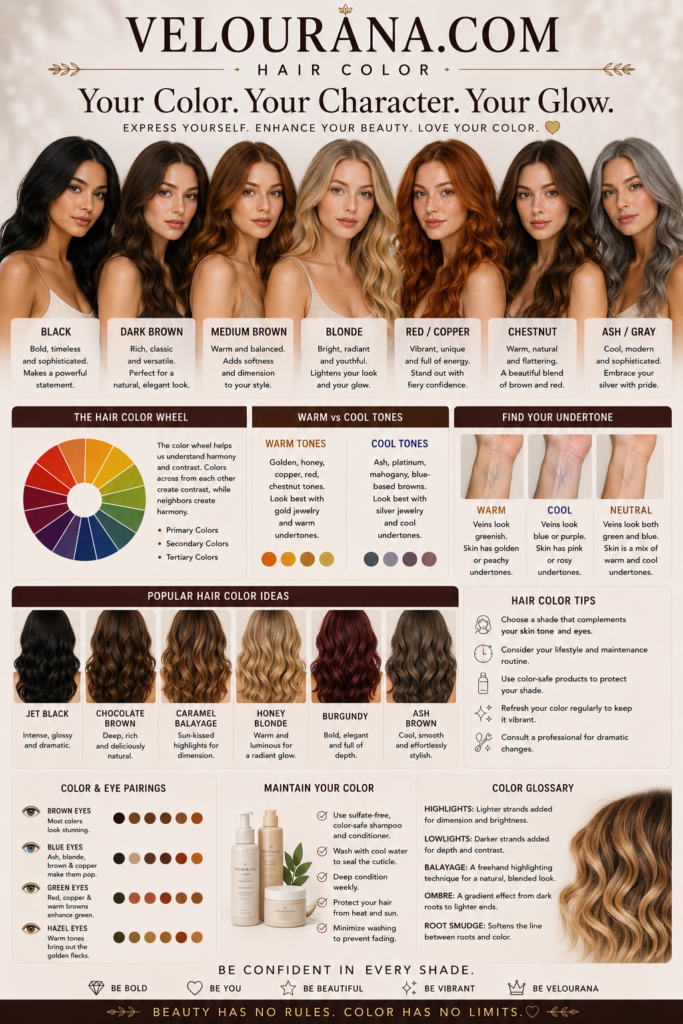
CATEGORY: Balayage
The word balayage may suggest one recognizable look, yet there is no single balayage color. A brunette threaded with restrained caramel, a dark blonde softened by beige ribbons, a copper base illuminated with amber, and a luminous blonde with a shadowed root can all belong to the same family. What makes them related is not a particular shade but an approach to dimension: brightness is distributed selectively so that it interacts with depth rather than replacing it.
This flexibility is precisely why balayage requires more interpretation than its apparent simplicity suggests. The technique has to negotiate several visual relationships simultaneously. The lightened areas must work with the natural or colored base. Their temperature must make sense beside the deeper hair. Their scale has to suit the density and texture. Their position needs to remain attractive when the hair moves. Their brightness must be technically achievable without ignoring the condition of the fiber.
When these relationships are balanced, balayage can appear remarkably natural even when the transformation is significant. When they are not, the result may technically contain all the expected ingredients—dark roots, lighter lengths, brighter ends—yet still feel disconnected.
The difference lies in architecture. Beautiful dimensional color is built through relationships, not merely through lightness.
Contrast Determines the Personality of Balayage
Before tone becomes important, contrast establishes the overall character of the color. Two balayage designs can use almost identical beige tones but look completely different because one remains close to the base level while the other creates a dramatic separation between dark and light.
Low-contrast balayage tends to feel subtle and integrated. The lighter sections may sit only modestly above the natural base, producing movement that becomes more apparent under bright light or when the hair moves. On medium brunette hair, this might mean softly illuminated brown or dark caramel rather than obvious blonde. The effect can be elegant precisely because the transition is difficult to locate.
Higher contrast creates a more graphic form of dimension. Deep roots combined with substantially lighter lengths produce visible ribbons and stronger separation. This can be striking, especially when the brightness is concentrated around the face or perimeter. However, stronger contrast also increases the importance of blending. The greater the distance between dark and light, the more carefully the intermediate transition must be managed.
Contrast is not synonymous with quality. Subtle color is not automatically more sophisticated, and dramatic color is not automatically more fashionable. The appropriate level depends on the wearer and the desired visual identity.
Natural hair color provides an important reference. Someone with very dark hair who wants obvious pale blonde pieces is intentionally choosing high contrast. Another person with the same base may want only enough lift to reveal warm brown movement. Both are valid balayage directions, but they demand different technical strategies and create very different maintenance experiences.
Density changes the perception of contrast as well. On extremely thick hair, delicate highlights can disappear into the mass of the hair unless they are strategically positioned. On fine hair, very broad high-contrast ribbons may dominate the overall appearance. The scale of the color should therefore relate to the amount of hair carrying it.
The face is another consideration. Strong brightness around the hairline can create an immediate focal point, while softer illumination produces a more diffused effect. Modern balayage frequently uses face-framing brightness, but the most successful versions integrate that brightness into the rest of the design rather than leaving two isolated pale strips beside the face.
Contrast should feel intentional from every angle. It is the visual volume control of balayage: it determines whether the color whispers, speaks clearly, or becomes the defining feature of the hair.
Tone Gives the Lightened Hair Its Emotional Character
If contrast determines how strongly balayage is perceived, tone influences its atmosphere. Golden balayage can feel radiant and sunlit. Caramel can bring richness to brunette hair. Beige often creates restrained softness. Cooler taupe and ash directions can make the result feel muted and modern, while copper and amber can amplify warmth rather than neutralize it.
These descriptions are aesthetic, but the process behind them is chemical. Lightening exposes underlying pigment, and the final tone has to be created in relation to the level achieved. A target shade cannot be considered independently from the lifting stage.
This becomes especially important when the inspiration image shows very pale, cool balayage on a naturally dark base. Pale cool shades generally require a sufficiently light canvas. If the hair cannot safely reach that level, toning alone cannot create the same luminosity. Attempting to neutralize a darker warm result too aggressively may produce a muted shade without producing the brightness seen in the reference.
Balayage on brunette hair therefore benefits from a broader understanding of beauty than the assumption that cooler is always better. Warm brown, caramel, toffee, honey, bronze, and beige-gold tones can interact beautifully with dark bases because they bridge the visual distance between brunette depth and blonde lightness.
A dark espresso base paired with very pale icy sections creates deliberate contrast. The same base with warm medium-brown illumination creates continuity. Neither is universally superior. They express different relationships between the starting color and the lightened areas.
The complexion can influence how these choices are perceived, although personal preference remains central. Warm reflections near the face can add radiance for some people, while cooler or more neutral tones may harmonize better for others. Eye color, natural brow color, makeup habits, and clothing palette can also change the overall impression.
Tonal sophistication often comes from avoiding extremes. A beige balayage does not have to be completely devoid of warmth. A warm caramel does not have to become orange. A cool brunette result does not have to look gray. The most wearable shades frequently occupy nuanced territory where unwanted undertones are controlled without stripping the hair of visual richness.
Brunette Balayage Depends on Protecting Brunette Identity
Brunette balayage is one of the clearest demonstrations of why lightening more hair does not necessarily create a better result. The beauty of the design often depends on preserving enough darkness that the hair continues to read as brunette.
When the base is rich and deep, lighter sections gain extraordinary visibility. A caramel ribbon against dark chocolate hair can appear brighter than it would against a medium blonde base because the surrounding depth amplifies it. This contrast can create the illusion of greater luminosity without requiring the entire head to become dramatically light.
Problems arise when repeated appointments gradually consume the negative space. Each visit may add a few more lightened sections until the original brunette architecture has largely disappeared. The hair becomes progressively blonde through the lengths, and the remaining dark root begins to look more like regrowth than intentional depth.
Maintaining brunette balayage can therefore involve protecting dark hair as carefully as creating light hair. Previously lightened sections do not automatically need to be lightened again. Some appointments may focus on refreshing selected areas, adjusting tone, or restoring depth where the pattern has become too bright.
This preservation is especially important around the interior of the hair. Surface brightness and perimeter illumination can create a strong visual impact while deeper internal sections maintain richness. As the hair moves, the darker areas appear and disappear beneath the lighter surfaces, producing the sense of depth associated with expensive-looking dimensional color.
Brunette balayage also offers an enormous tonal range. Chocolate, chestnut, caramel, bronze, cinnamon, hazelnut, honey, beige, and neutral brown-blonde directions can all create different interpretations without requiring the base to surrender its identity.
The transition from dark to light should feel connected. A very deep base moving immediately into pale blonde can be beautiful when intentionally dramatic, but intermediate tones often make brunette balayage feel more organic. They act as visual bridges, preventing the color from appearing divided into unrelated dark and light zones.
The result should make the brunette foundation feel more complex, not merely covered with blonde.
Blonde Balayage Uses Shadow to Make Brightness Visible
Balayage is equally valuable for naturally blonde or previously lightened hair, although the visual problem changes. When the base is already light, the challenge may be creating enough depth for the brightest pieces to remain visible.
Uniform blonde hair can sometimes appear flatter than dimensional blonde even when it is technically lighter overall. Introducing subtle shadow at the root or preserving slightly deeper areas between brighter sections gives the eye reference points. Against those deeper areas, pale ribbons appear more luminous.
This is why a root shadow can transform blonde balayage. The root does not necessarily become dark. Even a modest increase in depth can create separation and make the lengths appear brighter by comparison. The transition can also soften the appearance of natural growth, particularly when the client's natural base is deeper than the lightened hair.
Blonde balayage can range from soft wheat and champagne tones to beige, pearl, golden, sandy, or cooler finishes. Again, the final tone depends on the level of the underlying canvas. Very pale tonal directions require appropriately light hair, while deeper blonde levels support richer beige and golden results.
The condition of blonde hair deserves particular attention because previously lightened lengths may already have undergone significant chemical processing. Repeatedly applying lightener to sections that are sufficiently bright can compromise the fiber without delivering meaningful visual benefit. Precision therefore becomes increasingly important over time.
A mature balayage plan recognizes the history of each area. New growth may require fresh lightening, certain mid-length sections may need selective connection, and the ends may require protection rather than additional processing. Treating the entire hair as though it were virgin at every appointment ignores the accumulated structure of the color.
This is one reason excellent blonde balayage can improve when the maintenance strategy becomes more selective. The goal shifts from constantly creating more blonde to preserving the distribution of blonde already present.
Texture Changes How the Color Is Read
Balayage exists on a moving surface, and hair texture determines how that surface presents color. Straight, wavy, curly, and coily hair can carry dimensional color beautifully, but the same placement pattern will not necessarily produce the same visual result on each.
Straight hair displays transitions with exceptional clarity. Sections tend to lie alongside one another, allowing the eye to follow the movement from root depth into lighter lengths. This can make subtle balayage appear polished and fluid, but it can also reveal abrupt lines. Blending must therefore be particularly controlled.
Wavy hair naturally creates changing planes. As the hair bends, one surface catches light while another falls into shadow. Balayage can intensify this effect, making the waves appear more dimensional. A ribbon that seems moderate when the hair is straight may become much more visible when it curves toward the light.
Curly hair presents color through spirals and arcs. Placement can be designed to illuminate selected curls rather than distributing brightness mechanically across every section. The relationship between the curl pattern and the painted area can influence whether the result looks dimensional or fragmented.
Coily textures create dense, intricate patterns of light and shadow. Thoughtful color placement can reveal shape and definition, but technical considerations are particularly important because the structural condition of the hair must remain central to any lightening service. The visual goal cannot be separated from the physical tolerance of the fiber.
Styling habits therefore belong in the color consultation. A person who wears hair curly almost every day should not have the entire color design judged solely on a temporary straight blowout. Similarly, someone who regularly alternates between smooth and textured styles may need placement that remains balanced in multiple configurations.
The haircut contributes as well. Layers expose different depths within the hair, while a blunt perimeter concentrates the ends into a stronger visual line. Brightness positioned on layers can emphasize movement; brightness concentrated through a blunt edge can make the perimeter appear particularly luminous.
Balayage is most convincing when color, texture, and cut appear to have been designed together.
Face-Framing Brightness Should Belong to the Whole Composition
The brighter face frame has become one of the most recognizable features of contemporary dimensional color. It can illuminate the complexion, create immediate visual impact, and provide a focal point even when the rest of the balayage remains subtle.
Its effectiveness, however, depends on integration.
When face-framing pieces are dramatically lighter than everything behind them without any transitional relationship, they can appear detached from the overall color. The eye sees the pieces first and the hair second. This may be intentional in highly graphic styles, but it differs from the seamless character traditionally associated with balayage.
A more integrated design allows the brightness around the face to echo elsewhere. The supporting sections do not have to be equally light. They simply need to create enough continuity that the front feels like the brightest expression of an existing color story rather than a separate addition.
Placement around the hairline also requires delicacy because these hairs may be finer than those in the interior. The visual impact can be strong even with relatively small sections, particularly when they sit directly beside the skin. More product or more aggressive lightening is not automatically necessary.
The position of the brightness can influence facial emphasis. Color concentrated near the upper hairline produces a different impression from illumination that becomes strongest around the jaw or lower lengths. The haircut, parting, and natural fall of the hair all affect where these pieces will ultimately sit.
A center part can display symmetrical front brightness very clearly. A side part exposes the hair differently and may require asymmetrical consideration. Someone who frequently changes the part may benefit from placement that remains flexible rather than depending on one exact arrangement.
The face frame is therefore not a standardized pair of highlights. In sophisticated balayage, it is the point at which the larger dimensional design meets the face.
Color History Determines What the Next Appointment Can Become
Balayage develops over time. After the first appointment, the hair is no longer a blank canvas. Every subsequent service interacts with the placement, lift, tone, and structural changes created previously.
This history can be advantageous. Existing lightness may provide a foundation that allows future appointments to refine rather than reconstruct the entire design. Brightness can be moved upward selectively, new ribbons can be introduced, and older lightened ends can remain untouched.
It can also create complexity. Repeated overlapping of lightener can leave certain areas more processed than others. Previous dark color can produce uneven lifting. Toners, glosses, permanent dyes, and home color may all affect subsequent results.
A detailed history is therefore important even when the hair looks relatively uniform. Two visually similar brunette heads may behave completely differently if one is virgin hair and the other contains several years of dark permanent color.
Corrective balayage can become particularly complex when previous highlights are striped, overly light, or poorly blended. The solution may not be to add more lightener. Restoring dimension can require lowlights, depth, tonal correction, selective lightening, or a combination of approaches. The objective is to rebuild visual relationships.
Patience becomes valuable when a major transformation is desired. Moving from repeatedly colored dark hair toward much lighter balayage may require stages. Each stage should ideally produce a wearable result rather than treating the hair as unfinished until a distant target is reached.
This staged approach respects the fact that hair is a material with limits. The most impressive color transformation loses value if the fiber becomes too compromised to display the result beautifully.
Balayage planning therefore extends beyond the current appointment. The colorist is not simply deciding what the hair can become today, but how today's decisions will affect what remains possible later.
The Grow-Out Is Part of the Aesthetic
Traditional discussions of hair color often treat regrowth as a problem that begins after the salon result. Balayage changes that relationship because the future growth pattern can be incorporated into the original design.
When brightness begins with a soft transition rather than a hard line, natural growth can extend the root area without immediately creating a sharp boundary. The color evolves gradually. This is one of the reasons balayage can suit people who do not want frequent root-focused appointments.
Yet a soft grow-out is not the same as indefinite maintenance. As months pass, the brightest sections move farther from the scalp. Tonal refinement fades. Haircuts remove portions of the lightened ends. The overall balance between depth and brightness changes.
At some point, the color may still look attractive but no longer resemble the original distribution. The appropriate response depends on what has changed. If the placement remains beautiful but the tone has shifted, a gloss or toner may be sufficient. If brightness has moved too far downward, selected sections may need to be brought upward. If repeated lightening has made the hair too blonde, depth may need to be restored.
This adaptive maintenance is one of balayage's strengths. Every appointment does not have to repeat the original service exactly. The technique can evolve with the hair.
Seasonal changes can also influence preferences. Some people enjoy greater brightness during summer and deeper, richer dimension during autumn and winter. Balayage can accommodate this without requiring an entirely new color identity. The proportions and tones can shift while the underlying architecture remains.
The most successful long-term balayage often looks less like a series of disconnected transformations and more like a continuing conversation between the natural base and carefully managed lightness.
Condition Is Part of Color Quality
Balayage is visual, but the condition of the hair strongly affects how the color is perceived. Healthy-looking hair reflects light more evenly, moves fluidly, and allows tonal variation to appear luminous. Excessively compromised hair can look dull or rough even when the color formula itself is beautiful.
Lightening alters the hair fiber, and the degree of change depends on the starting condition, products, processing, previous chemical history, and desired lift. The pursuit of brightness must therefore be balanced against structural integrity.
This is particularly important with dramatic transformations. Social media often compresses complex color journeys into a single before-and-after image. What the photograph cannot always communicate is whether multiple sessions were required, what previous color history existed, or how much processing the hair could safely tolerate.
A responsible approach recognizes that the brightest technically imaginable result is not always the most beautiful practical result. A slightly deeper balayage on glossy, resilient hair may appear more luxurious than a much paler result achieved at the expense of condition.
Home maintenance supports that balance. Lightened lengths may benefit from conditioning appropriate to their needs, sensible heat styling, protection before high-temperature tools, and handling that reduces unnecessary mechanical stress. The exact routine should reflect the individual hair rather than assuming every balayage client needs the same collection of products.
Porosity can change after lightening, particularly in areas that have undergone repeated processing. This may influence how quickly the hair loses moisture, how it responds to styling, and how it accepts future tonal products. Maintaining an awareness of those differences helps prevent the lengths from being treated exactly like untouched roots.
Color quality is therefore inseparable from hair quality. Balayage is not successful merely because the desired shade appears immediately after processing. The finished hair should remain capable of carrying that color attractively.
Why Personalization Is the Real Luxury of Balayage
Balayage became globally recognizable because of its softness, but its deeper appeal lies in adaptability. It allows color to be built around the person rather than requiring the person to conform to a fixed pattern.
The same technique can preserve a deep brunette identity, create a transition toward blonde, enrich copper hair, soften gray blending strategies in appropriate contexts, or introduce barely visible dimension into naturally lighter hair. It can be bold around the face and restrained through the back, luminous through the ends and quiet near the root, warm in overall character or carefully neutralized.
What matters is coherence.
The base, contrast, tone, texture, haircut, and maintenance plan should support one another. A dramatic photograph may provide inspiration, but the strongest result is rarely achieved by copying placement without interpretation. Hair density may require the ribbons to become broader or finer. Natural color may change the appropriate tonal family. Previous processing may limit the achievable brightness. Daily styling may alter where the most important sections need to sit.
This personalization also prevents balayage from becoming visually repetitive. The technique does not need to produce the same dark-root-to-blonde-end gradient on everyone. Its vocabulary is much larger. Some of the most sophisticated results are so subtle that they are difficult to identify as a technique at all. The hair simply looks richer, brighter, or more dimensional.
That subtlety reveals the central philosophy behind balayage. The objective is not maximum intervention. It is meaningful placement.
Light is used where it contributes something. Shadow remains where it creates depth. Tone connects the new color to the existing palette. Texture determines how the design is revealed. The root is treated as part of the composition rather than merely the place where color begins.
When all of those elements are considered together, balayage becomes more than a method of highlighting hair. It becomes a form of personal color architecture: a deliberate arrangement of depth and illumination designed to remain beautiful not only in the salon chair, but as the hair moves, grows, changes tone, and becomes part of everyday life.
THE END VELOURANA
 Discover More From Our Family of Websites
 ZodiacBearing (Astrology, Tarot, Numerology, Angel Numbers & Spiritual Guidance)
 Velourana (Beauty, Makeup, Hair Care, Skincare & Beauty Tips)
 HavenBearing (Home, Living, Organization, Décor & Everyday Inspiration)
 PawBearing (Pet Care, Dog Breeds, Animal Health, Training & Pet Products)
 PsyCatherine (Notes From the Journal of a Psychologist on Real Life)

