CATEGORY: After-Sun Skincare
Spending time outdoors can be one of life’s greatest pleasures. Whether relaxing on the beach, hiking through nature, enjoying outdoor sports, or simply walking on a sunny afternoon, sunlight plays an important role in our wellbeing. However, while moderate sun exposure has benefits, prolonged exposure can leave the skin dehydrated, sensitive, and in need of proper care.
After-sun skincare is often misunderstood as something only necessary after sunburn. In reality, every period of significant sun exposure affects the skin to some degree. Heat, ultraviolet (UV) radiation, wind, saltwater, and chlorinated pools can all contribute to moisture loss and temporary changes in the skin barrier. A thoughtful after-sun routine helps replenish hydration, soothe discomfort, and support the skin’s natural recovery process.
Understanding how to care for your skin after spending time in the sun is just as important as applying sunscreen beforehand. A consistent routine not only improves comfort but also helps maintain healthier-looking skin throughout the summer months and beyond.
This comprehensive guide explains everything you need to know about after-sun skincare, from understanding how sunlight affects the skin to choosing the right products and developing an effective recovery routine.
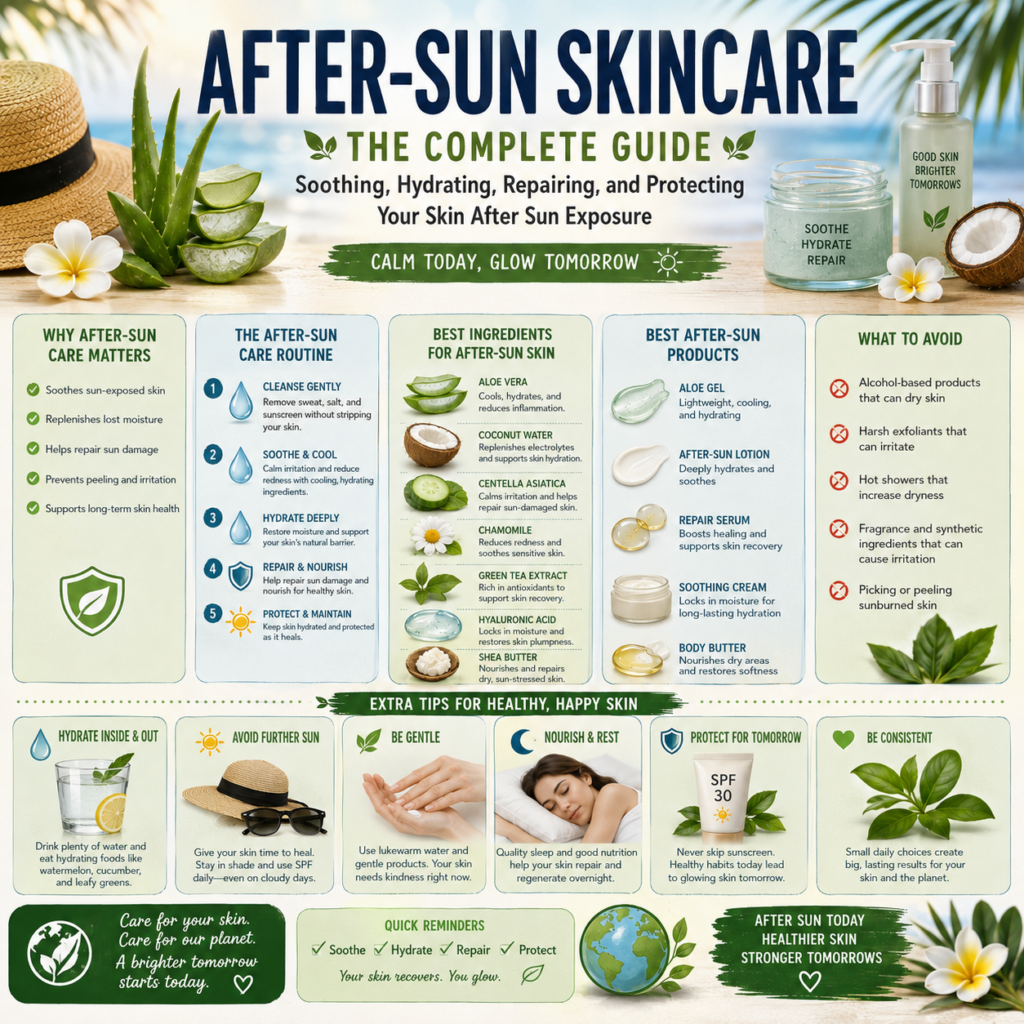
Why After-Sun Skincare Matters
Many people focus heavily on sun protection but overlook what happens once they return indoors.
Even when sunscreen has been applied correctly, the skin has still been exposed to heat, perspiration, environmental pollutants, and varying levels of ultraviolet radiation.
Proper after-sun care helps:
- Restore lost moisture.
- Calm temporary redness.
- Support the skin barrier.
- Improve skin comfort.
- Reduce feelings of tightness.
- Prepare the skin for its normal overnight recovery process.
A few simple steps performed consistently can make a noticeable difference in how the skin feels after a day outdoors.
How Sun Exposure Affects the Skin
Sunlight interacts with the skin in several different ways.
Ultraviolet radiation, particularly UVA and UVB rays, can contribute to changes within the outer layers of the skin. Heat also increases water loss through the skin, while wind, saltwater, and chlorinated water may further contribute to dryness.
Common temporary effects after prolonged sun exposure include:
- Dryness.
- Tightness.
- Warmth.
- Mild redness.
- Rough texture.
- Increased sensitivity.
These changes highlight the importance of replenishing moisture and treating the skin gently after spending time outside.
The First Steps After Coming Indoors
Your skincare routine should begin shortly after returning from the sun.
The first priority is allowing the skin to cool naturally.
Helpful first steps include:
Move into a Cool Environment
Avoid remaining in direct sunlight once outdoor activities are finished.
Drink Plenty of Water
Hydration supports the body’s normal functions after time spent in warm conditions.
Remove Sunscreen and Surface Impurities
Cleanse gently to remove sunscreen, sweat, salt, chlorine, and environmental debris without over-cleansing the skin.
Avoid using excessively hot water, as it may increase feelings of dryness.
Gentle Cleansing Is Essential
After sun exposure, the skin often becomes more sensitive than usual.
Choose a gentle cleanser designed to remove impurities while helping preserve the skin’s natural moisture barrier.
A suitable cleanser should:
- Remove sunscreen effectively.
- Avoid excessive stripping of natural oils.
- Leave the skin feeling comfortable.
- Prepare the skin for moisturizing products.
Avoid aggressive scrubs immediately after prolonged sun exposure, especially if the skin feels irritated.
Replenishing Lost Hydration
One of the most important goals of after-sun skincare is restoring moisture.
Sun exposure may temporarily reduce the skin’s hydration levels, making moisturizing products especially valuable.
Hydrating skincare products often focus on ingredients that help attract or retain moisture within the skin while supporting the skin barrier.
Consistent moisturization helps improve comfort while reducing feelings of dryness and tightness.
Common Ingredients Found in After-Sun Products
Many after-sun formulations contain ingredients selected to provide hydration and help soothe skin after sun exposure.
Frequently used ingredients include:
Aloe Vera
Widely used in after-sun products because of its refreshing feel and moisturizing properties.
Glycerin
A humectant commonly included to help attract moisture to the skin.
Hyaluronic Acid
Frequently used to support skin hydration by helping retain water.
Panthenol
Often included in skincare products designed to support skin comfort and hydration.
Ceramides
Help support the skin’s protective barrier and reduce moisture loss.
Different formulations combine these ingredients in varying ways depending on the intended skin type and product texture.
Cooling the Skin Comfortably
Many people enjoy the refreshing sensation of cooling skincare products after spending time outdoors.
Simple approaches include:
- Storing moisturizer in the refrigerator.
- Applying cool (not icy) compresses when appropriate.
- Using lightweight gel formulations.
- Remaining in a comfortably cool environment.
Avoid applying ice directly to the skin, as extreme temperatures may increase irritation.
Caring for the Face
Facial skin is often more delicate than skin on other parts of the body.
An effective facial after-sun routine may include:
Gentle Cleansing
Remove sunscreen without over-washing.
Hydrating Serum
Apply products formulated to increase hydration.
Moisturizer
Seal in moisture with a suitable cream or lotion.
Lip Care
Apply a moisturizing lip balm to prevent dryness.
Using gentle products helps maintain comfort while supporting overnight recovery.
Caring for the Body
Body skincare deserves equal attention.
Pay particular attention to areas that receive the greatest sun exposure, including:
- Shoulders.
- Neck.
- Arms.
- Legs.
- Feet.
Apply body lotion or after-sun moisturizer generously while the skin remains slightly damp after bathing.
This helps improve the distribution of moisturizing products across the skin.
Avoid Irritating the Skin
Following sun exposure, avoid skincare products that may feel too harsh for temporarily sensitive skin.
For a short period, many people prefer to limit unnecessary irritation by avoiding overly aggressive exfoliation or treatments until the skin feels comfortable again.
Always introduce active skincare ingredients according to their individual directions and your skin’s tolerance.
Clothing and Skin Recovery
Loose, breathable clothing can improve comfort after prolonged time in the sun.
Natural, lightweight fabrics often allow air to circulate more freely while reducing friction against sensitive skin.
Avoid tight clothing if the skin feels particularly warm or tender.
Nutrition and Internal Hydration
Healthy skin recovery also benefits from overall wellness.
Following time outdoors:
- Drink water regularly.
- Eat balanced meals.
- Include fruits and vegetables rich in vitamins and antioxidants.
- Avoid excessive alcohol, which may contribute to dehydration.
Healthy lifestyle habits support normal skin function alongside topical skincare.
Building an After-Sun Routine
Consistency is more valuable than complexity.
A practical routine may include:
Immediately After Returning Home
- Move into a cool environment.
- Drink water.
- Shower using lukewarm water.
- Cleanse gently.
After Cleansing
- Apply a hydrating serum if desired.
- Use an after-sun moisturizer or body lotion.
- Moisturize lips.
Evening
- Continue hydrating the skin if dryness develops.
- Allow the skin time to recover overnight.
Supporting Long-Term Skin Health
After-sun skincare is only one part of healthy sun care.
Long-term skin health also depends on:
- Using sunscreen appropriately.
- Wearing protective clothing.
- Seeking shade during periods of intense sunlight.
- Performing regular skin self-checks.
- Consulting healthcare professionals about any concerning skin changes.
Combining prevention with proper after-sun care provides the best overall approach.
Final Thoughts
After-sun skincare is an essential part of maintaining healthy, comfortable skin throughout the year. Even when sunscreen is used correctly, sunlight, heat, wind, and environmental conditions can temporarily reduce skin hydration and affect the skin barrier. By cleansing gently, replenishing moisture, choosing hydrating skincare products, and allowing the skin time to recover, you help support its natural protective functions while improving overall comfort.
The best after-sun routine does not need to be complicated. Simple, consistent habits performed after every significant period of sun exposure can help your skin remain soft, refreshed, and healthy-looking throughout the seasons. Caring for your skin after the sun is every bit as important as protecting it before you step outside.
—
The End
Velourana.com
 Discover More From Our Family of Websites
 ZodiacBearing (Astrology, Tarot, Numerology, Angel Numbers & Spiritual Guidance)
 Velourana (Beauty, Makeup, Hair Care, Skincare & Beauty Tips)
 HavenBearing (Home, Living, Organization, Décor & Everyday Inspiration)
 PawBearing (Pet Care, Dog Breeds, Animal Health, Training & Pet Products)
 PsyCatherine (Notes From the Journal of a Psychologist on Real Life)