
CATEGORY: After-Sun Skincare
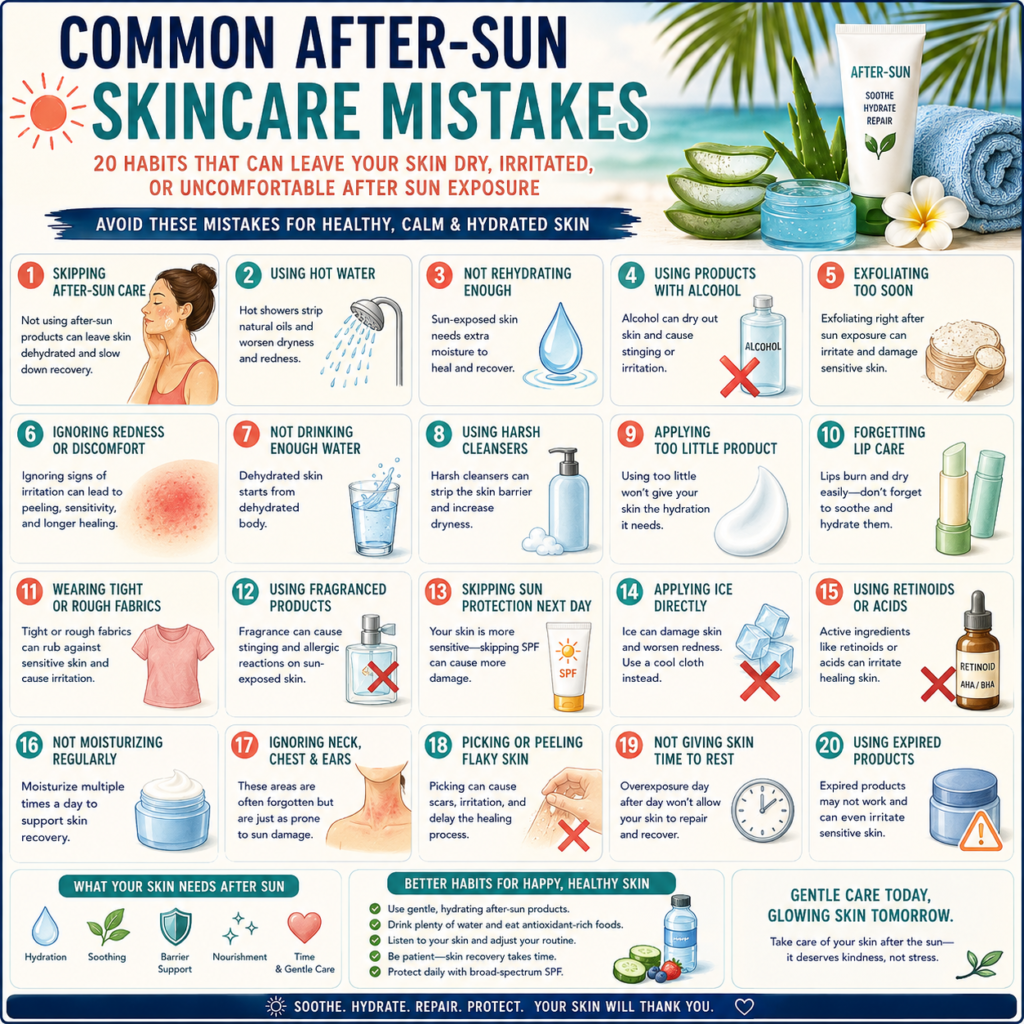
After-sun skincare has become an essential part of many people’s beauty routines, yet it is also surrounded by countless myths and misconceptions. Some believe that after-sun products are only useful after sunburn, while others assume that a tan automatically means healthy skin or that expensive skincare products always provide better results. Social media, advertising, and word-of-mouth advice often blur the line between proven skincare practices and popular myths.
Understanding what your skin truly needs after spending time outdoors helps you make informed choices that support long-term skin health. While after-sun skincare products can provide hydration, improve comfort, and help support the skin’s natural barrier, they are not miracle products, nor can they reverse every effect of sun exposure.
This guide explores some of the most common myths surrounding after-sun skincare and explains the facts behind each one, helping you build a routine based on sound skincare principles rather than misinformation.
Myth 1: After-Sun Products Are Only Needed After Sunburn
This is perhaps the most widespread misconception.
Many people believe they only need after-sun products when their skin becomes visibly red.
In reality, sun exposure affects the skin even when no sunburn develops.
Heat, ultraviolet radiation, wind, sea salt, perspiration, and chlorinated water may all contribute to temporary moisture loss.
Using hydrating skincare after spending time outdoors can therefore benefit many people, regardless of whether visible redness is present.
Myth 2: Sunscreen Eliminates the Need for After-Sun Care
Sunscreen and after-sun skincare perform completely different roles.
Sunscreen helps protect the skin before and during sun exposure.
After-sun skincare focuses on:
- Replenishing moisture.
- Supporting the skin barrier.
- Improving comfort.
- Helping the skin recover from environmental stress.
One complements the other rather than replacing it.
Myth 3: A Tan Means Healthy Skin
A tan is often associated with beauty and vitality.
However, a tan is simply the skin’s response to ultraviolet exposure.
Healthy-looking skin is better measured by:
- Good hydration.
- A well-functioning skin barrier.
- Comfortable texture.
- Consistent skincare habits.
A tan should never be viewed as proof that the skin has avoided environmental stress.
Myth 4: Oily Skin Doesn’t Need Moisturizer
People with oily skin often avoid moisturizers because they fear creating additional shine.
However, oily skin can still become dehydrated.
Lightweight lotions, gels, and hydrating serums often provide moisture without leaving the skin feeling heavy.
Balanced hydration may actually improve overall skin comfort.
Myth 5: More Product Means Better Results
Applying excessive amounts of after-sun lotion rarely provides additional benefits.
Instead, unnecessary product may:
- Feel sticky.
- Waste product.
- Increase costs.
- Take longer to absorb.
Applying products according to the manufacturer’s instructions is usually the most effective approach.
Myth 6: Aloe Vera Alone Is Enough
Aloe vera is one of the best-known after-sun ingredients because of its refreshing feel.
However, many modern after-sun formulations combine aloe vera with additional moisturizing ingredients such as:
- Glycerin.
- Hyaluronic acid.
- Ceramides.
- Panthenol.
Balanced formulations often provide more complete hydration than relying on a single ingredient alone.
Myth 7: Hot Showers Help the Skin Recover
After spending time in warm weather, a hot shower may seem relaxing.
However, very hot water can contribute to additional moisture loss.
Lukewarm water is generally a gentler choice for skin that has recently been exposed to the sun.
Myth 8: Cooling Products Lower Skin Temperature Permanently
Many after-sun gels provide an immediate cooling sensation.
This refreshing feeling improves comfort but should not be confused with permanent changes to skin temperature.
The sensation comes primarily from the formulation and evaporation rather than long-lasting cooling of the skin itself.
Myth 9: Expensive Products Are Always Better
Price alone does not determine skincare quality.
An effective after-sun product depends on:
- Suitable ingredients.
- Appropriate formulation.
- Compatibility with your skin type.
- Consistent use.
Many affordable products perform exceptionally well when chosen carefully.
Myth 10: Natural Products Are Always Safe
Natural ingredients are often perceived as completely harmless.
However, naturally derived ingredients can still cause irritation or allergic reactions in some individuals.
Every skincare product—whether natural or synthetic—should be chosen according to your skin’s individual needs and used according to the manufacturer’s instructions.
Myth 11: Exfoliating Immediately Improves Recovery
Some people believe removing the outer layer of skin immediately after sun exposure helps reveal healthier skin.
In reality, aggressive exfoliation may leave temporarily sensitive skin feeling more uncomfortable.
Many people prefer to wait until the skin feels fully comfortable before resuming exfoliating products.
Myth 12: Drinking Water Alone Rehydrates the Skin
Internal hydration is essential for overall health.
However, drinking water does not replace topical moisturizers.
Healthy after-sun care combines:
- Internal hydration.
- Gentle cleansing.
- Moisturizing products.
- Appropriate skincare ingredients.
Both internal and external hydration contribute to skin comfort.
Myth 13: One After-Sun Product Suits Everyone
Different skin types have different requirements.
For example:
- Dry skin often benefits from richer creams.
- Oily skin frequently prefers lightweight gels.
- Sensitive skin may respond best to fragrance-free products.
- Mature skin often appreciates additional barrier-supporting ingredients.
Personalized skincare generally produces better results than one-size-fits-all routines.
Myth 14: After-Sun Skincare Is Only for Summer
Sun exposure occurs throughout the year.
Outdoor activities during spring, autumn, and even winter can leave the skin feeling dry after prolonged exposure to sunlight and environmental conditions.
After-sun care can therefore remain useful whenever the skin has spent significant time outdoors.
Myth 15: Skincare Alone Can Reverse Sun Damage
After-sun products help hydrate the skin and support comfort.
They are not designed to reverse all long-term effects associated with ultraviolet exposure.
The most effective strategy remains prevention through:
- Sunscreen.
- Protective clothing.
- Shade.
- Sensible sun habits.
Recovery and prevention work best together.
Building a Fact-Based After-Sun Routine
An effective routine is based on consistent habits rather than marketing promises.
A simple routine includes:
After Returning Indoors
- Move into a cool environment.
- Drink water.
- Shower using lukewarm water.
- Cleanse gently.
After Cleansing
- Apply hydrating skincare.
- Moisturize face and body.
- Care for lips.
- Continue hydration throughout the evening.
Consistency is far more important than using large numbers of products.
Choosing Products Wisely
Rather than focusing on myths, evaluate products based on:
- Ingredient list.
- Skin type compatibility.
- Product texture.
- Manufacturer directions.
- Personal comfort.
Understanding what each product is designed to do leads to better long-term skincare decisions.
Final Thoughts
After-sun skincare is most effective when guided by knowledge rather than misconceptions. Many common myths—such as believing after-sun products are only for sunburn, that oily skin does not require hydration, or that expensive products always perform better—can prevent people from giving their skin the care it truly needs after spending time outdoors.
By understanding the facts, choosing products suited to your skin type, moisturizing consistently, and combining after-sun care with sensible sun protection, you create a balanced skincare routine that supports healthy, comfortable, and well-hydrated skin throughout every season. Good skincare is built on informed habits, and after-sun care is an important part of that long-term commitment.
—
The End
Velourana.com
 Discover More From Our Family of Websites
 ZodiacBearing (Astrology, Tarot, Numerology, Angel Numbers & Spiritual Guidance)
 Velourana (Beauty, Makeup, Hair Care, Skincare & Beauty Tips)
 HavenBearing (Home, Living, Organization, Décor & Everyday Inspiration)
 PawBearing (Pet Care, Dog Breeds, Animal Health, Training & Pet Products)
 PsyCatherine (Notes From the Journal of a Psychologist on Real Life)

