
CATEGORY: After-Sun Skincare
No two people experience sun exposure in exactly the same way. While one person may notice only a slight feeling of warmth after an afternoon outdoors, another may experience dryness, tightness, excess oil production, or temporary sensitivity. These differences are often influenced by individual skin type, which plays a major role in determining how the skin responds to sunlight, heat, humidity, wind, and environmental conditions.
For this reason, there is no universal after-sun skincare routine that suits everyone. The products and ingredients that work beautifully for dry skin may feel too rich for oily skin, while lightweight gel formulations that are comfortable for oily complexions may not provide enough nourishment for mature or very dry skin.
Understanding your skin type is one of the most valuable steps toward building an effective after-sun routine. Choosing products that complement your skin’s natural characteristics helps improve hydration, maintain comfort, and support the skin’s protective barrier without creating unnecessary heaviness or irritation.
This guide explains how different skin types respond to sun exposure and how to choose after-sun products that best meet your skin’s individual needs.
Why Skin Type Matters
Sunlight affects everyone differently.
Although heat and ultraviolet radiation contribute to moisture loss in all skin types, the visible results may vary considerably.
For example:
- Dry skin often becomes tighter and rougher.
- Oily skin may initially produce more surface oil while still becoming dehydrated underneath.
- Sensitive skin may feel more reactive.
- Mature skin may lose moisture more quickly.
Selecting skincare based on these differences helps improve both comfort and overall skin appearance.
Understanding the Main Skin Types
Most people fall into one of several broad skin categories.
These include:
- Dry skin.
- Oily skin.
- Combination skin.
- Sensitive skin.
- Mature skin.
Some individuals may experience characteristics from more than one category, making a flexible skincare routine especially useful.
After-Sun Care for Dry Skin
Dry skin naturally produces less oil than other skin types and often feels tight even under normal conditions.
After sun exposure, dryness may become more noticeable.
People with dry skin often benefit from products containing ingredients such as:
Ceramides
Support the skin’s natural barrier while helping reduce moisture loss.
Hyaluronic Acid
Helps attract and retain water within the outer layers of the skin.
Glycerin
Provides additional hydration by drawing moisture toward the skin.
Shea Butter
Offers richer moisturization for areas experiencing significant dryness.
Cream-based formulations are often particularly comfortable for dry skin after prolonged sun exposure.
After-Sun Care for Oily Skin
Many people assume oily skin does not require moisturization.
In reality, oily skin can still become dehydrated after spending time in the sun.
The goal is to replenish hydration without creating a heavy or greasy feeling.
Lightweight products often work best.
Suitable formulations may include:
- Gel moisturizers.
- Lightweight lotions.
- Aloe vera gels.
- Hyaluronic acid serums.
Fast-absorbing products provide hydration while maintaining a comfortable finish.
After-Sun Care for Combination Skin
Combination skin presents unique challenges because different areas of the face have different needs.
Commonly:
- The forehead, nose, and chin produce more oil.
- The cheeks remain drier.
A balanced routine often includes lightweight hydrating products applied throughout the face, with additional moisturizer applied only where dryness develops.
Many lotion-based formulations work well for combination skin because they provide hydration without excessive richness.
After-Sun Care for Sensitive Skin
Sensitive skin often responds more noticeably to environmental changes.
Following sun exposure, individuals with sensitive skin frequently prefer products that are:
- Fragrance-free.
- Alcohol-free where appropriate.
- Simple in formulation.
- Designed for sensitive skin.
Gentle cleansing is especially important.
Avoid unnecessary exfoliation immediately after prolonged sun exposure if the skin feels uncomfortable.
After-Sun Care for Mature Skin
As skin matures, natural moisture levels and barrier function gradually change.
Sun exposure may therefore contribute to more noticeable feelings of dryness.
Mature skin often benefits from products containing:
- Ceramides.
- Hyaluronic acid.
- Glycerin.
- Nourishing emollients.
- Barrier-supporting ingredients.
Richer creams may provide additional comfort, particularly during the evening skincare routine.
Face and Body May Need Different Products
The skin on the face differs from that on the body.
Facial skin is generally thinner and often exposed to different environmental conditions.
Many people therefore choose:
Facial Moisturizer
Specifically formulated for facial skin.
Body Lotion
Designed for larger body areas requiring generous hydration.
Using separate products allows each area to receive care appropriate for its individual characteristics.
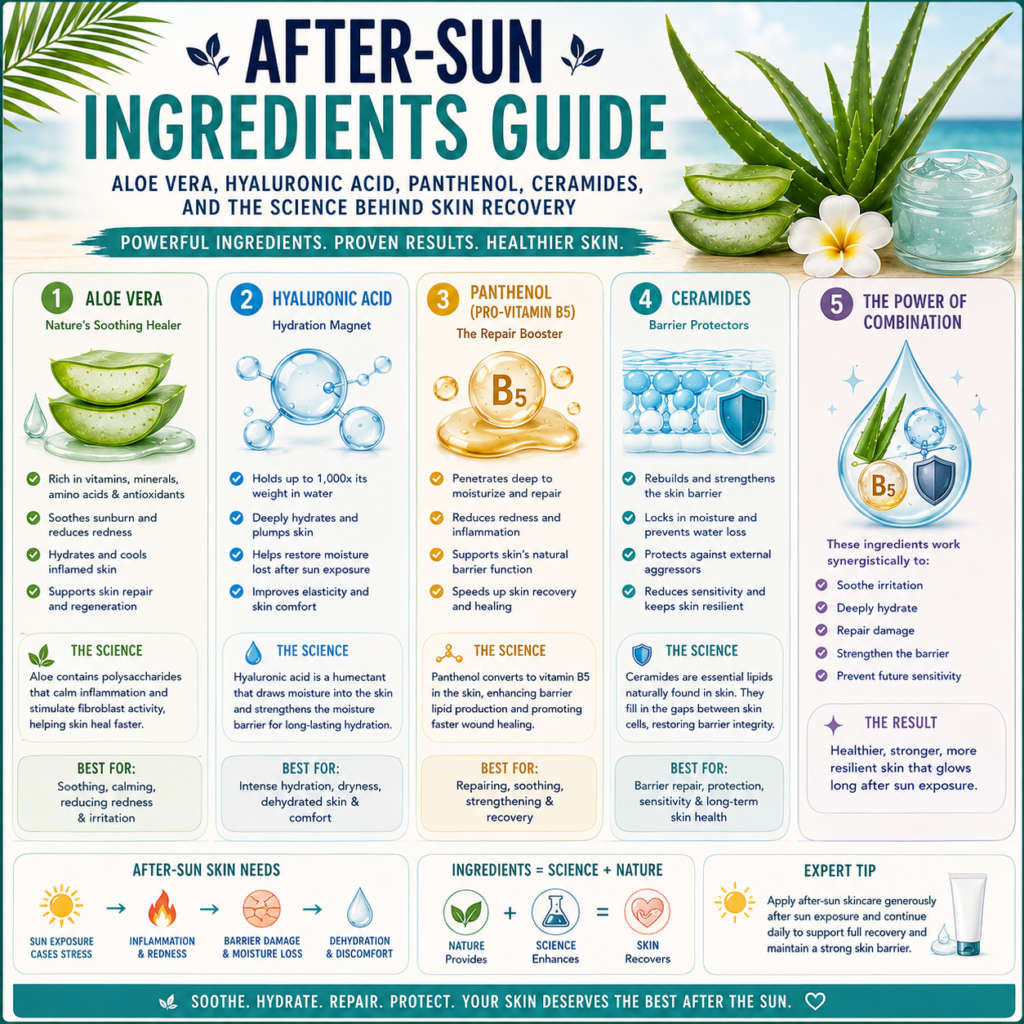
Common Ingredients Suitable for Most Skin Types
Several ingredients appear across a wide variety of after-sun formulations.
These include:
Aloe Vera
Known for its refreshing feel.
Glycerin
Supports hydration through humectant properties.
Panthenol
Often included in products formulated for skin comfort.
Hyaluronic Acid
Helps maintain moisture.
Ceramides
Support the skin’s protective barrier.
These ingredients frequently work well together within balanced formulations.
Texture Matters as Much as Ingredients
Choosing the right product texture often improves comfort.
Common options include:
Gel
Lightweight and refreshing.
Lotion
Balanced hydration suitable for many skin types.
Cream
Richer moisturization for dry or mature skin.
Body Milk
Easy to spread over large areas while remaining lighter than many creams.
Personal preference plays an important role in selecting the most enjoyable formulation.
Adjust Your Routine Throughout the Year
Your skin type remains relatively consistent, but environmental conditions change.
For example:
- Summer heat may encourage lighter moisturizers.
- Cooler months may require richer formulations.
- Holiday travel may expose skin to different climates.
- Air conditioning may contribute to dryness.
Adapting your routine seasonally helps maintain consistent skin comfort.
Additional Tips for Every Skin Type
Regardless of skin type, several habits benefit almost everyone after spending time outdoors.
These include:
- Drinking sufficient water.
- Cleansing gently.
- Avoiding very hot showers.
- Moisturizing promptly after bathing.
- Wearing breathable clothing.
- Continuing daily sun protection.
Consistency often produces better long-term results than occasional intensive treatments.
Signs Your Routine May Need Adjustment
Your skincare routine should evolve according to your skin’s changing needs.
Consider reviewing your products if you notice:
- Persistent dryness.
- Increased oiliness.
- Tightness.
- Rough texture.
- Ongoing discomfort.
- Products that feel too heavy or too light.
Minor adjustments often improve comfort considerably.
Building a Personalized Routine
An effective after-sun routine may include:
Immediately After Sun Exposure
- Move indoors.
- Drink water.
- Shower using lukewarm water.
- Cleanse gently.
Skincare
- Apply a hydrating serum if appropriate.
- Moisturize according to your skin type.
- Use lip balm.
- Continue hydration throughout the evening.
Tailoring this basic structure to your skin type provides the most personalized results.
Final Thoughts
Every skin type benefits from thoughtful after-sun care, but the products that deliver the best results depend on your individual needs. Dry skin often requires richer moisturization, oily skin benefits from lightweight hydration, combination skin needs balanced formulations, sensitive skin responds well to gentle routines, and mature skin frequently appreciates additional barrier support.
By understanding your skin type and selecting products with appropriate ingredients and textures, you can create an after-sun routine that keeps your skin feeling comfortable, hydrated, and healthy after every day spent outdoors. The most effective skincare is always the routine that works consistently with your skin rather than against it.
—
The End
Velourana.com
 Discover More From Our Family of Websites
 ZodiacBearing (Astrology, Tarot, Numerology, Angel Numbers & Spiritual Guidance)
 Velourana (Beauty, Makeup, Hair Care, Skincare & Beauty Tips)
 HavenBearing (Home, Living, Organization, Décor & Everyday Inspiration)
 PawBearing (Pet Care, Dog Breeds, Animal Health, Training & Pet Products)
 PsyCatherine (Notes From the Journal of a Psychologist on Real Life)

