CATEGORY: After-Sun Skincare
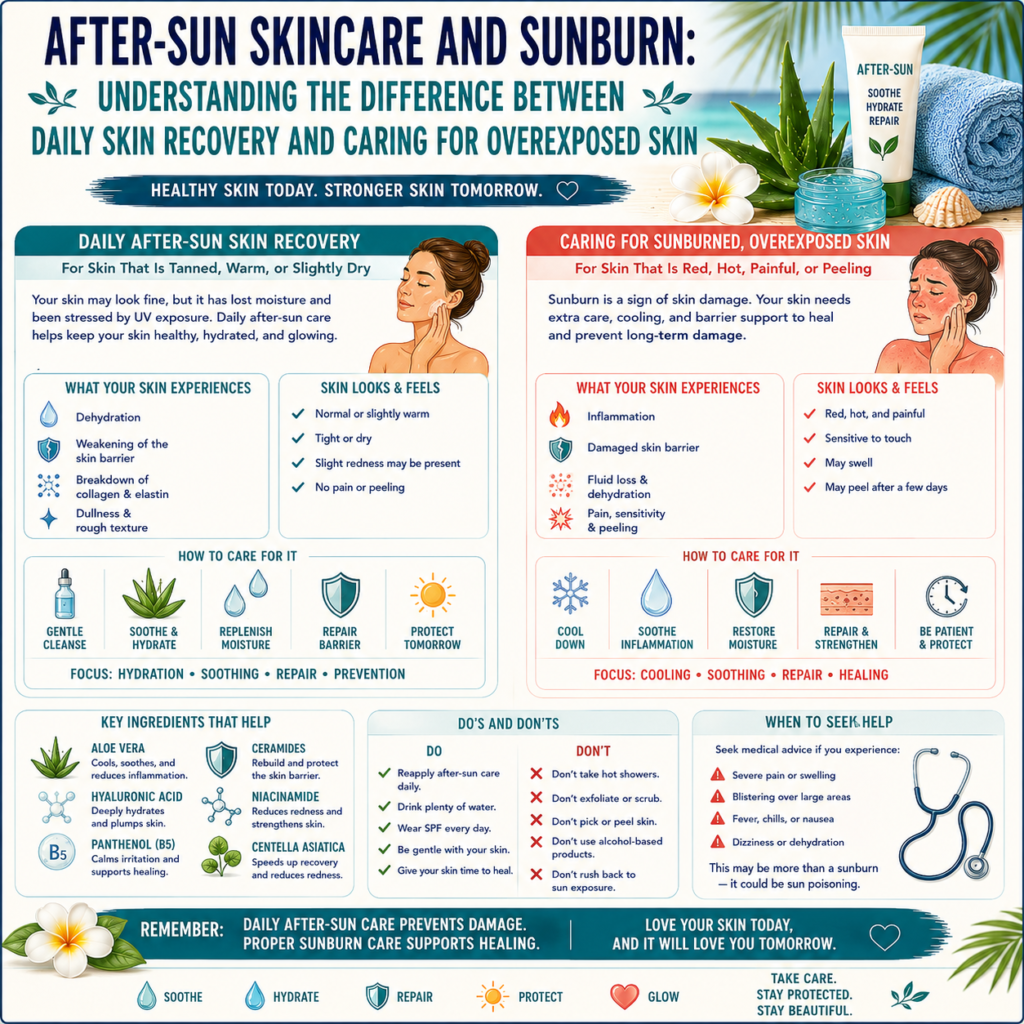
Many people use the terms after-sun skincare and sunburn treatment as though they mean the same thing. In reality, they describe two very different situations. After-sun skincare is part of a healthy daily skincare routine that helps replenish moisture and improve comfort after normal sun exposure, while sunburn is a form of skin damage caused by excessive exposure to ultraviolet (UV) radiation that requires a more cautious approach.
Understanding this distinction is important because it helps set realistic expectations for after-sun products. A moisturizing lotion can support hydration and leave the skin feeling more comfortable after a sunny afternoon, but it cannot reverse the biological effects of excessive UV exposure. Likewise, waiting until sunburn develops before thinking about skincare means missing the opportunity to care for the skin after everyday outdoor activities.
This guide explains the difference between normal after-sun care and caring for overexposed skin, how to recognize the signs of sunburn, what skincare products can realistically do, and how to build healthy habits that combine prevention with recovery.
What Is After-Sun Skincare?
After-sun skincare refers to the routine performed after spending time outdoors to help restore comfort and hydration.
Even when sunscreen has been applied correctly and no visible redness appears, the skin may still experience temporary moisture loss due to:
- Heat.
- Wind.
- Perspiration.
- Saltwater.
- Chlorinated pools.
- Environmental exposure.
The primary goals of after-sun care are to:
- Replenish moisture.
- Support the skin barrier.
- Improve skin comfort.
- Leave the skin feeling soft and refreshed.
It is a routine that can be beneficial after many days spent outdoors, not only after holidays or long beach visits.
What Is Sunburn?
Sunburn is an inflammatory reaction that occurs when the skin has been exposed to more ultraviolet radiation than it can tolerate.
Common signs include:
- Redness.
- Warmth.
- Pain or tenderness.
- Swelling.
- Increased sensitivity.
- Peeling in the days that follow.
More severe sunburn may involve blistering, extensive swelling, fever, chills, headache, dizziness, nausea, or dehydration. These symptoms require prompt medical assessment rather than self-treatment alone.
Why Prevention Is Better Than Recovery
The most effective way to care for sun-exposed skin is to reduce excessive exposure in the first place.
Healthy sun habits include:
- Applying broad-spectrum sunscreen correctly.
- Reapplying sunscreen according to product directions.
- Wearing protective clothing.
- Seeking shade during periods of intense sunlight.
- Wearing a wide-brimmed hat and UV-protective sunglasses.
- Planning outdoor activities outside peak UV hours when practical.
After-sun skincare supports the skin after exposure, but it does not replace preventive measures.
What After-Sun Products Can Do
Well-formulated after-sun products are designed to support skin comfort after normal sun exposure.
Depending on their ingredients, they may:
- Help replenish moisture.
- Improve the feeling of dryness.
- Support the skin’s protective barrier.
- Leave the skin feeling cooler and refreshed.
- Soften rough-feeling skin.
Regular use can make skin feel more comfortable following a day outdoors, especially when heat, wind, or water activities have contributed to dehydration.
What After-Sun Products Cannot Do
It is equally important to understand the limitations of skincare.
After-sun products cannot:
- Reverse UV-induced skin damage.
- Instantly repair sunburn.
- Replace sunscreen.
- Prevent future sunburn if applied before sun exposure (unless the product specifically contains sunscreen and is intended for that purpose).
- Eliminate the long-term effects associated with repeated excessive UV exposure.
Using after-sun products should always be viewed as part of an overall sun-care routine rather than a substitute for sun protection.
Recognizing Mild Sunburn
Mild sunburn usually develops several hours after excessive sun exposure.
Typical signs include:
- Pink or red skin.
- Mild tenderness.
- Warmth.
- Dryness.
- Tightness.
These symptoms often improve gradually over several days with appropriate self-care, provided they remain mild.
Caring for Mildly Sunburned Skin
If the skin has become mildly sunburned, gentle care is important.
Helpful measures include:
Move Out of the Sun
Avoid further UV exposure until the skin has recovered.
Cool the Skin
A cool (not icy) shower or cool compress may help improve comfort.
Moisturize Gently
Fragrance-free moisturizers or after-sun products designed to hydrate the skin may help relieve feelings of dryness.
Stay Hydrated
Drink water regularly, particularly after prolonged exposure to heat.
Avoid vigorous rubbing, harsh exfoliation, or very hot showers while the skin remains uncomfortable.
When Medical Advice Is Needed
Not every sunburn can be managed at home.
Medical attention should be sought promptly if sunburn is accompanied by symptoms such as:
- Extensive blistering.
- Severe pain.
- Fever.
- Chills.
- Confusion.
- Fainting.
- Persistent vomiting.
- Signs of dehydration.
Children, older adults, and individuals with underlying medical conditions may require additional caution.
Caring for Skin After Swimming
Swimming introduces additional factors beyond sunlight.
Saltwater and chlorinated water may contribute to temporary dryness.
A simple routine includes:
- Rinsing the skin with fresh water.
- Showering using lukewarm water.
- Cleansing gently.
- Applying moisturizer while the skin is slightly damp.
This routine helps remove residual salt, chlorine, sunscreen, and perspiration.
Ingredients Commonly Found in After-Sun Products
Many formulations include ingredients selected to hydrate and support skin comfort.
Common examples include:
- Aloe vera.
- Glycerin.
- Hyaluronic acid.
- Panthenol.
- Ceramides.
- Plant-derived emollients.
Each contributes differently to hydration and the maintenance of the skin barrier.
Everyday After-Sun Care Is Worthwhile
You do not need to spend an entire day on the beach to benefit from after-sun skincare.
Activities such as:
- Walking.
- Gardening.
- Outdoor exercise.
- Cycling.
- Watching outdoor sporting events.
- Dining outside.
may all leave the skin feeling drier than usual.
Making after-sun care a consistent habit supports skin comfort throughout the warmer months.
Building a Complete Sun-Care Routine
Healthy skin benefits from combining prevention with recovery.
A balanced routine includes:
Before Going Outdoors
- Apply sunscreen.
- Wear protective clothing.
- Carry water.
After Returning Indoors
- Move into a cool environment.
- Shower using lukewarm water.
- Cleanse gently.
- Apply hydrating skincare.
- Moisturize generously.
- Continue drinking water.
Each step supports the next, creating a comprehensive approach to skin health.
Common Misunderstandings
Several misconceptions continue to circulate about after-sun care.
For example:
- After-sun lotion is not a replacement for sunscreen.
- A tan does not mean the skin avoided UV stress.
- Moisturizer cannot reverse sunburn.
- Healthy skin benefits from after-sun care even without visible redness.
Understanding these distinctions leads to better long-term skincare habits.
Long-Term Skin Health
The skin is exposed to environmental conditions throughout life.
Developing consistent routines that include:
- Sensible sun protection.
- Gentle cleansing.
- Regular moisturization.
- Healthy hydration.
- Awareness of skin changes.
helps support healthy-looking skin over time.
Monitoring your skin and consulting a healthcare professional about any unusual or changing lesions remains an important part of overall skin health.
Final Thoughts
After-sun skincare and sunburn care are closely related but not identical. Daily after-sun routines focus on restoring hydration, supporting the skin’s natural barrier, and improving comfort after ordinary sun exposure, while sunburn requires greater caution and, in more serious cases, professional medical attention. Understanding the difference allows you to use skincare products appropriately and develop realistic expectations about what they can achieve.
The healthiest approach combines prevention with thoughtful recovery. By protecting your skin before going outdoors and caring for it gently afterwards, you support its natural resilience while helping it remain comfortable, hydrated, and healthy-looking throughout every season.
—
The End
Velourana.com
 Discover More From Our Family of Websites
 ZodiacBearing (Astrology, Tarot, Numerology, Angel Numbers & Spiritual Guidance)
 Velourana (Beauty, Makeup, Hair Care, Skincare & Beauty Tips)
 HavenBearing (Home, Living, Organization, Décor & Everyday Inspiration)
 PawBearing (Pet Care, Dog Breeds, Animal Health, Training & Pet Products)
 PsyCatherine (Notes From the Journal of a Psychologist on Real Life)