CATEGORY: After-Sun Skincare
After spending hours enjoying sunshine at the beach, relaxing by the pool, hiking through nature, or simply working outdoors, your skin often feels noticeably different. It may feel warm, tight, dehydrated, or more sensitive than usual. While sunscreen helps protect the skin during sun exposure, after-sun lotion focuses on caring for the skin once the day is over.
Many people mistakenly believe after-sun lotions are only necessary when the skin becomes sunburned. In reality, every significant period of sun exposure places demands on the skin, even when sunscreen has been applied correctly and no visible redness appears. Heat, ultraviolet (UV) radiation, wind, sea salt, and chlorinated water can all contribute to temporary moisture loss and leave the skin needing additional care.
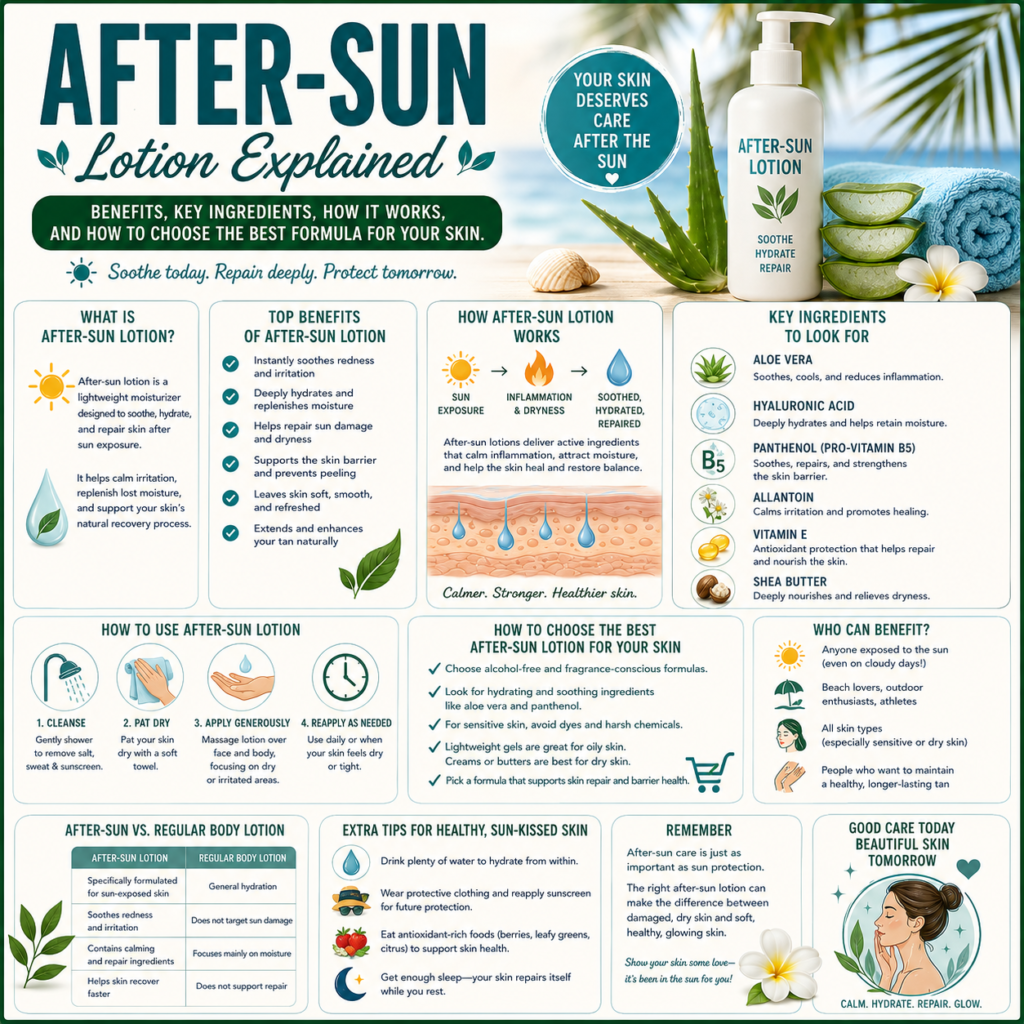
An effective after-sun lotion is designed to replenish hydration, support the skin’s natural barrier, improve comfort, and help restore the skin’s healthy appearance. This guide explains how after-sun lotions work, which ingredients are commonly used, how to choose the right formula for your skin type, and how to incorporate one into your daily skincare routine.
What Is an After-Sun Lotion?
An after-sun lotion is a moisturizing skincare product formulated specifically for use after sun exposure.
Unlike sunscreen, which is designed to help protect the skin before and during exposure to ultraviolet radiation, after-sun lotion is intended to support the skin’s recovery afterwards.
Its primary goals are to:
- Restore hydration.
- Improve skin comfort.
- Support the skin barrier.
- Reduce feelings of tightness.
- Leave the skin feeling refreshed.
- Help maintain smooth, healthy-looking skin.
Many modern after-sun products are lightweight enough for everyday summer use.
Why Skin Needs Moisture After Sun Exposure
Even when the skin does not appear sunburned, prolonged time outdoors often increases moisture loss.
Factors that contribute include:
- Sunlight.
- Heat.
- Perspiration.
- Wind.
- Saltwater.
- Chlorinated swimming pools.
As moisture levels decrease, the skin may temporarily feel:
- Dry.
- Tight.
- Rough.
- Less comfortable.
- More sensitive than usual.
Replacing lost hydration is therefore one of the most important steps in after-sun care.
How After-Sun Lotion Works
Most after-sun lotions focus on restoring moisture while supporting the skin’s natural protective barrier.
Different formulations achieve this through combinations of ingredients that:
Attract Moisture
Humectants help draw water toward the outer layers of the skin.
Reduce Moisture Loss
Barrier-supporting ingredients help the skin retain hydration.
Improve Comfort
Many formulas include ingredients selected for their cooling or soothing feel.
Leave Skin Soft
Emollients smooth the skin’s surface and improve texture.
These combined actions help the skin feel healthier and more comfortable after spending time outdoors.
Common Ingredients Found in After-Sun Lotions
Many after-sun products contain ingredients selected for hydration and skin comfort.
Frequently used ingredients include:
Aloe Vera
One of the most widely recognized after-sun ingredients because of its refreshing feel and moisturizing properties.
Glycerin
A humectant commonly used to help attract and retain moisture.
Hyaluronic Acid
Frequently included to support skin hydration by binding water within the outer layers of the skin.
Panthenol
Often used in skincare products designed to improve skin comfort and support hydration.
Ceramides
Help reinforce the skin’s protective barrier and reduce moisture loss.
Different products combine these ingredients according to their intended purpose and texture.
Lotion, Gel, Cream, or Milk?
After-sun products are available in several different textures.
Lotion
Lightweight, easy to spread, and suitable for everyday use on most skin types.
Gel
Often provides an especially refreshing sensation and absorbs quickly.
Cream
Typically richer and more nourishing for very dry skin.
Body Milk
Usually lighter than creams while providing generous hydration over large areas.
The best choice depends on individual skin type, climate, and personal preference.
Choosing the Right After-Sun Lotion
Different skin types benefit from different formulations.
Dry Skin
Look for richer moisturizing ingredients that help reduce moisture loss.
Oily Skin
Lightweight, fast-absorbing lotions often feel more comfortable.
Sensitive Skin
Fragrance-free or specially formulated products may be preferred.
Mature Skin
Hydrating formulations that support the skin barrier are often beneficial.
Choosing products appropriate for your individual skin type generally produces the most comfortable results.
How to Apply After-Sun Lotion
Application is simple but timing matters.
For best results:
- Shower using lukewarm water.
- Gently pat the skin dry.
- Apply lotion while the skin is still slightly damp.
- Spread evenly over exposed areas.
- Reapply if the skin later feels dry.
Allow the lotion to absorb fully before dressing.
Areas That Need Extra Attention
Certain parts of the body receive greater sun exposure than others.
Pay particular attention to:
- Shoulders.
- Chest.
- Neck.
- Arms.
- Legs.
- Feet.
These areas often benefit from generous moisturization following outdoor activities.
Can After-Sun Lotion Replace Sunscreen?
No.
After-sun lotion and sunscreen perform completely different roles.
Sunscreen is designed for application before and during sun exposure to help protect the skin from ultraviolet radiation.
After-sun lotion is intended for use afterwards to replenish hydration and support skin comfort.
Using one does not eliminate the need for the other.
Everyday Summer Moisturizing
Many people use after-sun lotion even after relatively short periods outdoors.
Doing so helps:
- Maintain hydration.
- Improve skin softness.
- Support the skin barrier.
- Create a refreshing post-shower routine.
Regular moisturization throughout the summer may help keep skin looking healthier and feeling more comfortable.
Storage Tips
Proper storage helps preserve product quality.
Most after-sun lotions should be:
- Stored according to the manufacturer’s instructions.
- Protected from excessive heat.
- Kept out of direct sunlight.
- Closed securely after use.
Some people enjoy storing after-sun lotions in the refrigerator for an additional cooling sensation, provided this is compatible with the product’s storage guidance.
Building an Effective After-Sun Routine
An effective routine may include:
Immediately After Sun Exposure
- Move into the shade or indoors.
- Drink water.
- Shower using lukewarm water.
- Cleanse gently.
After Showering
- Apply after-sun lotion generously.
- Moisturize the face using appropriate skincare products.
- Apply lip balm if needed.
Evening
- Continue moisturizing if the skin feels dry.
- Allow the skin time to recover overnight.
Consistency often provides better long-term results than occasional use.
Supporting Healthy Skin All Summer
After-sun lotion works best as part of a complete sun-care routine.
Healthy habits include:
- Applying sunscreen before sun exposure.
- Wearing protective clothing.
- Seeking shade during periods of intense sunlight.
- Staying hydrated.
- Moisturizing after spending time outdoors.
Together, these practices help maintain healthier-looking skin throughout the year.
Final Thoughts
After-sun lotion is far more than a product reserved for occasional sunburn. It is an important part of everyday summer skincare that helps replenish moisture, support the skin’s protective barrier, and improve overall comfort after time spent outdoors. Whether your skin has been exposed to sunshine, heat, wind, sea salt, or chlorinated water, a quality after-sun lotion helps restore hydration and leaves your skin feeling soft, refreshed, and well cared for.
By choosing a formulation suited to your skin type and applying it consistently after sun exposure, you can help maintain smoother, healthier-looking skin while making after-sun care an effortless part of your daily skincare routine.
—
The End
Velourana.com
 Discover More From Our Family of Websites
 ZodiacBearing (Astrology, Tarot, Numerology, Angel Numbers & Spiritual Guidance)
 Velourana (Beauty, Makeup, Hair Care, Skincare & Beauty Tips)
 HavenBearing (Home, Living, Organization, Décor & Everyday Inspiration)
 PawBearing (Pet Care, Dog Breeds, Animal Health, Training & Pet Products)
 PsyCatherine (Notes From the Journal of a Psychologist on Real Life)