
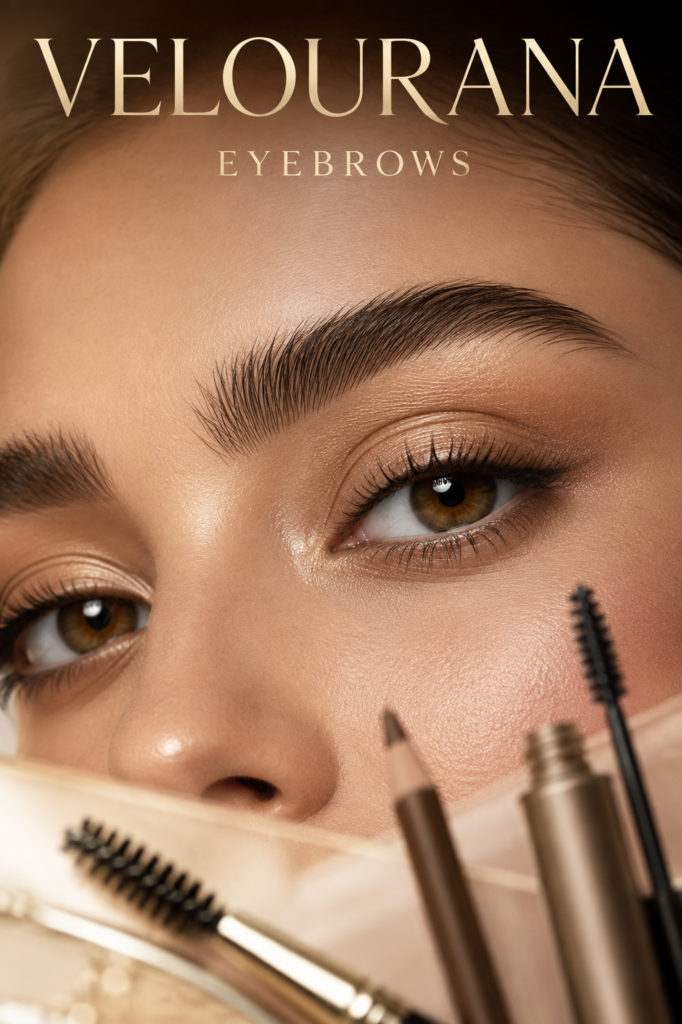
CATEGORY: Ombre Brows
The defining sophistication of ombre brows lies not in darkness but in distribution. Pigment is intentionally distributed across the eyebrow so that the inner portion remains comparatively soft while structure and depth increase toward the arch and tail. This controlled transition can make eyebrows appear fuller and more polished while avoiding the visual heaviness that occurs when every section receives identical intensity.
Although the concept appears simple, the technique involves several interacting elements. Shape determines where pigment should sit. Natural density determines how much additional color is required. Product texture influences whether edges appear soft or precise. Pressure controls opacity. Blending determines whether transitions remain seamless. Color selection decides whether the finished brow integrates with the person's natural features.
For this reason, ombre brows are better understood as an approach to visual balance than as one rigid application method.
The technique can be subtle enough for understated everyday makeup or developed into a stronger, more sculpted brow. It can work on naturally dense eyebrows, sparse growth, straight brows, rounded brows, and prominent arches. What unites these variations is the deliberate movement from softness toward definition.
When executed carefully, the gradient is visible without becoming obvious. The viewer notices a balanced eyebrow rather than a sequence of makeup decisions.
Preparing the Natural Brow as the Foundation
Ombre makeup performs best when the underlying eyebrow is clearly visible and properly arranged. Preparation therefore begins by understanding the natural brow rather than immediately covering it with pigment.
Brushing through the hairs reveals their direction and density. The front may contain vertical growth, the central section may be fuller, and the tail may become increasingly fine. Sparse areas become easier to identify once hairs are separated.
Skin condition also influences product behavior. Excess moisturizer, sunscreen, foundation, or facial oil can cause powder and pencil to adhere unevenly. Pomade may slide or deposit too intensely in certain areas. Removing unnecessary residue from the brow area creates a more predictable surface.
This does not require making the skin excessively dry. The objective is simply to avoid a slippery layer that interferes with control.
Existing brow hair should remain part of the finished texture. Foundation trapped in the hairs can make them appear dull and reduce the dimensional effect of the ombre gradient. A clean spoolie can remove residue before brow makeup begins.
At this stage, the overall shape can be assessed. The starting point, arch, and tail provide orientation, but natural proportions should remain central. Mapping can help identify balance without forcing the brows into a standardized template.
Preparation establishes the canvas, but it should not erase the individuality of the brow that already exists.
Mapping an Ombre Brow Without Creating a Rigid Template
Mapping can be useful because ombre brows still require coherent shape, particularly when the natural growth is sparse. Yet the mapping should function as guidance rather than as a boundary that must be filled completely.
The beginning of the brow deserves particular attention. If the mapped starting point is treated as a hard vertical edge, the soft gradient can immediately be compromised. Instead, the inner boundary can remain visually open.
The lower line often provides the most useful structural reference. It establishes the general direction from front to arch and helps both brows appear balanced. This line can become gradually more defined as it travels outward.
The upper edge may require less continuous definition. Through the front and body, leaving it relatively soft can preserve natural texture. Greater precision can appear near the arch and tail where the brow naturally narrows.
The arch position should reflect existing bone structure and growth. Dramatically relocating it may require so much correction that the eyebrow begins to appear artificial.
Tail length can be assessed in relation to the eye and surrounding facial structure. A short tail can be extended, but the extension should follow a believable trajectory.
The resulting map is therefore not a closed shape waiting to be colored. It is a collection of reference points that guide where increasing definition should occur.
Controlling Pigment Through Pressure
One of the simplest ways to create an ombre gradient is to change application pressure.
With a pencil, light contact produces faint marks suitable for the front and transitional body. Greater pressure creates deeper pigment for the arch and tail. The same pencil can therefore produce several apparent shades.
With powder, pressure affects both deposition and blending. A softly loaded brush can create a transparent haze, while repeated application increases saturation.
Pomade responds particularly strongly to pressure and product quantity. A brush containing too much product can create an opaque mark immediately. Working a small amount into the bristles and removing excess before application gives far greater control.
Pressure should generally increase gradually rather than suddenly. This mirrors the visual progression of the brow.
The hand itself also affects line quality. Heavy pressure can create thick, blunt marks even with a fine tool. Light movements allow the product to interact with skin texture and existing hair rather than covering them completely.
Control becomes especially important at the front. A single heavily deposited mark can disrupt the softness of the entire eyebrow.
The ombre technique therefore demonstrates that product color alone does not determine intensity. The same shade can appear dramatically different depending on how it reaches the skin.
Creating the Softest Part of the Gradient
The first section of the brow establishes the visual tone of the entire ombre effect.
Instead of beginning with a fully loaded brush at the inner corner, product can first be applied farther outward. Once the majority has been deposited, the remaining color can be feathered inward. This naturally produces a lighter concentration.
If pencil strokes are used, they can follow the natural hair direction. Their spacing can remain relatively open, allowing skin to show between them.
Powder can be introduced as a faint shadow rather than an opaque fill. The upper front should usually remain especially soft because a sharply defined top corner can make the eyebrow appear squared.
The exact amount of softness depends on natural density. Someone with very full inner brows may already possess significant depth. Artificially creating an extremely pale front could look inconsistent with the actual hair. Ombre technique should complement the brow rather than contradict it.
Likewise, a person with almost no inner growth may need enough cosmetic structure to establish where the eyebrow begins. Soft does not mean invisible.
The ideal front provides orientation without becoming a dominant geometric feature. It should feel like an emergence of density rather than a painted starting line.
Developing the Transition Through the Middle
The middle section is where technical control becomes most visible because it must connect two different levels of intensity.
A common problem is creating a soft front and a dark outer brow without sufficient transition between them. The result resembles two styles attached together rather than one gradient.
The central area should therefore accumulate pigment progressively.
If powder is used, additional layers can be placed as the brush moves outward. With pencil, strokes can become slightly closer together and deeper. Pomade can become more concentrated while still being blended into the preceding section.
The natural hairs contribute significantly. If density increases naturally through the body, less cosmetic pigment may be needed because the hair itself creates the gradient.
Edge definition can increase simultaneously. The lower boundary may become cleaner while the upper edge remains relatively soft. This creates structure without making the entire brow equally sharp.
The middle also provides an opportunity to correct gaps. Rather than filling a gap as a dark patch, several strokes or layers can integrate it with the surrounding density.
A successful transitional body is almost invisible as a technical zone. Its purpose is to prevent the viewer from identifying exactly where softness becomes definition.
Using the Arch as the Point of Maximum Structure
The arch frequently serves as the structural center of the outer brow. By the time the gradient reaches this area, pigment can be considerably stronger than at the front.
Greater lower-edge definition can emphasize lift. The upper edge can also become clearer, particularly if the natural arch lacks density.
This does not mean surrounding the arch with a harsh outline. Texture can remain visible, and the boundaries can still integrate with natural hair.
The arch is also where asymmetry often becomes apparent. One brow may peak higher or farther outward. Small corrections can improve balance without rebuilding both shapes.
When additional height is desired, pigment placed strategically along the upper arch can create the impression of lift. Removing large amounts of hair beneath the brow is not always necessary.
Color depth should remain connected to the transitional body. If the arch suddenly becomes several shades darker, the gradient loses continuity.
The arch represents increased structure, not a separate block of pigment.
Refining the Tail and Preserving Proportion
The tail completes the ombre progression and usually carries the greatest precision.
Because the eyebrow naturally narrows here, controlled definition can appear elegant rather than severe. Both edges may become clearer as they converge toward the endpoint.
The pigment can also reach its greatest concentration, although the tail should remain compatible with the natural brow color. A black or extremely dark tail attached to a medium-brown brow may appear disconnected.
A missing or sparse tail can be reconstructed with strokes following the direction of existing hair. A soft underlying shade can provide density, followed by finer marks that create texture.
Length should be considered carefully. Extending the tail can balance a short eyebrow, but excessive downward extension can visually pull the eye area lower. A very long horizontal tail can alter facial proportions in another way.
The endpoint should taper naturally. A thick, blunt finish interrupts the visual flow.
Precision is useful here precisely because the rest of the eyebrow has prepared for it. The soft front and developing body allow the tail to carry greater definition without making the entire brow appear harsh.
Combining Powder and Pencil for Dimensional Ombre Brows
Powder and pencil create complementary effects.
Powder produces atmospheric density. It softens the appearance of bare skin and can create gradual tonal transitions. Pencil produces detail, allowing individual gaps, edges, and extensions to be addressed precisely.
When combined, powder can establish the broad gradient while pencil provides texture and structure.
The inner brow may receive only a trace of powder or a few fine pencil strokes. Through the body, powder can become more concentrated. Pencil can then strengthen areas where natural hairs are missing.
Around the arch and tail, the pencil can provide increasingly clear definition while the powder maintains tonal continuity.
The order can vary according to preference and brow condition. Some techniques establish the powder base first and add strokes afterward. Others create structural pencil marks before softening them with powder.
What matters is that neither product overwhelms the other. If powder becomes completely opaque, pencil strokes may disappear visually. If pencil lines are too heavy, the softness of the powder loses relevance.
Dimensionality emerges when background density and foreground hair texture remain separately perceptible.
Working With Pomade Without Creating a Block Brow
Pomade is frequently associated with highly defined eyebrows because of its strong pigmentation and creamy consistency. Yet it can produce sophisticated ombre effects when quantity is carefully controlled.
The amount on the brush should be extremely small relative to the intensity the product can create. Working pomade into a fine angled brush helps distribute it evenly through the bristles.
The strongest product concentration can be reserved for the outer brow. Once much of that pigment has transferred to the skin, the remaining amount can be blended toward the inner section.
This automatically supports a gradient.
Short strokes are generally easier to integrate than one continuous heavy line. The lower boundary can be developed gradually, becoming stronger toward the arch.
At the front, the brush should contain minimal residual product. Light upward marks can imitate hair without producing a solid square.
Pomade can also be softened with a spoolie before it sets. Timing matters because some formulas become resistant to movement as they dry.
The objective is to use the durability and precision of pomade without allowing its pigmentation to eliminate transparency.
A powerful product does not require a powerful-looking result. Control determines whether the finish becomes graphic or graduated.
Using Brow Gel to Reinforce Texture
After pigment has established the gradient, brow gel can return attention to the actual hairs.
This is particularly valuable because powder, pencil, and pomade primarily affect the skin beneath and around the hair. Gel separates and positions the strands above that cosmetic base, restoring three-dimensional texture.
Clear gel preserves the chosen color while controlling direction. Tinted gel can increase apparent density, particularly through the body and tail.
Application can follow the same gradient principle. Heavy tinted gel at the front may undermine earlier efforts to keep that area soft. Beginning through the middle and outer brow before lightly touching the front can maintain balance.
Hair direction can also support the ombre structure. Inner hairs may be lifted slightly, creating openness. Central hairs can move diagonally outward. Tail hairs can follow the narrowing shape.
The final result becomes a combination of skin-level pigment and visible hair.
This layering is one reason ombre brows can appear dimensional despite relatively polished shaping.
Correcting a Front That Has Become Too Dark
Because the brow front is visually sensitive, excess pigment there is one of the most common challenges.
The first response should usually be removal or redistribution rather than adding more pigment elsewhere to compensate.
A clean spoolie can lift and spread excess product. Brushing upward and outward may expose more skin between the hairs and soften concentrated color.
For powder, a clean brush can diffuse the area further. If necessary, a small amount of complexion product can be used carefully around the boundary, although covering the entire front with concealer can create another artificial edge.
Pencil marks may be softened with a spoolie or gently reduced before additional layers are applied.
The temptation to darken the rest of the brow until the front appears relatively lighter should generally be resisted. This can turn a small error into an unnecessarily heavy overall result.
Ombre technique depends on preserving contrast between sections. Restoring the softness of the front is therefore more effective than eliminating the contrast.
Correcting a Gradient That Looks Patchy
A patchy gradient differs from a naturally textured brow. Texture contains intentional variation; patchiness produces disconnected areas of pigment.
This can occur when product adheres unevenly to oily or heavily moisturized skin. It can also result from applying too much pigment in isolated sections.
Correction begins by determining whether the problem is excess or absence.
A concentrated patch can be diffused with a spoolie or clean brush. A pale interruption can receive a small amount of product matching the surrounding transitional intensity.
The correction should respect the gradient. Filling every patch to the darkest level would create uniformity rather than continuity.
Layering thin amounts is usually more controllable than applying one heavy correction.
Evaluating the brow from farther away is useful because tiny variations visible in a magnifying mirror may not affect the overall result.
The goal is not microscopic perfection. It is a visually uninterrupted progression when the eyebrow is seen as part of the face.
Adapting the Ombre Effect to Different Brow Shapes
Ombre technique is independent of any single eyebrow shape.
Straight brows can maintain their horizontal character while transitioning from a soft front to a stronger tail. The gradient provides dimension without introducing an artificial arch.
Rounded brows can follow their natural curve. Greater definition around the outer curve can reinforce structure while the inner section remains diffused.
Soft-angled brows naturally accommodate the technique because the developing intensity can lead toward the subtle peak before narrowing into the tail.
High arches can use deeper pigmentation around the peak and tail while maintaining enough softness to prevent the arch from becoming overly severe.
Short brows can benefit from carefully extended tails, while long brows may require little extension at all.
The gradient should serve the shape rather than replace it.
This adaptability is one reason ombre brows remain relevant across changing trends. The technique can evolve while individual brow architecture remains intact.
Matching Ombre Intensity to the Rest of the Face
Eyebrow intensity is perceived relative to surrounding makeup.
Against bare or lightly perfected skin, a very strong ombre brow may become the dominant facial feature. A softer gradient can provide sufficient definition while maintaining overall harmony.
With eyeliner, lashes, or deeper eyeshadow, stronger brows may be necessary to prevent the upper face from appearing visually unbalanced. The arch and tail can carry additional depth while the front retains softness.
Lip color also affects the balance of contrast. A strong lip can accommodate a more defined brow, although matching intensity exactly is unnecessary.
Hair color and hairstyle influence perception as well. Dark hair framing the face may make deeper brows appear integrated, while very light hair can increase the prominence of strong brow pigment.
Lighting changes the result further. Bright daylight reveals heavy edges and excessive product more clearly, while photography or evening lighting may visually reduce subtle definition.
Ombre brows therefore work best when evaluated within the entire beauty look rather than in isolation.
Longevity and Maintaining the Gradient
A gradient is only successful if its different levels of intensity remain reasonably stable during wear.
When the soft front disappears entirely while the darker tail remains intact, the brow may look incomplete. When the front smudges and becomes darker, the ombre effect can reverse.
Product selection can address these concerns.
Long-wearing pencils and pomades can provide durability in areas where precision matters. Powder can be layered carefully for greater adherence. Gel can help maintain hair direction and prevent the brow texture from collapsing.
Skin preparation remains important, particularly for oily complexions. Removing excess surface oil before application can improve consistency.
Touching or rubbing the brows should be minimized because fine inner strokes are particularly vulnerable to movement.
If touch-ups are necessary, the original gradient should guide them. Restoring a faded front does not require matching the depth of the tail. Likewise, reinforcing the tail should not automatically involve adding more product through the entire brow.
Maintaining ombre brows means preserving relationships between areas, not merely preserving maximum color.
Why the Best Ombre Brows Do Not Look Divided Into Sections
Technical descriptions often separate the eyebrow into front, body, arch, and tail because this makes the method easier to understand. Visually, however, a successful ombre brow should not look segmented.
The viewer should see one continuous eyebrow.
The front should flow into the body. The body should develop naturally toward the arch. The arch should lead into the tail. Color, texture, and edge definition should change gradually enough that no transition appears abrupt.
This is why blending and observation are as important as pigment placement.
An ombre brow is not simply a formula in which one part is light and another dark. It is a controlled progression in which each neighboring area remains closely related.
The distinction is subtle but fundamental.
When the gradient becomes seamless, the technique can create remarkable depth. The brow appears soft where softness flatters the central face and increasingly structured where definition strengthens the outer eye area. Natural hairs remain visible above the cosmetic work, giving the brow dimension rather than flat opacity.
The finished result can be understated or dramatic, but it retains the same internal logic: intensity grows rather than suddenly appears.
Ombre brows demonstrate how sophisticated eyebrow makeup can emerge from carefully controlled differences rather than uniform perfection. The technique uses contrast, but it disguises the boundaries of that contrast. It uses definition, but concentrates it selectively. It uses pigment, but allows lighter areas to remain meaningful.
Ultimately, mastering ombre brows is the art of making transition itself almost invisible. When no single line announces where the gradient begins or ends, the eyebrow appears cohesive, balanced, and intentionally dimensional.
THE END VELOURANA
 Discover More From Our Family of Websites
 ZodiacBearing (Astrology, Tarot, Numerology, Angel Numbers & Spiritual Guidance)
 Velourana (Beauty, Makeup, Hair Care, Skincare & Beauty Tips)
 HavenBearing (Home, Living, Organization, Décor & Everyday Inspiration)
 PawBearing (Pet Care, Dog Breeds, Animal Health, Training & Pet Products)
 PsyCatherine (Notes From the Journal of a Psychologist on Real Life)

