CATEGORY: Defined Brows
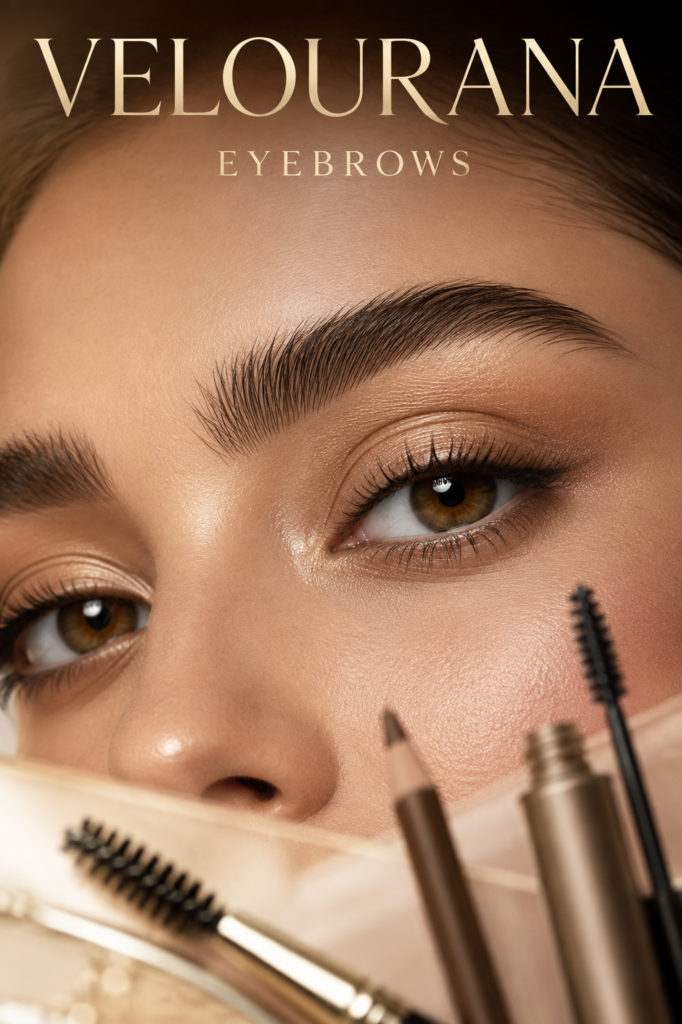
A beautifully defined eyebrow can change the visual organization of the entire face without appearing obviously altered. The eyes may seem more framed, the upper face more balanced, and the surrounding makeup more complete. This effect explains why eyebrow definition remains important even as beauty trends move repeatedly between natural, fluffy, laminated, thin, straight, arched, and highly polished styles.
Definition survives these changes because it is not itself a single shape. It is a technique of creating visual clarity.
A defined eyebrow communicates where it begins, how it develops through the central section, where its highest structural point occurs, and how it resolves into the tail. These elements may be extremely subtle or deliberately dramatic. What matters is that they appear connected.
The challenge is achieving this coherence without erasing the characteristics that make real brows look alive. Natural hair direction, uneven density, slight asymmetry, and variations in texture all contribute to realism. The most sophisticated defined brow therefore balances two seemingly opposite qualities: precision and imperfection.
Understanding Definition as Visual Organization
An undefined brow is not necessarily sparse. Some naturally dense eyebrows lack visible structure because the hairs grow in several directions or extend beyond the main shape. Conversely, a sparse eyebrow can appear strongly defined when its boundaries and proportions are carefully established.
This distinction is important because it changes the purpose of brow makeup.
If density is the problem, additional color may help. If direction is the problem, grooming and hold may be more effective. If the tail lacks shape, precision work may be required only in that region. If the lower boundary is inconsistent, correcting that single line can make the entire eyebrow appear more polished.
Treating all of these situations with the same product applied uniformly across the entire brow usually creates unnecessary heaviness.
Definition is more effective when the eyebrow is analyzed in zones.
The front establishes the beginning and should generally retain some openness. The body carries most of the visual density. The arch creates directional movement. The tail provides closure and refinement.
Each zone contributes differently, so each can be treated differently.
Natural Hair Growth Should Guide the Design
Before changing a brow, its natural growth pattern provides valuable information.
At the front, hairs frequently grow upward. Moving toward the center, they begin to angle outward. Near the arch and tail, they often lie more horizontally or diagonally.
These changes create natural movement. When makeup strokes ignore them, the result can look artificial even when the shape itself is technically attractive.
Hair direction can also reveal where apparent gaps are misleading. A section may look sparse when the hairs are lying incorrectly but appear full once brushed into position. This is one reason grooming before filling is so important.
Natural growth also influences the amount of structure a brow can support. Coarse, dense hairs already create strong visual presence. Adding heavy pigment underneath them may make the brow disproportionately dominant. Fine, pale hairs may require more color to achieve a similar degree of visible definition.
The existing brow should therefore be treated as the foundation rather than an obstacle.
Even when significant reshaping is desired, working with some aspect of natural growth usually produces a more integrated result.
Establishing the Beginning Without Creating a Block
The inner brow has an outsized influence on whether brow makeup looks natural.
A sharply squared beginning can immediately reveal cosmetic construction. This effect becomes particularly obvious when the inner edge is dark, vertical, and perfectly solid.
Real brows rarely begin this way.
Their starting points usually contain fewer hairs, more visible skin, and greater variation in direction. Maintaining some of these characteristics allows the brow to transition naturally into the face.
For defined brows, the front can still have a clear location without having a hard boundary. Fine strokes can reinforce missing hairs. Light powder can create subtle shadow. Tinted gel can make pale hairs more visible.
The intensity should generally increase gradually toward the central section.
This does not require an exaggerated gradient. The difference may be slight. What matters is avoiding equal saturation from the first millimeter of the brow to the tail.
When the beginning remains softer, stronger definition elsewhere becomes easier to wear because the entire brow retains dimensionality.
The Lower Brow Line as a Structural Anchor
Among all areas of the eyebrow, the lower boundary often provides the greatest opportunity for controlled definition.
A relatively clean underside creates visual separation between the eyebrow and eyelid. It can make the shape easier to read and may contribute to a more lifted or open appearance around the eyes.
This line does not need to be dramatically drawn.
Small gaps can be connected with pencil, powder, or pomade. Pigment can then be blended upward so that the edge remains controlled while the interior retains texture.
The location of the lower boundary also affects perceived thickness. Filling significantly below natural hair growth can enlarge the eyebrow, while removing too much from underneath can create an unnecessarily thin shape.
Changes should therefore be considered in relation to the entire brow rather than made simply to achieve a perfectly smooth line.
The strongest lower definition is often concentrated from the central brow toward the tail, with slightly softer treatment near the front.
This produces structure while preserving a natural transition at the inner corner.
Creating Fullness Without Flattening the Brow
Sparse areas are one of the most common reasons for using brow makeup, but filling them completely is not always the most convincing solution.
Natural eyebrows contain visible skin.
When every opening is covered with opaque pigment, the eyebrow can lose depth. Hair and makeup merge into one continuous surface, particularly when a creamy or highly pigmented product is used.
A more dimensional approach introduces fullness selectively.
Fine strokes can bridge larger gaps while allowing smaller spaces to remain. Powder can create a soft shadow beneath hair without completely hiding the skin. Pencil can reinforce sections where the silhouette appears interrupted.
Layering also matters. Beginning with a small amount of product makes it possible to evaluate the effect before adding more. Brow makeup is usually easier to intensify than to remove cleanly once too much has been applied.
The goal is visual density rather than literal coverage.
From normal viewing distance, a brow can appear full and complete while still containing considerable texture and skin visibility at close range.
Working With the Arch Rather Than Manufacturing One
The arch is frequently treated as the defining feature of an eyebrow, but not every face benefits from a pronounced peak.
Some natural brows are softly curved. Others are relatively straight. Some rise gradually and descend sharply, while others have only a subtle directional change.
Definition should clarify the existing architecture unless intentional reshaping is part of the desired aesthetic.
Artificially raising an arch often requires filling above natural hair growth and removing hair beneath it. When taken too far, this can create a permanently surprised expression or disconnect the eyebrow from the orbital structure around the eye.
A softer approach identifies where the brow naturally changes direction and enhances that transition.
The arch can appear clearer simply by controlling hair direction, strengthening the lower boundary, or adding subtle density immediately before the tail begins.
This creates a structural point without needing a dramatic triangular peak.
Straight brows can also be highly defined. In this case, precision comes from consistent thickness, controlled edges, and a carefully tapered tail rather than a prominent arch.
Definition should describe the shape that exists or the shape intentionally chosen; it should not automatically impose an arch.
Why the Tail Requires Precision
The tail acts almost like punctuation for the eyebrow.
When it is balanced, the shape feels complete. When it is too long, thick, low, short, or indistinct, the entire eyebrow may appear less harmonious.
Sparse tails often require more reconstruction than other sections. Fine pencils and brow pens are useful because they allow the shape to narrow gradually rather than ending in a heavy patch of pigment.
Direction is particularly important.
A tail drawn too far downward can visually pull the eye area with it. An excessively horizontal extension may appear unnatural when it conflicts with the person's bone structure. The most flattering direction generally relates to the natural brow and surrounding facial proportions.
Thickness should decrease progressively.
This taper distinguishes a refined tail from a rectangular extension. Even strongly defined brows benefit from a sense of narrowing because it gives the eyebrow movement.
The endpoint does not need to be needle-thin, but it should feel intentional.
Product Texture Changes the Character of Definition
The same eyebrow shape can look entirely different depending on the product used to create it.
Powder tends to produce atmospheric definition. It creates shadow and density without necessarily revealing exactly where the cosmetic product begins and ends. This can be particularly flattering for softer makeup.
Pencil offers greater structural control. Depending on the tip and pressure, it can produce anything from gentle shading to precise individual strokes.
Pens emphasize linear texture. They are useful for creating the impression of additional hairs, especially at the front or through localized sparse areas.
Pomades create stronger saturation and can define boundaries with considerable precision. They are effective when dramatic structure or substantial reconstruction is desired, but their intensity makes blending and product control particularly important.
Gels alter the visual effect through hair itself. By lifting, separating, darkening, or fixing the strands, gel can make the eyebrow appear fuller and more defined without extensively coloring the skin.
The choice of product therefore communicates style as well as correcting practical concerns.
A softly powdered brow and a hair-stroke brow can have identical measurements yet create very different impressions.
Color Determines Whether Definition Integrates or Dominates
Shade selection affects both realism and visual weight.
A product that is significantly darker than the natural brow can create immediate definition, but it may also make every application mark more visible. Softer shades offer greater tolerance and allow texture to remain noticeable.
Hair color provides a useful reference, but it should not be considered in isolation. Brow hairs themselves may differ from scalp hair, particularly when the hair has been dyed. Skin undertone also influences how a brow shade is perceived.
Neutral and slightly cool brow tones often resemble natural shadow effectively, but excessively ashy shades can appear gray on warmer complexions. Warm brow colors may harmonize beautifully with certain hair colors, yet overly red tones can look conspicuous when that warmth is absent from the natural brow.
The desired makeup intensity also matters.
A softly defined everyday brow may benefit from a shade close to the natural hairs. A stronger editorial or evening look may intentionally increase contrast.
Color should serve the shape rather than overpower it.
Using Grooming as Part of Definition
Not all definition comes from makeup.
The physical arrangement of brow hair can create substantial structure on its own. Brushing hairs upward at the front can expose their individual texture. Directing central hairs diagonally outward can establish flow. Controlling the tail can reveal a cleaner taper.
This is particularly relevant for dense eyebrows.
Adding more pigment to a naturally full brow may be unnecessary when the actual issue is unruly direction. A strong-hold clear gel can sometimes provide all the definition required.
Trimming can also improve shape, but it should be selective. Brow hairs contribute to density not only through their roots but through their length. Cutting them excessively short may reveal spaces that were previously covered naturally.
Similarly, removing hairs around the perimeter can increase clarity, but over-removal may eventually force makeup to reconstruct areas that once existed naturally.
The strongest long-term brow strategy usually preserves useful hair.
Cosmetics can temporarily increase density and precision; restoring over-removed brow hair can be considerably more difficult.
Softening Is as Important as Adding
A common mistake in brow makeup is focusing entirely on application.
Professional-looking definition often depends just as much on what happens after pigment has been placed.
Brushing through the brow can break up concentrated color and move it subtly along the hairs. This reduces visible boundaries between natural and cosmetic density.
Edges can also be softened selectively. The lower line may remain comparatively crisp while the upper line is diffused. The front can be brushed more thoroughly than the tail. Areas with naturally dense hair may need less pigment after blending than initially expected.
This selective softening creates hierarchy.
Without it, every part of the eyebrow competes equally for attention. With it, the viewer perceives the overall shape first and the cosmetic construction much less.
The process resembles editing. Adding product establishes information; removing or diffusing excess determines which information remains visually important.
Concealer and the Illusion of Extreme Precision
Concealer can make a brow appear exceptionally sharp by increasing contrast between the eyebrow and surrounding skin.
Used carefully, this technique can correct small application errors and refine the lower boundary. It can be particularly useful with full-coverage or evening makeup, where a highly polished finish fits naturally with the rest of the complexion.
The danger lies in creating an obvious outline around the eyebrow.
A concealer shade that is substantially lighter than the complexion may produce a bright halo. Instead of making the brow appear naturally precise, it can emphasize that the shape has been cosmetically carved.
A shade close to the surrounding complexion generally creates subtler refinement.
Blending is essential. The concealer should disappear into the complexion rather than remain as a separate border.
For minimal makeup, concealer may not be necessary at all. A carefully controlled pencil edge or cleaned-up application can provide sufficient definition.
Precision does not require visible evidence of every technique used to achieve it.
Balancing Both Brows Without Overcorrecting
Eyebrow asymmetry is normal.
The muscles around the eyes and forehead can position each brow differently. Hair patterns may vary. One tail may naturally contain more density, or one arch may sit slightly higher.
Makeup can reduce distracting differences, but attempting to eliminate every asymmetry often creates heavier and less natural brows.
The useful question is whether the eyebrows feel balanced when the face is viewed as a whole.
A slightly higher arch may not require correction if both brows share similar visual weight. One brow may need a few additional strokes through the tail rather than complete reshaping. A small difference in starting height can be less noticeable than excessive pigment added to compensate for it.
It is also helpful to evaluate brows from a normal distance.
Close mirrors magnify tiny differences that are virtually invisible in ordinary interaction. Repeatedly correcting these details can gradually distort the overall shape.
Defined brows should create harmony, not mathematical duplication.
Adapting Definition to Different Beauty Styles
Defined brows are versatile precisely because definition can be expressed at different intensities.
In natural makeup, definition may consist primarily of grooming, a few strategic strokes, and subtle tail refinement. The eyebrow remains recognizably natural but appears more organized.
For polished daytime makeup, additional density through the body and a cleaner lower boundary can create greater structure.
Evening makeup may support deeper color, a more pronounced tail, and stronger arch definition, particularly when paired with dramatic eye makeup.
Editorial beauty can take definition much further. Graphic shapes, bleached brows with reconstructed lines, exaggerated arches, or intentionally artificial finishes can transform the eyebrow into a creative focal point.
None of these approaches invalidates the others.
The relevant question is whether the degree of definition supports the intended aesthetic.
Technique becomes most successful when it is adaptable rather than formulaic.
Maintaining Definition Throughout the Day
Because eyebrows are made from relatively small visual details, minor deterioration can become noticeable.
A missing section of tail or a disturbed group of hairs may affect the shape more than equivalent fading elsewhere on the face.
Product compatibility helps improve wear. Waxy pencils, resistant pomades, long-wearing pens, and effective gels can maintain structure, but skin type and skincare influence performance.
Oilier skin may cause some products to soften. Heavy moisturizers or sunscreen can reduce adhesion if they remain wet around the brow. Dry skin may cause certain formulas to skip or cling unevenly.
Allowing complexion products to settle and removing obvious excess from the brow hairs can create a more stable base.
Layering different textures can also improve longevity. A light pencil structure combined with gel, for example, may last better than repeatedly applying one heavy product.
Durability should be concentrated where it is needed most rather than used as a reason to overload the entire brow.
The Modern Defined Brow
Contemporary beauty has gradually moved away from the idea that a defined eyebrow must be visibly sculpted.
Definition now includes soft, textured, feathered, sleek, natural, and dramatic interpretations. What connects them is intentional structure.
The modern approach recognizes that eyebrows are hair, not simply shapes drawn onto skin. Their individual strands, changing directions, uneven density, and subtle asymmetries contribute to their character.
Precision remains valuable, but it is used strategically.
A clean lower edge can coexist with a soft upper boundary. A reconstructed tail can coexist with an almost untouched front. Strong hold can coexist with minimal pigment. Sparse areas can be corrected without covering every glimpse of skin.
This balance allows defined brows to frame the face while remaining integrated with it.
Ultimately, the most successful brow is not necessarily the one with the sharpest arch, darkest color, or most perfect outline. It is the one in which every adjustment appears purposeful and the finished shape feels naturally connected to the person wearing it.
Definition becomes sophisticated when technique is visible in the result but not necessarily visible as makeup.
THE END VELOURANA
 Discover More From Our Family of Websites
 ZodiacBearing (Astrology, Tarot, Numerology, Angel Numbers & Spiritual Guidance)
 Velourana (Beauty, Makeup, Hair Care, Skincare & Beauty Tips)
 HavenBearing (Home, Living, Organization, Décor & Everyday Inspiration)
 PawBearing (Pet Care, Dog Breeds, Animal Health, Training & Pet Products)
 PsyCatherine (Notes From the Journal of a Psychologist on Real Life)