
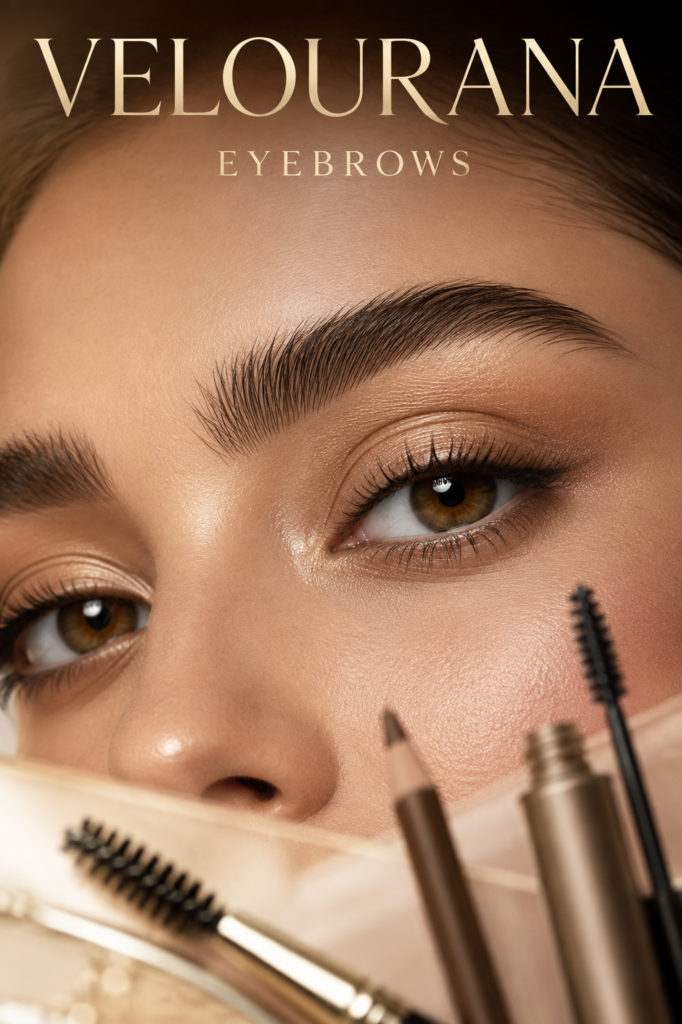
CATEGORY: Brow Shaping
Eyebrows occupy relatively little physical space on the face, yet changing their shape can noticeably alter the appearance of the eyes, forehead, nose, and overall expression. A few millimeters removed beneath an arch can make the brow seem higher. Shortening the tail can change the apparent width of the eye area. Moving the beginning inward or outward can influence how the spacing between the eyes is perceived. This visual power explains why brow shaping deserves more consideration than simply cleaning away stray hairs.
The strongest brow designs usually appear as though they naturally belong to the person wearing them. This does not mean that brows should never be reshaped or that natural growth must always remain untouched. Rather, successful shaping tends to work with existing anatomy instead of forcing the eyebrow into a fashionable template that requires extensive removal.
Every eyebrow presents its own combination of density, direction, length, curvature, and asymmetry. Some brows grow thick and relatively straight. Others are fine with a naturally elevated arch. Some have strong inner growth but sparse tails. Others contain hairs that curl, descend, or grow in several directions.
These variations are not imperfections that must automatically be corrected. They are the raw structure from which an appropriate shape can be developed.
Reading the Brow Before Changing It
One of the most valuable stages of brow shaping happens before any hair is removed.
The eyebrow should first be observed from normal conversational distance rather than only through a magnifying mirror. Close inspection is useful for precision, but it can distort priorities. A single hair may appear dramatically misplaced when viewed from centimeters away while being completely invisible within the overall shape.
Looking at the entire face reveals the eyebrow's true visual role.
Several characteristics become apparent: where the brow naturally begins, where its greatest density lies, whether its line rises or remains straight, where it reaches its highest point, and how the tail descends or extends outward.
Brushing the hairs gently through their natural direction can reveal the underlying pattern more clearly. The goal is not immediately to force them upward into a laminated appearance but to understand how they naturally overlap.
Density should also be assessed. Areas that initially seem unnecessarily thick may actually contain hairs needed to conceal sparse sections beneath them. This is especially common in the tail and around the arch.
The skin underneath can provide further clues. Previous over-plucking may have created areas where growth is limited, meaning that the shaping strategy must preserve surrounding hairs rather than remove them in pursuit of perfect lines.
Observation transforms shaping from guesswork into deliberate design.
Establishing the Beginning of the Brow
The inner brow has an important relationship with the bridge of the nose and the apparent spacing of the eyes.
Traditional mapping often places the beginning near a vertical reference extending upward from the outer portion of the nostril. While useful as a starting point, this measurement should be considered alongside natural growth and facial proportions.
Removing too much from the inner brow can create an unusually large gap between the eyebrows. The brows may then look short and disconnected from the central structure of the face. This effect can be particularly noticeable when the original eyebrows were naturally full.
Allowing the brows to extend too far inward can create the opposite impression, especially when dense hairs visually merge toward the bridge of the nose.
The front also has its own internal texture. Hairs commonly grow upward or diagonally here and may be less densely packed than those in the body. Preserving this variation often produces a softer, more natural beginning.
A heavily squared inner edge can be created with makeup when a graphic style is desired, but permanently removing hair to establish an extremely rigid block shape reduces flexibility.
The natural beginning should therefore be treated as an important structural anchor. Refinement around it can improve balance, but dramatic repositioning deserves caution.
Building a Continuous Brow Body
The central body connects the beginning to the arch and carries much of the eyebrow's visual weight.
This section benefits from continuity. When it becomes excessively thin compared with the front, the brow can appear abruptly segmented. When it remains extremely heavy while the tail becomes very fine, the imbalance may also attract attention.
Natural brows usually taper to some degree as they move outward, although the extent varies.
Shaping can enhance this progression by removing clearly misplaced hairs while retaining enough density to create a coherent line. The lower boundary often offers the greatest opportunity for definition because scattered growth beneath the main brow can obscure its natural contour.
However, removing hair should not be confused with drawing a perfectly straight border.
Individual hairs emerge at slightly different positions. A completely geometric edge may require removing useful growth simply because it does not align with an imagined line. A more sophisticated result often maintains enough natural irregularity to look like hair rather than an artificial stencil.
The upper body generally benefits from even greater restraint. Hairs along this boundary contribute strongly to fullness and natural character. Occasional isolated hairs may be removed, but substantially lowering the upper line can change the brow's position and thickness.
The objective is to reveal the shape that already exists within the growth rather than carve an entirely new shape through it.
Understanding the Highest Point
The highest point of the brow is commonly called the arch, but the term can create the mistaken impression that every eyebrow requires a dramatic peak.
Some brows naturally form a pronounced angle. Others curve gently. Some are almost straight and reach only a subtle elevation before tapering toward the temple.
Each can be attractive.
The natural arch is often easier to identify after the hairs are brushed into position. The upper boundary may rise gradually before changing direction, while the lower boundary provides space beneath this area.
Refining the lower edge can make the arch more visible without changing the upper structure significantly.
Problems arise when an arch is created where the natural eyebrow does not support one. Removing a deep section from beneath a straight brow may technically produce a higher-looking peak, but it can also reduce thickness dramatically and leave the outer brow disconnected.
Similarly, placing the highest point too close to the center may create a strongly rounded or surprised appearance. An arch situated farther outward generally produces a more elongated line.
The ideal position cannot be determined by one universal formula because the brow must relate to the person's eyes and bone structure.
Mapping can suggest a region. Natural anatomy should decide the final shape.
Tail Length and Direction
The tail controls the final movement of the eyebrow.
After the arch area, the brow typically becomes narrower and extends toward the temple. The angle of this descent varies considerably. Some tails remain relatively high and almost horizontal. Others descend more visibly.
A well-balanced tail feels connected to the rest of the brow.
When it is shortened excessively, the eyebrow can look incomplete. The outer eye loses some of its framing, and the heavier inner portion may dominate the shape. When the tail extends too far downward, it may create a descending visual line that changes the apparent expression around the eyes.
Traditional mapping uses a diagonal from the nose through the outer corner of the eye to estimate an endpoint. This can provide a useful reference, particularly when deciding whether isolated hairs beyond the main tail contribute meaningfully to the brow.
Natural growth still matters. Some people simply have shorter eyebrow tails, while others have substantial outer growth. Makeup can extend a naturally short tail without requiring the rest of the eyebrow to be reshaped to accommodate a theoretical measurement.
Preserving tail density is especially valuable because this region is frequently finer than the brow body. A small number of hairs may make the difference between a continuous taper and a visible gap.
For that reason, uncertainty around the tail should generally encourage restraint.
How Eye Characteristics Influence Brow Design
Eyebrows and eyes are perceived together, so the relationship between them is central to shaping.
The vertical distance between the eyebrow and eyelid influences how open or compact the eye area appears. Removing hair beneath the brow can expose more skin and visually increase this space, but the effect should remain proportional.
Eye spacing also interacts with brow beginnings. Moving the inner edges farther apart can increase the perception of space through the center of the face. Keeping them closer can visually concentrate that region.
The horizontal length of the eyebrow interacts with eye width. A sufficiently extended tail can provide an elegant frame around the outer eye, while a very short brow may emphasize the central features.
Eye orientation adds another dimension. Brows with gently elevated outer sections can reinforce upward visual movement, while strongly descending tails create a different directional effect.
These relationships do not mean that every perceived facial characteristic requires correction. Brow shaping is not obligated to make every eye conform to one idealized shape.
Instead, understanding visual relationships allows intentional decisions.
Someone may wish to emphasize natural straightness rather than create lift. Another person may prefer a softer curve instead of a dramatic angle. The appropriate design depends both on anatomy and on the aesthetic result being sought.
Face Shape as Context, Not a Formula
Beauty advice has long connected particular eyebrow shapes with categories such as round, oval, square, heart-shaped, or long faces. The theory is generally based on visual contrast. A more angular brow may introduce structure to softer facial contours, while a gently curved brow may soften highly angular features.
There is some useful design logic within these ideas, but rigid application can be misleading.
Face-shape categories describe only the broad outline of the face. They do not fully account for eye spacing, forehead proportions, brow-bone structure, nose width, natural eyebrow position, or hair density.
A dramatic angular brow recommended for a particular face shape may be impossible to create naturally on someone whose eyebrows grow low and straight. Achieving it could require removing so much hair that the final result looks less harmonious than the original shape.
Likewise, someone with naturally arched eyebrows does not necessarily benefit from flattening them simply because a generalized guide recommends straighter brows for their facial category.
Face shape is therefore best treated as context.
It can help explain why certain visual effects occur, but the natural eyebrow remains the more immediate source of information.
Thickness, Density, and Visual Weight
Thickness and density are related but not identical.
A brow may occupy a relatively wide vertical area while containing fine, sparse hairs. Another may be physically narrower but densely packed with coarse hair. Both can appear strong for different reasons.
Shaping should take this distinction into account.
Removing hair from a sparse but broad eyebrow may expose gaps quickly. A dense eyebrow can sometimes tolerate more refinement without losing continuity, although aggressive thinning may still conflict with its natural character.
The visual weight of the brow also interacts with other features. Dark, dense eyebrows create a strong frame around the eyes. Fine or lighter brows create a softer frame.
Neither needs to be transformed into the other.
Preserving enough natural density makes the eyebrow easier to style in multiple ways. A full brow can be brushed softly, defined with gel, or sharpened temporarily with makeup. A severely thinned brow depends more heavily on cosmetic reconstruction when a fuller appearance is desired.
Long-term flexibility is therefore a useful consideration during shaping.
Fashion cycles repeatedly demonstrate why. Brow trends have moved between extremely thin, sharply arched, highly defined, feathered, laminated, straight, and naturally full styles. Hair removed permanently or repeatedly cannot necessarily follow these changes at the same speed.
A well-maintained natural foundation provides more freedom.
Working With Unequal Brows
Most people have differences between their two eyebrows.
One may contain a stronger arch. One may be longer. One may grow more densely at the front. One may sit slightly higher because of skeletal structure or facial muscle activity.
The temptation is to use hair removal to make them identical.
This can become counterproductive because the lower or thinner brow may not contain enough growth to match the higher or fuller one. Reducing the stronger eyebrow until it matches the weaker one can sacrifice healthy structure without truly correcting the underlying asymmetry.
Visual balancing is usually more effective.
If one brow is slightly higher, maintaining a little more thickness beneath it may reduce the apparent difference. If one tail is naturally sparse, preserving every useful hair there while subtly refining the fuller side may create better harmony.
Cosmetics can address smaller discrepancies without permanent alteration. A few pencil strokes can extend a short tail. Powder can increase apparent density. Gel can redirect hairs to create slightly different heights.
The aim is for the eyebrows to function convincingly as a pair, not to become exact mirror images.
The Role of Trimming
Trimming is sometimes overlooked because it does not remove hair from the follicle, yet it can substantially affect apparent shape.
Long hairs may project beyond the upper or lower boundary even when their roots lie in ideal positions. Removing those hairs completely would reduce density unnecessarily.
Selective trimming can solve the problem.
The key is to evaluate hair in its normal direction. When brows are brushed dramatically upward, many hairs extend beyond the visible outline simply because they normally lie diagonally across the brow. Cutting all of them to the same short length can create gaps when they return to their resting position.
A more conservative method focuses only on lengths that genuinely interfere with the intended shape.
Coarse or curly brows require particular care because shortening a hair changes how it behaves. A long curved hair may lie smoothly within the brow, while the same hair cut short may stand outward.
Trimming should therefore support the architecture rather than automatically accompany every shaping session.
Sometimes brushing and setting the brow with gel provides enough control without cutting anything.
Precision and the Risk of Magnification
Magnifying mirrors make it possible to see extremely fine hairs, but they can also encourage excessive grooming.
At high magnification, every irregularity appears important. The viewer loses sight of how the eyebrow relates to the face and begins solving microscopic problems that nobody would notice at ordinary distance.
This is a common route to over-plucking.
A safer rhythm alternates between detailed work and full-face observation. After removing a small number of hairs, the brow can be reassessed from farther away. The overall shape may already look clean even though several fine hairs remain visible under magnification.
Lighting matters as well. Strong, even illumination helps reveal the actual outline without creating shadows that mimic gaps or density.
The shaping process should stop when the visual objective has been achieved, not when every hair outside a perfectly imagined boundary has disappeared.
Natural eyebrows contain texture. Preserving some of that texture often makes the finished result more believable.
Shaping and Makeup Should Work Together
Brow shaping establishes the physical foundation, while makeup provides temporary control over color, density, definition, and styling.
Understanding this division prevents unnecessary hair removal.
A small sparse area does not always need surrounding hairs removed to make the gap appear intentional. It can often be filled discreetly. A naturally short tail can be extended with fine pencil or pen strokes. A slightly uneven upper line can be visually balanced with makeup rather than permanently lowered.
Likewise, styling products can change the apparent shape without changing the hair count.
Brushing the inner hairs upward creates greater vertical texture. Directing the body diagonally outward can elongate the brow. Setting the tail neatly can sharpen its taper.
This flexibility is valuable because the desired appearance may change with different makeup styles.
A softly groomed brow may complement minimal daytime makeup, while the same underlying shape can support greater definition for an evening look.
Good shaping creates a versatile framework rather than locking the face into one highly specific cosmetic style.
Allowing Brows to Recover
When eyebrows have been repeatedly over-shaped, establishing a new form may require a period of regrowth.
This can be frustrating because hairs do not necessarily return simultaneously. Some areas may become dense quickly while others remain sparse, creating a temporary stage in which the brow looks less tidy.
Removing these emerging hairs too early can perpetuate the old shape.
Allowing growth provides more information about the eyebrow's potential boundaries. Once enough hair has returned, the new shape can be evaluated as a whole rather than reconstructed one follicle at a time.
Not every previously removed hair will necessarily return, particularly after years of repeated extraction. Expectations should therefore remain realistic.
Where density remains limited, a shape that incorporates the available growth is usually more sustainable than one that depends on hairs that are no longer present.
Makeup can provide temporary continuity during this process.
The broader principle is that shaping should respond to the eyebrow that actually exists rather than an imagined version that requires constant correction.
Knowing When the Shape Is Finished
One of the most difficult aspects of eyebrow shaping is knowing when to stop.
Once the major stray growth has been removed and the structure becomes visible, additional changes often produce diminishing returns. Each new hair removed has proportionally greater influence because fewer unnecessary hairs remain.
This is where restraint becomes a technical skill.
The brow should be assessed for overall continuity. The beginning should connect naturally with the body. The body should progress toward the highest area without abrupt thinning. The tail should taper coherently. The two brows should appear balanced within the face.
If these relationships are working, a handful of minor irregularities rarely justify further removal.
It is useful to remember that eyebrow hairs move. Facial expressions change their position. Lighting changes how dense they appear. Makeup can alter their boundaries. Pursuing a perfectly static shape therefore misunderstands the nature of the feature.
The finished brow should work in real life, not only under close inspection.
A More Individual Approach to Brow Shaping
Contemporary brow shaping is increasingly defined by individuality rather than conformity.
The most compelling eyebrows are not necessarily the most symmetrical, the most arched, or the most meticulously outlined. They are brows whose proportions appear coherent with the person's natural features.
For one person, this may mean preserving substantial thickness and simply clearing scattered growth. For another, it may involve refining a naturally high arch. Someone with straight brows may benefit from emphasizing that horizontal structure rather than trying to manufacture curvature. Someone with fine brows may achieve the strongest result by protecting every useful hair and relying on subtle makeup for additional definition.
The underlying principle remains consistent: shaping should enhance the eyebrow's architecture without destroying the qualities that make it naturally convincing.
Mapping provides guidance. Grooming techniques provide control. Makeup provides flexibility. Yet observation and restraint determine how effectively those tools are used.
A beautifully shaped eyebrow rarely needs to announce the work that created it. Its success is visible in the balance of the whole face: the eyes appear framed, the brow line feels intentional, and the natural hair still looks like an integral part of the person rather than a shape imposed upon them.
That is the enduring value of thoughtful brow shaping. It does not simply remove hair. It identifies which elements of the natural eyebrow deserve emphasis, which require refinement, and which are better left untouched.
THE END VELOURANA
 Discover More From Our Family of Websites
 ZodiacBearing (Astrology, Tarot, Numerology, Angel Numbers & Spiritual Guidance)
 Velourana (Beauty, Makeup, Hair Care, Skincare & Beauty Tips)
 HavenBearing (Home, Living, Organization, Décor & Everyday Inspiration)
 PawBearing (Pet Care, Dog Breeds, Animal Health, Training & Pet Products)
 PsyCatherine (Notes From the Journal of a Psychologist on Real Life)

