CATEGORY: Soft-Angled Brows
Soft-angled brows occupy a particularly versatile place in eyebrow design. They have enough structure to frame the eyes and create visible definition, yet their change in direction is sufficiently gentle that the brow rarely appears severe. Instead of rising toward a sharply pointed peak and descending abruptly, the soft-angled brow moves upward in a controlled line, reaches a subtly rounded high point, and then transitions smoothly toward the tail.
That combination explains much of the shape's enduring appeal. Eyebrows influence how the proportions of the upper face are perceived, but the most effective brow is not necessarily the one with the highest arch or the strongest outline. Often it is the shape that introduces just enough geometry to organize the face without becoming the dominant feature. Soft-angled brows accomplish this through moderation.
Their apparent simplicity can be deceptive. Creating a convincing soft angle involves decisions about placement, proportion, density, direction, grooming, and product application. The arch must be visible without becoming pointed. The tail needs definition without appearing unnaturally narrow. The beginning of the brow should support the overall structure without looking squared or excessively dark. Even the individual hairs contribute to the final impression because their direction determines whether the brow appears fluid or rigid.
Understanding soft-angled brows therefore means looking beyond the outline. The shape is created by the relationship between the brow's natural growth and the way that growth is refined. When those two elements work together, the result can appear polished while retaining the variation and softness associated with natural brows.
What Makes a Brow Soft-Angled
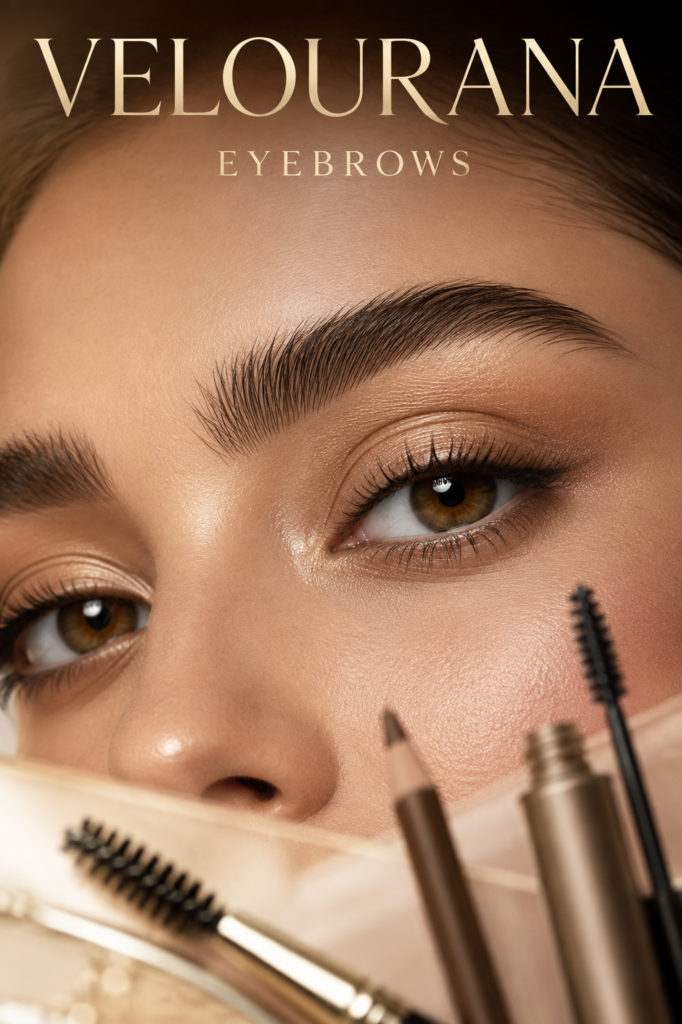
A soft-angled brow is characterized primarily by the way its upper and lower lines change direction. Beginning near the inner corner of the eye, the brow generally travels outward with a gradual upward tendency. Somewhere beyond the central portion, it reaches its highest area before descending toward the tail. Unlike a highly arched brow, however, the transition at the highest point is curved rather than sharply articulated.
The distinction becomes clearer when soft-angled brows are compared conceptually with straight, rounded, and sharply arched shapes. A straight brow minimizes vertical movement and creates a predominantly horizontal visual line. A rounded brow follows a continuous curve without a strongly identifiable change in direction. A sharply angled brow creates a pronounced peak where the ascending and descending lines visibly meet. The soft-angled brow exists between these possibilities. Its arch can be identified, but it does not behave like a corner.
This balance makes the shape adaptable. A relatively low soft angle can look understated and almost straight, while a higher version can create noticeable lift without reaching the dramatic character of a sharply arched brow. Thickness can also vary considerably. Full natural brows can carry a soft angle, as can more refined medium-width brows. The defining characteristic is not a specific thickness but the controlled transition through the arch.
The lower brow line plays an important role in establishing this effect. If too much hair is removed underneath the highest point, even a naturally gentle arch can become sharp. Conversely, if the lower line remains completely unstructured, the angle may disappear and the brow can begin to look rounded. Successful shaping preserves enough hair to maintain softness while establishing a clear directional change.
The upper line requires similar restraint. Excessive removal from the top can flatten the brow or create an artificial contour that conflicts with natural growth. In many cases, much of the soft angle can be created through careful grooming beneath the brow, subtle trimming, and strategic filling rather than extensive reshaping of the upper edge.
Hair direction adds another dimension. Inner hairs often grow more vertically, central hairs gradually move outward, and hairs approaching the tail may lie increasingly horizontal or diagonal. When grooming respects these changes, the brow naturally develops visual movement. When every hair is forced into exactly the same direction, the shape can lose some of its organic character.
This is why soft-angled brows are better understood as a relationship between geometry and texture rather than as a stencil. Their recognizable structure comes from the outline, but their softness comes from everything happening within that outline.
Facial Proportion and the Placement of the Angle
Brow design has long been associated with facial mapping, but mapping is most useful when treated as a proportional guide rather than an inflexible formula. Human faces are asymmetrical, eye placement varies, brow bones differ, and natural hair growth rarely follows perfectly mirrored coordinates. Soft-angled brows benefit particularly from an individualized approach because small adjustments in the location and height of the arch can substantially change their effect.
The beginning of the brow influences how the central face is framed. Bringing the brows visually closer together can make the bridge of the nose and central features appear more concentrated, while excessive distance between the brows can create an impression of greater openness. Natural growth should remain the primary reference because removing substantial amounts of inner-brow hair merely to satisfy a mapping rule can produce an artificial result.
The arch is usually most harmonious when it occurs somewhere in the outer half of the brow rather than directly above its center. Placing the highest point too far inward can create a surprised or peaked appearance. Moving it excessively outward can make the brow seem long and flat before suddenly dropping at the end. A soft angle depends on a gradual ascent followed by a similarly controlled transition downward.
The relationship with the brow bone is equally important. Brows do not exist on a flat surface. The underlying orbital structure affects how the arch appears from different viewpoints, and a shape that seems subtle when seen directly from the front can look more pronounced when the face turns. Working with the natural brow bone usually produces greater dimensional harmony than attempting to impose a predetermined template.
Tail placement influences the final sense of balance. A very short tail can make the brow appear unfinished, while an excessively long or steeply descending tail can visually pull the outer eye downward. Soft-angled brows generally benefit from a tail that continues the natural trajectory of the arch rather than suddenly changing direction.
These principles help explain why identical brow shapes do not produce identical effects on different faces. The goal is not to force every face into the same proportion but to use the soft angle as a flexible framework. One person may need only a slight lift in the outer third. Another may naturally possess a relatively high arch that needs to be softened through filling and grooming rather than intensified through removal.
Facial shape can provide additional context, although it should not be treated as a rigid classification system. Softer brow geometry can introduce structure to faces dominated by curved contours, while the rounded transition of a soft angle can prevent strongly angular facial features from appearing overly geometric. On longer faces, excessive arch height may exaggerate vertical emphasis, whereas a lower soft angle can maintain definition without creating unnecessary height. On broader faces, a carefully positioned outer arch can introduce directional movement.
Yet these are visual tendencies rather than universal prescriptions. Features such as eye shape, forehead proportions, brow density, hair texture, and personal style may be more influential than the broad category assigned to the face. The strongest soft-angled brow is ultimately one that looks integrated with the individual rather than selected from a chart.
Natural Growth as the Foundation of the Shape
The easiest soft-angled brows to maintain are usually those developed from the existing growth pattern. Natural brows often contain clues about where their most harmonious arch belongs. Hair density may gradually change toward the outer third, the upper boundary may rise slightly, and the lower line may reveal a subtle change in direction. Recognizing these cues allows shaping to enhance what already exists.
This approach is particularly important because eyebrow hair can be slow to recover after repeated removal. Persistent over-tweezing may eventually reduce density in areas where structure is needed, especially around the arch and tail. A soft angle requires continuity; gaps created through excessive removal can make the shape appear segmented.
Allowing sufficient growth before significant reshaping can therefore be valuable. When more of the natural brow is visible, it becomes easier to distinguish genuinely misplaced hairs from hairs that are essential to the architecture. What initially looks like excess growth may actually contribute to the gradual transition that keeps the arch soft.
Density also affects how the angle should be constructed. Thick brows often need relatively little product because the hairs themselves create the outline. Their primary needs may be grooming, selective removal outside the main shape, and occasional trimming where individual hairs disrupt the contour. Sparse brows require a different strategy. Instead of relying heavily on removal, the shape may need to be established through fine cosmetic strokes or softly deposited color.
The direction of growth should not be ignored. Some brows naturally rise strongly at the front, while others grow almost horizontally. Certain arches contain hairs that curl or point downward. These variations are not defects; they determine how the finished brow will behave. Attempting to force a naturally horizontal brow into a dramatically lifted pattern can require substantial product and fixation, making the result less effortless.
Texture matters as well. Coarse hairs create strong visual lines and can make even a moderate arch appear pronounced. Fine hairs create softer edges and may require additional definition to make the angle visible. Curly or irregular hairs introduce movement that can either enhance natural softness or obscure the intended outline depending on how they are groomed.
A well-designed soft angle therefore begins with observation. The objective is not simply to identify where hair should be removed. It is to determine which hairs are already contributing to the desired direction, where density needs preservation, and where small refinements can reveal the shape more clearly.
Grooming Without Turning the Soft Angle Into a Sharp Arch
The greatest shaping risk with soft-angled brows is overcorrection. Because the difference between a gentle angle and a sharp one may involve only a narrow area beneath the arch, removing a small number of strategically important hairs can alter the entire character of the brow.
This is especially relevant when cleaning beneath the highest point. Creating an exaggerated hollow directly below the arch increases contrast between the ascending and descending portions, making the peak look sharper. For a softer result, the lower boundary should transition gradually. Stray hairs can be removed, but the main body of the brow should retain enough fullness to prevent the arch from becoming a narrow summit.
Tweezing offers precise control and can be useful for maintaining an established shape. The advantage is the ability to evaluate individual hairs before removal. Working too quickly, however, can lead to progressive thinning because each small adjustment encourages another. Periodically viewing the entire face rather than focusing continuously on a magnified section helps preserve proportion.
Threading and waxing can produce clean boundaries efficiently, but the intended shape should be clearly established beforehand. A very crisp lower line is not inherently incompatible with soft-angled brows, yet an aggressively carved arch can shift the result toward a more dramatic aesthetic. The amount of definition should therefore correspond with the desired finish.
Trimming deserves equal consideration. Long brow hairs can extend beyond the intended boundary when brushed upward or outward, creating apparent bulk that may tempt unnecessary tweezing. Selective trimming can refine these hairs while preserving density at the root. Cutting too much across the entire brow can create blunt edges and expose gaps, particularly when the hairs return to their natural position.
Symmetry requires restraint as well. Eyebrows are rarely identical because the two sides of the face are not identical. Chasing exact symmetry through repeated hair removal can gradually make both brows thinner without making them truly equal. A more useful objective is visual balance: comparable height, weight, direction, and overall character.
The soft angle itself can accommodate modest asymmetry. One arch may naturally sit slightly higher, or one tail may contain greater density. Makeup can compensate for small differences without permanently removing useful hair. This preserves flexibility and allows the brows to continue looking natural when no product is worn.
Maintenance frequency depends on growth rate and the degree of refinement desired. A highly polished soft angle may require more regular cleanup, while a fuller interpretation can tolerate visible regrowth without losing its essential shape. In either case, the underlying structure should remain recognizable even when grooming is not freshly completed.
Creating Soft-Angled Brows With Makeup
Cosmetics can strengthen an existing soft angle, compensate for sparse areas, or create the impression of an angle where natural growth is relatively straight or rounded. The most convincing results usually come from building definition gradually rather than drawing the entire outline with equal intensity.
The front of the brow typically benefits from the lightest treatment. Natural brows are often less visually dense at their inner edge, even when the hair itself is abundant. Reproducing this gradient helps maintain softness. Heavy blocks of pigment at the beginning can make the entire brow appear more graphic and may distract from the subtlety of the arch.
Through the central portion, definition can increase. This area establishes the direction toward the high point and often benefits from filling small spaces between hairs rather than covering the brow uniformly. The aim is to create continuity while retaining visible texture.
Near the arch, placement becomes particularly important. Adding pigment just above or within the natural upper boundary can create a small amount of lift, whereas heavily extending the lower boundary downward may increase thickness and reduce the perception of an angle. Conversely, carving too aggressively underneath the arch can make it excessively sharp. The desired effect comes from balancing these adjustments.
The tail usually carries greater definition because natural hair density often decreases there. A precise tail can give the brow a finished appearance, but it should taper progressively. A tail drawn with identical thickness from arch to endpoint can look heavy. A very thin, extended line can appear disconnected from a fuller brow. The transition should reflect the overall density and scale of the brow.
Different products produce different interpretations of the same soft-angled structure. Fine pencils and brow pens can imitate individual hairs and are especially useful where sparse areas need targeted correction. Powders create diffused density and can make the brow appear naturally fuller. Pomades provide stronger control and definition but require careful application when the desired result is soft. Gels can organize existing hairs, add tint, or provide fixation without substantially redrawing the shape.
Product choice is therefore less important than application strategy. A pencil can create an extremely graphic brow when applied heavily, while a pomade can appear surprisingly natural when used sparingly with fine strokes. Texture, pressure, pigment concentration, and blending determine the final character.
Color selection also affects perceived softness. A shade that is excessively dark or saturated can make the outline appear stronger even when the shape itself is gentle. Brow color does not always need to match scalp hair exactly. Natural brows often contain multiple tones, and subtle variation can create greater dimension.
For lighter hair, excessively warm or dark brow products may dominate the face. For deeper hair colors, using pure black indiscriminately can sometimes create a flatter effect than a deep neutral or brown-black tone. Gray, silver, red, and unusually colored hair each present their own relationships with brow color, and the most harmonious choice depends on complexion, natural brow pigmentation, and the desired level of contrast.
The final result should allow the angle to remain visible without requiring a hard perimeter. A soft-angled brow can be beautifully defined while still showing individual hairs and slight tonal variation.
How the Shape Changes the Expression of the Eyes
Brows are powerful framing elements because they sit immediately above the eyes and establish directional lines across the upper face. A soft angle tends to create a sense of lift while avoiding the intensity sometimes associated with a steep arch.
The ascending portion directs visual attention upward and outward. This can make the eye area appear more open, particularly when the tail remains controlled rather than descending dramatically. The rounded high point prevents that upward movement from becoming abrupt, maintaining a relatively relaxed expression.
Eye shape changes how this relationship is perceived. With hooded eyes, for example, the visible space between the lash line and brow may be limited, so excessive lowering of the brow through makeup can make the area feel more compressed. A thoughtfully positioned soft angle can preserve openness without requiring a dramatically high arch.
Deep-set eyes create stronger natural shadow around the orbital area, making brow placement particularly noticeable. A heavily darkened, sharply angled brow may intensify that contrast, while a softer treatment can maintain definition without overwhelming the eyes.
With rounder eyes, the directional movement of a soft angle can introduce a subtle horizontal and upward counterpoint to the eye's curvature. Almond-shaped eyes often harmonize naturally with the gradual rise and taper of the shape. Downturned outer corners may benefit visually from avoiding a brow tail that descends too steeply, while upturned eyes can be complemented by an arch whose outer movement follows rather than exaggerates their direction.
These observations do not mean that particular eye shapes require particular brows. They illustrate how eyebrow geometry interacts with nearby features. Personal preference remains central. Someone may deliberately choose stronger contrast, greater drama, or a lower, straighter interpretation regardless of conventional balancing principles.
Expression also changes dynamically. Brows move when people speak, smile, concentrate, or react. A shape that looks perfect in a static photograph should still feel natural when the face is animated. Following the underlying brow structure helps preserve this mobility because the cosmetic design remains connected to the muscles and hair pattern that naturally create expression.
Soft-Angled Brows Across Different Beauty Aesthetics
One reason soft-angled brows remain relevant is their ability to adapt to changing beauty aesthetics. The fundamental geometry can support a barely groomed natural brow, a polished classic brow, or a highly finished makeup look simply by altering density, edge definition, texture, and color.
In a natural aesthetic, the angle may be created almost entirely through grooming. Individual hairs remain visible, boundaries are imperfect, and the arch emerges through the natural change in hair direction. Clear or lightly tinted gel may provide enough organization to reveal the shape.
A more polished interpretation can combine controlled grooming with selective filling. The lower boundary may be subtly clarified, sparse areas balanced, and the tail refined. The brow still contains texture, but its architecture becomes more obvious.
For stronger makeup, the same soft angle can support increased density and precision. The distinction is that the arch itself remains rounded rather than sharply pointed. This allows the brow to carry substantial visual weight without necessarily becoming severe.
Laminated or upward-groomed effects offer another interpretation. Brushing hairs vertically or diagonally can alter the apparent boundaries of the brow, making it look fuller and sometimes straighter. To preserve a soft angle, hair direction can gradually transition from upward at the beginning to outward toward the arch and tail. The geometry is then created through the collective orientation of the hairs rather than through a heavily drawn perimeter.
Mature brow styling can also benefit from this adaptability. Brow density and hair texture may change over time, and tails can become sparser. Reconstructing a moderate soft angle through subtle filling can restore visible framing without relying on a very high or sharply defined arch. Again, individual circumstances vary, but the shape's inherent moderation makes it flexible.
The same principle applies across minimalist and maximalist makeup. Soft-angled brows do not prescribe how much makeup should be worn. They provide a structural foundation capable of becoming quieter or stronger according to the surrounding look.
Maintaining the Shape Over Time
A successful brow shape should remain manageable after the initial grooming or makeup session. Soft-angled brows are particularly suited to sustainable maintenance because they do not require the extreme removal often necessary for highly sculpted arches.
Once the essential boundaries are established, new growth can be evaluated in relation to them. Hairs clearly outside the main shape can be removed while uncertain hairs can be left until their contribution becomes apparent. This conservative approach reduces the risk of gradually changing the arch through repeated maintenance.
Photographs can help track the shape over time because brow changes often occur incrementally. A person may not notice that an arch has become thinner or higher after months of small adjustments. Comparing the current brow with an earlier version can reveal whether the original balance is being preserved.
Changes in hairstyle, hair color, makeup preferences, or facial proportions may also influence how the brow is perceived. A shape does not need to remain permanently fixed. Soft angles can be subtly lowered, widened, strengthened, or diffused without abandoning their essential identity.
Seasonal changes in makeup style may affect product choices as well. A lighter cosmetic approach may call for visible hair texture and minimal filling, while more elaborate makeup may support greater definition. Maintaining the underlying natural density gives the wearer freedom to move between these interpretations.
The healthiest long-term approach is generally one that preserves options. Hair can always be visually darkened, redirected, or temporarily concealed more easily than it can be immediately regrown after excessive removal. The softness of the shape itself encourages this philosophy of gradual refinement.
Why Soft-Angled Brows Continue to Feel Contemporary
Eyebrow trends change repeatedly, moving between thin and full, structured and fluffy, high-arched and straight. Soft-angled brows endure because they are not dependent on an extreme. They can absorb elements of different trends without losing their fundamental balance.
When fuller brows dominate, the soft angle can remain broad and textured. When cleaner brows return, its boundaries can become more refined. When upward brushing is fashionable, the hairs can be lifted while preserving the gentle transition through the outer third. When understated makeup becomes prominent, the same shape can be worn with almost no visible product.
This adaptability reflects a larger principle in beauty: proportions that work with individual anatomy tend to survive changes in fashion more easily than highly standardized shapes. The soft angle is not valuable because it is universally ideal, but because it provides enough structure to be recognizable and enough flexibility to remain personal.
Its defining quality is controlled transition. The brow rises without becoming steep, turns without becoming pointed, and tapers without appearing abruptly diminished. Every aspect of successful soft-angled brow design reinforces that continuity.
For some people, this structure already exists naturally and requires little more than thoughtful grooming. For others, it can be suggested through strategic filling or modest reshaping. In both cases, the strongest results come from respecting density, hair direction, facial proportions, and natural asymmetry.
Soft-angled brows demonstrate that definition does not require severity. Their impact comes from subtle geometry: a gradual rise, a restrained high point, and a smooth descent that frames the eyes while remaining integrated with the face. That balance gives the shape its versatility and explains why it continues to move comfortably between natural grooming and sophisticated makeup.
THE END VELOURANA
 Discover More From Our Family of Websites
 ZodiacBearing (Astrology, Tarot, Numerology, Angel Numbers & Spiritual Guidance)
 Velourana (Beauty, Makeup, Hair Care, Skincare & Beauty Tips)
 HavenBearing (Home, Living, Organization, Décor & Everyday Inspiration)
 PawBearing (Pet Care, Dog Breeds, Animal Health, Training & Pet Products)
 PsyCatherine (Notes From the Journal of a Psychologist on Real Life)