CATEGORY: Rounded Brows
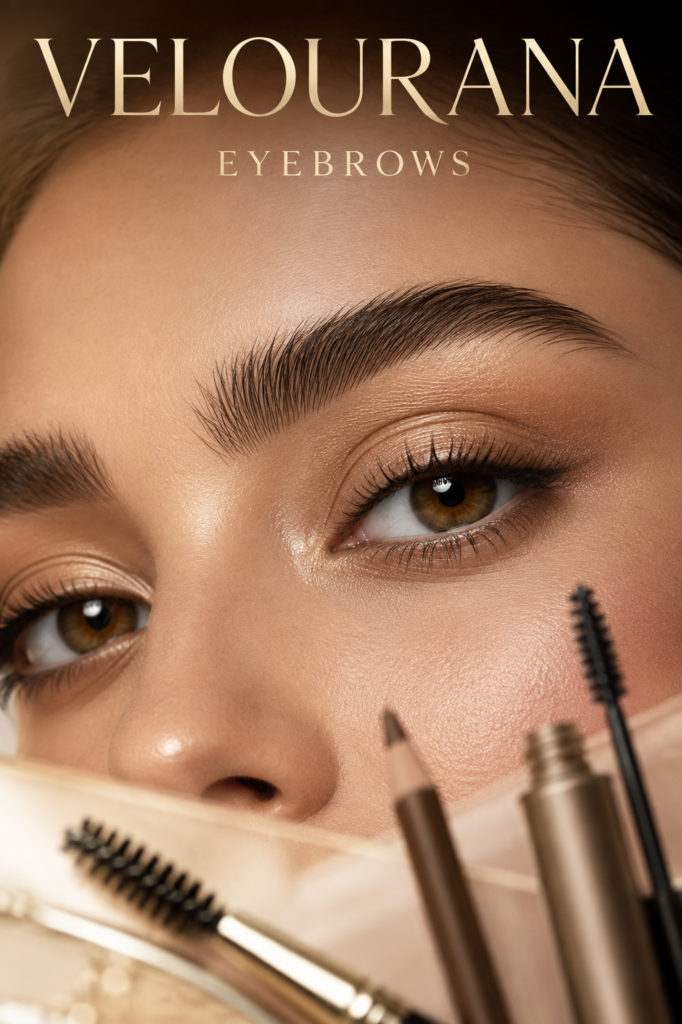
Rounded brows are defined by softness. Instead of rising sharply toward a pronounced peak, the brow follows a gentle curve from the inner corner toward the tail, creating an uninterrupted, flowing line above the eye. The result can appear relaxed, elegant, youthful, and approachable. Although rounded brows are sometimes described as simply the opposite of angular brows, the distinction is more sophisticated than that. A well-designed rounded brow still needs structure, proportion, elevation, and a deliberate relationship between the front, body, highest point, and tail. Its softness comes from how those elements connect rather than from eliminating definition altogether.
The popularity of rounded brows reflects a broader understanding of brow design as facial architecture rather than a fixed beauty trend. Brows influence how the forehead, eyes, nose, cheekbones, and even jawline are visually perceived. A dramatic arch can introduce intensity and lift, while a rounded brow often diffuses sharpness and produces visual continuity. This makes the shape particularly valuable for people who want their brows to complement strong facial angles or who naturally have curved brow growth.
Rounded brows should not be confused with brows that are completely semicircular. An exaggerated rainbow-like curve can look artificial because natural brows rarely maintain the same degree of curvature from beginning to end. Contemporary rounded brows typically combine a relatively calm beginning, gradual elevation through the middle, and a softly descending tail. The highest point is present but blended into the overall curve so that the eye does not perceive an abrupt angle.
Understanding this shape requires looking beyond fashion photographs and recognizing the principles behind successful brow proportions. Bone structure, natural hair direction, brow density, eye placement, forehead height, and personal expression all affect whether a rounded brow feels harmonious. When these variables are respected, the shape can look almost effortless despite being carefully designed.
The Visual Character of a Rounded Brow
Every brow shape creates a different visual rhythm across the upper face. Angular brows create contrast because the ascending and descending lines meet at a noticeable change of direction. Straight brows emphasize horizontal width. Rounded brows create continuity through curvature. The viewer's eye travels smoothly along the brow rather than stopping at a distinct corner or peak.
This continuity is responsible for much of the shape's softness. Curves tend to be interpreted as gentle and organic because similar lines occur throughout natural facial anatomy. Cheeks, eyelids, lips, and the contours around the temples rarely form rigid geometric angles. A rounded brow can therefore echo those natural curves and integrate easily with the surrounding features.
The effect becomes particularly noticeable when comparing the same face with different brow shapes. A high, pointed arch can make the eye area appear more lifted and expressive, but it can also add visual sharpness. A rounded version can reduce that intensity, allowing the eyes themselves to become the primary focal point. The expression may seem calmer because there is less suggestion of surprise, severity, or exaggerated elevation.
Rounded brows are also adaptable. The curve does not have to be low. A brow can rise noticeably and still be classified as rounded if its highest section transitions smoothly into the descending tail. Likewise, a low rounded brow can remain fairly close to the orbital bone while maintaining a subtle curve. The category therefore describes the character of the arch more than its absolute height.
Thickness also changes the impression. A full rounded brow can feel modern and natural because the curve is supported by visible hair texture. A thin rounded brow can look more polished or vintage depending on the styling. Density, width, and curvature interact, meaning that two rounded brows can have completely different personalities while sharing the same underlying structural principle.
How Rounded Brows Interact With Facial Geometry
Brow shaping works partly through visual contrast. When facial features contain strong angles, curves can soften them. When a face is already highly curved, additional curvature can either enhance its natural harmony or, if exaggerated, create excessive roundness. This is why face-shape recommendations should be treated as design guidance rather than rigid rules.
On square or angular faces, rounded brows can provide useful contrast to a defined jaw or broad forehead. The gentle curvature introduces a softer visual element into an otherwise geometric facial structure. Instead of repeating the angles of the jawline, the brow creates balance by moving in the opposite design direction.
On heart-shaped faces, rounded brows can also work effectively because they can soften the transition between a broader forehead and narrower chin. A moderate rounded arch usually provides enough lift to prevent the brow from appearing flat while avoiding the exaggerated height that could make the upper face seem even more dominant.
Oval faces generally tolerate many brow shapes because their proportions are naturally balanced. Rounded brows on an oval face can reinforce this equilibrium, particularly when the curve remains restrained. Since the face does not usually require dramatic corrective shaping, the brow can follow the natural bone structure rather than attempting to create strong visual compensation.
Round faces require more nuance. Traditional brow advice often recommends a higher or more angular arch to create vertical contrast. That principle can be useful, but it does not mean rounded brows are unsuitable. A rounded brow with adequate elevation and a slightly extended tail can still create definition. Problems generally arise when the brow is both very low and strongly curved, because this can repeat the circular quality of the face rather than adding structure.
Long or oblong faces may benefit from rounded brows when the curve is relatively shallow. Excessive arch height can visually lengthen the upper face, whereas a broader, softly rounded brow can introduce horizontal emphasis. Here again, the key is not whether the brow is rounded but how high and narrow the curve becomes.
Individual features matter more than any face-shape label. Two people categorized as having square faces may have very different brow bones, eye shapes, hairlines, and natural brow growth. Effective brow design therefore begins with the actual face rather than a diagram.
The Difference Between Rounded, Arched, and Straight Brows
Brow terminology often becomes confusing because almost every brow contains some combination of horizontal movement and curvature. The distinction between rounded, arched, and straight brows is therefore based on dominant geometry rather than absolute categories.
A classic arched brow has a recognizable elevation point where the ascending line transitions into the descending tail. That transition can be subtle or dramatic, but the viewer can usually identify a defined peak. Rounded brows also rise and fall, yet the highest point blends gradually into the surrounding line.
Straight brows prioritize horizontal movement. They may contain a slight curve, especially near the tail, but the main body remains relatively level. The visual effect is broader and calmer, with less vertical lift than most rounded designs.
A rounded brow occupies a middle territory. It provides more curvature than a straight brow but less geometric interruption than a sharply arched brow. This makes it useful for anyone who wants visible shape without obvious angularity.
There are also hybrid forms. A soft-angled brow may appear rounded through most of its length but develop a slightly more defined apex. A straight-rounded brow may remain horizontal through the front and middle before curving downward gently near the tail. These variations demonstrate why natural brows rarely fit perfectly into simple categories.
Recognizing the dominant line is more useful than obsessing over labels. If the overall impression is one continuous curve with no obvious corner, the brow can reasonably be considered rounded.
Natural Growth Patterns and Brow Bone Structure
The easiest rounded brows to maintain are often those that already grow with some degree of curvature. Natural hair direction determines how convincingly a shape can be created without excessive removal or cosmetic reconstruction.
Brow hairs near the inner corner often grow vertically or diagonally upward. Moving toward the center, they usually begin to angle outward. Near the tail, the hairs may lie more horizontally or downward. These directional changes naturally create a curved flow even before shaping begins.
The brow bone provides another structural guide. A rounded brow frequently looks most harmonious when it echoes the orbital contour beneath it. This does not mean tracing the bone exactly, but the skeletal structure can reveal where natural elevation occurs and where the tail should begin descending.
Attempting to force a dramatically different shape from the natural anatomy can require substantial tweezing, waxing, trimming, or filling. The result may look convincing in makeup but become difficult to maintain over time. When designing rounded brows, preserving the existing hair framework usually produces greater realism.
Natural asymmetry should also be expected. One eyebrow may sit slightly higher, grow more densely, or curve differently from the other. Trying to make both brows mathematically identical can lead to over-removal. Rounded shapes are particularly forgiving because their softness allows small variations to remain visually cohesive.
Symmetry is therefore better understood as balance rather than duplication. The brows should relate to each other, but they do not need to be mirror images.
Creating the Correct Degree of Curvature
The defining challenge of rounded brow shaping is controlling the curve. Too little curvature and the brow begins to read as straight. Too much and it can become semicircular, making the eyes appear permanently surprised or creating an outdated appearance.
Modern rounded brows typically rely on gradual changes in direction. The inner section begins with relatively little lift. The brow then rises progressively through the middle before reaching a soft high point somewhere around the outer portion of the iris or slightly beyond it. From there, the tail descends smoothly.
The location of the highest point matters because it influences perceived expression. When the peak occurs too close to the center, the brow can appear excessively circular. When placed farther outward, the shape becomes more elongated and sophisticated.
Tail length also affects curvature. A very short tail can make the arch seem abrupt even when the peak itself is rounded. Extending the tail slightly outward allows the descending line to unfold gradually. However, a tail that extends too far downward can visually drag the eye area.
The beginning of the brow should not be excessively curved either. If the brow immediately rises from its inner edge, the entire shape may resemble an arch drawn with a compass. Keeping the first section comparatively calm creates a more natural transition.
These small proportional decisions are what separate a refined rounded brow from a simply curved line.
Brow Thickness and Its Influence on Shape
Thickness determines how strongly the rounded outline is perceived. Fuller brows allow curvature to emerge through a combination of upper and lower edges rather than through a single narrow line. This can make the shape appear softer because individual hairs remain visible.
With thick brows, shaping often involves refining the lower boundary while preserving much of the upper growth. Removing too much from the top can flatten natural volume and produce an overly sculpted result. The goal is usually to clarify the curve without erasing the texture that makes a full brow appealing.
Medium-width brows offer substantial flexibility. Their rounded structure can be altered slightly through grooming or makeup without requiring dramatic changes. A moderate thickness also allows the tail to taper naturally, which supports the flowing quality of the shape.
Thin rounded brows require greater precision because every millimeter affects the outline. A narrow brow with too much curvature can quickly resemble a high semicircle. Maintaining some horizontal length through the body can prevent this.
Fashion cycles influence preferred brow thickness, but facial proportion remains more important. A brow should have enough visual presence to frame the eye without overwhelming it. Rounded brows can be adapted to different widths as long as the transitions remain smooth.
The Role of the Brow Tail
The tail is often underestimated in discussions of brow shape, yet it determines whether a rounded brow appears lifted, drooping, abbreviated, or elongated.
A successful rounded tail usually narrows progressively as it moves outward. The descent begins gently after the highest portion of the brow rather than dropping suddenly. This maintains continuity and reinforces the shape's characteristic softness.
If the tail descends too steeply, the outer corner of the eye may appear lower. This can create a tired or heavy impression even if the rest of the brow is beautifully shaped. A slightly more horizontal tail often preserves lift.
Conversely, keeping the tail completely level can undermine the rounded silhouette. Some downward movement is typically necessary to complete the curve. The objective is controlled descent rather than a dramatic fall.
Length also influences apparent eye width. A properly extended tail can frame the outer eye and make the brow feel complete. A very short tail may leave the face looking unfinished, while an excessively long one can dominate the temple area.
People with sparse outer brows can create the appearance of a rounded tail with pencil, pen, powder, or pomade. The most realistic results usually follow the direction of surrounding hairs rather than drawing a solid curved stripe.
Makeup Techniques That Preserve a Rounded Appearance
Cosmetics can emphasize or completely transform natural brow geometry. When maintaining a rounded shape, application technique should reinforce softness rather than introducing artificial corners.
The beginning of the brow generally benefits from lighter application. Heavy pigment at the inner edge can create a rectangular block that conflicts with the flowing nature of the shape. Gradual density usually looks more natural, with visible hair texture near the front and slightly stronger definition through the body.
The lower boundary can be defined carefully to establish the curve. However, drawing a sharply angled line beneath the arch can unintentionally convert a rounded brow into a soft-angle design. Following the natural curvature with short, controlled strokes preserves the intended geometry.
The upper edge requires restraint. Filling every irregularity into a perfectly smooth outline can make the brow look painted. Modern brow styling often allows slight variation between hairs, especially through the front and upper body.
At the highest point, product should blend seamlessly rather than forming a pointed summit. This is particularly important when using pomades or highly pigmented pencils because their precision can easily create angularity.
The tail can be more defined, but it should still taper. A broad or blunt tail interrupts the flow of the brow and may make the outer section look heavy.
Brow gels can further influence shape by controlling hair direction. Brushing hairs slightly upward through the front and outward through the body maintains lift while preserving curvature. Extreme vertical brushing can change the perceived silhouette, so the direction should complement the underlying shape.
Grooming Rounded Brows Without Over-Removing Hair
Rounded brows often require less aggressive shaping than people assume. Because their character depends on gradual transitions, excessive removal can weaken the curve rather than improve it.
The most important hairs to evaluate are those that significantly disrupt the lower outline or extend far outside the intended shape. Scattered hairs close to the brow can sometimes contribute to fullness and should not automatically be removed.
Tweezing allows precise control, making it useful for maintaining a rounded outline. Removing one hair at a time also reduces the risk of accidentally creating a sharp notch beneath the arch.
Waxing and threading can produce cleaner boundaries but require careful shape planning. If too much hair is removed beneath the highest point, the brow may become sharply arched. A rounded brow needs enough density around the transition zone to maintain its smooth line.
Trimming should also be conservative. Long hairs can create bulk or unevenness, but aggressive trimming removes natural texture. Brushing the brow into its normal position before trimming provides a more accurate sense of which hairs actually extend beyond the desired silhouette.
Frequent minor maintenance is often preferable to occasional dramatic reshaping. When the basic structure is preserved, only obvious regrowth needs attention.
Rounded Brows and Different Eye Shapes
Brows and eyes operate as a visual unit, so brow curvature can influence how eye shape is perceived.
Almond eyes generally pair easily with rounded brows because both share naturally flowing contours. A moderate curve can echo the eye without competing with it. The relationship often appears cohesive when the highest point of the brow sits slightly outward from the eye's center.
For hooded eyes, brow positioning can affect visible lid space. A softly elevated rounded brow can create openness without the severity of a sharp arch. However, removing excessive hair from underneath simply to increase space can distort the natural brow and produce an artificial result.
Round eyes can look particularly expressive beneath rounded brows. If both eye and brow are strongly circular, the effect may become very soft. People seeking greater elongation can adjust the brow by extending the tail outward and placing the highest point slightly farther toward the temple.
Deep-set eyes can benefit from a rounded brow that remains substantial enough to balance the depth of the socket. Extremely thin or highly elevated brows may exaggerate the distance between the brow and eye.
Downturned eyes may appear more lifted when the brow tail avoids excessive downward movement. The brow can remain rounded while allowing the outer section to travel more laterally.
Upturned eyes often harmonize naturally with a gently descending rounded tail because the brow provides visual counterbalance to the eye's upward direction.
These relationships are subtle, and personal preference remains central. Brow shaping can influence perception, but it does not need to function as facial correction.
Rounded Brows in Contemporary Beauty
Modern brow aesthetics increasingly value individuality, visible hair texture, and shapes that work with natural growth. Rounded brows fit comfortably within this approach because they can appear polished without looking heavily engineered.
Earlier beauty periods sometimes favored extremely thin, highly curved brows. Contemporary rounded brows are generally fuller and less exaggerated. Instead of creating a perfect arc, stylists often preserve natural irregularities and allow the brow to widen through the front and center.
This difference is important. A historically inspired thin rounded brow can create a deliberate fashion statement, but a modern rounded brow usually seeks believable softness. The curve appears to emerge from the hairs themselves rather than being imposed as a drawn outline.
Editorial beauty has also expanded the range of accepted brow shapes. Straight, feathered, angular, laminated, bleached, narrow, and rounded brows can all coexist. The emphasis has shifted from discovering one universally flattering shape toward understanding how different brow structures alter facial character.
Rounded brows remain particularly relevant because they offer a middle ground between minimal shaping and dramatic sculpting. They provide recognizable structure without requiring a sharp architectural peak.
When Natural Brows Are Not Naturally Rounded
Someone with angular or straight natural brows can still create a softer rounded appearance, but the degree of transformation should be realistic.
For naturally angular brows, the most effective strategy is often to soften the peak rather than eliminate it completely. Allowing hair to grow beneath or around the apex can reduce sharpness. Makeup can then fill the transition so the brow appears more continuous.
Straight brows can be given greater curvature through subtle definition beneath the middle and careful extension of the tail. Attempting to create a high rounded arch where little natural hair exists may require extensive cosmetic filling and can appear disconnected from the brow bone.
Sparse brows provide more freedom because cosmetic products can establish new geometry, but realistic hair direction remains essential. Individual strokes following an imagined growth pattern tend to look more natural than solid outlines.
Brow tinting may increase the visibility of fine hairs that already contribute to curvature. Sometimes a brow appears straighter simply because lighter hairs around the arch are difficult to see.
Lamination can also change perceived shape by directing hairs upward and outward, though the underlying hair distribution still determines what silhouette can be achieved.
The best transformations usually reinterpret natural brows rather than fighting them.
Maintaining Proportion as Brow Trends Change
Beauty trends can influence how rounded brows are styled, but proportions should remain grounded in the individual face. A trend toward ultra-thin brows, for example, does not necessarily mean removing substantial amounts of natural hair. Likewise, a trend toward maximal fullness does not require extending the brow beyond believable boundaries.
Rounded brows are particularly vulnerable to trend exaggeration because altering width or arch height can dramatically change their character. A fuller brow may appear softly curved, while removing several rows of hair underneath can transform the same structure into a high arch.
Temporary cosmetic experimentation is therefore useful before permanent or semi-permanent changes. Makeup allows different thicknesses, tail positions, and degrees of curvature to be tested without sacrificing natural growth.
Photographs can also help because people often perceive their brows differently in a mirror than they do in images. Viewing the entire face rather than concentrating closely on individual hairs makes proportional issues easier to recognize.
The most sustainable brow design is one that remains attractive even when a specific trend passes. Rounded brows achieve this particularly well when they respect natural growth and avoid extreme curvature.
The Enduring Appeal of Soft Brow Architecture
Rounded brows demonstrate how subtle structural choices can alter the expression of an entire face. Their defining quality is not simply curvature but continuity. The beginning, body, highest point, and tail connect without abrupt interruption, producing a brow that feels composed yet gentle.
Their versatility explains their longevity. Rounded brows can be thick or narrow, elevated or shallow, highly natural or carefully polished. They can soften angular facial features, complement curved features, frame different eye shapes, and adapt to changing makeup aesthetics.
The most successful rounded brow rarely looks like a perfect geometric arc. Instead, it contains small variations in density, hair direction, and contour that preserve authenticity. Its curve follows the logic of the face rather than forcing the face to accommodate a predetermined template.
For anyone considering this brow shape, the essential objective is balance. Enough elevation is needed to create definition, enough length to frame the eye, enough density to preserve texture, and enough softness to prevent the arch from becoming angular. When these elements are calibrated carefully, rounded brows can create one of the most harmonious and naturally expressive frames for the eyes.
THE END VELOURANA
 Discover More From Our Family of Websites
 ZodiacBearing (Astrology, Tarot, Numerology, Angel Numbers & Spiritual Guidance)
 Velourana (Beauty, Makeup, Hair Care, Skincare & Beauty Tips)
 HavenBearing (Home, Living, Organization, Décor & Everyday Inspiration)
 PawBearing (Pet Care, Dog Breeds, Animal Health, Training & Pet Products)
 PsyCatherine (Notes From the Journal of a Psychologist on Real Life)