
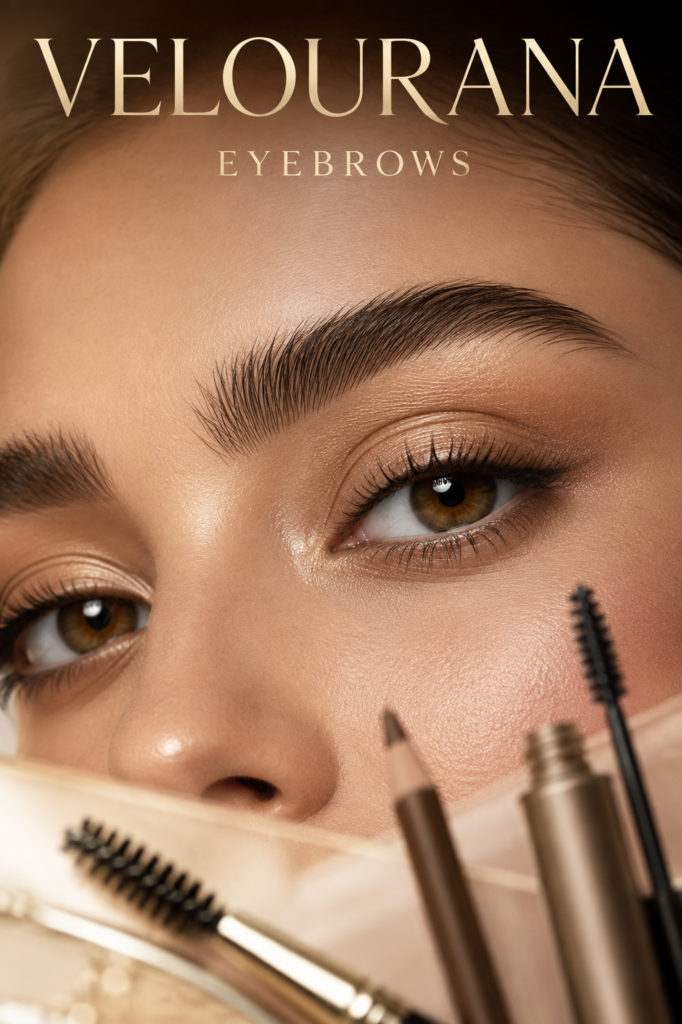
CATEGORY: Brow Soap
The difference between an ordinary brow and a beautifully styled brow can be measured in millimeters. A few hairs redirected upward can make the front appear fuller. A slight diagonal shift through the arch can visually lift the eyebrow. Separating hairs that normally overlap can expose their full length and transform apparent density. Brow soap makes these subtle changes possible because it treats eyebrow hair as a material that can be shaped.
This is what makes the category distinct from pigment-centered brow products. Brow pencils, powders and pomades alter what the eye perceives by introducing color onto the skin and hair. Brow soap works primarily through physical arrangement. It allows the existing hairs to become more visible and occupy the brow space differently.
The technique can look effortless when finished well, but successful soap brows are rarely created by simply coating a spoolie and brushing everything straight upward. The most sophisticated results consider natural growth, hair length, facial proportions, product quantity and the relationship between the brow and surrounding makeup.
Learning to use brow soap therefore involves more than learning how to make brow hairs stay in place. It involves understanding how those hairs contribute to shape.
Reading the Natural Brow Before Styling
Every eyebrow contains its own directional pattern. The inner hairs often grow more vertically, the central hairs tend to angle outward, and the tail commonly becomes more horizontal. These transitions are part of what makes natural eyebrows look organic.
Brow soap can exaggerate, refine or partially override those directions. Before deciding which approach to take, it helps to look at the brow without product and identify how the hairs behave.
Some eyebrows contain long, flexible hairs that can be moved significantly. Others have short, coarse hairs that resist dramatic redirection. Dense brows may have multiple layers of overlapping hair, while fine brows may have more visible skin between strands. Asymmetry is also common. One eyebrow may naturally rise more strongly or contain a different growth pattern from the other.
Trying to force both brows into an identical template can therefore create unnecessary difficulty. Brow soap works particularly well when used to improve each eyebrow rather than erase every natural difference.
At the inner brow, vertical lifting can create softness and openness. Moving toward the center, gradually angling the hairs outward can preserve a natural flow. Around the arch, the direction can follow the rise and descent of the brow rather than continuing vertically. At the tail, excessively upward brushing can sometimes make the shape appear shortened or irregular, so a more horizontal finish may be preferable.
These are not rigid rules. They illustrate the principle that direction should be intentional.
Preparing the Brow Area
Brow soap performs most predictably when the brow hairs are free from unnecessary product buildup. Rich skincare, sunscreen, foundation and facial oils can all influence the way a styling formula adheres.
The preparation does not need to be elaborate. What matters is understanding that brow hair is a surface, and the product needs sufficient contact with that surface to create hold.
If foundation has already been applied across the brow, a clean spoolie can help remove excess complexion product from the hairs before soap is introduced. This can also reveal the natural brow color again, which makes it easier to judge how much pigment will ultimately be necessary.
Skin underneath the brow can remain appropriately moisturized, but an extremely slippery layer may affect some formulas. People with oilier skin may notice that certain brow soaps soften as the day progresses, while others remain stable. Formula choice can therefore matter as much as preparation.
The applicator should also begin clean. A spoolie containing dried brow soap, pencil pigment or foundation can contaminate the fresh product and contribute to residue. Since a small amount of brow soap can be sufficient, a clean brush gives much greater control over exactly what is being applied.
Activating Traditional Brow Soap
Traditional-style brow soaps often need moisture before the product can transfer efficiently to a spoolie. This stage appears simple but has a significant influence on the result.
The aim is usually to soften the surface rather than saturate it. A lightly damp spoolie can be rubbed across the product until a thin coating forms around the bristles. Alternatively, some formulas are designed to receive a light mist directly.
When the mixture becomes visibly foamy, there may be more water than necessary. Foam is not automatically disastrous, but it can indicate that the soap has been excessively activated. The application may become wetter, and the brow can take longer to set.
A nearly dry brush, by contrast, may collect too little product or pick up uneven fragments. The spoolie should generally move smoothly through the formula and emerge coated without carrying obvious lumps.
Purpose-made brow soaps vary, so these observations should always be balanced with the instructions provided for the specific product. Some modern formulas are intentionally waterless and should not be treated like traditional soap at all.
Once the spoolie is loaded, removing obvious excess can help. Brow soap is a category in which more product does not automatically mean more hold. Thick layers can become visible, stiff or flaky. Thin, well-distributed coverage often produces a cleaner result.
Coating Before Sculpting
One useful way to understand brow soap technique is to separate coating from sculpting.
During the first stage, the objective is to distribute the product through the brow hairs. The spoolie can move against and then with the natural growth direction so that the formula reaches more than just the exposed surface. This is especially useful in dense brows, where upper hairs can otherwise receive product while lower layers remain uncontrolled.
The movement does not need to be aggressive. Brow hair is small and the surrounding skin is delicate. Controlled brushing is sufficient to work the product through.
Once the hairs have an even film, sculpting begins. The spoolie is then used to establish the final direction.
This distinction can improve consistency. If styling begins immediately with a heavily loaded brush, the first section of the eyebrow may receive far more product than the tail. By distributing the formula before perfecting the shape, the brow can be styled with a more even level of hold.
The approach is particularly useful when creating a laminated effect because every hair needs enough grip to remain in its altered position.
Building the Feathered Brow
The feathered brow is defined by visible individual hairs, controlled separation and a sense of lightness. It should not necessarily look rigid.
At the inner corner, the hairs can be brushed upward with a slight outward inclination. Perfectly vertical strokes create a more dramatic appearance, whereas a subtle diagonal angle tends to look softer.
Moving toward the center, the spoolie can gradually rotate so that the hairs follow the natural sweep toward the temple. This directional transition is important because it prevents the brow from resembling a row of parallel lines.
Around the arch, the hairs can continue diagonally while respecting the shape underneath. The tail can then be smoothed more horizontally.
The amount of pressure should remain moderate. If every hair is pressed flat against the skin, much of the airy quality disappears. The objective is to separate and lift rather than laminate completely.
A feathered brow often looks best when slight irregularities remain. Natural hair does not grow at mathematically identical angles. Allowing some variation gives the eyebrow depth and prevents the styling from appearing overly mechanical.
Pigment, when necessary, can then be placed selectively rather than covering the entire brow. Fine strokes can occupy genuine gaps while the visible natural hairs remain dominant.
Creating a Laminated Brow Effect
The laminated brow is a stronger interpretation of the same styling principles. Instead of preserving substantial three-dimensional movement, the hairs are deliberately arranged closer to the skin.
Brow soap is particularly well suited to this aesthetic because it can provide enough grip to maintain unusual hair directions.
After coating the hairs thoroughly, the spoolie can lift them into the desired pattern. While the formula remains workable, the hairs may be gently pressed against the skin with the side of the spoolie or another suitable smooth surface.
The result is a flatter arrangement in which the full length of each hair becomes highly visible. Because the hairs are spread across a larger vertical area, the brow often looks considerably fuller.
The upper edge may become irregular as long hairs extend beyond the natural silhouette. Whether to preserve this texture or refine it depends on the desired finish. Some laminated brows intentionally feature a visibly feathered upper boundary. Others are gently shaped so that the hairs create a cleaner arc.
Trimming should be approached independently from styling. A hair that appears excessively long when brushed vertically may sit perfectly when directed diagonally. Cutting it solely because of an extreme styling position can alter the natural brow when it is worn differently later.
This is why brow soap can be useful before grooming decisions: it reveals the potential range of each hair.
Adapting the Technique to Fine Brows
Fine or relatively sparse eyebrows can benefit significantly from directional styling, but the objective is usually different from that of dense brows.
When there are fewer hairs, preserving each visible strand becomes important. Brow soap can separate hairs that naturally lie together and distribute them across a wider area. This creates an impression of greater coverage without immediately resorting to heavy pigment.
The product quantity should remain controlled. Fine hairs can become overwhelmed by thick styling formulas, causing several strands to stick together. When that happens, the eyebrow may paradoxically look less full because individual hairs disappear into clusters.
A lighter coating allows each strand to remain visible.
Once the hairs are arranged, genuine gaps become easier to identify. Instead of filling the entire eyebrow indiscriminately, pigment can be concentrated precisely where the natural hair cannot provide coverage.
A fine pencil or brow pen can be particularly compatible with this approach because both aim to preserve the visual language of individual hairs. Added strokes can follow the same directions established by the brow soap, beginning more vertically near the inner corner and gradually rotating outward.
The finished result can appear fuller while remaining relatively transparent. Skin is still visible in places, but the overall pattern reads as an eyebrow rather than a collection of empty areas.
Adapting the Technique to Thick Brows
Thick eyebrows offer more material to sculpt, but they can also be more resistant.
Coarse hairs may have a strong natural growth direction. Brushing them vertically can create tension that eventually causes them to fall back. In these cases, coating the hairs thoroughly and choosing a strong-hold formula becomes more important.
However, dramatic vertical styling is not always necessary. Dense brows can look beautifully groomed when the hairs are simply lifted slightly and aligned more consistently. The transformation may come from organization rather than enlargement.
The front can remain fluffy while the central portion is directed diagonally. Long hairs around the arch can be incorporated into the shape instead of automatically trimmed. The tail can be kept sleek to prevent the entire eyebrow from appearing excessively wide.
Because thick brows contain more overlapping hairs, working the spoolie through different layers can help distribute the product. Applying only to the uppermost hairs may create a styled surface while the hairs underneath continue pushing in their natural direction.
The goal is not necessarily to immobilize every strand. It is to establish enough shared direction that the brow looks deliberate.
Combining Brow Soap With Brow Pencil
Brow soap and pencil perform complementary functions. Soap moves hair; pencil creates pigment on the skin.
The combination can be extremely effective when the eyebrow has good overall hair coverage but contains isolated gaps. Styling first reveals where those gaps actually remain after the hairs have been redistributed.
However, some brow soaps leave a film on the skin that makes pencil application more difficult. A very waxy pencil may glide over it, while a harder, finer pencil may struggle to deposit pigment. In other routines, applying pencil first works better.
There is therefore no universal application order.
When pencil is applied before soap, the brow should be brushed carefully enough that the pigment is not excessively disturbed. When it is applied afterward, allowing the soap to set can sometimes create a more stable surface, provided the pencil is compatible with the dried formula.
Whichever order is chosen, the visual relationship matters most. Pencil strokes should imitate the direction, length and spacing of the surrounding hairs rather than creating a separate block underneath them.
At the front, fewer strokes generally preserve softness. Through the central brow, small gaps can be completed. The tail may tolerate slightly more definition because natural brow density often decreases there.
The combination allows brow soap to remain the primary source of texture while pencil quietly supports areas where nature provides less hair.
Brow Soap With Pens, Powders and Pomades
Other pigment products can also accompany brow soap, although each creates a different finish.
Brow pens are particularly suited to hair-focused styling because their fine tips can produce thin marks. Against a soap-styled brow, those marks can visually merge with real hairs when color and direction are chosen carefully.
Powder creates a softer shadow. Instead of imitating individual strands, it can reduce the contrast between visible skin and brow hair. This can be useful when sparse areas are diffuse rather than concentrated in obvious gaps.
Pomade creates stronger definition and can transform a feathered brow into a more dramatic look. Because pomades can be rich and emollient, compatibility with brow soap becomes especially important. Too many waxy layers can make the brow feel heavy or interfere with hold.
The most harmonious combinations usually assign a clear role to each product. Soap provides structure. Pigment provides only the color or density that structure cannot create by itself.
When every product is applied heavily, the advantages of brow soap can disappear. Individual hairs become less visible beneath the combined texture, defeating the purpose of feathered styling.
Avoiding the Overloaded Brow
Brow soap has a distinctive temptation: because the product is often transparent, it is easy to keep adding more without immediately seeing how much has accumulated.
The consequences may appear later. The brow can become unusually shiny, hard, flaky or coated. Hairs may stick together in thick sections rather than remaining separated.
Controlled application is therefore fundamental.
A spoolie does not need to carry a large visible mass of product. A thin film distributed thoroughly can provide substantial styling power. If additional hold is necessary, building gradually is generally easier to control than beginning with an excessive amount.
The surrounding skin provides clues. If thick deposits are visible between the hairs, more product may have been applied than necessary. If the spoolie leaves ridges of material, those can often be redistributed before the formula sets.
Once dry, aggressive correction becomes more difficult. Repeated brushing can break the film and cause flaking. It is usually better to establish the shape while the product remains workable.
Managing Residue on Dark Brows
White or gray residue is particularly noticeable on dark eyebrow hair. It can transform an otherwise polished brow into one that appears dusty.
Product quantity is one factor, but residue can also originate elsewhere. A spoolie that has touched foundation or concealer can transfer those products into the soap. Powder applied after the brow has been styled can settle on slightly tacky hairs. Sunscreen and skincare may also interact with the formula.
Keeping brow tools separate from complexion products helps. So does avoiding unnecessary foundation directly through the eyebrow.
If residue appears immediately during application, it can sometimes be removed or redistributed while the formula is still moist. Continuing to add water is not always the solution, since excessive moisture can alter the product further.
Formula selection matters too. Modern transparent brow soaps and waxes are often designed specifically to minimize visible deposits, although performance still varies between individuals and routines.
The ideal finish is one in which the product itself largely disappears and the styled hair receives the attention.
Correcting Brow Asymmetry
Eyebrows are rarely identical. Differences can arise from hair growth, bone structure, facial expression, grooming history and natural asymmetry.
Brow soap can visually reduce some differences because hair direction influences perceived shape.
If one brow appears lower, slightly more lift through its hairs may create a higher upper boundary. If one arch looks denser, separating hairs on the opposite brow may expand its visible area. A shorter-looking tail can sometimes be improved by redirecting existing hairs outward.
These adjustments are optical rather than structural, but small changes can be surprisingly effective.
The objective should not necessarily be perfect symmetry. Human faces are naturally asymmetrical, and brows that are forced into identical shapes can sometimes look less natural than brows that remain subtly different.
A more useful goal is balance. Both eyebrows should appear intentional and compatible with one another even if their individual hair patterns remain distinct.
Brow soap supports this because it offers temporary manipulation. Unlike removing hair, styling can be changed immediately. Different directions can be tested before committing to grooming alterations.
Brow Soap and the Shape of the Face
Eyebrows influence how facial proportions are perceived. Raising the apparent upper boundary can make the eye area feel more open. Extending hairs outward can emphasize width. A highly vertical inner brow can create a stronger, more editorial expression.
Because brow soap can alter these dimensions without adding a hard outline, its effects can be subtle even when the underlying change is significant.
A very tall feathered brow may complement some faces while dominating others. Likewise, an extremely flattened laminated brow can look sophisticated in one makeup style and overly severe in another.
The most adaptable approach is to treat trends as possibilities rather than templates. The natural brow provides the starting architecture, and styling can emphasize the features that already work well.
This also prevents the eyebrow from becoming disconnected from the rest of the face. Brow soap should not necessarily announce itself as a technique. In understated makeup, its best effect may simply be that the eyebrows look naturally fuller and more orderly.
Maintaining the Brow Through the Day
Once brow soap has set, unnecessary contact is one of the simplest things to avoid. Rubbing or repeatedly touching the hairs can weaken their arrangement and create flakes.
Water exposure can also affect formulas that are not designed to be waterproof. Sweat, humidity and facial oils may gradually soften the hold. The degree varies widely between products.
If a brow hair moves during the day, attempting to brush through completely dried product can sometimes create more disruption than improvement. A small correction may be possible, but extensive restyling is usually easier when the original layer is removed and reapplied.
This is another reason moderate application can be advantageous. A thin, clean layer tends to age more gracefully than a heavy coating.
At the end of wear, the product should be removed as part of normal facial cleansing rather than allowed to accumulate repeatedly on the brow hairs and surrounding skin. The exact cleansing method should be compatible with the rest of the makeup and skincare routine.
Brow Soap Versus Brow Gel
Brow soap and brow gel overlap in purpose but create different styling experiences.
Gel is typically convenient. The product arrives on an applicator, can be brushed through quickly and may combine hold with tint or fibers. It suits routines where speed and simplicity matter.
Brow soap often offers more deliberate sculpting. The separate spoolie and workable texture allow the hairs to be manipulated repeatedly before setting. Strong formulas can create the flattened, laminated effect that lightweight gels may struggle to reproduce.
Modern high-hold gels have narrowed this difference considerably, and some perform similarly to brow soaps. The categories increasingly overlap.
The choice is therefore less about which product is objectively better and more about the desired interaction with the brow. Someone who wants a quick everyday tidy may prefer gel. Someone who enjoys shaping each section or creating pronounced lift may appreciate brow soap. Others may alternate between them depending on the makeup look.
When a Softer Brow Looks Better
The popularity of dramatic feathered brows can create the impression that brow soap should always produce maximum lift. In reality, the product can be equally useful for restrained styling.
A soft brow might involve brushing the inner hairs slightly upward, organizing the central section diagonally and smoothing the tail. The result may be barely recognizable as a "soap brow," yet the eyebrow appears more polished.
This approach can work particularly well with sophisticated complexion makeup, strong eye makeup or bold lip color because the brows provide structure without competing for attention.
It can also suit mature, fine or naturally irregular brows where extreme separation might emphasize gaps rather than disguise them. By controlling the direction without spreading the hairs too widely, brow soap can maintain density while improving shape.
Technique should respond to the eyebrow rather than to the product's reputation.
The Continuing Appeal of Soap-Styled Brows
Brow soap became famous through a recognizable trend, but its lasting value lies in something broader. It taught everyday makeup users to think about eyebrows in terms of hair direction.
Once that idea is understood, the brow becomes more versatile. Fullness is no longer created only by adding pigment. Shape is no longer determined only by tweezing or outlining. Existing hairs can be repositioned to alter both.
This makes brow soap an unusually architectural cosmetic. Its most important effects come from lift, spacing, angle and hold.
Used dramatically, it can create editorial brows with conspicuous height and a laminated surface. Used lightly, it can simply organize unruly hairs and make the eyebrow appear naturally fuller. Combined with pencil or pen, it can support sparse areas without sacrificing texture. On dense brows, it can provide structure without adding unnecessary color.
The best results emerge when the product remains subordinate to the hair. Brow soap should enable the natural eyebrow to become more expressive rather than burying it beneath visible product.
That principle explains why the technique remains relevant even as brow trends continue to change. Fashion may alter the preferred height, density or direction, but the ability to control individual hairs will continue to be useful.
Brow soap offers exactly that control. In a category filled with products designed to draw, shade and deepen, it approaches the eyebrow from a different perspective: before adding anything new, discover what the existing hairs can do.
THE END VELOURANA
 Discover More From Our Family of Websites
 ZodiacBearing (Astrology, Tarot, Numerology, Angel Numbers & Spiritual Guidance)
 Velourana (Beauty, Makeup, Hair Care, Skincare & Beauty Tips)
 HavenBearing (Home, Living, Organization, Décor & Everyday Inspiration)
 PawBearing (Pet Care, Dog Breeds, Animal Health, Training & Pet Products)
 PsyCatherine (Notes From the Journal of a Psychologist on Real Life)

