
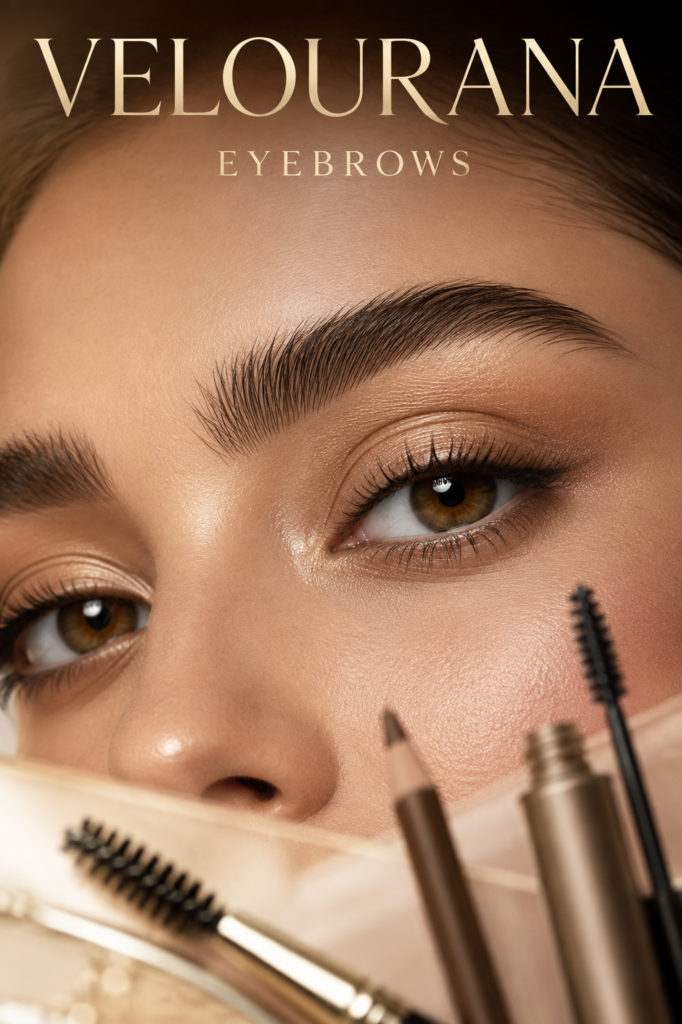
CATEGORY: Brow Soap
Brows have moved through countless beauty eras, from the ultra-thin arches of earlier decades to the carefully sculpted brows that dominated the first years of the social-media beauty boom. More recently, however, the emphasis has shifted toward texture. Instead of creating an eyebrow that looks completely drawn, filled and perfected, contemporary brow styling often aims to preserve the individual hairs and make them part of the finished look. Brow soap has become closely associated with this movement because it offers something that many traditional brow products do not: the ability to manipulate the direction, spacing and visibility of individual hairs.
The name can initially sound surprisingly ordinary. Soap is normally associated with cleansing, not cosmetics. Yet the concept behind brow soap is remarkably practical. A suitable soap-like styling formula can coat brow hairs and help them remain in a deliberately arranged position. When the hairs are brushed upward or diagonally outward, the eyebrow can immediately appear fuller, wider and more structured even before any pigment is added.
Modern products marketed specifically as brow soaps have developed the idea considerably. Rather than simply borrowing an ordinary cleansing bar, cosmetic brands can formulate products around brow styling, creating compact waxy or soap-based textures designed to work with a spoolie brush. Some remain relatively traditional in appearance, while others resemble balms, waxes or transparent styling pastes. Their shared purpose is not primarily to add color. It is to control the architecture of the brow.
That distinction explains why brow soap occupies a unique position within brow makeup. A pencil can imitate missing hairs. A powder can create soft density. A pomade can intensify shape and definition. Brow soap instead works predominantly with the hairs that already exist, reorganizing them so that their natural texture becomes more visually prominent.
Why Brow Soap Changes the Appearance of the Brow
The visual effect of brow soap depends heavily on direction. Brow hairs naturally grow at different angles. Near the inner corner, they may point upward. Through the middle of the brow, they often travel diagonally. Toward the tail, they usually become increasingly horizontal. Left untouched, these variations create a natural brow pattern, but they can also make individual hairs overlap.
When hairs overlap, portions of the eyebrow can appear denser while other areas seem sparse. Brushing those hairs into a more intentional arrangement redistributes them across the visible brow area. This does not create additional hair, but it can create the impression of greater coverage.
The effect becomes especially noticeable when brow hairs are brushed upward. The upper boundary of the eyebrow rises, exposing the full length of hairs that previously lay at an angle. A brow that seemed relatively narrow may suddenly look taller and more substantial. This is one reason soap brows became associated with the fluffy, feathered aesthetic.
Yet brow soap is not limited to dramatically vertical brows. The same product can support much subtler styling. Hairs can be brushed diagonally toward the temples for a polished natural shape, or only slightly lifted to maintain their existing growth pattern. The amount of product, moisture and brushing pressure can all influence the result.
This flexibility distinguishes brow soap from the idea of one fixed "soap brow" look. The product is a styling medium rather than a predetermined shape. A person with dense brows may use it primarily to keep unruly hairs organized. Someone with finer brows may use it to spread available hairs across sparse-looking areas. Another person may use it only through the front of the eyebrow to create softness while leaving the arch and tail comparatively traditional.
The result therefore depends as much on technique as on the formula itself.
From Traditional Soap Brows to Purpose-Made Cosmetics
The use of soap for eyebrow styling existed long before brow soap became a mainstream beauty category. Makeup artists discovered that a small amount of suitable soap could provide considerable hold when brushed through brow hairs. The technique was particularly useful when a strong editorial or photographic brow was required.
Social media later brought the method into everyday beauty culture. Images and tutorials showing dramatically lifted brows made the transformation easy to understand visually. The technique appeared accessible because the fundamental tools were simple: a soap-like product, moisture and a spoolie.
As the aesthetic became popular, cosmetic companies began producing dedicated brow soaps. This changed the category significantly. Consumers no longer had to adapt a cleansing product for cosmetic styling. Purpose-made versions could be packaged in compacts, designed for use with makeup brushes and formulated with the expectations of facial cosmetics in mind.
The terminology nevertheless remained broad. A product called brow soap may not behave exactly like a traditional bar of soap. Some formulas lean toward waxes or styling balms while retaining the "soap" name because consumers associate it with the feathered brow technique. Consequently, texture and performance can vary substantially between products.
Some brow soaps feel firm and require activation with a small amount of liquid. Others are softer and can be picked up directly with a spoolie. Some dry to a noticeably rigid finish, while others remain more flexible. There are transparent versions and tinted versions, although clear formulas remain closely associated with the category because they allow users to control hair without necessarily adding pigment.
The evolution of brow soap illustrates how a professional technique can eventually become its own retail category. What began as an unconventional use of an existing material has developed into a specialized type of brow styling product.
The Relationship Between Moisture and Hold
One of the most important characteristics of traditional-style brow soap is its interaction with moisture. A completely dry, firm product may be difficult to transfer onto a spoolie. Adding a small amount of moisture softens the surface and allows the brush to collect a thin film.
The amount matters considerably.
If the surface becomes excessively wet, the product may turn foamy or dilute too much. The resulting layer can become slippery, making the hairs easier to move initially but potentially reducing the clean, controlled finish. Too little moisture can create the opposite problem: insufficient product transfers to the brush, or the spoolie drags against the surface without creating an even coating.
The ideal consistency varies by formula. Some products need only a barely damp spoolie. Others respond better when the product itself receives a light mist. Modern formulations may require no added water at all, which is why the manufacturer's directions are important even when two products are both marketed as brow soap.
After application, evaporation contributes to the setting process in formulas that are activated with water. The hairs gradually become less movable as the product dries. This creates a short styling window. During that period, the eyebrow can be brushed, reshaped and refined. Once the product has fully set, repeatedly combing through it may disturb the film and create visible residue.
This is one reason brow soap application can feel different from using a conventional tinted brow gel. Gel is commonly brushed through the hairs in a few quick passes. Brow soap often rewards more deliberate manipulation because the goal is not simply coating the hairs but arranging them into a specific structure before the product sets.
The Spoolie as a Styling Tool
The spoolie is central to brow soap application. Although it looks simple, the way it is held and moved can substantially change the final eyebrow.
A spoolie loaded with a thin, even layer of product can distribute brow soap from the roots toward the ends of the hairs. Brushing only across the surface may move the tips without sufficiently controlling the base. Working through the brow allows the styling product to surround more of each hair and can improve the consistency of the hold.
The direction of brushing determines the character of the finished brow. Strong upward strokes create maximum height and separation. Diagonal strokes produce lift while respecting the natural arc. More horizontal movements through the tail can preserve a tapered shape.
Pressure also changes the effect. Light brushing leaves the brow fluffy and dimensional. Pressing the hairs more firmly against the skin can create the laminated appearance often associated with highly groomed soap brows. Neither approach is inherently preferable. They simply create different relationships between the hairs, skin and surrounding makeup.
Some users employ the handle of the spoolie or another smooth tool to press styled hairs into position. This can strengthen the flattened, laminated effect, although excessive pressure or too much product may make the eyebrow look overly rigid.
A clean spoolie is equally important. Dried product remaining from previous applications can mix with fresh brow soap and create uneven deposits. Since brow soap relies heavily on thin, controlled layers, keeping the applicator clean helps maintain predictable performance.
Creating Fullness Without Losing Natural Texture
The appeal of brow soap is strongly connected to the current preference for visible hair texture. Traditional brow shaping techniques often focused on creating a clean silhouette. The eyebrow might be outlined, filled and sharpened until the individual hairs became secondary to the overall form.
Soap styling reverses that hierarchy. Individual hairs become part of the design.
When hairs are separated and lifted, small spaces appear between them. Counterintuitively, those spaces can make the eyebrow look more dimensional rather than less full. The eye recognizes numerous distinct strands, creating an impression of texture and density.
This effect can be particularly attractive at the front of the brow. Instead of filling the inner portion with a solid block of pigment, hairs can be lifted individually so that skin remains visible between them. The transition from the bridge of the nose into the eyebrow then appears softer.
Through the arch, the approach can become more controlled. Hairs can follow the natural rise of the eyebrow rather than pointing completely vertically. At the tail, the direction can gradually flatten. This creates a feathered effect without sacrificing the overall structure.
Brow soap can therefore help reconcile two seemingly opposite beauty goals: definition and naturalness. The eyebrow can be carefully styled while still looking unmistakably like hair.
Achieving that balance depends on restraint. When too much product is used, the brow may become visibly coated. When every hair is forced into exactly the same direction, natural variation can disappear. The most convincing results often preserve slight differences in angle while improving the overall arrangement.
Brow Soap and Sparse Brows
Brow soap is sometimes described as a product that makes brows look dramatically fuller, but its limitations are important to understand. It manipulates existing hairs; it cannot fill an area where no hair exists.
For mildly sparse eyebrows, however, repositioning can make a meaningful visual difference. A longer hair growing beside a thin area may be brushed across some of the visible skin. Hairs that previously overlapped can be separated so that they occupy more space. The upper boundary can be expanded slightly by lifting hairs rather than allowing them to lie flat.
When genuine gaps remain, brow soap can work alongside pigment products. A fine brow pencil or brow pen can create hair-like marks in areas where the natural density is insufficient. The styling product and pigment then perform different jobs: one organizes real hairs while the other creates the illusion of additional ones.
The order of application requires some consideration. Depending on the formulas involved, applying a waxy or soap-like product first may make certain pencils less able to draw cleanly on the skin. Conversely, applying pigment first and then brushing aggressively through it can blur or remove the marks.
A practical approach is to understand the compatibility of the specific products rather than assuming one universal order. Some combinations work beautifully with pencil first; others are easier when the brow is styled before sparse areas are carefully completed.
The objective is integration. Artificial strokes should follow the direction established by the real hairs. When the soap lifts the inner hairs vertically, pencil marks in that area generally look more convincing when they follow a similar orientation. Through the arch and tail, the angle can gradually change.
This coordination prevents the styled hairs and added pigment from appearing like two unrelated layers.
Dense and Unruly Brows
People with naturally dense eyebrows may have very little need for additional color, yet brow soap can still be valuable because fullness and control are separate concerns.
Thicker brow hairs can be surprisingly resistant to lightweight gels. A product may initially brush them into place only for the hairs to return gradually toward their original position. A stronger styling formula can provide the additional grip needed to maintain a deliberate shape.
Dense brows also benefit from strategic separation. When many hairs cluster together, the eyebrow can appear heavy in particular areas. Brushing them apart can reveal a more even distribution and make the shape feel lighter without removing hair.
This is especially relevant for anyone who prefers to preserve natural density rather than trimming aggressively. Instead of cutting every hair that extends beyond a conventional brow outline, styling can show whether those hairs contribute positively when redirected.
Brow soap can therefore influence grooming decisions. An apparently overgrown hair may actually become useful once brushed diagonally into the shape. Conversely, styling can reveal genuinely excessive length more clearly, making subsequent trimming more precise.
The interaction between grooming and styling demonstrates why brow products are not merely decorative. They can help a person understand the structure of their natural brows before making permanent or semi-permanent changes through tweezing, waxing or trimming.
Working With Makeup Around the Brows
Brow soap does not exist independently from the rest of a makeup routine. Its texture can interact with foundation, concealer, powder and skincare products surrounding the eyebrow.
A heavily moisturized or oily surface may make it more difficult for certain styling products to grip. Likewise, complexion makeup applied underneath the brow hairs can mix with soap and create a cloudy or tinted residue. Preparing the brow area thoughtfully can therefore improve the finished appearance.
This does not necessarily mean the skin must be completely bare. It means avoiding unnecessary buildup within the brow itself. Foundation can often be blended around the eyebrow rather than repeatedly pushed through the hairs.
Once the brows are styled, concealer may be used around the lower edge if a particularly defined shape is desired. Yet the modern appeal of soap brows often comes from avoiding an excessively carved outline. A softer complexion transition allows the feathered hairs to remain the dominant feature.
Powder placement also deserves attention. Loose or pressed powder settling into a tacky brow product can reduce its clarity. Allowing the brow soap to set before finishing nearby complexion makeup can help, depending on the routine.
These details become more important with transparent brow products because any residue is visible against the natural hair. Darker brow hairs can make pale deposits especially noticeable.
White Residue, Flaking and Product Buildup
One of the most commonly discussed disadvantages of brow soap is the possibility of visible residue. A product that initially appears transparent can dry with pale particles or develop flakes as the brow is touched during the day.
Several factors can contribute. Excessive product is a major one. A thick layer is more likely to remain visible than a thin film. Too much water can also change the way some formulas dry. Repeatedly brushing the eyebrow after the product has begun setting may break the film into particles.
Interaction with skincare and makeup can create additional problems. Foundation, sunscreen or powder caught on the spoolie can become mixed into the brow product. The result may look like the soap itself has turned white even when the residue is actually a combination of cosmetics.
Applying controlled amounts helps preserve transparency. Brow soap does not need to form a visibly thick coating to be effective. The objective is sufficient coverage to influence the hairs while keeping the product itself visually unobtrusive.
If a particular formula repeatedly leaves residue despite careful application, the issue may simply be compatibility. Brow hair thickness, skin oil, climate and surrounding cosmetics all influence performance. A softer brow wax or strong-hold gel may suit some routines better.
The existence of alternatives does not diminish brow soap. It highlights the specialized nature of the category. Its characteristic grip and sculpting ability are precisely what make it appealing, but those qualities also mean application can require more attention than a quick swipe of gel.
Soft Feathering Versus the Laminated Effect
Although the terms are sometimes used interchangeably, feathered brows and laminated-looking brows are not identical.
A feathered brow emphasizes separation and airiness. Individual hairs remain visibly dimensional, with some distance from the skin. The overall direction is controlled, but the eyebrow retains movement visually.
A laminated effect is flatter and more graphic. Hairs are brushed firmly into position and often pressed against the skin, creating the impression of brow lamination even without a salon treatment. The upper edge can become particularly prominent because the full length of the hairs is displayed.
Brow soap can create either result.
For feathering, less product and lighter pressure are usually advantageous. The spoolie separates and lifts without compressing every strand. For a laminated appearance, the hairs can be thoroughly coated, brushed into a stronger direction and pressed into place while the formula remains workable.
Face shape, brow density and personal style can all influence which interpretation feels most harmonious. Extremely vertical inner brows create a striking editorial statement, but a softer diagonal direction may integrate more naturally into everyday makeup. Likewise, very long brow hairs can produce dramatic height when lifted, while shorter hairs may create a subtler texture.
The flexibility to move between these effects is part of brow soap's enduring relevance. It is not restricted to the trend that originally popularized it.
Hold, Comfort and Flexibility
Strong hold is often treated as the defining measure of a brow styling product, but maximum rigidity is not always the ideal outcome.
A formula that dries extremely hard may preserve the shape impressively, yet some people dislike the sensation of stiff hairs. Others appreciate that firmness because it prevents them from touching or disturbing the brows. Softer formulas can feel more comfortable but may allow heavier hairs to move.
The appropriate balance depends on the natural brow and the desired style.
A person creating dramatically lifted brows for photography may prioritize structure. Someone wearing minimal everyday makeup may prefer a flexible finish that simply keeps stray hairs organized. Climate can also affect expectations. Heat, humidity and skin oil can challenge styling products differently from cool, dry conditions.
Touching the eyebrows after application can reduce longevity regardless of formula. Brow soap creates a physical arrangement that can be disrupted by rubbing, clothing or repeated contact. This is particularly relevant when hairs have been pressed into a direction very different from their natural growth.
Understanding hold as a combination of formula, application and daily conditions gives a more realistic picture than assuming that one product will behave identically for everyone.
Choosing Brow Soap as Part of a Brow Routine
Brow soap is most useful when its function matches the styling objective. It excels at manipulating hair, producing lift and creating visible texture. It is less suited to being the sole product when the main concern is extensive missing density or dramatic color alteration.
Someone with naturally full brows may find that brow soap alone creates a complete look. A person with moderate gaps may pair it with a pencil or pen. Those wanting a highly defined evening brow might combine hair styling with stronger pigment through the arch and tail.
The product can also change how much pigment seems necessary. Once hairs are lifted and redistributed, areas that initially looked sparse may require less filling than expected. Styling first can therefore prevent unnecessarily heavy makeup.
Color is another consideration. Clear brow soap preserves the natural shade and works across many hair colors. Tinted formulas can add subtle depth, although they may behave more like hybrid soap-gel products. For brows containing gray, silver or very light hairs, tinted styling products can alter visibility considerably, while transparent formulas emphasize texture without changing color.
Packaging and application format matter as well. A compact that requires a separate spoolie offers control but involves an additional tool. Integrated applicators may be more convenient. Neither format is universally superior; the choice depends on how deliberately someone wants to manipulate the brow.
Why Brow Soap Remains Relevant
Beauty trends rarely remain static. The dramatic soap brow has already evolved from the highly vertical, deliberately laminated versions that once dominated social feeds. Yet the underlying principle has proved more durable than the most exaggerated interpretation.
Modern brow makeup increasingly recognizes the value of the natural hair itself. Instead of automatically covering, outlining or replacing it with pigment, styling can enhance what is already present. Brow soap fits naturally within that philosophy.
Its importance is not that everyone should wear brows brushed straight upward. It is that the product expands the possibilities of eyebrow styling. Hairs can be lifted, separated, redirected and structured before additional makeup is considered.
That approach can make a brow appear fuller without necessarily making it darker. It can make a dense brow look more organized without making it thinner. It can soften the front of a heavily defined eyebrow or create an intentionally editorial laminated finish.
The transformation comes from architecture rather than color.
For a product with such a simple name, brow soap demonstrates a sophisticated principle of makeup: changing texture and direction can sometimes have as much visual impact as adding pigment. When applied with restraint and adapted to the natural growth of the eyebrow, it can create brows that feel polished while preserving the individuality of every visible hair.
THE END VELOURANA
 Discover More From Our Family of Websites
 ZodiacBearing (Astrology, Tarot, Numerology, Angel Numbers & Spiritual Guidance)
 Velourana (Beauty, Makeup, Hair Care, Skincare & Beauty Tips)
 HavenBearing (Home, Living, Organization, Décor & Everyday Inspiration)
 PawBearing (Pet Care, Dog Breeds, Animal Health, Training & Pet Products)
 PsyCatherine (Notes From the Journal of a Psychologist on Real Life)

