
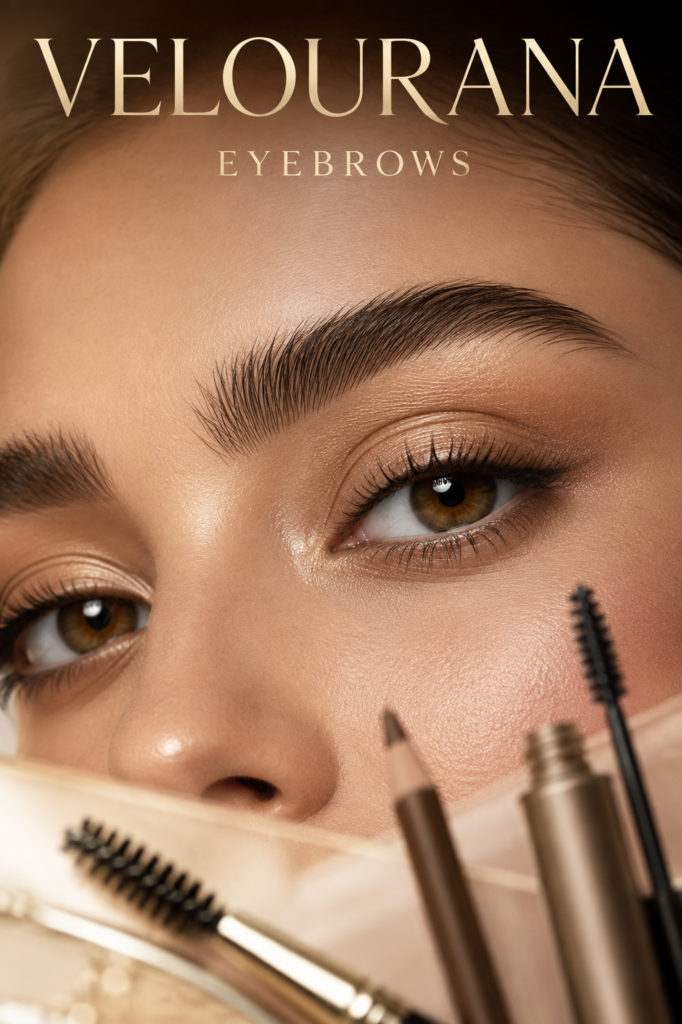
CATEGORY: Brow Gels
Brow gel occupies an unusual place in the modern makeup bag. It can be almost invisible, yet it has the ability to change the entire structure of the face. A few controlled strokes through the eyebrows can lift hairs that naturally point downward, organize an uneven growth pattern, emphasize an arch, soften an overly constructed brow, or make naturally full eyebrows appear deliberately groomed rather than simply untouched. Unlike products designed primarily to draw, fill, or reconstruct the eyebrow, gel works directly with the hairs that are already present.
That distinction explains much of its appeal. Brow gel belongs somewhere between makeup and grooming. Clear formulas can perform almost entirely as styling products, while tinted versions introduce pigment and may make the eyebrow appear denser and more defined. Fiber-enriched gels move still further toward cosmetic enhancement by depositing tiny materials that visually increase the substance of individual hairs. Strong-hold formulas can create dramatically lifted, laminated-looking brows, while softer gels preserve movement and produce a more relaxed finish.
The result is a category that appears simple from the outside but contains considerable variation. Choosing well requires more than deciding between clear and brown. Hold strength, brush dimensions, pigment concentration, texture, drying behavior, flexibility, finish, and compatibility with other brow products can all determine whether a gel looks refined or conspicuous.
Understanding these differences makes brow gel considerably easier to use. The objective is rarely to force every eyebrow into the same fashionable shape. A more sophisticated approach is to determine what the natural brow already provides and then choose the degree of control, color, and density that complements it.
Why Brow Gel Has Become Such an Important Brow Product
Eyebrows are composed of individual hairs growing at different angles, densities, lengths, and stages. Even a naturally symmetrical pair of brows will not necessarily behave symmetrically. One brow may have hairs that rise easily at the front while the other grows more horizontally. Longer hairs may fall downward during the day, while shorter hairs can project outward. Brow gel addresses this movement.
The fundamental action is comparable to hairstyling on a miniature scale. Film-forming ingredients and other styling components help coat the brow hairs and encourage them to remain in the position established by the applicator. Modern formulas vary substantially in strength. Some provide barely perceptible control, whereas others are developed specifically for substantial hold.
This means that brow gel can alter perceived shape without actually changing the underlying eyebrow. Brushing hairs slightly upward can reveal their length and make the brow appear fuller. Directing the tail outward rather than downward can create a more lifted impression. Organizing hairs through a sparse region may reduce the visual prominence of small gaps.
The transformation can therefore come from arrangement rather than additional makeup.
This is particularly useful in contemporary brow styling, where texture is often allowed to remain visible. Instead of creating a completely solid block of pigment, gel can preserve the distinction between individual hairs. Even when pencils or powders are used underneath, gel can restore separation so that the finished eyebrow retains dimension.
There is also a practical advantage. Brow gel generally requires little equipment. The product and applicator are usually contained in the same package, making it suitable for quick makeup routines and touch-ups. Clear gel eliminates shade selection altogether, while tinted gel can combine grooming and subtle coloring in a single application.
Its apparent simplicity, however, should not encourage careless application. Because the product coats hair rather than merely sitting beneath it, excess formula can become immediately noticeable. Precision and restraint usually produce the most polished result.
Clear, Tinted, and Volumizing Brow Gels
The most useful distinction within the category is based on what the formula adds beyond hold.
Clear brow gel is primarily concerned with organization. It changes the direction and position of brow hairs without deliberately altering their color. This makes it particularly adaptable. Naturally dense eyebrows can be brushed into a cleaner silhouette without looking heavily made up, while filled brows can be finished with clear gel after pencil, powder, or another color product has established the desired definition.
Clear formulas also allow the natural variations within brow hair to remain visible. Many eyebrows contain slightly different shades from root to tip or from the front to the tail. Transparent gel preserves these differences, which can contribute to a softer appearance.
Tinted brow gel introduces pigment. Instead of simply arranging the hairs, it coats them with color and can increase their visual prominence. This can be useful when eyebrow hairs are naturally light relative to the surrounding features, when some hairs have become gray, or when the brow appears less substantial because individual hairs do not contrast strongly against the skin.
Tint should not automatically be interpreted as heavy coverage. Many formulas provide relatively sheer color designed to enhance rather than completely recolor the eyebrow. Others deposit considerably more pigment and therefore require greater application control.
Volumizing or fiber brow gels add another dimension. Their purpose is to make existing hairs appear thicker or more numerous. Fine fibers or texture-building materials can adhere to the hairs, increasing visible density. For someone whose eyebrow has reasonable overall shape but lacks substance, this may provide enough enhancement without requiring extensive pencil work.
Strong sculpting gels constitute another increasingly prominent variation. Sometimes described with terms suggesting glue, lamination, or extreme hold, these formulas prioritize directional control. They can be useful for coarse, long, downward-growing, or otherwise resistant brow hairs. They are also associated with highly lifted styling in which the individual hairs remain prominently visible.
These categories frequently overlap. A tinted gel may also contain fibers. A clear gel may provide exceptionally strong hold. A volumizing formula may offer either flexible or rigid control. Product descriptions should therefore be interpreted according to the complete intended effect rather than a single label.
Hold Is About More Than Keeping Hairs Still
Hold strength has become one of the defining characteristics of brow gel, but maximum hold is not automatically the best choice.
A softly styled eyebrow needs enough control to maintain organization without eliminating natural movement. Flexible formulas are particularly useful when the hairs already grow in approximately the desired direction. They can reduce disorder while maintaining a soft texture.
Stronger hold becomes valuable when hair actively resists styling. Coarse brow hairs may return to their original direction shortly after brushing. Long hairs can descend as the day progresses. Stronger film-forming systems can provide additional support for these situations.
The desired aesthetic matters equally. A brushed, feathery brow benefits from visible separation and lift. A conventional groomed brow may need only enough hold to prevent stray hairs from escaping the established outline. A laminated-inspired style demands considerably greater directional control.
There is also a sensory difference. Some users enjoy knowing that the brow has been firmly set, while others dislike any sensation of stiffness. Modern formulas attempt to balance these priorities, but differences remain.
Humidity, perspiration, facial oils, skincare products, and the amount of gel applied can influence real-world wear. A formula performing beautifully on clean brow hairs may behave differently when applied over a rich moisturizer, sunscreen, foundation, or oily brow pencil.
Consequently, claims about longevity should be understood within the conditions of actual wear. The strongest product on paper may not necessarily provide the most attractive finish for every brow.
The Applicator Can Transform the Result
The brush receives less attention than the formula, yet it can determine how successfully the product is distributed.
A small spoolie offers considerable control. It can reach shorter hairs and makes it easier to concentrate color precisely without coating a large area of surrounding skin. This can be particularly valuable with highly pigmented gels.
Larger brushes cover more hair quickly and may suit naturally substantial brows, but they can carry considerably more product. If the wand emerges heavily coated, direct application may overwhelm the eyebrow before there is an opportunity to distribute the formula.
Brush shape also affects styling. Some applicators contain short bristles for depositing formula and longer bristles for combing. Others use tapered tips to reach narrow sections such as the brow tail. Certain strong-hold products use specialized comb-like or angled applicators intended to press and direct hairs more deliberately.
The relationship between brush and formula is therefore important. A highly fluid tinted gel combined with a large, heavily loaded applicator can be difficult to control. A thick sculpting formula may benefit from a firmer brush capable of physically directing resistant hairs.
The ideal applicator should make the intended effect easier rather than requiring constant correction.
Creating Shape Without Making the Brow Look Rigid
Application direction determines much of the final appearance.
The front of the eyebrow usually benefits from a different approach than the arch and tail. Brushing every hair vertically upward can create a dramatic editorial effect, but it does not necessarily complement every face or natural growth pattern.
A softer approach often begins by encouraging the innermost hairs upward and slightly outward. Through the center, the direction can gradually become more diagonal. Toward the tail, hairs can follow the natural line of the eyebrow rather than standing vertically.
This produces movement while maintaining an intentional silhouette.
Pressure matters as well. Brow gel is generally more attractive when the brush moves through the hairs rather than simply painting product over their surface. The objective is to coat, separate, and position.
With tinted formulas, control becomes especially important near the skin. Too much pressure can transfer a concentrated patch of pigment beneath the hairs. Sometimes this is useful because subtle skin staining can visually fill a sparse area, but accidental deposits can make the eyebrow appear uneven.
Working with a lightly loaded brush provides greater flexibility. More product can always be introduced where additional hold or color is needed. Removing excess after a formula begins setting is considerably more difficult.
Strong-hold gels require particular attention to timing. Hairs generally need to be positioned while the product remains workable. Repeatedly brushing through a partially dried film can disturb the finish and, depending on the formula, contribute to visible residue.
A polished brow is therefore often the result of surprisingly little product combined with deliberate movement.
Choosing Color in a Tinted Brow Gel
Tinted gel creates a different shade-matching challenge from pencil because pigment coats existing hairs.
The natural brow color should remain the primary reference, but the desired degree of definition also matters. A very deep gel can make each hair visually stronger, producing a bold result even when little product is used. A slightly softer shade can preserve texture while reducing the risk that the eyebrow dominates the face.
Undertone is equally significant. Brown is not one universal color. It can lean warm, cool, neutral, golden, reddish, or nearly black. A mismatch may become more apparent because the tint is distributed throughout the hairs rather than confined to a few drawn strokes.
Hair color provides useful context but should not be followed mechanically. Someone with dyed hair may prefer eyebrows that relate to the current hair color without matching it exactly. Others deliberately preserve naturally deeper or cooler brows because they provide flattering facial structure.
Gray and white brow hairs present another consideration. A tinted gel can integrate them into the surrounding brow, but opaque pigment may create a more dramatic transformation than expected. Sheerer formulas can offer a gradual approach.
The best shade is therefore the one that produces the intended relationship between brow, skin, eyes, and hair rather than simply matching the name printed on a package.
Brow Gel in a Complete Brow Routine
Brow gel can function independently, but its versatility becomes particularly apparent when combined with other products.
A pencil can create precise hair-like marks in genuinely sparse areas. Powder can establish diffuse fullness. Pomade can create stronger definition and structure. Gel then works with the physical hairs, arranging them over or around the cosmetic work underneath.
The order of application depends partly on formula.
Applying pencil before gel is common because the pencil can establish shape while the skin and hair remain relatively dry. Gel can subsequently organize the hairs and soften the appearance of drawn marks.
However, some very strong gels create a film on the surrounding skin that makes subsequent pencil application more difficult. Conversely, heavily waxy brow products underneath gel can interfere with the way certain gels adhere to hair.
There is no universal requirement to use multiple products. In fact, one of brow gel's greatest strengths is its ability to simplify. Someone with adequate natural density may discover that gel alone provides sufficient definition.
For sparse brows, gel can still play an important role without being expected to perform tasks for which it was not designed. A transparent styling gel cannot recreate absent hairs. A tinted or fiber gel can visually increase fullness, but substantial gaps may still require pencil or another filling product.
Recognizing these boundaries prevents overapplication. Trying to force gel to provide the precision of a pencil often results in excessive pigment and an unnecessarily heavy brow.
Texture, Residue, and the Signs of Overapplication
A successful brow gel should support the intended appearance without drawing attention to the product itself unless a deliberately glossy or editorial finish is desired.
Visible flakes, clumps, concentrated pigment, or heavily stuck-together hairs often indicate either incompatibility or excess application. Repeated layers can create a thicker film than the formula was designed to wear elegantly.
Clear gels are not automatically invisible under every circumstance. Excess dried product can sometimes become noticeable, particularly if the brow is repeatedly manipulated after setting.
Tinted gels reveal overapplication more readily because pigment accumulates. The front of the brow is especially sensitive. Natural eyebrows frequently have softer density at the inner edge, and saturating this area with dark gel can produce an abrupt, squared appearance.
The solution is usually not more blending after the product has dried. Better control begins before the brush touches the brow. Removing excess formula from the applicator and building gradually creates a more predictable result.
Texture preferences should also influence product selection. Someone seeking a fluffy, airy brow may prefer a formula that separates hairs cleanly. Someone seeking sleek lamination may intentionally want hairs to lie closer together and nearer the skin.
Neither effect is inherently superior. Brow gel succeeds when its texture supports the intended style.
Matching Brow Gel to Natural Brow Characteristics
The natural eyebrow should determine the strategy.
Dense brows often need control more than additional color. A clear or lightly tinted gel can emphasize their existing volume while preventing longer hairs from appearing disorganized. Stronger hold may be useful if the hairs are coarse.
Fine brows present the opposite opportunity. Heavy sculpting products can sometimes make delicate hairs look flattened or overly coated. Lightweight tinted or fiber gels can enhance visibility while preserving softness.
Sparse brows require distinction between sparse hair and sparse color. Sometimes the hairs are present but very light, in which case tint can produce a surprisingly substantial improvement. When hair is genuinely absent from particular areas, drawing products may be required to supplement the gel.
Long brow hairs can benefit greatly from directional styling but may also need trimming if their length consistently disrupts the desired silhouette. Gel should not necessarily be used to compensate for every grooming issue.
Downward-growing hairs may require stronger hold and careful positioning. Brushing them upward immediately changes the apparent openness around the eye, although forcing them into an extreme vertical position may be unnecessary.
Naturally curly or irregular brow hairs can look particularly expressive when their texture is respected. Gel can organize the overall shape without erasing every variation.
The broader principle is simple: enhancement begins with observation. Brow gel is most effective when it cooperates with the natural structure instead of treating every eyebrow as raw material for the same trend.
Brow Gel and the Changing Idea of a Finished Eyebrow
Beauty trends have repeatedly altered what constitutes a desirable eyebrow. Extremely thin brows, sharply drawn arches, dense sculpted brows, fluffy brushed-up brows, and laminated effects have all occupied prominent positions at different times.
Brow gel adapts unusually well to these shifts because it controls texture rather than imposing one fixed architecture.
A soft gel can support understated grooming. A tinted gel can contribute to a polished conventional brow. A strong clear formula can produce a highly lifted contemporary effect. Fiber formulas can emphasize fullness without requiring a completely drawn eyebrow.
This flexibility helps explain why the product remains relevant even as aesthetics change.
More importantly, gel has contributed to a broader appreciation of eyebrow hair itself. Individual strands, differences in direction, and natural density can become part of the finished makeup rather than imperfections that must be covered.
The most enduring use of brow gel may therefore be its simplest one: making natural eyebrows appear intentionally themselves.
When chosen according to hair texture, desired hold, color needs, and preferred finish, brow gel becomes far more than a final swipe through the brows. It becomes a subtle structural tool capable of changing expression, balance, and polish while preserving the character of the individual eyebrow.
THE END VELOURANA
 Discover More From Our Family of Websites
 ZodiacBearing (Astrology, Tarot, Numerology, Angel Numbers & Spiritual Guidance)
 Velourana (Beauty, Makeup, Hair Care, Skincare & Beauty Tips)
 HavenBearing (Home, Living, Organization, Décor & Everyday Inspiration)
 PawBearing (Pet Care, Dog Breeds, Animal Health, Training & Pet Products)
 PsyCatherine (Notes From the Journal of a Psychologist on Real Life)

