
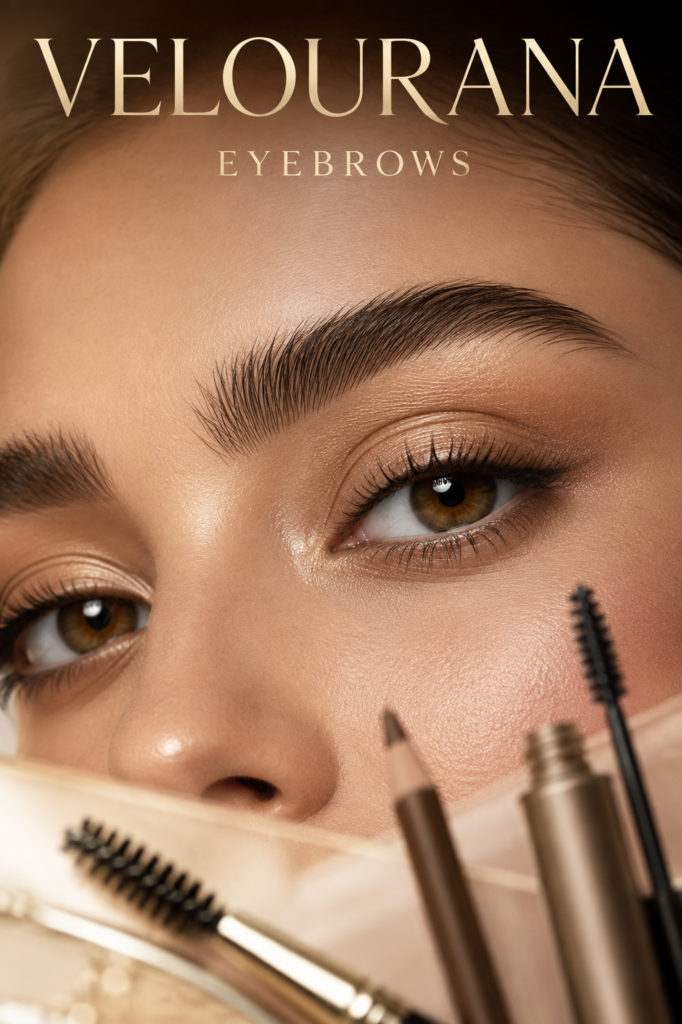
CATEGORY: Trimming
Eyebrow grooming often appears to revolve around dramatic transformations. Shaping, tinting, lamination, threading, waxing, and makeup can all noticeably change the appearance of the brows, yet one of the quietest techniques can have an equally important effect. Trimming is the controlled removal of excess length from individual brow hairs, and when it is approached carefully, it can make brows appear cleaner, more balanced, and easier to style without substantially changing their natural shape.
The simplicity of trimming is deceptive. A pair of small scissors and a brow brush may seem like uncomplicated tools, but the difference between thoughtful trimming and excessive cutting can be considerable. Brow hairs contribute not only color and density but also texture. Their length allows them to overlap neighboring hairs, fill small spaces, and create the impression of fullness. Cutting too much can therefore expose areas of skin that previously looked naturally covered.
Modern brow grooming increasingly values this relationship between structure and texture. Rather than attempting to make every hair identical, successful trimming usually preserves enough variation for the brow to retain movement and dimension. The objective is not to turn the eyebrow into a perfectly uniform strip. It is to refine hairs that genuinely disrupt the desired silhouette while leaving the majority of the brow intact.
Understanding how brow hairs grow, how they interact with one another, and how trimming affects their appearance makes the process far more predictable. Whether brows are naturally thick and unruly or relatively fine with only a few long hairs, precision matters more than the amount removed.
Why Brow Hair Length Matters
Every eyebrow is composed of individual hairs growing at slightly different angles, lengths, and stages of the growth cycle. Some hairs lie relatively flat against the skin, while others project outward. Hairs near the inner brow often grow more vertically, those through the center may travel diagonally, and hairs toward the tail frequently become more horizontal.
These directional changes contribute to the natural architecture of the brow.
Length also creates visual density. A long brow hair may overlap several neighboring hairs, helping the area beneath it appear fuller. This is particularly important in brows with moderate or low density. When such a hair is shortened substantially, the underlying space may suddenly become visible even though no hair has actually been removed from the follicle.
This explains why trimming can occasionally create the illusion of thinning.
Dense brows behave differently. When many hairs overlap, excessive length can make the upper or lower boundary look untidy. Certain hairs may curl, bend, or extend well beyond the intended shape. Carefully shortening these outliers can reveal a cleaner silhouette without requiring additional tweezing, waxing, or threading.
The amount of trimming that looks appropriate therefore depends on density as much as length. Two people can have hairs of similar length yet require completely different grooming approaches.
Hair texture adds another variable. Coarse hairs often retain their shape strongly and may resist lying flat. Fine hairs can be more flexible and may shift dramatically when brushed. Curved or slightly curly brow hairs can appear longer or shorter depending on their direction.
For this reason, judging a brow exclusively while every hair is aggressively brushed upward can be misleading. The hairs should also be observed in the direction in which they will normally be worn.
Trimming Is Refinement Rather Than Reshaping
Trimming and hair removal perform fundamentally different functions.
Tweezing, threading, or waxing removes hairs from the root and can therefore alter the actual outline of the eyebrow. Trimming generally leaves the follicle untouched and changes only the visible length of the hair. This makes it particularly useful when the overall brow shape is satisfactory but certain hairs make the surface or boundary look irregular.
That distinction is important because an eyebrow can look untidy without being incorrectly shaped.
A few long hairs extending above the upper boundary may create the impression that the entire brow needs reshaping. Removing those hairs completely could unnecessarily reduce density. Shortening only the excessive portion can solve the visual problem while preserving the hair itself.
The same principle applies around the inner brow. Long hairs in this area can sometimes dominate the expression when they stand vertically or bend in different directions. Yet removing them from the root may create an overly wide gap between the brows. Controlled trimming offers a subtler alternative.
A useful way to understand trimming is as surface refinement. The underlying architecture remains largely unchanged, while the texture sitting on top of that architecture becomes more controlled.
This is also why trimming can complement other grooming techniques. A threaded or waxed brow may still contain long hairs inside its boundaries. A laminated brow may reveal previously unnoticed differences in length because the hairs are repositioned. A naturally maintained brow may need nothing more than occasional trimming to appear polished.
The Importance of Seeing the Brow in Its Natural Position
One of the most common problems with brow trimming occurs when hairs are evaluated only in an exaggerated position.
Brushing every hair vertically upward can reveal length, but it can also create an artificial picture of how the brow actually behaves. A hair that extends significantly above the brow when pushed straight upward may settle perfectly into place when brushed diagonally along its natural growth pattern.
Cutting according to the exaggerated position can therefore remove more length than necessary.
A more considered assessment observes the brow from several perspectives. The hairs can be brushed upward gently to identify unusually long strands, then returned toward their normal direction to see whether those strands genuinely disturb the silhouette.
The inner, middle, and outer sections should not necessarily be treated identically.
Near the inner corner, a slightly feathered effect often depends on longer hairs. Through the arch, overlapping hairs can help create density and continuity. Toward the tail, hairs may become finer and less numerous, making their length particularly valuable.
Uniform cutting across the entire brow ignores these structural differences.
Natural asymmetry must also be considered. One brow may contain more upward-growing hairs than the other. One arch may be naturally denser. Attempting to force both brows into identical patterns through trimming can make them look less natural rather than more balanced.
The aim is visual harmony, not mathematical duplication.
Choosing Tools That Support Precision
Because brow trimming involves very small areas, control is essential.
Small grooming scissors allow the cutting edge to remain close to the individual hair being shortened. Large household scissors are poorly suited to this level of precision because their blades can obscure the brow and make accidental cutting easier.
The cutting edge should be sufficiently sharp to produce a clean cut rather than crushing or pulling the hair. At the same time, the scissors should feel comfortable and controllable in the hand.
A spoolie or brow brush is equally important. It separates the hairs, reveals their direction, and allows sections of the brow to be repositioned for inspection.
Good lighting can be as important as the tools themselves. Uneven shadows may make some hairs appear more prominent than they really are. Clear illumination helps distinguish individual strands and reduces the temptation to trim based on an inaccurate silhouette.
Magnification can help with individual hairs, but extreme magnification can distort judgment. When the brow occupies the entire field of vision, tiny irregularities can appear disproportionately significant. Periodically looking at the whole face provides essential perspective.
Brows exist within facial proportions. A hair that looks dramatically out of place under strong magnification may be completely invisible at normal viewing distance.
How Controlled Trimming Works
Precision trimming is most successful when it progresses conservatively.
The brow is first observed in its normal state. This establishes the natural silhouette before any manipulation occurs. The hairs can then be brushed gently upward or slightly outward to expose strands that extend noticeably beyond neighboring hairs.
Rather than cutting a straight horizontal line through every protruding hair, selective trimming focuses on individual strands or very small groups.
This preserves differences in length and reduces the risk of creating an unnaturally blunt edge.
The scissors can be positioned so that only the excess tip is removed. After a small adjustment, the hairs should be brushed back into their usual position and reassessed.
This cycle of trimming, repositioning, and observing is slower than cutting the entire brow at once, but it provides considerably more control.
It also recognizes an important characteristic of eyebrow grooming: the effect of a cut is sometimes more obvious after the hairs settle.
Removing a few millimeters from a long strand may be sufficient. Once it falls back into place, it may blend perfectly with surrounding hairs. Cutting further simply because more length remains visible when the strand is lifted can create unnecessary thinning.
The safest visual standard is therefore the finished brow in its intended position rather than the temporary position used to expose the hair.
Why Over-Trimming Changes Brow Density
The most significant cosmetic risk associated with trimming is usually not physical damage but visual loss of fullness.
Brow hairs overlap in layers. Imagine several long hairs crossing a small sparse area. Together, they conceal some of the skin beneath them. If all of those hairs are shortened to the same point, the overlapping coverage disappears.
The brow may suddenly appear to contain a gap.
This effect is especially noticeable around the arch and tail, where density often decreases naturally. It can also occur in brows that have previously been over-plucked or that simply grow sparsely.
Dense brows tolerate more trimming because many hairs remain available to provide coverage. Even then, removing too much length can change their texture. A naturally soft, feathered brow can become stiff-looking if every strand terminates at approximately the same boundary.
This is why professional-looking trimming frequently appears almost invisible. The viewer notices that the brow looks neat but cannot easily identify where individual hairs were cut.
Texture remains intact.
Different Brow Types Require Different Approaches
Thick brows with long, coarse hairs often show the most obvious benefit from trimming. Their hairs may extend beyond the upper edge, curl downward, or cross over neighboring strands. Selective shortening can make styling easier and help the natural shape remain visible.
However, thick brows should not automatically be trimmed heavily. Their fullness is often one of their defining characteristics. Removing excessive length can transform a dimensional brow into a flatter, more rigid shape.
Fine brows require even greater restraint. Because each hair contributes significantly to visible density, preserving length can be more important than achieving perfect uniformity. In many cases, only a handful of obvious outliers require attention.
Sparse brows may need little trimming at all. Long hairs can actually be useful because they visually bridge areas with fewer follicles. Shortening them unnecessarily can reveal gaps that then require makeup to conceal.
Curly or wavy brow hairs present another challenge. Their apparent length changes depending on whether they are stretched, brushed, or allowed to return to their natural curve. Cutting them while fully extended can result in a much shorter appearance after they contract back into position.
Downward-growing hairs can also be deceptive. Brushing them upward may make them look excessively long, but their length may be necessary for them to integrate naturally when returned to their usual direction.
There is therefore no universal trimming measurement suitable for every brow. The appropriate amount is determined by the interaction between length, density, texture, direction, and desired style.
Trimming and Contemporary Brow Aesthetics
Brow trends influence how trimming is approached.
Highly sculpted brows often emphasize a crisp outline, encouraging more obvious control of hairs extending beyond the shape. Softer contemporary styles may intentionally preserve longer hairs, particularly near the front of the brow, to create a feathered appearance.
Laminated and brushed-up styles have also changed the role of length.
When brow hairs are styled upward, their length becomes part of the design. Hairs that might once have been considered excessive can contribute to a lifted, textured effect. Trimming them according to older standards could reduce the very characteristic the styling technique is intended to emphasize.
At the same time, exceptionally long hairs can disrupt a laminated look by extending far beyond the rest of the brow. Selective trimming can therefore remain useful, but the desired final styling direction must be considered before cutting.
A natural brow does not necessarily mean an untouched brow. Subtle grooming can preserve natural character while improving proportion. Conversely, a groomed brow does not have to look sharply manufactured.
The distinction lies in how much of the original texture is retained.
Relationship Between Trimming and Brow Makeup
Trimming can affect the way brow cosmetics perform.
Long, unruly hairs may move through pencil, powder, pomade, or gel applications and make precise styling more difficult. When obvious excess length is controlled, products can sometimes distribute more evenly.
Brow gels are particularly influenced by hair length. Clear or tinted gels rely on the existing hairs to create structure. Long hairs can produce attractive volume when brushed into position, but hairs that refuse to settle may require repeated application or stronger hold.
Trimming can reduce that resistance in selected areas.
However, excessive trimming can increase dependence on makeup. If shortened hairs no longer cover small gaps, pencils and powders may become necessary to restore the appearance of fullness that existed before grooming.
This illustrates the balance at the center of brow trimming. The goal is not simply to make cosmetic application easier. It is to preserve enough natural hair that makeup remains an enhancement rather than a correction for unnecessary removal.
The intended makeup style also matters. A person who prefers fluffy brows may retain considerably more length than someone who prefers a smooth, defined finish.
Maintaining Shape Between Professional Grooming Sessions
Trimming can function as a maintenance technique between professional brow appointments.
As hairs grow and move through different growth stages, a few strands may begin to extend beyond the established shape. Selectively shortening them can help maintain a polished appearance without altering the professionally created outline.
This is particularly useful when the shape itself remains satisfactory.
The temptation to combine trimming with extensive tweezing should be approached cautiously. Once individual hairs begin to look irregular, it can be easy to continue adjusting the brow until the original shape changes substantially.
A conservative maintenance philosophy protects against this gradual over-grooming.
The interval between trims varies considerably. Some people develop noticeable long hairs relatively quickly, while others rarely require trimming. Brows should therefore be groomed according to visible need rather than an arbitrary schedule.
If the brow still settles neatly into its intended position, trimming may offer no meaningful benefit.
Correcting the Appearance of an Over-Trimmed Brow
Because trimming does not remove the follicle, an over-trimmed brow is generally a temporary cosmetic problem. The shortened hair remains present and can continue through its natural growth cycle.
The immediate challenge is visual.
Short hairs may stand more upright because they no longer have sufficient length to lie smoothly. Gaps can become visible, particularly where longer hairs previously overlapped sparse sections. The upper boundary may also appear unusually blunt.
Attempting to correct the problem by trimming neighboring hairs to match can make the situation worse. This converts a localized mistake into a larger reduction in density.
Instead, the remaining brow can be left largely untouched while the shortened hairs regain length. Brow pencils, powders, fine-tip pens, or tinted gels can help restore visual continuity during this period.
A softer makeup application often works better than drawing a heavy new outline. The objective is to recreate the impression of natural hair and shadow until the texture returns.
The experience can also reveal useful information about the brow. Areas that become noticeably sparse after trimming are areas where hair length is contributing strongly to coverage. Those sections can be treated more conservatively in future grooming.
The Difference Between Neatness and Uniformity
One of the most important principles in brow grooming is that neatness does not require uniformity.
Natural eyebrow hairs vary. Some are longer, some shorter, some straighter, and some more curved. This variation produces depth. When every hair is cut to an identical boundary, the brow can lose some of its organic appearance.
A refined brow retains controlled irregularity.
The outer silhouette can look intentional while individual strands remain distinguishable. The front can contain softer vertical texture, the body can appear fuller, and the tail can taper naturally.
This is particularly relevant as beauty aesthetics continue to move between highly defined and more natural interpretations of the brow. Techniques that preserve flexibility allow the same natural structure to accommodate different styling preferences.
A carefully trimmed brow can be brushed upward for texture, sideways for softness, or held neatly with gel. An excessively shortened brow offers fewer possibilities because the hair itself no longer has enough length to move.
Preserving styling versatility is therefore another reason to trim conservatively.
Brow Trimming as Part of a Larger Grooming Philosophy
The most effective brow grooming techniques tend to work with the natural structure rather than continually attempting to replace it.
Trimming embodies this principle particularly well because it can refine without removing. A long hair that contributes useful density does not need to be sacrificed simply because its tip extends slightly beyond the desired boundary. A small adjustment may be enough.
This approach also encourages attention to the face as a whole.
Brows influence expression, but their effect depends on their relationship with the eyes, forehead, nose, and overall facial proportions. Viewing them only as isolated shapes can lead to excessive correction.
Small asymmetries often contribute to a natural appearance. Slight differences in hair direction can give each brow character. Precision grooming recognizes which irregularities genuinely interfere with balance and which are simply part of normal human variation.
That distinction becomes increasingly important when magnifying mirrors, high-resolution photography, and highly edited beauty imagery encourage scrutiny of details that may barely register in ordinary life.
Good trimming is not measured by the number of hairs cut. It is measured by whether the brow looks better while still appearing fundamentally like itself.
A More Considered Definition of the Finished Brow
A successfully trimmed eyebrow should retain fullness, movement, and proportion.
Its longest disruptive hairs have been controlled, but the surface has not been stripped of texture. The inner brow remains appropriately soft for the chosen style. The arch retains enough overlapping hair to appear continuous. The tail remains defined without becoming unnecessarily thin.
Most importantly, the brow works when viewed from normal distance.
Close inspection may still reveal hairs of different lengths. That is not a failure. Those differences are often what allow the eyebrow to appear dimensional rather than artificial.
Trimming is therefore less about cutting and more about judgment.
Knowing which hair to leave untouched is as important as knowing which one to shorten. Understanding density is as important as recognizing length. Observing the brow after every small adjustment is more valuable than attempting to achieve perfection in a single pass.
When these principles guide the process, trimming becomes one of the most restrained and effective techniques in brow grooming. It preserves the natural architecture while giving the hairs enough discipline to support the desired shape.
The result is not a brow that looks obviously trimmed. It is a brow whose natural structure appears clearer, cleaner, and more intentional.
THE END VELOURANA
 Discover More From Our Family of Websites
 ZodiacBearing (Astrology, Tarot, Numerology, Angel Numbers & Spiritual Guidance)
 Velourana (Beauty, Makeup, Hair Care, Skincare & Beauty Tips)
 HavenBearing (Home, Living, Organization, Décor & Everyday Inspiration)
 PawBearing (Pet Care, Dog Breeds, Animal Health, Training & Pet Products)
 PsyCatherine (Notes From the Journal of a Psychologist on Real Life)

