
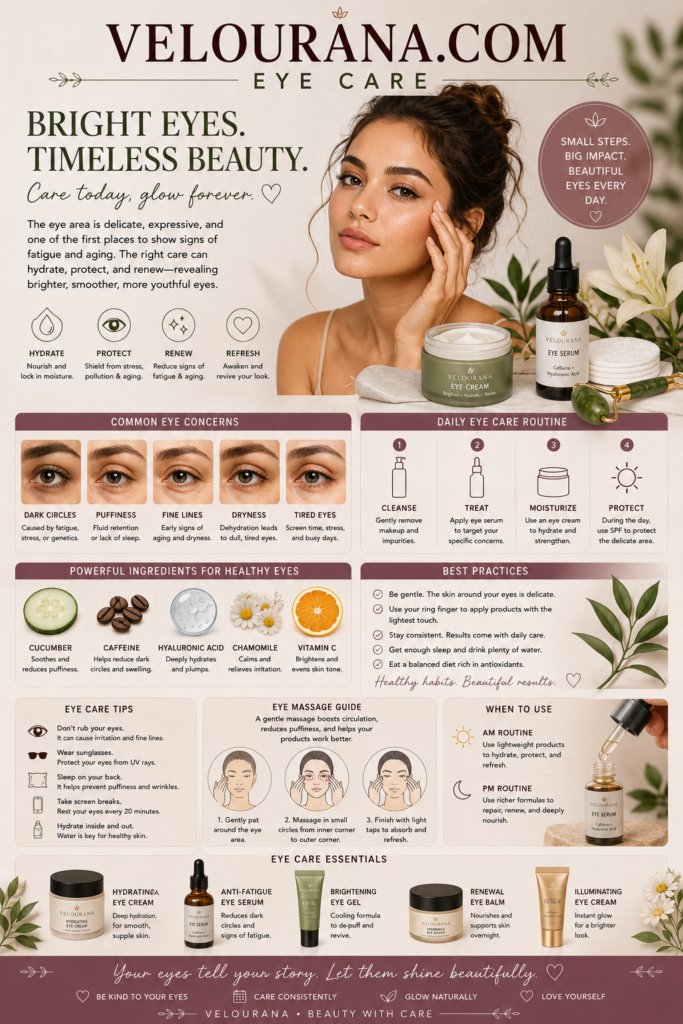
CATEGORY: Eye Creams
There is no single texture, ingredient combination, or treatment philosophy that defines the perfect eye cream. The product that feels beautifully nourishing on one person's skin may feel heavy on another. A formula that performs flawlessly beneath makeup may not provide enough comfort for chronically dry under-eyes at night. A sophisticated retinol treatment may be useful for someone concerned with visible photoaging but unnecessarily complicated for a younger person whose only concern is occasional dehydration.
This variation explains why the eye-cream category has expanded into gels, gel-creams, lotions, emulsions, balms, serums, masks, tinted treatments, cooling formulas, and rich overnight creams. The abundance can make shopping confusing, but beneath the different textures and marketing language lies a fairly logical principle: an eye product should be chosen according to the condition of the skin, the concern being addressed, the time of use, and the products layered around it.
The most productive way to evaluate eye cream is therefore not to ask which product is universally best. It is to understand how formulas behave and then match that behavior to what the eye area actually needs.
Texture Is Part of the Treatment
Skincare discussions often focus so intensely on active ingredients that texture is treated as an aesthetic preference. Around the eyes, however, texture can directly affect whether a product is used consistently and whether it integrates successfully with the rest of the routine.
Lightweight gels and gel-creams tend to appeal to people who dislike the sensation of rich products. They can work particularly well during the day because they settle quickly and are less likely to interfere with concealer or foundation. Their cooling sensation can also make tired eyes feel refreshed, although the sensation itself should not be confused with permanent treatment of puffiness.
A lightweight eye cream can still be highly hydrating. Water-rich formulas containing glycerin, hyaluronic acid, panthenol, beta-glucan, or similar humectants may significantly improve surface hydration without relying on large quantities of oils. This makes them suitable for normal or combination skin and for humid conditions in which richer creams may feel excessive.
Traditional cream emulsions occupy the middle ground. They combine water-binding ingredients with emollients and a degree of occlusion, making them versatile for a wide range of skin types. A well-balanced cream can soften dry skin while remaining elegant enough for daytime use.
Rich creams and balms provide greater emollience and occlusion. They can be particularly comforting when the eye area feels tight, flaky, or persistently dry. During colder weather or in dry indoor environments, a richer product may reduce the sensation of moisture loss more effectively than a light gel.
Yet richness is not automatically superior. Heavy layers can migrate toward the eyes, disrupt makeup, or simply feel uncomfortable. Some people are also prone to developing small bumps around the eye area, including milia, although these can have multiple causes and should not automatically be blamed on one particular ingredient. If a new rich product repeatedly coincides with unwanted changes, simplifying the routine can help identify whether the formula is contributing.
The practical lesson is that texture is functional. The ideal eye cream should provide enough hydration and protection without creating problems that discourage regular use.
Morning Eye Cream Has a Different Job
Morning eye care takes place within a demanding environment. The product may need to sit beneath sunscreen, concealer, foundation, powder, or all of them. It must remain comfortable through facial movement and changing temperatures while avoiding pilling or excessive shine.
For this reason, daytime eye creams often benefit from relatively lightweight textures. Hydration is important because makeup tends to emphasize dry patches and fine surface lines, but excessive emollience can cause concealer to move or collect in creases.
Humectants can be especially helpful in this context. By improving water content in the outer layers of the skin, they can make the surface appear smoother before makeup. Silicones and lightweight emollients may further improve slip and create a more even cosmetic canvas.
Some morning formulas include caffeine, which is often chosen for temporary puffiness and tired-looking eyes. Others incorporate light-reflecting pigments that immediately brighten the appearance of shadows. These optical effects can be useful, but they are cosmetic rather than structural. A cream containing illuminating particles may make dark circles appear less obvious without changing their biological cause.
Tinted eye creams take this principle further by combining skincare with subtle color correction. Peach, apricot, or other undertones may visually neutralize certain types of darkness depending on skin tone. Such products occupy the boundary between skincare and makeup, and their success should be judged partly by their immediate cosmetic effect rather than expecting them to permanently remove pigmentation.
The most important daytime treatment, however, remains ultraviolet protection. Some eye creams contain SPF, but relying on a tiny dab of eye cream may not provide the quantity necessary for dependable protection. A broad-spectrum facial sunscreen that can be comfortably applied around the eye contour is often more practical. Sunglasses provide additional physical protection and can also reduce squinting in bright conditions.
A daytime eye cream therefore earns its place by preparing, hydrating, and supporting the skin while fitting comfortably beneath protection and makeup. It does not need to contain every available active ingredient to be effective.
Why Nighttime Eye Care Can Be Richer and More Targeted
Evening routines remove many of the cosmetic constraints of daytime. There is no need to accommodate foundation or concealer, and richer textures can remain on the skin overnight without concerns about shine. This makes nighttime an appropriate opportunity for deeper moisturization or carefully selected treatment ingredients.
Dry eye contours often respond well to richer evening creams containing ceramides, squalane, fatty acids, cholesterol, shea-derived emollients, or other barrier-supportive components. These ingredients do not literally feed the skin, as some marketing language implies, but they can reduce moisture loss and improve softness.
Night is also a common time for retinoid eye products. Retinol and related ingredients are widely used in anti-aging skincare because of their ability to influence processes associated with skin renewal and visible photoaging. Their benefits are gradual, and the eye area requires particular care because irritation can occur more easily.
Introducing a retinol eye cream too aggressively can produce dryness, flaking, burning, or increased sensitivity. This is counterproductive. Irritated skin may look more lined and feel significantly less comfortable. A conservative frequency that allows the skin to adapt is generally more sensible than immediately applying a potent treatment every night.
The rest of the evening routine matters. Someone already using a facial retinoid may not require a second retinoid eye product. Conversely, a person who cannot comfortably use a stronger facial treatment near the eyes may prefer a dedicated formula designed specifically for that area.
Exfoliating acids require similar restraint. The eye contour does not usually need the same exfoliation strategy as congested or oily facial regions. Applying strong glycolic, salicylic, or other acid treatments too close to the eyes can create irritation without providing a meaningful advantage.
Nighttime eye care works best when it is purposeful rather than crowded. Hydration, barrier support, and one well-chosen treatment can often achieve more than layering numerous active products simply because they are available.
Matching the Formula to Dryness and Sensitivity
Dryness around the eyes can arise for many reasons. Natural skin type plays a role, but environmental conditions, cleansing habits, retinoids, exfoliating products, makeup removal, seasonal weather, and a compromised skin barrier can all contribute.
When dryness is prominent, the first objective should be restoring comfort rather than immediately introducing aggressive anti-aging treatments. A formula combining humectants with emollients and occlusive ingredients can improve both water retention and softness.
Ceramides are useful because they are components of the lipid structure involved in the skin barrier. Cholesterol and fatty acids can complement this approach. Glycerin remains one of the most dependable humectants in cosmetic formulation, while ingredients such as panthenol can add soothing and moisturizing qualities.
Very dry skin may benefit from a small amount of a more occlusive product over a regular moisturizer, provided it remains comfortable and does not migrate into the eyes. The assumption that every eye area requires an elaborate specialist treatment can sometimes obscure the fact that simple barrier support is exactly what the skin needs.
Sensitive eye contours require additional caution. Fragrance is not automatically problematic for every person, but avoiding fragranced products can reduce unnecessary variables when the area is reactive. Essential oils should likewise not be assumed to be gentle merely because they are plant-derived.
A short ingredient list is not inherently safer than a long one, but simple formulas can make it easier to identify potential triggers. When sensitivity is active, introducing several new products simultaneously makes it difficult to determine what caused a reaction.
Persistent eczema-like irritation, swelling, severe itching, or recurrent dermatitis around the eyes warrants professional assessment rather than endless experimentation with cosmetic products. The eye contour is not an appropriate place to repeatedly challenge irritated skin with new actives.
Choosing Ingredients for Visible Fine Lines
Fine lines are one of the most common reasons people purchase eye creams, but meaningful selection begins by distinguishing temporary surface dehydration from established wrinkles.
Dehydration lines can respond rapidly to moisturization. Humectants increase hydration in the stratum corneum, while emollients smooth its surface. The result can make fine texture appear less obvious within a relatively short period. This is one reason eye creams can seem to produce an immediate smoothing effect.
Structural wrinkles are different. Repeated expression, ultraviolet exposure, age-related changes in collagen and elastin, and other biological processes contribute to their development. Moisturization improves their appearance but cannot eliminate their underlying structure.
Retinoids are among the more credible topical options for visible photoaging. The key around the eyes is balancing potential effectiveness with tolerance. A sophisticated eye formula may use a modest concentration, controlled-delivery system, or supportive moisturizing base to reduce irritation.
Peptides are frequently included in eye creams positioned for firmness and fine lines. Their evidence varies according to the particular peptide, and consumers should be wary of treating the entire category as one proven ingredient. Nevertheless, peptide-containing moisturizers can form part of a well-designed routine, particularly when combined with effective hydration.
Antioxidants are also commonly included. Oxidative stress contributes to skin aging, and antioxidants can support a broader protective skincare strategy. Vitamin C and its derivatives, vitamin E, green-tea-derived compounds, and other antioxidant ingredients appear in eye formulations, although their stability and concentration determine how meaningful their presence is.
None of these ingredients diminishes the importance of sunscreen. Daily ultraviolet exposure accumulates over time, and the eye contour is frequently neglected during sunscreen application because people fear stinging. Finding a sunscreen that is tolerable around the eyes may therefore be more valuable for long-term aging prevention than repeatedly changing night creams.
Fine-line care works best as a long-term strategy: protect the skin, maintain hydration, avoid chronic irritation, and use evidence-based treatments consistently enough to evaluate them properly.
Brightening the Eye Area Without Promising the Impossible
Brightening eye creams are among the most attractive products in the category because under-eye darkness can dramatically influence facial appearance. Yet they are also among the easiest products to misunderstand.
The first challenge is determining why the area appears dark. Pigmentation can sometimes respond to topical ingredients that support a more even-looking skin tone. Niacinamide, vitamin C derivatives, and other brightening ingredients may be useful depending on the formulation and individual skin.
Sun protection is particularly important when pigmentation is involved because ultraviolet radiation can encourage melanin production and deepen uneven tone. Brightening treatments used without adequate protection are working against a continuing source of pigmentation.
Darkness caused by thin skin and visible underlying vessels behaves differently. Hydration may improve the optical quality of the skin, and certain ingredients may make the area appear fresher, but topical cosmetics cannot make deeper vascular anatomy disappear.
Facial structure creates another form of darkness. A tear trough or natural hollow casts a shadow, particularly under overhead lighting. The shadow may become more noticeable with age as facial volume and tissue distribution change. No brightening cream can remove a physical hollow.
This distinction explains why reviews of the same eye cream can vary dramatically. A person with mild pigmentation may notice gradual improvement from a well-formulated brightening product, while someone whose darkness is predominantly structural may see almost no change.
Some creams solve the cosmetic problem rather than the biological one. Light-reflecting minerals and subtle pigments can immediately reduce the visual contrast between the under-eye area and surrounding skin. There is nothing deceptive about this when the product is presented accurately. Cosmetic correction can be useful even when it is temporary.
A realistic brightening eye cream should therefore be evaluated according to the kind of darkness present. The best outcome may be gradual improvement, immediate optical correction, better hydration, or a combination of these effects rather than complete disappearance of dark circles.
Puffiness, Cooling Formulas and the Appeal of Instant Results
Puffiness is another concern where immediate appearance and long-term structural change are easily confused. Temporary swelling may fluctuate from morning to evening and from one day to another. It can be affected by fluid distribution, sleep, allergies, irritation, and other factors.
Cooling eye products are popular because lower temperatures can temporarily make the area feel refreshed and may reduce the appearance of transient swelling. Gel textures, chilled applicators, and cool compresses exploit this effect. The experience can be pleasant and visually useful without representing permanent remodeling of the tissues.
Caffeine is frequently incorporated into depuffing formulas. It can support a temporary improvement in the appearance of some types of puffiness and darkness, which makes it particularly appropriate in morning eye products. Again, the scale of the expected effect should remain realistic.
Persistent under-eye bags related to structural changes are different. With age, tissues supporting the eye area can change and orbital fat can become more prominent. A topical cream cannot reposition these deeper structures. Products marketed as though they can permanently "erase" substantial eye bags deserve skepticism.
The method of application can contribute modestly to the refreshed appearance people seek. Gentle movement across the area may help distribute temporary fluid, but aggressive massage is unnecessary and can irritate delicate skin. Tools such as rollers and metal applicators are primarily useful for their cooling sensation and the controlled way they spread product.
Sudden, pronounced, painful, one-sided, or otherwise unusual swelling should not be approached as an ordinary beauty concern. The proximity of the eye itself means symptoms that appear medically significant deserve appropriate professional evaluation.
For routine cosmetic puffiness, the most successful products are often those that promise less and perform consistently: lightweight hydration, cooling comfort, perhaps caffeine, and a finish that leaves the eye contour looking smoother and more awake.
Eye Cream and Makeup Need to Work Together
The relationship between eye cream and makeup is often overlooked when products are reviewed in isolation. A cream may be excellent as an overnight moisturizer yet perform poorly beneath concealer, while another may provide less intensive moisturization but create an exceptionally smooth daytime base.
Concealer exaggerates dryness because pigments collect around surface irregularities. Applying makeup immediately over dehydrated skin can therefore make fine lines appear more obvious. A modest layer of eye cream allowed to absorb before concealer can improve the result.
Too much cream creates the opposite problem. A slippery emollient layer may prevent concealer from setting properly, encourage migration, or increase creasing. The instinct to compensate for dryness with a thick coating can therefore make makeup less stable.
Timing helps. Applying skincare first and allowing it to settle while completing another part of the routine gives the eye product time to form an even film. Excess product can be gently removed before makeup rather than concealed beneath additional layers.
Pilling usually indicates incompatibility between formulas, excessive quantities, or too much rubbing during layering. It does not necessarily mean either product is poor. Silicone-rich primers, certain film-forming sunscreens, eye creams, and foundations can interact differently depending on the sequence and amount used.
For makeup wearers, an eye cream should therefore be assessed not only by how the skin feels immediately after application but also by how the entire eye area behaves several hours later. Comfort, hydration, crease formation, and makeup stability are all legitimate measures of performance.
How Much Should an Eye Cream Cost?
Eye creams occupy almost every price category, from basic pharmacy moisturizers to luxury formulas costing considerably more than full-size facial creams. Their small packaging can make the price per milliliter especially high.
There is no scientific rule stating that an expensive eye cream must outperform an affordable one. Cost reflects many factors beyond active ingredients: packaging, branding, fragrance development, texture engineering, proprietary complexes, marketing, retail distribution, and luxury positioning.
Formulation quality certainly has value. Creating a stable retinoid product with an elegant texture and excellent tolerability requires expertise. Sophisticated delivery systems can also increase manufacturing costs. But consumers should distinguish legitimate formulation advantages from the assumption that prestige automatically produces better biological results.
For a person who primarily needs hydration, a relatively simple formula containing glycerin, emollients, and barrier-supportive ingredients may be entirely sufficient. Spending substantially more makes sense only if the more expensive product provides qualities the individual genuinely values, whether that is a particular active system, exceptional cosmetic elegance, or simply a sensory experience they enjoy.
The small amount required per application means an eye cream can last a long time, which partly offsets its package price. Nevertheless, products should not be kept indefinitely. Changes in smell, color, texture, or separation can indicate deterioration, and the manufacturer's period-after-opening guidance should be respected.
Value in skincare is ultimately personal, but effectiveness should not be confused with luxury. A beautiful jar can enhance the experience of a routine; it cannot substitute for a sound formula.
Building Eye Cream Into a Routine That Makes Sense
A coherent skincare routine does not need numerous eye products. In many cases, one well-chosen cream is enough. Some people prefer a lightweight daytime formula and a richer or more active nighttime treatment, but even that division should exist for a reason.
Cleansing should leave the eye contour comfortable rather than stripped. Makeup removal needs to be thorough but gentle, particularly with waterproof mascara and long-wear products that tempt excessive rubbing. Repeated friction can aggravate already sensitive skin.
After cleansing, treatment products should be positioned carefully. Strong facial acids and retinoids do not need to be carried directly beneath the eyes unless they are specifically intended and tolerated there. The eye cream can then provide hydration or targeted treatment according to its formulation.
During the day, sunscreen completes the protective strategy. At night, a richer moisturizer may be sufficient after the eye treatment. The exact order can vary with product texture, but layering from lighter to richer formulations is often practical.
Most importantly, the routine should remain stable long enough to judge. Hydration can improve quickly, but pigmentation and visible signs of photoaging require patience. Introducing and abandoning products every few days encourages confusion and makes irritation more likely.
The eye area also benefits from restraint when something goes wrong. If a new product causes burning, persistent redness, itching, or swelling, adding more products in an attempt to repair the problem can make identification of the trigger harder. Simplification is often the more sensible response.
The Eye Cream That Deserves a Place on the Shelf
A good eye cream does not need to transform the face overnight. It needs to do its assigned job reliably.
For one person, that job may simply be keeping dry under-eyes soft enough that concealer looks smooth. For another, it may involve a carefully tolerated retinoid used over many months. Someone with morning puffiness may value a lightweight caffeine gel, while sensitive skin may respond best to a fragrance-free barrier cream with no fashionable actives at all.
This variety is not evidence that eye creams are meaningless. It reflects the fact that the eye contour can present several different concerns and that skincare products work through different mechanisms.
The strongest routine begins with identifying the concern accurately. Hydration should be treated as hydration, not wrinkle removal. Pigmentation should be distinguished from anatomical shadowing. Temporary puffiness should not be confused with structural under-eye bags. Fine lines caused by dryness should not automatically trigger aggressive anti-aging treatments.
Once those distinctions are made, eye creams become much easier to understand. The impressive formula is not necessarily the one carrying the longest ingredient list or the boldest promise. It is the one whose ingredients, texture, and strength correspond to a real need and can be used consistently without making the surrounding skin less comfortable.
The eye area does not require perfection. It requires protection from avoidable damage, sufficient hydration, thoughtful treatment where appropriate, and realistic expectations about what topical skincare can change. A well-chosen eye cream can contribute meaningfully to all of these goals, provided it is selected for the skin rather than for the promise on the box.
THE END VELOURANA
 Discover More From Our Family of Websites
 ZodiacBearing (Astrology, Tarot, Numerology, Angel Numbers & Spiritual Guidance)
 Velourana (Beauty, Makeup, Hair Care, Skincare & Beauty Tips)
 HavenBearing (Home, Living, Organization, Décor & Everyday Inspiration)
 PawBearing (Pet Care, Dog Breeds, Animal Health, Training & Pet Products)
 PsyCatherine (Notes From the Journal of a Psychologist on Real Life)

