
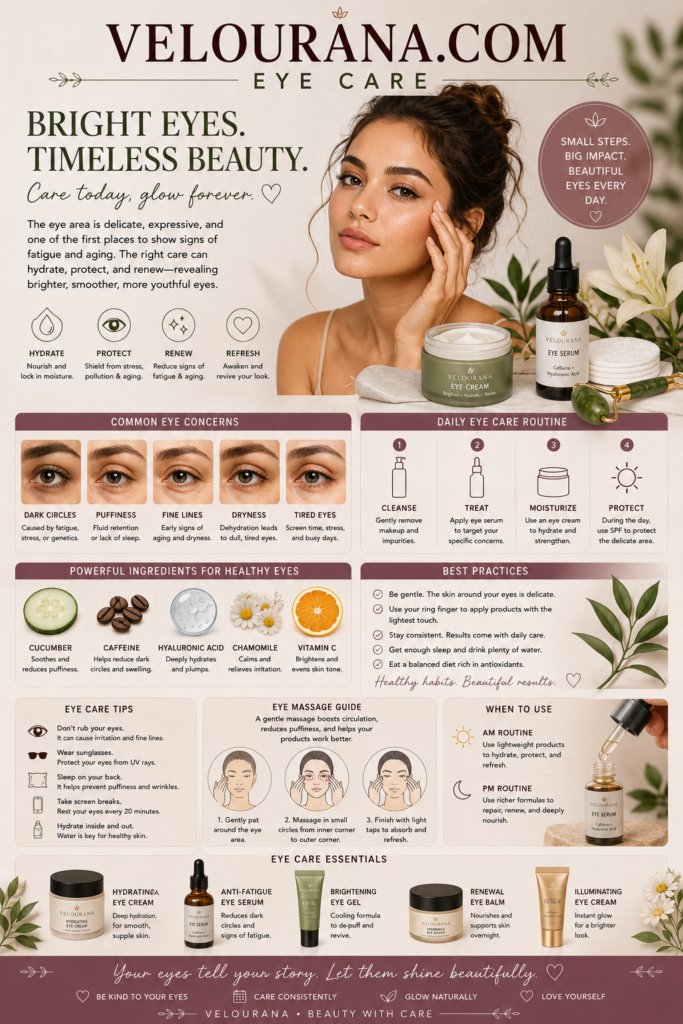
CATEGORY: Cooling Eye Care
The skin around the eyes has a remarkable ability to reveal what the rest of the face may still be hiding. A late night, a long day in front of a screen, seasonal allergies, emotional fatigue, heat, dehydration or an unusually salty meal can all become visible around the eyes before they seem obvious anywhere else. Puffiness can soften the natural contours of the eye area, the lids may feel heavy, and the skin can appear less rested even when the underlying issue is temporary. Cooling eye care has become popular precisely because it addresses this sense of visible and physical fatigue in a way that is immediate, tactile and relatively simple.
Yet cooling the eye area is more sophisticated than placing something cold against the skin and hoping for transformation. Temperature influences superficial blood vessels, fluid movement and sensory perception, while the delicate structure of the eye contour determines how much cooling is comfortable and appropriate. Used thoughtfully, cool temperatures can create a refreshing sensation, temporarily reduce the appearance of puffiness and make an overheated or tired eye area feel calmer. Used too aggressively, however, extreme cold can irritate the skin rather than soothe it.
Modern cooling eye care therefore sits somewhere between skincare technique and sensory ritual. Refrigerated eye products, cooling masks, chilled tools, hydrogel patches and carefully controlled compresses all work through variations of the same basic principle: gentle, temporary cooling rather than freezing. Understanding that distinction changes cooling eye care from a beauty trick into a more intelligent method of caring for one of the face's most delicate regions.
Why the Eye Area Responds So Noticeably to Temperature
The eye contour is structurally different from many other areas of facial skin. It is thin, highly expressive and constantly moving. Blinking, squinting, smiling and changes in facial expression repeatedly fold and stretch the surrounding tissue. Beneath the skin are blood vessels and supporting structures that can become visually prominent, particularly when the area is swollen or when the skin is naturally translucent.
Temporary puffiness is often associated with fluid accumulation in the tissues surrounding the eyes. This is one reason the eye area can look noticeably different immediately after waking. During sleep, body position and normal fluid distribution can contribute to morning swelling. Other influences, including sodium intake, alcohol, crying, allergies, heat and insufficient sleep, may make the effect more visible.
Gentle cooling can temporarily narrow superficial blood vessels and reduce the sensation of warmth. The contact of a cool surface can also create a feeling of firmness and freshness that makes the area seem more awake. When cooling is combined with light movement across the skin, the ritual may help redistribute superficial fluid, although the pressure should remain extremely gentle.
This explains why cooling treatments often produce their most obvious cosmetic effect on transient puffiness rather than on permanent anatomical features. A naturally deep tear trough, hereditary pigmentation or structural under-eye hollow cannot be erased simply by reducing temperature. Cooling may make the surrounding area look fresher, but it does not change bone structure, permanently tighten skin or remove established pigmentation.
That distinction is essential because cooling eye care works best when its purpose is realistic. It is a technique for temporary comfort and visible refreshment, not a substitute for every form of eye treatment.
The sensory effect matters as well. A comfortably cool product can feel particularly pleasant after prolonged screen use, warm weather or a tiring day. The immediate sensation can make a familiar moisturizer, serum or mask feel more restorative even when refrigeration does not fundamentally change the product's long-term skincare performance.
Cooling Is Not the Same as Freezing
The most important principle in cooling eye care is moderation. If cool feels refreshing, it is tempting to assume that colder must be better. The skin does not work that way.
Ice placed directly against delicate facial skin can become painfully cold and potentially cause irritation or cold injury. The eye contour is not an appropriate place for aggressive temperature experiments. A treatment should feel comfortably cool rather than numbingly cold, painful or burning.
This is why refrigerated products and chilled skincare tools are generally conceptually different from frozen objects. A refrigerator creates a cool environment without necessarily exposing the skin to the extreme temperatures associated with a freezer. Even then, individual products have storage requirements that should be respected. Refrigeration should never be assumed to be suitable merely because a product is intended for the eye area.
Formulation stability matters. Some cosmetics are designed to remain at ordinary room temperature, and unnecessarily chilling them may alter texture, separation or application characteristics. Product packaging or manufacturer instructions should therefore take priority over beauty trends.
When a reusable eye mask or tool is specifically designed for cooling, its instructions provide the best guide to appropriate preparation. A cool tool should also be allowed to warm slightly if it feels excessively cold when first removed from storage.
The same caution applies to traditional home methods. A clean, cool compress can provide the desired temperature sensation without requiring extreme cold. The objective is controlled cooling across the surface of the skin, not an endurance test.
Comfort provides useful feedback. If the eye area becomes painful, unusually pale, intensely red, numb or irritated, the treatment is no longer functioning as a soothing beauty ritual. Cooling should leave the area feeling calmer, not stressed.
Morning Puffiness and the Appeal of a Cooling Ritual
Morning is perhaps the moment most closely associated with cooling eye care. The face has been relatively still for hours, the body has remained horizontal, and the under-eye area may appear fuller than it did the previous evening. For some people this puffiness disappears quickly after getting out of bed. For others it remains visible for considerably longer.
Cooling treatments fit naturally into this transition from sleep to wakefulness because their effect is both physical and sensory. The cool contact can make heavy eyelids feel more refreshed while temporarily reducing the look of swelling. The ritual also encourages a few quiet minutes before makeup, sunscreen or the rest of the morning skincare routine.
A refrigerated eye cream can provide a subtle version of this experience. Its formulation may be identical to the product used at room temperature, but the cooler application creates an immediate refreshing sensation. Lightweight gels are especially associated with this style of use because their textures spread easily and tend to feel fresh on contact.
Hydrogel eye patches offer a more occlusive interpretation. They sit over the under-eye region and maintain contact with the skin for a defined period. When appropriately chilled, they combine hydration with temperature and can create a temporarily smoother, more rested appearance. Much of the visible plumping comes from hydration, while cooling contributes to the refreshing and de-puffing sensation.
Reusable cooling masks cover a larger area and can be particularly appealing when both the eyelids and under-eye region feel tired. The design of the mask matters because excessive weight or pressure directly over the eyes is undesirable. A comfortable mask should rest gently rather than compress the orbital area.
Whatever format is chosen, morning cooling works particularly well when it remains uncomplicated. The eye contour does not require an elaborate sequence of tools, patches, rollers and creams layered one after another. Too much manipulation can undermine the calming purpose of the routine.
A few minutes of comfortable cooling followed by appropriate skincare is often enough to achieve the cosmetic objective.
The Relationship Between Cooling and Eye Skincare Ingredients
Cooling is a technique rather than an active ingredient, but the products used alongside it can influence the overall result. A well-formulated eye moisturizer can support hydration while the cool temperature provides temporary refreshment. Humectants such as glycerin and hyaluronic acid are frequently found in eye-area products because they help attract and retain water within the outer layers of the skin.
Hydrated skin generally reflects light differently from dehydrated skin and can appear smoother. Fine dehydration lines may consequently look less obvious after a moisturizing treatment. When this effect is combined with cooling, the eye area can appear fresher without implying that either temperature or hydration has permanently altered wrinkles.
Caffeine is another ingredient frequently associated with de-puffing eye products. Its presence has made refrigerated caffeine eye treatments particularly popular. The formulation, concentration and overall product design matter more than the ingredient name alone, however. Cooling a poorly tolerated formula does not make it suitable for sensitive skin.
Soothing ingredients can complement the sensory character of cooling. Products containing ingredients intended to support the skin barrier or reduce the feeling of dryness may make the experience more comfortable, particularly when the eye contour is prone to tightness.
At the same time, refrigeration should not be used as a strategy for making irritating active ingredients tolerable. A product that repeatedly causes stinging, redness or dermatitis around the eyes is not transformed into a gentle product merely because it feels cool during application.
Eye-area tolerance deserves particular attention because products can migrate. Tears, facial movement and the warmth of the skin can move skincare closer to the eye than where it was originally applied. Fragrance, strongly irritating ingredients or unsuitable formulas may therefore cause discomfort even if they were not placed directly against the lash line.
Cooling should enhance a compatible formula rather than disguise an incompatible one.
Cooling Tools, Rollers and the Importance of Pressure
The beauty market has turned cooling into an entire category of tools. Metal-tipped applicators, stainless-steel globes, stone rollers and specially shaped massage devices promise a more refined version of the familiar cold-compress experience. Their effectiveness depends less on luxurious appearance than on temperature, shape, hygiene and technique.
Metal naturally feels cool because it conducts heat efficiently away from the skin. This can create an immediate cooling sensation even without refrigeration. When a metal applicator is chilled, that sensation becomes more pronounced, which explains the popularity of metal-tipped eye serums and reusable cooling wands.
The temptation with tools is to massage aggressively in pursuit of faster de-puffing. The eye area does not benefit from heavy pressure. Skin should not be dragged, repeatedly stretched or pressed deeply against the structures beneath it.
A cooling tool is most appropriate when it glides easily over a product that provides sufficient slip. Slow, controlled movement is preferable to rapid rubbing. The pressure should be light enough that the skin does not bunch dramatically ahead of the tool.
Direction is often discussed in beauty routines, but the broader principle is more important: movement should be gentle and anatomically comfortable. The user should not attempt to force fluid from the face through vigorous massage.
Cleanliness is equally important. A reusable tool repeatedly touches skincare, skin oils and potentially makeup residue. Returning it to storage without cleaning can create an unhygienic cycle. Tools should be maintained according to their materials and manufacturer's care instructions and allowed to dry appropriately before reuse.
Sharing eye tools is also undesirable. Anything used close to the eyes should be treated as a personal skincare item.
The most sophisticated cooling tool is therefore not necessarily the most expensive. It is the one that can be cleaned properly, holds a comfortable temperature, moves smoothly and encourages gentle rather than excessive manipulation.
Screen Fatigue, Heat and the Sensation of Tired Eyes
Modern eye fatigue is closely connected with digital life. Hours spent reading, working, gaming or scrolling can leave the eyes feeling tired, dry or strained. Cooling products are often marketed as an answer to "screen eyes," but it is important to distinguish between soothing the surrounding skin and treating the eyes themselves.
A cool mask over closed eyes may feel relaxing after prolonged screen use. The reduction in sensory stimulation, combined with darkness and cool temperature, can create a welcome break. The surrounding skin may also feel less warm or puffy afterward.
That does not mean a cosmetic mask corrects the causes of digital eye strain. Extended close-focus work, reduced blinking and dry indoor environments can contribute to ocular discomfort that skincare cannot resolve. Cooling the skin is a comfort measure rather than a comprehensive treatment for eye health.
This distinction becomes particularly important when symptoms include persistent pain, significant redness, vision changes, unusual light sensitivity or ongoing dryness. These belong outside the normal territory of cosmetic cooling rituals.
For ordinary end-of-day facial fatigue, however, cooling can be an appealing transition between work and evening. Removing makeup thoroughly, cleansing gently and resting with a comfortably cool eye mask can make the eye area feel refreshed without introducing additional active ingredients.
Warm climates create another context in which cooling becomes especially attractive. Heat can make facial skin feel flushed and heavy, and chilled gel textures may feel more pleasant than rich creams. During summer, the sensory advantage of a cool eye product can be substantial even when the fundamental skincare benefits remain the same.
Cooling is therefore partly about physiology and partly about experience. Skincare does not have to create a permanent structural change to be worthwhile. Comfort, relaxation and temporary cosmetic improvement are legitimate functions when they are described accurately.
Dark Circles and the Limits of What Cooling Can Change
Few beauty concerns are discussed as broadly as dark circles, yet the term describes several different visual phenomena. Some under-eye darkness comes from pigmentation within the skin. Some is influenced by visible blood vessels beneath thin skin. Some results from shadow created by hollowness, facial anatomy or changes in volume. Puffiness can also cast a shadow that makes the area below it appear darker.
Cooling may help when swelling is contributing to the shadow. As temporary puffiness decreases, the contour can appear flatter and the darkness may seem less dramatic. A reduction in visible redness or vascular prominence may also create a subtle cosmetic difference for some people.
Cooling cannot remove melanin-based pigmentation simply by lowering skin temperature. Nor can it fill a structural hollow or permanently change the thickness of the skin. This is why two people using the same cooling mask may report completely different results: their "dark circles" may have different causes.
The same principle applies to eye bags. Temporary morning swelling and persistent anatomical under-eye bags are not identical. Cooling may improve the appearance of fluid-related puffiness, but permanent protrusion of underlying structures is not something a chilled roller can erase.
Beauty language often compresses these distinctions into dramatic promises of "banishing bags" or "erasing dark circles." A more useful approach is to understand what changes after cooling and how long that change lasts.
If the eye contour looks significantly less swollen after a cool compress but returns to its usual appearance later, the treatment is doing exactly what a temporary cooling technique should be expected to do. Temporary does not mean ineffective. It simply defines the nature of the effect.
Sensitive Eyes Require a More Minimal Approach
The proximity of skincare to the eyes makes tolerance particularly important. Someone who reacts easily to fragrance, preservatives, botanical extracts or active ingredients may find that an elaborate eye routine creates more problems than it solves.
Cooling itself can be kept very simple. A clean, comfortably cool compress requires no fragrance and introduces no additional cosmetic ingredients. For highly reactive skin, simplicity can be an advantage.
Reusable masks and tools should also be considered from a hygiene perspective. Residue from cleansers, disinfectants or skincare products can remain on surfaces if they are not rinsed or maintained properly. A product that is technically clean but coated with an irritating cleaning substance may still cause discomfort.
Contact-lens wearers may prefer to remove lenses before lengthy eye-area rituals, particularly if products could migrate toward the eyes. Cosmetic instructions and professional eye-care guidance should take priority when there is any uncertainty.
The eyelids themselves can develop irritation and dermatitis, and persistent swelling should not automatically be interpreted as ordinary cosmetic puffiness. Sudden or severe swelling, pain, discharge, injury, visual disturbance or symptoms suggestive of infection require appropriate medical assessment rather than repeated cooling treatments intended to conceal the problem.
Allergies create another complication. Seasonal allergic reactions can produce puffy, itchy eyes, and a cool compress may feel soothing. Yet rubbing the eyes aggressively can worsen irritation, while skincare cannot replace appropriate management of the underlying allergy.
Cooling eye care is at its best when it respects this boundary. It can provide comfort without pretending to diagnose or cure conditions that extend beyond cosmetics.
Integrating Cooling Into a Complete Eye Care Routine
A coherent eye routine begins with the needs of the skin rather than with the number of available products. Cooling can be incorporated into cleansing, hydration and sun protection without becoming a separate multi-stage project.
In the morning, the face can be cleansed or refreshed according to skin type before a cooling treatment is used on clean skin. If a reusable tool is paired with an eye serum or moisturizer, the product can provide enough slip to minimize friction. Once the treatment is complete, the rest of the skincare routine can continue normally.
Sun protection deserves particular attention because the eye contour is exposed to ultraviolet radiation just like the rest of the face. Sunglasses can also provide physical shade while reducing squinting in bright conditions. Cooling may make the eye area look refreshed for the morning, but protection from environmental exposure contributes much more to long-term skin care.
In the evening, cooling can become a restorative step after makeup and sunscreen have been removed. This timing can be particularly pleasant after hot weather or a long working day. There is no requirement, however, to cool the eye area twice daily. Frequency should be based on comfort and actual need.
People using stronger facial actives should also consider the condition of the surrounding skin. If the eye contour is already dry, peeling or irritated, additional rubbing with tools is unlikely to improve it. Barrier support and a simpler routine may be more appropriate until the skin feels comfortable again.
Consistency in eye care does not mean performing every possible technique every day. It means repeatedly choosing practices that the skin tolerates.
This is where cooling differs from many treatment-oriented skincare strategies. It can be used situationally. A person may enjoy it after travel, during hot weather or on mornings when puffiness is noticeable, then skip it entirely when the eye area already feels comfortable.
That flexibility is part of its value.
The Quiet Luxury of Temperature in Skincare
Cooling eye care has become visually associated with polished beauty routines: glass skincare refrigerators, sculptural metal tools, translucent gel masks and carefully arranged patches. Yet the underlying mechanism is strikingly uncomplicated. Temperature changes how skin feels, and gentle cooling can temporarily influence how the eye contour looks.
Its effectiveness does not depend on turning that principle into an elaborate collection.
There is something particularly appropriate about restraint around the eyes. This is an area where aggressive exfoliation, excessive rubbing and complicated layering can quickly become counterproductive. Cooling offers an alternative beauty language based on stillness, softness and temporary relief.
The best cooling ritual may last only a few minutes. It may involve a sophisticated reusable mask or nothing more elaborate than a clean cool compress. The sophistication lies in knowing what the technique can accomplish.
It can make transient puffiness appear less prominent. It can create a refreshing sensation after heat or fatigue. It can complement hydrating skincare and make a morning or evening routine feel more restorative. It may temporarily improve the appearance of shadows caused partly by swelling.
It cannot permanently remove hereditary dark circles, remodel the anatomy beneath the eyes, erase established wrinkles or substitute for medical care when eye symptoms are persistent or unusual.
Once those boundaries are understood, cooling becomes more useful rather than less impressive. The ritual no longer needs exaggerated claims to justify its place in beauty care.
The eye area is constantly communicating movement, expression and fatigue. Cooling offers a brief way to soften some of the visible effects of a demanding day or restless night while creating a moment of physical comfort. In a beauty culture often focused on stronger ingredients and more intensive interventions, that gentle purpose has a distinctive appeal.
A comfortably chilled eye treatment does not need to transform the face to succeed. Sometimes its role is simply to make the skin around the eyes look and feel calmer, fresher and more awake.
THE END VELOURANA
 Discover More From Our Family of Websites
 ZodiacBearing (Astrology, Tarot, Numerology, Angel Numbers & Spiritual Guidance)
 Velourana (Beauty, Makeup, Hair Care, Skincare & Beauty Tips)
 HavenBearing (Home, Living, Organization, Décor & Everyday Inspiration)
 PawBearing (Pet Care, Dog Breeds, Animal Health, Training & Pet Products)
 PsyCatherine (Notes From the Journal of a Psychologist on Real Life)

