
CATEGORY: Red Hair
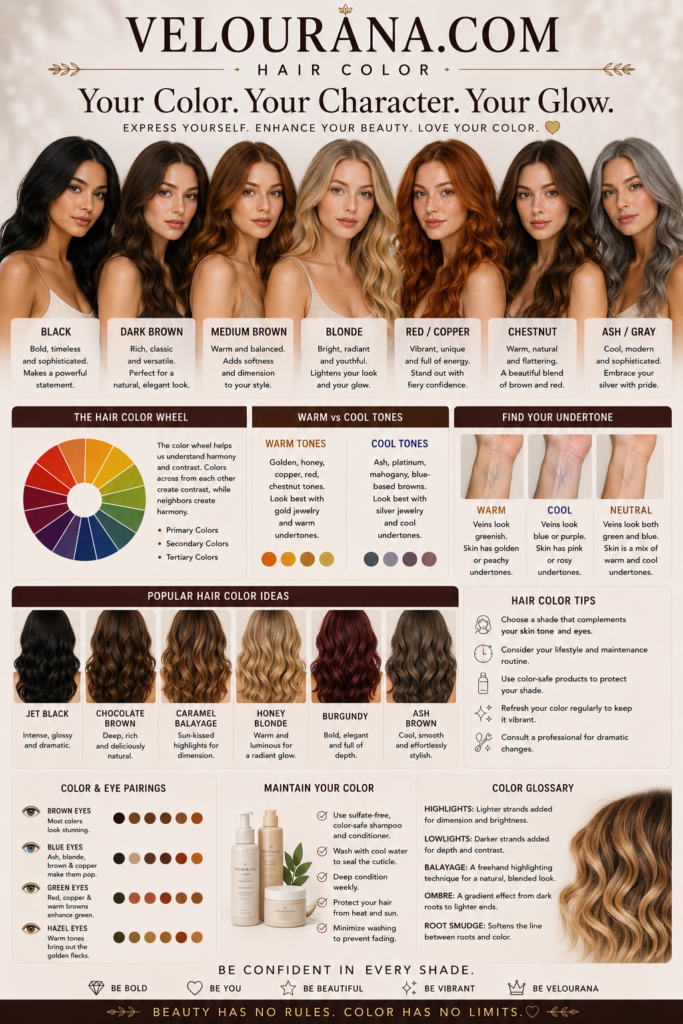
Red hair occupies a distinctive place in the world of hair color because it is never simply one color. It can appear as the palest strawberry veil, a polished copper, a burnished auburn, a deep mahogany red, or an almost incandescent crimson. What connects these shades is warmth, but even that warmth is remarkably complex. Some reds lean toward gold and orange, others toward brown, violet, or burgundy, and the difference between them can completely alter the way the hair interacts with the complexion, eyes, clothing, and surrounding light.
This complexity is part of red hair's enduring appeal. Unlike colors that can remain relatively visually stable across different environments, red is highly responsive to illumination. Morning sunlight may reveal flashes of copper that disappear indoors. A deep auburn can appear almost brunette in shadow before becoming unmistakably red beneath warm artificial light. Strawberry blonde can look softly golden from a distance and distinctly rosy when viewed closely. The result is a color family with unusual movement and visual personality.
Whether naturally occurring or created through professional coloring, successful red hair depends on understanding this spectrum rather than treating red as a single universal shade. Undertone, depth, saturation, hair condition, starting color, and maintenance all determine whether a red looks dimensional and sophisticated or flat and disconnected from the person wearing it.
Why Red Hair Has Such Extraordinary Visual Range
The remarkable variety within red hair begins with the relationship between depth and undertone. Hair can be very light while carrying only a delicate suggestion of red, or extremely dark while preserving a warm red reflection beneath its brown base. Between those extremes lies an enormous territory of copper, ginger, cinnamon, russet, auburn, terracotta, mahogany, cherry-brown, and countless blended variations.
Natural red hair provides an especially useful illustration of this complexity. It rarely resembles a uniform block of orange or red. Individual strands can contain subtle variations in gold, copper, brown, and lighter reflective tones. These differences create dimension, particularly when the hair moves or catches direct light. Replicating that natural complexity through coloring therefore often requires more sophistication than simply applying an intensely red formula from roots to ends.
Depth changes the personality of red dramatically. Lighter reds tend to feel airy, luminous, and delicate because more light is reflected from the hair. Medium copper and ginger shades can appear vivid without becoming dramatically dark. Auburn introduces enough brown to create richness and restraint, while mahogany and deep red-brown tones can feel almost mysterious because their redness emerges primarily through reflection.
Saturation creates another distinction. A muted copper-brown and a brilliant copper may exist at approximately the same depth, yet their visual effect is entirely different. Muted reds integrate more neutral or brown pigment, creating an earthy appearance. Highly saturated reds concentrate the warm pigment and therefore appear more conspicuous.
This is why describing a desired result merely as "red" leaves too much unresolved. The more useful questions concern how light or dark the color should be, whether it should lean golden, copper, brown, violet, or burgundy, and how obvious the redness should appear in ordinary indoor light rather than only under direct illumination.
From Strawberry Blonde to Deep Auburn
At the lightest end of the spectrum, strawberry blonde creates a bridge between blonde and red. Its character comes from a predominantly light base carrying a restrained red or copper influence. When balanced carefully, the effect can be remarkably subtle. It may appear golden at first glance, with the red becoming visible only as the hair moves.
Because strawberry tones are delicate, their success depends heavily on balance. Too much yellow can make the result read primarily as warm blonde, while excessive red can push it toward a stronger ginger or copper identity. The most sophisticated versions preserve luminosity while allowing enough warmth to establish a recognizably reddish character.
Copper becomes more assertive. It contains a stronger orange-red influence and can range from light, polished penny shades to deeper burnished tones. Clear copper has exceptional brightness because its warm pigments respond strongly to light. It can make curls appear more sculptural, emphasize the sleek surface of straight hair, and bring noticeable movement to layered cuts.
Ginger shades often sit close to copper but can have a slightly softer, more naturalistic quality, particularly when gold and muted warmth are present. Cinnamon and russet move toward earthier territory, where brown begins to temper the intensity of orange-red pigments. These shades are particularly effective when a person wants recognizable warmth without the visual brightness associated with vivid copper.
Auburn represents one of the most versatile intersections between brunette and red. Brown provides depth and stability while red introduces warmth and reflection. Depending on the formula, auburn can lean coppery, chestnut, mahogany, or subtly burgundy. In subdued lighting it may appear predominantly brown, while sunlight reveals the red dimension hidden within it.
Deeper still, mahogany combines brunette depth with red and often a restrained violet influence. This produces a cooler, more polished interpretation of red than orange-based copper. Burgundy pushes farther toward wine and violet-red territory. Although these shades belong to the broader red family, their relationship with skin and clothing can differ substantially from that of golden copper because their undertones are less orange and more blue-red.
The spectrum therefore behaves almost like a gradient rather than a collection of isolated colors. Moving from strawberry blonde through copper, auburn, and mahogany gradually changes not only darkness but the balance between gold, orange, red, brown, and violet.
Red Hair and the Complexion
Matching red hair to the complexion is more nuanced than the traditional rule that warm skin requires warm hair and cool skin requires cool hair. Undertone matters, but contrast, eye color, natural hair depth, saturation, and personal style can matter just as much.
Warm complexions can interact beautifully with copper, ginger, golden auburn, and cinnamon because the shared warmth creates visual continuity. On some people, this produces an exceptionally harmonious effect in which the hair seems to illuminate golden or peach tones already present in the skin.
Cool complexions can also wear red successfully. The key is often choosing the character of the red carefully. Blue-red, berry, mahogany, burgundy, and cooler auburn tones can echo cooler undertones without creating excessive orange contrast. Yet a deliberately contrasting copper can also be striking, particularly when the complexion is clear and the wearer wants the hair to become the dominant visual feature.
Neutral skin provides considerable flexibility because it can often accommodate both golden and cooler red directions. Olive complexions deserve particularly thoughtful consideration. Some orange-heavy shades can emphasize green or yellow tones in olive skin, while balanced auburn, muted copper, rich cinnamon, or deeper red-brown may create greater harmony. This is not an absolute restriction; saturation and depth can change the interaction substantially.
Skin depth is equally important. Pale skin and red hair are culturally associated so strongly that the pairing can appear almost instinctively natural, but red is by no means limited to fair complexions. Medium, tan, brown, and deep skin can support extraordinary red shades. Rich copper against deep skin can create luminous contrast, while dark auburn and mahogany can integrate seamlessly with naturally dark hair and still provide visible warmth.
The most successful choice often considers how much contrast is desired. A red close to the natural depth of the hair tends to feel more integrated. A dramatic change in both depth and undertone produces greater visual impact. Neither approach is inherently superior; they simply create different relationships between hair and face.
The Importance of the Starting Hair Color
Red pigment behaves differently depending on the canvas beneath it. This is one reason photographs of a particular shade cannot guarantee an identical result on every head of hair. The underlying color contributes to the final appearance, sometimes substantially.
Light blonde hair can accept red pigment with striking intensity. Because there is relatively little dark pigment competing with the added color, copper and red tones can appear exceptionally bright. This also means precision matters. A formula that looks restrained on darker hair may become much more vivid on a pale blonde base.
Medium blonde and light brown bases provide fertile territory for natural-looking copper, ginger, and auburn results because they already contain enough depth to prevent the red from becoming excessively luminous. Depending on the desired shade, these starting levels may require relatively little lightening.
Dark brown and black hair present a different challenge. Applying red pigment alone does not necessarily create a bright visible red because the existing dark pigment remains dominant. Without lightening, the result may be a subtle red reflection visible primarily in sunlight. That can be beautiful when the intention is a discreet transformation, but it will not reproduce the brightness of a copper shade shown on pre-lightened hair.
Creating a significantly lighter red from dark hair generally requires removal or lifting of some natural or artificial pigment. This introduces another consideration: the underlying warmth exposed during lightening. Dark hair naturally reveals red, orange, and yellow undertones as it lifts. For red transformations, these pigments can sometimes support the desired result rather than needing to be completely neutralized.
Previously colored hair complicates the process further. Artificial dark dye does not behave exactly like untouched natural pigment, and repeatedly colored lengths may respond differently from newer growth. Attempting a major red transformation over uneven previous color can therefore produce different depths or intensities from root to end.
Porosity adds another variable. Highly porous sections can absorb red pigments quickly but may also release them faster during washing. Healthy, less porous areas may take color differently. A sophisticated red result consequently depends not only on choosing an attractive formula but on understanding the condition and history of the hair receiving it.
Dimension Makes Red Hair Come Alive
Because red responds so strongly to light, dimension can transform its appearance. A completely uniform red may look bold and graphic, which can be desirable, but naturally inspired reds often become more convincing when several closely related tones coexist.
Dimension does not necessarily mean obvious highlights. It can be created through subtle shifts in warmth and depth. A copper base may contain slightly brighter pieces around the face and deeper auburn through the interior. An auburn brunette may include fine cinnamon reflections that become visible only in movement. Strawberry hair can combine pale golden sections with restrained copper warmth.
This multidimensional approach mirrors the way natural hair behaves. Even hair that appears to be one color from a distance contains variations caused by strand thickness, exposure to sunlight, texture, and natural pigment distribution.
Texture intensifies these effects. Curly and coily hair creates numerous surfaces angled toward and away from the light, allowing warm highlights to appear and disappear throughout the shape. Copper and auburn can therefore emphasize curl architecture beautifully. Straight hair reflects light in broader, smoother bands, making shine and color uniformity especially noticeable. Waves occupy a middle ground, with bends creating alternating areas of brightness and shadow.
Haircuts also influence the presentation. Layers expose internal sections and can reveal tonal variations that would remain hidden in a blunt shape. Face-framing pieces concentrate brightness near the complexion. Long, uninterrupted lengths provide a large surface on which deeper reds can display their richness.
The objective is not always to make the color more complicated. Rather, dimensional design allows red to interact with the structure of the hair instead of sitting on top of it as a flat visual coating.
Why Red Hair Requires Particular Maintenance
Red has a reputation for fading, and that reputation is well founded. Red dye molecules and the way vivid warm tones are perceived mean that changes can become noticeable relatively quickly. A small reduction in saturation that might be inconspicuous in a neutral brunette can dramatically alter a copper or crimson result.
Fading does not always mean that the hair becomes unattractive. In some cases, red evolves through a series of appealing stages. A brilliant copper may soften into a muted ginger, while a deep auburn can gradually become warmer and browner. The problem arises when the fading is uneven, excessively rapid, or moves away from the intended undertone.
Washing frequency has a significant influence. Every cleansing cycle exposes the hair to water and surfactants, and repeated washing gradually removes some artificial pigment. Very hot water can intensify the process, while gentler cleansing practices can help preserve color.
Hair condition is equally important. Damaged, highly porous hair may lose pigment more rapidly because its structure is less capable of retaining color consistently. Chemical services, repeated high-temperature styling, environmental exposure, and mechanical damage can all contribute to porosity.
Sunlight can alter red tones as well. Ultraviolet exposure affects both natural and artificial hair pigment, and prolonged exposure may reduce vibrancy. Heat styling does not automatically destroy color, but excessive temperatures combined with already compromised hair can accelerate the deterioration of both condition and appearance.
Color-preserving shampoos and conditioners can support longevity, but maintenance extends beyond choosing products labeled for colored hair. The broader objective is to keep the fiber in good condition while reducing unnecessary pigment loss.
Some red shades also benefit from periodic pigment refreshment. Color-depositing treatments, glosses, or professional toners can restore warmth between full coloring appointments without necessarily repeating the entire permanent-color process. The appropriate method depends on the original formula and the condition of the hair.
Natural Red Hair Has Its Own Color Story
Naturally red hair deserves distinction from artificially created red because its color architecture is biologically produced rather than deposited through dye. Natural red shades can range from very pale strawberry blonde to intense ginger and deep auburn, and individual heads of red hair often contain remarkable tonal variation.
Freckles, pale eyelashes, light brows, and fair skin are commonly associated with natural red hair, but they are not universal characteristics. Natural red occurs across different complexions and can vary greatly in intensity.
Natural red hair can also change over time. Childhood shades may deepen with age, and some redheads find that their hair becomes more auburn or brown as pigment patterns change. Later graying can produce beautiful combinations of silver, white, gold, and residual red.
For natural redheads who color their hair, preserving believable dimension can be particularly important if they want the result to remain close to their original identity. Enhancing faded copper, deepening an auburn base, or blending emerging gray may require a different approach from creating red on naturally brunette or blonde hair.
The brows can influence the overall effect as well. Natural redheads frequently have brows that are lighter, more neutral, or less obviously red than the hair. This is a useful reminder that perfectly matching brows to red hair is not necessary for visual harmony. In fact, an excessively literal red eyebrow can appear less natural than a softer taupe, auburn-brown, or neutral warm shade.
Red Hair as a Beauty Statement
Red hair has unusual visual authority. Even subdued versions can become a defining feature because warm red pigment attracts attention and creates strong associations with vitality, richness, and individuality.
Makeup can either reinforce that warmth or create deliberate contrast. Soft bronze, peach, terracotta, and warm neutral makeup can create a cohesive palette around copper hair. Cooler rose, berry, plum, and charcoal tones can introduce contrast, particularly with auburn or mahogany shades.
There is no requirement for redheads to avoid red lipstick, pink blush, or strong eye makeup. Such restrictions usually come from outdated beauty rules rather than color necessity. The more useful consideration is undertone balance. A highly orange copper combined with a strongly blue-red lip creates intentional contrast; a warm brick-red lip creates continuity. Both can work when the relationship is deliberate.
Clothing behaves similarly. Green is famously associated with red hair because complementary contrast makes both colors appear more vivid, but the wardrobe possibilities are far broader. Navy, cream, chocolate, camel, black, burgundy, teal, ivory, violet, rust, and many other shades can interact beautifully with different reds.
Jewelry can subtly alter the impression too. Yellow and rose gold can amplify warmth, while silver and white metals can create a cooler counterpoint. Again, complexion and personal preference matter more than rigid rules.
What makes red particularly interesting is that changing its undertone can change the entire surrounding palette. A person moving from golden copper to deep mahogany may discover that makeup and clothing colors appear different even though their skin has not changed. Hair occupies such a large visual area around the face that its color becomes part of the complexion's immediate environment.
Choosing a Red That Can Evolve Gracefully
A successful red transformation should be considered not only on the first day but throughout its life cycle. Fresh salon color represents only one stage. The shade will encounter washing, sunlight, styling, root growth, and gradual pigment loss.
For someone who prefers low-maintenance color, staying relatively close to the natural depth can make regrowth less conspicuous. A brunette moving into auburn may experience a softer transition at the roots than the same brunette moving into pale copper. Similarly, strategically preserving some natural depth can make a dimensional red easier to live with than a dramatic all-over transformation.
Those seeking vivid copper or brighter red should expect greater involvement. Brightness depends on pigment concentration and, when the natural base is dark, sufficient lightness underneath. Maintaining that clarity may require regular refreshing.
The condition of the hair should influence ambition. A spectacular shade loses much of its impact if achieving it requires compromising the fiber to the point that shine, elasticity, or curl definition deteriorates. Sometimes a deeper red that preserves hair quality will look far more luxurious than a lighter shade achieved through excessive processing.
Consultation becomes especially valuable when the desired result requires substantial lightening, correction of previous dye, or movement between opposite undertones. Red pigments can be persistent, and changing from red into certain cooler colors later may require careful correction.
This does not make red an impractical choice. It simply means that red rewards commitment and informed planning.
The Enduring Power of Red
Few hair-color families contain as much internal diversity as red. Strawberry blonde can whisper rather than announce itself. Copper can glow with metallic brilliance. Auburn can merge seamlessly with brunette depth. Mahogany can appear restrained indoors and reveal wine-colored reflections under stronger light.
That ability to transform according to depth, texture, and illumination gives red its distinctive character. It can look natural, theatrical, romantic, earthy, polished, rebellious, classical, or contemporary without leaving the same broad color family.
The most compelling red hair is rarely defined by intensity alone. It succeeds through proportion: enough warmth to create identity, enough depth to support the complexion, enough dimension to prevent flatness, and enough attention to hair condition to preserve shine.
Red is therefore less a single color choice than an entire language of warmth. Understanding its variations allows that language to be spoken softly or dramatically, naturally or deliberately, while retaining the luminous quality that makes red hair so unmistakable.
THE END VELOURANA
 Discover More From Our Family of Websites
 ZodiacBearing (Astrology, Tarot, Numerology, Angel Numbers & Spiritual Guidance)
 Velourana (Beauty, Makeup, Hair Care, Skincare & Beauty Tips)
 HavenBearing (Home, Living, Organization, Décor & Everyday Inspiration)
 PawBearing (Pet Care, Dog Breeds, Animal Health, Training & Pet Products)
 PsyCatherine (Notes From the Journal of a Psychologist on Real Life)

