
CATEGORY: Copper Hair
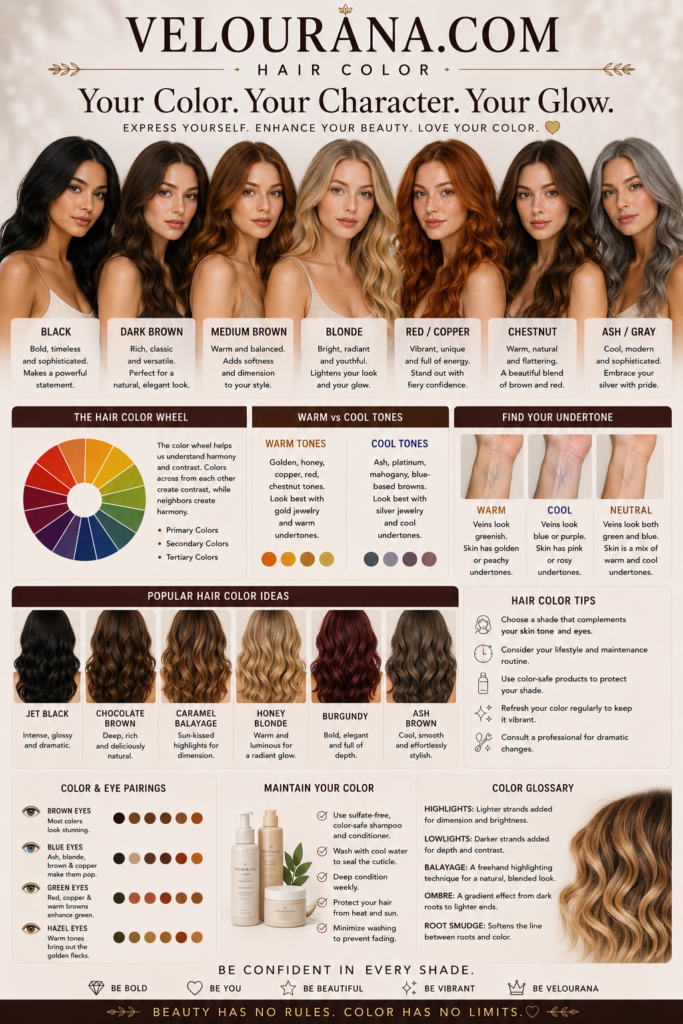
Copper hair is rarely static. From the moment it is created, it begins interacting with light, washing, styling, natural regrowth, underlying pigment, and the changing condition of the hair itself. A freshly colored copper may appear intensely polished and saturated, then gradually soften into ginger, gold, auburn, or warm brunette territory before its next refresh. Understanding that evolution is one of the keys to wearing copper successfully.
This makes copper different from a color that is judged primarily by whether it remains exactly the same shade. Some of its appeal comes from the way it changes. Fresh copper can have almost metallic brilliance; several weeks later, the same hair may look softer and more natural. The objective is not necessarily to freeze the original shade indefinitely but to make sure the color continues to look harmonious as it evolves.
That process begins before dye touches the hair. The choice between pale copper, vivid ginger, classic copper, copper brown, auburn-copper, and deep burnished red is partly an aesthetic decision, but it is also a decision about maintenance, starting level, contrast, and hair condition. A shade that fits naturally into the existing canvas can often be maintained with relatively modest intervention. A shade requiring several levels of lightening may demand much greater commitment.
Copper therefore works best when it is designed as an ongoing color rather than treated as a single dramatic appointment.
The Character of Copper Changes With Depth
The word copper immediately suggests warmth, but warmth alone does not define the finished appearance. Depth determines whether that warmth feels delicate, brilliant, earthy, rich, or dramatic.
Light copper has an almost translucent quality. Because the underlying canvas reflects substantial light, relatively delicate warm pigment can produce a clearly visible result. Pale ginger, apricot, strawberry-copper, and golden-copper shades live in this region. They often appear especially bright in daylight and can sometimes look much more blonde in softer indoor illumination.
A medium copper has greater pigment concentration and a more unmistakable red-orange identity. This is the territory associated with polished pennies, cinnamon, flame, and rich ginger. The color can remain luminous without depending on an extremely light base, and its stronger saturation gives it visual presence from a wider range of lighting conditions.
Deeper copper introduces brown and sometimes more red. Instead of appearing primarily orange-gold, the hair may read as rich brunette with copper fire running through it. This can create remarkable sophistication because the warm reflection is partially concealed until light reaches the hair. Movement then exposes brighter areas, making the color appear to change as the head turns.
Very deep copper approaches auburn. The distinction is subtle because both families combine warmth with depth. Copper generally emphasizes orange-gold warmth more strongly, while auburn tends to emphasize red and brown. In practice, many beautiful colors occupy the space between them.
These transitions demonstrate why selecting copper from a small digital swatch can be misleading. Hair is three-dimensional, reflective, and constantly moving through different light. A shade that appears dark red in one photograph may reveal obvious copper-orange reflections in another. Evaluating several references taken under realistic lighting provides a more useful picture of the desired result.
Natural-Looking Copper Is Built Through Complexity
One reason naturally occurring red and ginger hair can be difficult to imitate perfectly is that natural hair rarely presents as a completely uniform block of pigment. Different fibers catch light differently, areas exposed to the environment may be slightly lighter, roots may carry more depth, and the distribution of pigment creates subtle variations across the head.
Artificial copper can look equally sophisticated when it respects that complexity. This does not necessarily require obvious highlights. Even a relatively uniform copper can contain tonal nuance when the formulation works with the existing base rather than completely obscuring it.
A deeper natural root, for example, can create useful shadow and make brighter lengths look more luminous by comparison. Fine variations between copper, gold, and red can prevent the result from appearing excessively flat. On curly hair, the physical structure itself creates changing reflection, so relatively subtle tonal variation may become highly visible.
The goal of dimension is not to make every section a different color. Successful dimensional copper still reads as one coherent family. The differences support the overall impression rather than competing with it.
Brunette hair can provide an especially rich foundation for this approach. Instead of attempting to convert every strand into bright orange-copper, selected areas can be lifted or warmed while deeper brown remains visible. The finished result may have more visual depth and require less extensive lightening.
On naturally blonde hair, dimension can be created in the opposite direction. A pale canvas may benefit from deeper copper or warm lowlights that provide structure and prevent the color from looking excessively uniform. Root depth can also make a very light copper feel more grounded.
The relationship between light and dark areas is therefore central to copper design. Brightness becomes more noticeable beside depth, while deeper sections appear richer beside luminous warmth.
The Difference Between Vibrant Copper and Refined Copper
Vibrancy and refinement are not opposites, but they require different kinds of control. A highly saturated copper can be extremely elegant when the tone is even, the hair remains glossy, and the shade has been deliberately chosen. Conversely, a muted copper can look unfinished if it is the accidental result of fading rather than an intentional tonal direction.
Vivid copper generally places orange-red warmth at the center of the appearance. The hair is unmistakably colored even from a distance. On a sufficiently light base, the result can approach a brilliant ginger or fiery orange while still retaining enough red and gold complexity to look dimensional.
A more restrained copper may incorporate brown, beige, gold, or muted red. Instead of announcing itself immediately, the warmth becomes part of the hair's depth. This can make copper easier to integrate into conservative styling or a naturally brunette appearance.
Muted copper has become particularly interesting because it challenges the assumption that warm hair must always be highly saturated. Soft cinnamon, dusty ginger, beige-copper, and subdued terracotta can provide warmth without the intensity associated with classic bright red hair. These shades depend heavily on precise balance; too much neutralization can make the result dull, while insufficient control can restore unwanted orange brightness.
Refinement therefore comes from intentional saturation. The question is not whether copper should be bright or subtle, but whether its degree of brightness serves the intended result.
Shine also changes the perceived sophistication of the shade. Glossy copper reflects clean bands of light that emphasize tonal richness. Dry or damaged hair scatters reflection, making even expensive color work appear less polished. This is why hair condition is inseparable from the appearance of copper.
Matching the Transformation to the Existing Hair
A realistic copper plan begins with the starting canvas. Someone with untreated dark blonde hair, someone with naturally black hair, and someone with repeatedly bleached blonde hair may all want the same photograph, but reaching and maintaining that result will involve very different processes.
Virgin light brown or dark blonde hair often offers considerable flexibility. There may already be enough lightness to create visible copper without extreme alteration, depending on the target. Natural underlying warmth can become an advantage because copper does not require the same degree of warm-pigment elimination demanded by very cool colors.
Dark brunette hair can support rich copper beautifully, but the desired brightness determines how much change is required. Depositing warm pigment can create subtle copper reflections without dramatically lightening the hair. A brighter ginger or medium copper generally requires a lighter foundation.
Naturally black or very dark brown hair can produce spectacular deep copper, mahogany-copper, or warm auburn effects while retaining substantial depth. Transforming it into pale ginger is a much larger undertaking. The hair must first reach an appropriate underlying level, and the condition of the fiber may limit how much lightening can safely be attempted in one process.
Previously dyed hair introduces another variable. Artificial dark pigment can remain in the lengths even when natural regrowth is much lighter. Attempting to create copper without accounting for this difference can produce bright roots and resistant dark lengths. Previous bleaching may create the opposite problem, with porous ends becoming much more intense than less processed areas.
Color correction exists precisely because hair history matters. Uneven starting levels, overlapping dye, mineral accumulation, porosity differences, and previous lightening can all influence how copper develops. A technically appropriate formula cannot guarantee uniformity when the canvas itself is highly irregular.
This is why strand testing can be valuable when the hair history is complex. It provides information about how a small section responds before the entire head is committed to a process.
The Special Relationship Between Copper and Light
Few hair colors demonstrate the influence of lighting as dramatically as copper. Warm wavelengths can appear dramatically different under daylight, warm interior bulbs, cool artificial lighting, flash photography, and shaded environments.
Natural daylight often reveals the fullest complexity. Gold becomes brighter, orange becomes clearer, and subtle red reflections become visible. Direct sun can make medium copper appear almost fiery, especially on smooth reflective surfaces.
Warm indoor lighting may intensify golden and orange qualities while reducing the perception of cooler or neutral elements. Under some cool artificial lights, copper can appear deeper, browner, or less saturated. Photographs add another layer because cameras and editing software can alter white balance and saturation.
This variability should be expected rather than treated as evidence that the color is wrong. Hair color does not exist independently of illumination. The same head of copper hair genuinely presents different visual information in different environments.
Texture compounds the effect. Straight hair may produce long reflective bands, especially when smooth and glossy. Waves divide the reflection into alternating bright and shaded areas. Curls create numerous curved surfaces that catch light individually, producing flashes of copper throughout the shape. Coils may reveal especially complex tonal variation because highlights appear on the bends and outer surfaces while recessed areas remain deeper.
This is one reason dimensional copper can look extraordinary on textured hair. The color does not need exaggerated contrast to become visible; the geometry of the hair creates contrast naturally.
Hair condition again influences the outcome. A smooth surface reflects light more regularly, whereas a roughened surface scatters it. Two heads of hair carrying similar pigment can therefore appear to have different color intensity simply because one reflects light more efficiently.
Fading Is Part of the Copper Story
The fading behavior of copper deserves consideration before the initial transformation because maintaining warm artificial pigment can require regular attention. Red, orange, and related cosmetic tones can gradually lose saturation through washing and environmental exposure. The exact rate varies with formula, hair condition, cleansing habits, porosity, and previous processing.
Freshly colored copper is often at its most concentrated. During subsequent washes, some pigment loss is normal. A vivid result may become softer and more natural-looking before it reaches a point that feels noticeably faded.
The underlying canvas determines what appears as pigment leaves. Copper placed over light blonde hair may fade toward peach, strawberry, gold, or yellowish warmth. Copper placed over a medium brown foundation may gradually look more brunette. A deeper red-copper may lose some orange brilliance while retaining auburn depth.
Porous hair can complicate the process. Damaged or highly lightened areas may initially absorb significant pigment but fail to retain it as consistently. Ends may fade faster than roots, or certain sections may become noticeably lighter. Repeatedly covering the entire head with strong permanent color is not automatically the best response because cumulative processing can further affect the fiber.
Maintenance can instead focus on what the hair actually needs. Regrowth and faded lengths are different problems. Roots may require color development appropriate to natural hair, while lengths may need only tonal replenishment. Treating them identically can expose previously processed hair to unnecessary chemical stress.
This distinction becomes increasingly important for long-term copper wearers. The objective is not simply to recreate first-day intensity at every appointment, but to preserve enough structural quality for the color to remain glossy and dimensional over time.
Building a Routine Around Color Retention
A copper maintenance routine should protect both pigment and hair quality. Those priorities overlap because color looks richer when the fiber is smooth, conditioned, and capable of reflecting light.
Cleansing frequency is best determined by scalp needs, lifestyle, texture, and oil production rather than a rigid universal schedule. However, washing more often than necessary creates more opportunities for cosmetic pigment to leave the hair. A gentle approach can therefore help extend visible saturation.
Water temperature also affects the washing experience and the condition of the fiber. Extremely hot water is unnecessary for effective cleansing and can contribute to a harsher routine. Comfortable warm or lukewarm water is generally sufficient.
Conditioning becomes particularly important when copper has required lightening. The color itself does not automatically make hair dry, but the chemical processes used to reach a lighter canvas can alter the fiber. Appropriate conditioning can improve softness, manageability, and surface smoothness.
Heat styling should be approached with similar awareness. Copper often looks beautiful when styled with high shine, but repeatedly using excessive temperature in pursuit of that finish can work against the long-term goal. Controlled heat, suitable thermal protection, and styling methods adapted to the hair type help preserve condition.
Color-depositing treatments can extend tonal intensity, but they require judgment. A copper mask applied to very porous blonde ends may create stronger deposition than the same product on resistant roots. Repeated use can also shift the shade over time. These products work best as controlled maintenance rather than automatic additions to every wash.
A professional gloss or toner can offer another route when the underlying level remains suitable and the main issue is fading. Restoring warmth and shine may be enough to revive the appearance without repeating the entire original transformation.
Regrowth and the Choice Between Contrast and Blending
Root appearance strongly affects how demanding copper feels to maintain. The greater the contrast between natural regrowth and colored lengths, the sooner the transition may become visually obvious.
A naturally dark-haired person wearing pale copper will generally see a distinct root difference. That contrast can be embraced as part of the design through a shadowed or intentionally deeper root, or it can be maintained more frequently for a uniform appearance.
Someone whose natural color is dark blonde or warm light brown may experience a softer transition into medium copper. Regrowth can sometimes blend naturally enough that appointments are driven more by fading than by a visible root line.
Gray or white regrowth creates another kind of contrast because the difference involves both pigment and reflectivity. The approach depends on whether the goal is complete coverage, blending, or allowing natural silver to become part of the design. Copper can interact beautifully with lighter natural strands, but coverage behavior and maintenance expectations should be considered during formulation.
Rooted copper designs can reduce the pressure for constant uniformity. Preserving or recreating a slightly deeper root gives the color an intentional gradient and can make several weeks of growth less disruptive. This is particularly effective with balayage and other dimensional techniques.
The choice between seamless root coverage and visible depth is aesthetic rather than universally technical. Both can look polished when intentional.
Makeup, Clothing, and the New Color Environment Around the Face
Changing to copper hair alters more than the hair itself. Because the color surrounds the face, it changes the visual relationship between the complexion, brows, eyes, makeup, and clothing.
Colors that once appeared neutral beside brunette or blonde hair may seem different when surrounded by strong warmth. This does not mean an entire wardrobe or makeup collection needs to be replaced. It means the eye is now processing those colors within a different context.
Warm earthy shades can create harmony with copper, while cool colors can create striking contrast. Deep green, blue, teal, burgundy, cream, brown, black, gray, and many other colors can interact successfully with copper depending on the exact hair shade and complexion. There is no requirement to dress according to an autumn palette simply because the hair is warm.
Brows deserve similar flexibility. Matching them exactly to copper hair can sometimes look less natural than preserving a slightly deeper or more neutral brow. Natural red hair itself does not necessarily come with brows identical in color to the lengths, so exact matching is not a prerequisite for coherence.
Makeup can be adjusted according to the intensity of the hair rather than through rigid color rules. A vivid copper already creates strong warmth around the face, so neutral makeup may allow the hair to dominate. Alternatively, warm blush, bronze, terracotta, or complementary eye colors can reinforce the palette. Cooler makeup can deliberately introduce contrast.
The important principle is balance. Copper becomes part of the overall color composition rather than an isolated feature.
When Copper Becomes a Signature Color
Some hair colors depend heavily on trends, but copper repeatedly returns because it occupies an unusual position between naturalism and transformation. It can look as though it might have grown naturally from the scalp, yet a more saturated interpretation can be one of the most dramatic conventional hair colors available.
Its versatility also allows it to evolve with the wearer. A person may begin with subtle copper-brown highlights, move toward a richer all-over shade, brighten into ginger, and later deepen into auburn without abandoning the broader warm family. The transitions can feel significant while maintaining continuity.
Seasonal changes can be made through depth rather than complete reinvention. A brighter golden copper can feel lighter and more reflective, while a deeper burnished version can create richness without requiring a move to an entirely different color family.
Copper can also mature beautifully when the goal shifts from intensity toward softness. A vivid shade does not need to remain vivid forever to remain attractive. Muted copper, dimensional ginger-brown, and warm auburn can preserve the character of the color while reducing brightness or maintenance.
The most convincing long-term copper is ultimately one that respects both aesthetics and hair condition. Brilliant color on severely compromised hair loses much of its visual power because roughness, breakage, and uneven porosity interfere with shine and consistency. A slightly deeper or more restrained copper on healthier hair can appear considerably more luxurious.
That relationship between color and condition is central to copper's appeal. Copper is a color of reflected warmth. It depends on light, movement, surface quality, and tonal complexity to reveal its full character.
When those elements are balanced, copper can appear simultaneously rich and luminous, bold and believable. It can transform a face without overwhelming it, enhance texture without requiring exaggerated contrast, and evolve between appointments without losing its identity. Rather than being one fixed orange-red shade, copper is an entire landscape of warm hair color—capable of moving from pale strawberry light to deep burnished brunette while remaining unmistakably its own.
THE END VELOURANA
 Discover More From Our Family of Websites
 ZodiacBearing (Astrology, Tarot, Numerology, Angel Numbers & Spiritual Guidance)
 Velourana (Beauty, Makeup, Hair Care, Skincare & Beauty Tips)
 HavenBearing (Home, Living, Organization, Décor & Everyday Inspiration)
 PawBearing (Pet Care, Dog Breeds, Animal Health, Training & Pet Products)
 PsyCatherine (Notes From the Journal of a Psychologist on Real Life)

