
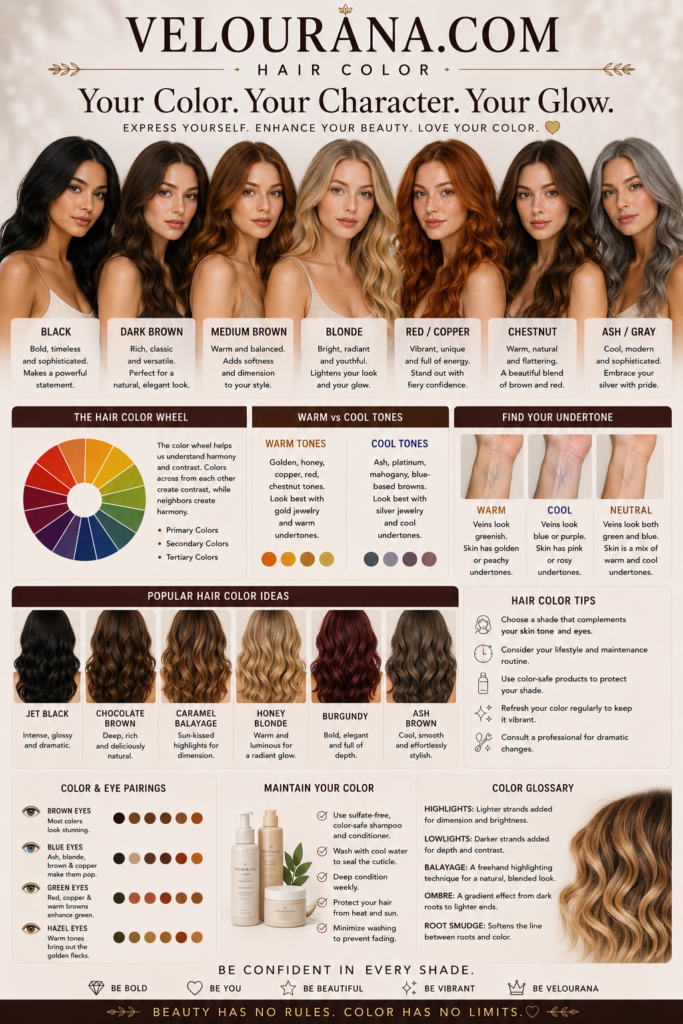
CATEGORY: Brunette Hair
A beautiful brunette can appear almost effortless, but the most convincing brown hair often contains a surprising amount of visual engineering. The root may be deeper than the ends. The hair around the face may carry a fraction more brightness. Warmth may be concentrated through the mid-lengths while the base remains neutral. Fine pieces may catch sunlight without ever reading as conventional highlights. Even a brunette that looks like one continuous shade can contain carefully controlled differences in depth that prevent the color from becoming heavy or artificial.
Modern brunette color has increasingly moved away from the assumption that brown must either remain completely natural or be transformed with conspicuous blonde streaks. Between those extremes lies an enormous field of possibilities. Brown can be sculpted with shadow, transparency, warmth, coolness, gloss, and subtle tonal transitions. The result can remain unmistakably brunette while acquiring the movement once associated mainly with lighter hair.
Understanding this approach requires looking beyond shade names. "Chocolate," "espresso," "mocha," and "chestnut" may help communicate an aesthetic direction, but they cannot fully describe how a brunette will behave on a particular head of hair. The starting color, existing artificial pigment, texture, porosity, density, haircut, complexion, and maintenance tolerance all affect the outcome. Brunette design is therefore less about selecting an attractive photograph and more about interpreting what makes that photograph attractive in the first place.
The difference matters because brown hair is unusually sensitive to small changes. A little too much warmth can turn sophisticated chestnut into unwanted orange. Too much ash can drain the color of vitality. Excessive darkness can hide texture. Too much brightness can erase the brunette identity altogether. The beauty is found in balance.
Brown Hair Is Built From Light as Much as Pigment
Color is perceived because of light, and brunette hair demonstrates this relationship particularly clearly. Darker hair absorbs more visible light than lighter hair, but its surface also reflects light. The interaction between absorption and reflection gives brunette its characteristic richness.
On smooth hair, reflected light can create brilliant bands of shine that temporarily make sections appear lighter. On waves, the curved surface produces alternating highlights and shadows. Curls break those reflections into smaller moving points, while coils create intricate patterns of illumination across the shape of the hair. This means that the visual depth of brunette cannot be separated from texture.
A photograph taken under bright daylight may therefore tell a very different color story from the same hair viewed indoors. Warm underlying tones become more visible in sunlight. Artificial indoor lighting can emphasize yellow, red, or cool qualities depending on the source. Camera processing can further distort what the eye would perceive naturally. Brunette inspiration photographs should consequently be interpreted rather than copied literally.
This is particularly important when someone requests a brown shade that appears almost black in one photograph but clearly brown in another. The difference may not represent two separate formulas at all. It may simply reveal how the color responds to illumination.
Hair condition also determines how effectively this interaction occurs. A relatively smooth surface produces more organized reflection, which the eye often interprets as gloss and richness. A rough, highly porous surface scatters light and can make brunette look dull even when plenty of pigment remains inside the fiber. The temptation may be to recolor immediately, but additional pigment does not automatically solve a surface problem.
This is one reason deep brunette shades can expose the condition of the hair rather than conceal it. Darkness creates a strong background against which shine becomes conspicuous. When that shine is present, the effect can be luxurious. When the surface appears dry, the absence of reflection can be equally noticeable.
Color care for brunette should therefore preserve not only pigment but also the optical quality of the hair. Conditioning, reduced friction, sensible heat use, appropriate cleansing, and protection from unnecessary chemical stress contribute directly to how sophisticated the color appears.
The Art of Choosing How Dark Brunette Should Become
Depth is one of the most consequential decisions in brunette color because moving even slightly darker can change the relationship between the hair and the entire face. Deeper hair can increase contrast with the skin, intensify the brows and eyes, and make the overall silhouette of the hair appear denser. Lighter brunette tends to reveal more internal texture and can create a softer transition against some complexions.
Neither direction is universally preferable. The decision depends on the visual effect being pursued.
Very deep brunette can feel graphic and polished. When it remains visibly brown rather than crossing completely into black, it often reveals a warm or neutral glow in direct light. This narrow territory between dark brown and black can be especially dramatic because the hair changes character according to its environment. Indoors it may appear nearly black; outdoors its brown identity becomes obvious.
Medium brunette offers more visible tonal range. Highlights and natural variation can be perceived without requiring strong contrast, making this depth particularly adaptable to dimensional techniques. Warm chestnut, balanced chocolate, cooler mocha, and many neutral browns live comfortably within this territory.
Lighter brunette sits close to the boundary with dark blonde. The distinction can become especially ambiguous when ash or beige tones are involved. Rather than worrying excessively about the label, it is more useful to decide whether the finished hair should read primarily as brown. Maintaining sufficient root depth and darker interior pieces can preserve brunette identity even when substantial brightness is introduced.
Changing depth also changes maintenance. Darkening hair considerably below its natural level can create conspicuous lighter regrowth. Lightening a naturally dark brunette requires management of exposed warmth and may involve repeated chemical processing. Remaining reasonably close to the natural base can often create the easiest long-term relationship, though ease is only one consideration among many.
Artificial pigment history complicates the decision. Repeatedly applying dark permanent color through the lengths can create significant pigment accumulation. The hair may become darker and more opaque over time, especially at porous ends. If a lighter brunette is desired later, removing this accumulated color can be difficult.
This is why maintaining brunette depth does not necessarily mean repeatedly pulling permanent dye through the entire head. When only new growth requires permanent coverage, previously colored lengths may need a different approach. Glossing or other deposit-focused services can refresh faded tone without treating every part of the hair as though it were virgin regrowth.
A thoughtful brunette strategy respects time. The color being created today becomes the starting canvas for every future decision.
Warmth Is Not the Enemy of Brunette Hair
Few aspects of brunette coloring create as much confusion as warmth. Orange and red tones are often discussed as though they are inherently undesirable, yet warm pigments are fundamental to many of the richest brown shades. The question is not whether warmth exists but whether its quality and intensity support the intended result.
Chestnut depends on warmth. Golden brown depends on warmth. Copper-brown, cinnamon brunette, mahogany, amber brown, and many chocolate shades derive much of their beauty from controlled warm reflection. Removing all red, orange, and gold from these colors would destroy their identity.
Even cool brunette exists in relationship with underlying warmth. When naturally dark hair is lightened, warm pigment is exposed. Toners can modify the visible result, but the underlying color history continues to matter as those toners fade. A cool brown is therefore often an actively maintained balance rather than a permanent elimination of warmth.
Problems arise when warmth appears in a form that conflicts with the intended shade. A neutral brunette that gradually becomes distinctly orange may no longer feel balanced. An ash brown that reveals strong red warmth can lose its smoky character. Conversely, a warm chestnut that becomes overly red may stop looking brown enough for the wearer's preference.
Correcting these shifts requires an understanding of complementary color relationships, but aggressive neutralization is not always the answer. Adding too much cool pigment can produce a dense, muddy result, particularly on porous hair. The goal is usually refinement rather than annihilation.
Natural warmth can also contribute to dimension. A brunette base that reveals subtle amber only under strong light has an optical richness that a completely opaque cool brown may lack. This does not make cool brunette inferior; it illustrates that the two aesthetics achieve sophistication differently. Cool brunette emphasizes restraint and softness, while warm brunette can emphasize luminosity and depth.
Skin undertone further influences how warmth is perceived. Warm reflections near the face may create harmony with golden or peach qualities in the complexion, but deliberate contrast can be equally attractive. Cool skin does not prohibit warm brunette, and warm skin does not prohibit ash brown. Personal color is relational, not a collection of absolute prohibitions.
Eye color can become more noticeable through these relationships. Warm brunette may echo amber or hazel elements in the iris. Cooler brown can create contrast against warm brown or green eyes. Deep neutral brunette may frame light eyes dramatically. These effects depend on the entire face rather than a simplistic matching formula.
A sophisticated brunette does not fear warmth. It decides where warmth belongs.
Dimension Without Sacrificing the Brunette Foundation
The most compelling dimensional brunette often depends on restraint. Brightness must have darkness around it in order to appear luminous. When every strand becomes light, contrast disappears and the hair ceases to function visually as brunette.
This concept of negative space is central to modern brown color. Deep sections are not unfinished areas waiting to be highlighted. They are structural elements. They provide shadow beneath waves, define the shape of curls, create density at the root, and make brighter pieces visible.
Imagine a medium chocolate base with a small amount of caramel running through the lengths. The caramel appears luminous because the chocolate remains dominant. Increase the amount of caramel repeatedly and the visual balance changes. Eventually the eye reads the overall head as lighter, perhaps bronde rather than brunette. There is no universal point at which this transition occurs, but the principle is important.
Face framing illustrates the same relationship. A few strategically lighter pieces can transform the appearance of an otherwise deep brunette because they sit where the eye naturally focuses. The rest of the hair can remain substantially darker. This produces a large visual change from a relatively small amount of lightening.
Subtle dimension can be even more sophisticated. Rather than creating blonde pieces, a colorist may move from dark brown to medium brown or from neutral chocolate to slightly warmer brown. The tonal difference becomes visible mainly through movement. This low-contrast approach works particularly well when the desired aesthetic is expensive-looking richness rather than obvious highlighting.
Balayage can support this effect when used with restraint, but the technique itself does not guarantee a particular result. Balayage simply describes an approach to applying lightener or color freehand. It can produce extremely subtle brunette dimension or very bright blonde ends depending on placement and lift.
Traditional foiling can also create natural-looking brunette when sections are fine, thoughtfully distributed, and toned appropriately. Likewise, lowlights can return brunette identity to hair that has become over-highlighted. Technique should serve the design rather than becoming the design.
Root melts and shadowed roots have become valuable tools because they allow brightness through the lengths while preserving depth near the scalp. A well-blended transition can reduce the appearance of a harsh grow-out line and create the impression that the lighter color naturally emerges from the brunette base.
Yet a root shadow should not automatically be applied to every brunette. Someone whose natural base already provides the desired depth may not need additional dark pigment at the root. Unnecessary darkening can complicate future lightening. Again, preserving useful natural color can be more sophisticated than covering it.
Texture Determines How Brunette Dimension Should Be Read
Hair-color photographs often encourage people to focus entirely on shade, but texture changes the way every shade is perceived. Brunette color should therefore be designed for the hair's movement rather than imagined on an abstract, perfectly smooth strand.
Straight hair reveals placement with unusual clarity. A highlight that begins abruptly or varies inconsistently can be easy to detect because the hair falls in relatively continuous lines. Subtle blending and precise transitions become particularly important. At the same time, straight brunette can showcase gloss beautifully because broad surfaces reflect uninterrupted bands of light.
Wavy hair naturally creates shadow and illumination. Dimensional brunette can amplify this structure by placing slightly lighter color where movement becomes most visible. When the hair bends, brightness appears and disappears, producing a fluid effect that can make relatively subtle color look more complex than it actually is.
Curly hair requires attention to the curl pattern itself. Very fine highlights may become visually lost once curls contract and overlap, while overly large or poorly positioned sections can create disconnected blocks of brightness. Color that follows the natural architecture of curls can emphasize their shape without overwhelming them.
Coily hair offers another intricate relationship between color and geometry. The many changing angles of the fiber create constant variation in reflection. Even deep brunette can appear highly dimensional without substantial lightening. When brighter pieces are introduced, preserving the condition and integrity of the hair becomes particularly important because lightening alters a fiber that may already require careful moisture, lubrication, and breakage management.
Density matters as well. Extremely dense brunette hair can absorb visual detail; small color changes may disappear within the mass. Strategic brightness can reveal movement, but it must be placed where it can actually be seen. Lower-density hair may benefit from a different approach because excessive contrast can sometimes make scalp visibility or separation between strands more apparent.
Strand diameter influences color perception too. Coarse strands can display pigment with substantial visual weight, while very fine strands may appear more translucent. The same nominal brown shade can consequently look deeper or lighter depending on the physical properties of the hair.
Haircut and color should therefore be considered together. Layers create surfaces where dimensional color can emerge. A blunt cut can emphasize a strong perimeter and showcase solid brunette beautifully. Short sculptural cuts can make deep brown feel intensely graphic. Long hair offers a large canvas for gradual transitions from root depth into lighter lengths.
There is no universally ideal brunette placement because there is no universally identical head of hair.
Brunette Transformations Require Respect for the Starting Canvas
One of the most important differences between successful and disappointing hair color is the attention paid to what already exists. Brunette transformations cannot be planned accurately without knowing whether the hair is virgin, previously lightened, permanently colored, henna-treated, chemically straightened, highly porous, gray, or composed of several different histories from roots to ends.
Virgin brunette offers relatively predictable underlying pigment during professional lightening, although individual response still varies. Previously dyed dark brunette can behave very differently because artificial pigment must be considered in addition to natural melanin. Years of overlapping dark color can create bands of accumulated pigment that resist lifting unevenly.
Previously blonde hair presents the opposite problem when returning to brunette. Lightening removes much of the pigment that gave the hair its original depth. Simply covering pale hair with a cool dark brown may fail to recreate the internal warmth of natural brunette. The color can look hollow or strange because the pigment foundation is incomplete.
Restoring missing warmth before or during the darkening process helps rebuild the tonal structure needed for convincing brown. The exact process depends on the starting level, desired result, and condition of the hair, which is why substantial blonde-to-brunette transformations are often better approached as color correction rather than simple dye application.
Porosity complicates every direction of change. Highly porous ends can grab dark pigment and become nearly black while healthier roots remain lighter. They may also lose certain tones rapidly afterward. Equal application does not guarantee equal color because different sections of the hair do not necessarily absorb or retain pigment equally.
This explains why professional formulas may vary across the head. Roots can require one mixture, mids another, and ends a gentler refresh. Such variation is not unnecessary complexity; it responds to a canvas that is already chemically and physically varied.
Color corrections become particularly challenging when the desired brunette is lighter than accumulated artificial dark color. Removing dark dye can expose uneven red, orange, and yellow zones. Achieving a refined lighter brown may require more than one session, especially when maintaining hair integrity is a priority.
Patience has aesthetic value here. Brunette hair that remains glossy and flexible often looks more beautiful than a theoretically perfect shade achieved at the cost of severe damage. Color exists on a physical fiber, and the condition of that fiber is part of the final result.
The Difference Between Fresh Brunette and Beautifully Aged Brunette
Hair color should not be evaluated only immediately after an appointment. The more meaningful question is how it will look after repeated washing, several weeks of growth, environmental exposure, and normal styling.
Freshly colored brunette may appear deeper than expected because deposited pigment is at its most concentrated. After several washes, the shade often settles. Tonal nuances become more visible, and some initial darkness may soften. Understanding this evolution can prevent unnecessary attempts to correct color too quickly.
Regrowth introduces another visual change. Permanent brunette applied for gray coverage may produce a distinct line as natural hair emerges. A dimensional brunette built around the natural root can grow much more softly. Neither method is inherently better; they solve different needs. Full gray coverage prioritizes opacity, while blending approaches may prioritize a less conspicuous transition.
Tonal fading also changes the character of brown. Cool pigments can diminish and reveal warmth. Red-based brunette can lose its vibrancy. Very dark color may soften at porous ends. Highlights may become brighter as toner washes away. These are predictable aspects of living color rather than necessarily signs of poor work.
Maintenance can be designed around those changes. A gloss between major coloring services may restore tone and shine without recreating the entire process. Dimensional brunette may need only occasional lightening while tonal refinement happens more frequently. Someone wearing a natural brunette base with subtle balayage can often tolerate considerably more growth than someone maintaining an all-over shade far removed from the natural color.
The cleansing routine influences longevity, but the objective should not be to avoid washing hair at all costs. The scalp and hair should be cleansed according to their actual needs. What can be adjusted is unnecessary exposure to very hot water, overly aggressive cleansing when it is not needed, and repeated practices that accelerate dryness or fading.
Color-depositing products can be useful in some brunette routines, but they should be approached as pigment rather than ordinary conditioner. Repeated deposition can build unevenly on porous sections, and a product designed to cool brown may gradually make certain areas too ashy. The visible condition of the hair should guide frequency.
Clarifying introduces a different consideration. Product and mineral buildup can dull brunette, so occasional deeper cleansing may improve brightness and movement. Yet strong clarifying immediately after coloring may accelerate pigment loss. The correct balance depends on buildup, scalp needs, water conditions, and the type of color present.
Brunette maintenance becomes simpler when it is treated as observation rather than ritual. The hair communicates what is changing through its tone, feel, shine, and behavior.
Why Brunette Can Look More Luxurious With Less Intervention
There is an interesting paradox in brunette hair: sophisticated results often come from knowing when not to add more.
More highlights do not automatically create more dimension. More toner does not automatically create a cleaner brown. More permanent color does not automatically make faded lengths richer. More darkness does not automatically create more shine. Each additional process changes the canvas and may create future maintenance that did not previously exist.
Preserving natural brunette can therefore be an active design decision. Natural roots provide authentic depth. Untouched interior sections create contrast. Slight natural variation prevents the color from looking manufactured. Healthy lengths reflect light more effectively because they have not undergone unnecessary chemical stress.
This does not mean brunette should remain conservative. Dramatic transformations can be beautiful. The point is that intervention should have a purpose.
A person seeking more brightness may not need an entire head of highlights if brightness around the face produces the desired effect. Someone wanting richer color may not need permanent dye through every length if a deposit-only gloss can accomplish the tonal change. Hair that feels dull may need buildup removed or surface condition improved rather than immediately becoming darker.
This economy of intervention is particularly valuable for long-term color planning. Every lightening session removes pigment and affects the structure of the fiber. Every dark permanent application adds artificial pigment that may matter later. Hair records its chemical history even after the wearer has forgotten the details.
The most adaptable brunette therefore often contains areas that have been deliberately left alone.
Brown Hair as a Long-Term Color Identity
Brunette's enduring appeal is partly rooted in its ability to change without becoming unrecognizable. A brunette can move warmer in autumn, slightly lighter through summer, deeper for a dramatic period, or more neutral when seeking restraint while retaining a continuous color identity.
Small adjustments can produce surprisingly large differences. Shifting from neutral chocolate to chestnut changes the emotional temperature of the hair without necessarily changing its depth. Adding a subtle face frame can brighten the entire appearance while most of the hair remains untouched. Deepening the root can make existing highlights appear more luminous. A clear or tinted gloss can increase reflectivity and make a familiar brown suddenly feel renewed.
This adaptability makes brunette especially suitable for color strategies built over time. Rather than repeatedly reinventing the hair, each appointment can refine what already exists. Old balayage can become part of new dimension. Natural roots can be incorporated rather than erased. Gray can gradually transition from full coverage toward blending if preferences change. Warmth can be encouraged or softened seasonally.
The strongest brunette identity is therefore not necessarily attached to one formula. Hair changes, skin changes, gray patterns evolve, cuts change, and personal aesthetics shift. A brown shade that felt perfect several years ago may eventually need a different depth or temperature. That evolution does not mean the original choice was wrong.
What remains constant is the extraordinary range contained within brunette itself.
Brown can be quiet without disappearing. It can be dark without becoming flat, warm without becoming orange, cool without becoming gray, and dimensional without becoming blonde. It can frame the face with dramatic contrast or create a soft tonal continuation from skin to hair. It can showcase mirror-like shine on straight hair, amplify movement through waves, reveal the architecture of curls, or create intricate light across coils.
Its sophistication lies in relationships rather than labels. Depth needs light. Highlights need shadow. Coolness needs enough underlying balance to remain believable. Warmth needs control to look deliberate. Pigment needs a healthy-looking surface to display its full richness.
Seen this way, brunette is not merely a hair-color category. It is a study in how subtle differences become visually powerful. The finest brown hair does not need to announce every tonal decision immediately. Some of its beauty appears at first glance, while the rest is discovered when the hair moves, when sunlight reaches it, or when a warmer reflection emerges unexpectedly from what seemed to be a simple dark surface.
That is the enduring strength of brunette hair: complexity hidden inside apparent simplicity, with enough range to remain endlessly interpretable.
THE END VELOURANA
 Discover More From Our Family of Websites
 ZodiacBearing (Astrology, Tarot, Numerology, Angel Numbers & Spiritual Guidance)
 Velourana (Beauty, Makeup, Hair Care, Skincare & Beauty Tips)
 HavenBearing (Home, Living, Organization, Décor & Everyday Inspiration)
 PawBearing (Pet Care, Dog Breeds, Animal Health, Training & Pet Products)
 PsyCatherine (Notes From the Journal of a Psychologist on Real Life)

