CATEGORY: Semi-Permanent Hair Color
The phrase semi-permanent hair color suggests simplicity: apply a shade, enjoy it temporarily, and allow it to wash away. In reality, temporary pigment is governed by a complex relationship between chemistry, hair structure, existing color, previous treatments, and maintenance habits. Understanding those relationships explains why one person's semi-permanent color fades beautifully while another person's becomes patchy, unexpectedly dark, or difficult to remove.
The central principle is that semi-permanent color generally works through pigment deposition rather than major oxidative alteration. Instead of significantly lightening the natural melanin inside the hair, direct-dye molecules attach to the hair surface and penetrate accessible areas of the cuticle and outer cortex. Their visibility depends on the background underneath.
This makes semi-permanent color unusually transparent in its behavior. Permanent formulas can alter the foundation and replace part of the original visual structure. Semi-permanent shades are more like translucent layers of color placed over an existing image. The original base continues to influence everything.
A pale pink layer over platinum blonde appears luminous because little dark pigment competes with it. The same pink over medium brown may be barely visible. A violet layer over yellow blonde interacts with that yellow. A blue layer over a warm golden base can shift toward green. A red layer over orange hair may intensify warmth rather than create a cool ruby tone.
The color in the container is therefore not the color that exists independently on the head. The final shade is a combination created by both the formula and the canvas.
Direct Dyes and the Architecture of the Hair Shaft
Human hair is composed primarily of keratin and organized into structural layers. The cuticle forms the protective outer surface, while the cortex contains most of the natural pigment and contributes greatly to the hair's strength.
Permanent oxidative color uses chemistry designed to alter this internal environment. Semi-permanent direct dyes generally rely much less on that process. Their pigments can lodge around the cuticle and penetrate into accessible areas without requiring the same degree of oxidation.
Because direct-dye molecules vary in size, charge, and chemical structure, different colors can attach to hair with different strengths. This helps explain why certain shades disappear relatively quickly while others leave persistent staining.
Highly saturated blues, greens, reds, and violets can be especially tenacious on porous, pale hair. Their fading may be gradual rather than complete. Someone expecting a bright blue to disappear cleanly back to platinum may instead find pale turquoise or greenish residue remaining.
The hair's electrical and structural characteristics also influence how strongly pigments attach. Chemical treatments change those characteristics. Bleaching, repeated oxidative coloring, heat exposure, and environmental weathering alter the cuticle and protein structure, often increasing porosity.
This is why semi-permanent color frequently behaves more dramatically on processed hair than on untouched hair.
Why Bleached Hair Takes Semi-Permanent Color So Intensely
Lightening removes natural pigment and changes the physical structure of the hair. These two effects both increase the visibility of semi-permanent color.
First, removing melanin creates a lighter canvas. There is less underlying depth competing with the added pigment. Second, the lightening process opens and alters the cuticle, increasing the hair's ability to absorb direct dyes.
This combination is ideal for vivid fashion color but can create challenges. Very porous hair may absorb color so rapidly that the final result becomes darker than expected. Pale pastel formulas can become unexpectedly strong on extremely porous ends. Uneven bleaching can also produce uneven final color because both the underlying warmth and the porosity differ from section to section.
Suppose a head of hair has pale yellow ends, golden mid-lengths, and slightly darker roots. Applying the same lavender semi-permanent color everywhere will not necessarily create uniform lavender. The pale ends may appear cool violet, the golden mid-lengths may become muted beige-violet, and the darker roots may show only a faint reflection.
A uniform formula cannot always overcome an uneven canvas.
This is one reason sophisticated fashion coloring often requires significant preparation. The dramatic photographs associated with vivid color are usually the result of careful lightening, toning, sectioning, pigment placement, and maintenance rather than simply applying a jar of bright dye.
Natural Hair Offers a Different Kind of Result
Untreated hair has advantages. Its cuticle is generally more intact, its strength may be better preserved, and its porosity can be relatively predictable. Yet that same healthy compactness can make semi-permanent pigments less intense.
On naturally dark brunette or black hair, direct dye may act more like a tinted filter than a complete transformation. Burgundy can create a red-violet reflection, navy can deepen black hair with a cool cast, and deep plum can become visible under sunlight.
These effects can be beautiful precisely because they are subtle. Semi-permanent color does not need to produce a dramatic fashion shade to be effective.
Natural blondes have a much wider visible range because the hair's lighter melanin concentration allows deposited pigment to influence the appearance more strongly. Warm blondes can move toward strawberry, peach, rose gold, copper, or caramel. Cooler blondes can take beige, pearl, violet, or smoky tones more clearly.
The hair's starting depth remains decisive. A semi-permanent product cannot meaningfully overcome a large depth difference. If the desired shade is substantially lighter than the natural hair, lightening is generally required first.
The Difference Between Adding Darkness and Adding Light
Hair color is sometimes discussed as though all color transformations function similarly, but adding depth and creating lightness are chemically different processes.
Darkening can often be achieved through deposition. The hair already contains enough depth; the colorist simply adds pigment. This makes semi-permanent products effective for deepening blonde, enriching brunette, intensifying red, or creating darker fashion shades.
Lightening requires pigment removal. Semi-permanent color generally cannot perform this function.
This becomes especially relevant when someone with dark hair wants a bright pastel result. The pastel dye itself may be gentle, but the transformation depends on first removing substantial natural pigment through bleach or another lightening system.
The phrase “semi-permanent color” can therefore describe only the final pigment stage, not the entire coloring journey.
This distinction helps prevent unrealistic expectations. It also allows a more accurate assessment of hair health. A direct dye over unbleached brunette hair is a relatively low-impact experiment. The same direct dye applied after repeated high-level bleaching is part of a much more chemically intensive process.
Color Theory Becomes Visible in Semi-Permanent Hair Color
Semi-permanent coloring provides one of the clearest demonstrations of practical color theory because the underlying shade remains active.
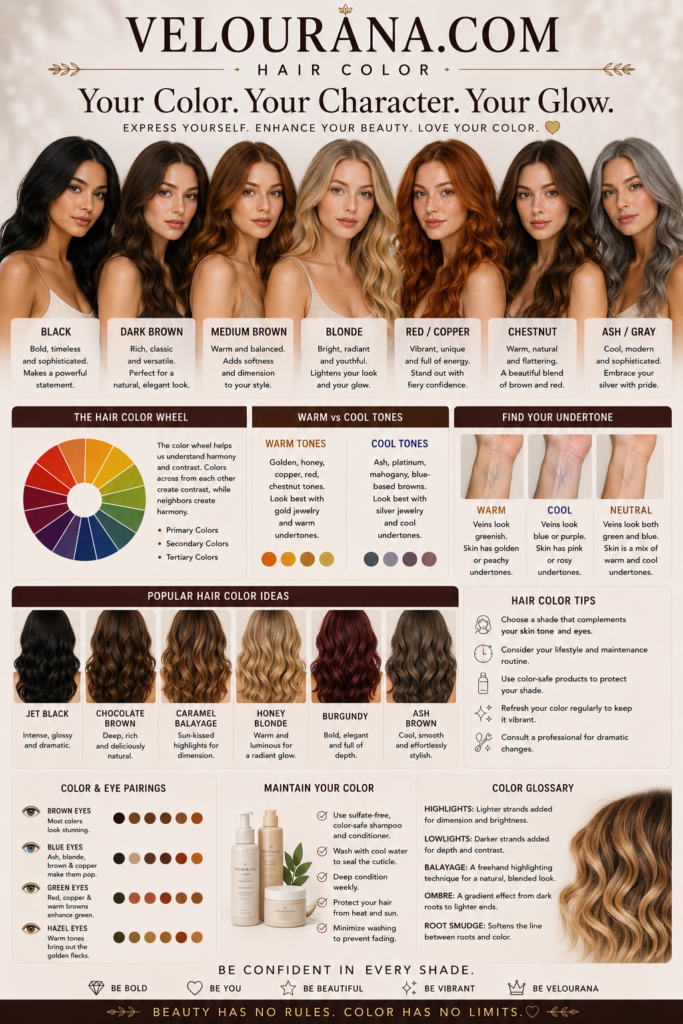
Complementary relationships can create neutralization. Violet can reduce the visual prominence of yellow. Blue can counter orange. Green can counter red. Yet these relationships must be managed carefully because excessive complementary pigment can create dullness or murkiness rather than elegant neutrality.
Fashion color demonstrates the same principles in more visible ways. Yellow-blonde hair combined with blue can appear green because both color influences remain visible. Red over yellow produces warmer orange-red. Pink over golden blonde often becomes peachier than expected.
The more translucent the applied dye, the more visible these interactions become.
Deep highly saturated shades can overpower the base more effectively, while pastels require very precise foundations. This is why very pale creative colors are among the most technically demanding semi-permanent looks. Their softness leaves little room for unwanted underlying pigment.
Achieving silver, icy lavender, baby blue, or pale rose often requires extremely light, carefully neutralized hair. Any remaining gold or orange can substantially change the result.
Deeper shades such as burgundy, dark violet, navy, emerald, or rich copper can tolerate more underlying pigment because their concentration is strong enough to visually dominate a wider range of bases.
Why Semi-Permanent Color Sometimes Appears Patchy
Patchiness is often blamed on poor application, but application technique is only one possible cause. Uneven porosity, mineral buildup, previous dye, inconsistent lightening, and product residue can all affect uptake.
Hair that contains heavy silicone buildup or mineral deposits may resist color in certain sections. Ends that have been repeatedly processed may absorb too much. Previously colored areas may contain residual pigments that interact with the new shade.
Even water composition can influence hair over time. Hard-water minerals can accumulate on the hair surface and affect both color appearance and chemical services. Copper and other mineral deposits are particularly relevant in lightened hair because they can contribute to discoloration and unpredictable reactions.
The visual history of the hair therefore matters as much as its current shade.
Someone who has repeatedly colored, highlighted, toned, and corrected their hair may have several invisible pigment layers beneath the current appearance. Semi-permanent color can reveal these differences because each section absorbs and reflects new pigment differently.
This is another reason strand testing is valuable. It exposes interactions that cannot be predicted from packaging alone.
The Role of Application Technique
While chemistry determines what is possible, application determines how evenly the possible result is achieved.
Semi-permanent color generally performs best when the hair is thoroughly saturated. Direct dyes cannot color areas they do not contact. Thick hair, high-density hair, curls, and long hair require careful sectioning because superficial application can leave internal layers under-saturated.
The viscosity of the formula also affects distribution. Thick cream dyes may provide excellent control but require deliberate working through the hair. More fluid formulas can spread easily but may be harder to place precisely.
The relationship between scalp area and ends must also be considered. Natural roots may resist color more than porous lengths, while older ends may absorb pigment immediately.
Applying the same amount for the same amount of time everywhere can therefore create uneven depth. Professional techniques often compensate for these differences.
Temperature may influence uptake as well. The scalp produces heat, so color near the root area can sometimes behave differently from color on the cooler lengths. Although semi-permanent direct dyes are less dependent on oxidation than permanent formulas, the overall environment still influences penetration and saturation.
Dilution, Pastels, and Pigment Concentration
Many semi-permanent direct dyes can be diluted using compatible conditioners or clear mixing bases, creating softer versions of concentrated shades.
This technique is particularly common for pastels. A strong magenta can become blush pink, violet can become lavender, and blue can become powder blue when pigment concentration is reduced.
However, dilution does not change the base requirement. A pale formula becomes more transparent, not more powerful. If the hair contains significant yellow, orange, or brown pigment, a diluted pastel may be overwhelmed by the base.
This is why pastel color often demands cleaner lightening than intense color. High pigment concentration can mask some unevenness; pale pigment cannot.
Dilution also affects fading. Lower pigment concentration may disappear faster because fewer dye molecules are deposited. Very pale pastel colors can sometimes change noticeably after only a few washes.
This ephemeral quality is part of their appeal, but it also requires realistic expectations. Pastel hair is rarely a static shade. It evolves constantly.
Washing and the Mechanics of Pigment Loss
Water is one of the main forces behind semi-permanent fading. Each wash causes the hair to swell slightly and exposes deposited pigment to cleansing agents, friction, and rinsing.
Shampoo strength matters. Clarifying and deep-cleansing formulas can accelerate pigment removal. Gentler color-care shampoos generally help extend vibrancy.
Water temperature also matters. Hot water tends to increase swelling and can encourage faster pigment release. Cooler or lukewarm washing is often associated with better color retention.
Frequency is equally important. Hair washed daily is exposed to the fading process far more often than hair washed twice weekly.
Styling products can indirectly affect the equation. If heavy buildup requires stronger cleansing, color may fade more quickly. Likewise, frequent sweating, swimming, or exposure to chlorinated water can alter the maintenance pattern.
Color longevity is therefore not only a property of the dye. It is a property of the dye-hair-routine relationship.
Sunlight, Heat, and Environmental Fading
Semi-permanent color does not fade only through shampooing. Ultraviolet exposure can break down artificial pigment and alter the appearance of the hair.
Bright fashion shades may become noticeably duller after significant sun exposure. Red-based colors are often particularly vulnerable to loss of vibrancy, although performance varies by formula.
Heat styling introduces another stressor. Flat irons, curling tools, and high-temperature blow-drying can contribute to dryness and structural wear. Porous hair tends to lose color more easily, so protecting condition indirectly supports color retention.
Environmental factors also influence gloss. A vivid color that remains chemically present can still appear less intense if the cuticle becomes rough and light reflection decreases.
Healthy-looking color therefore depends not only on pigment quantity but also on surface quality. Smooth hair reflects light more evenly, making both natural and artificial color appear richer.
Color-Depositing Care Between Full Applications
Semi-permanent maintenance has expanded beyond traditional dyes. Pigmented conditioners, masks, shampoos, glosses, and treatment creams can gradually restore color between full applications.
These products often contain lower pigment concentrations than dedicated fashion dyes, making them useful for maintenance rather than major transformation.
Their advantage lies in moderation. Instead of allowing color to fade significantly and then performing a complete recoloring session, small amounts of pigment can be introduced periodically.
However, buildup remains possible. Repeatedly using a pigmented conditioner can gradually deepen porous areas, especially the ends. A product marketed as subtle may eventually produce stronger color than expected when used frequently.
The same principle of cumulative deposition applies. Each application adds pigment to whatever remains from previous applications.
Maintenance should therefore respond to the actual condition of the color rather than follow an automatic schedule regardless of appearance.
Semi-Permanent Color as a Bridge Between Salon Services
For professionally colored hair, semi-permanent pigment can function as a bridge between more intensive appointments.
A brunette balayage may benefit from a gloss that restores warmth or coolness. Copper hair can regain saturation. Red lengths can be refreshed without repeatedly processing every section with permanent dye. Fashion colors can be replenished as they fade.
This allows permanent or oxidative services to focus on areas that actually require structural change, such as new growth or significant tonal correction.
The approach can help preserve condition because not every part of the hair needs the same treatment at every appointment.
The roots, mid-lengths, and ends may each require a different strategy. Hair color is most successful when these zones are treated according to their needs rather than automatically receiving identical formulas.
Removal and Transitioning to Another Color
Because semi-permanent color fades, it can create the impression that changing to another shade will always be easy. Sometimes it is. Sometimes residual pigment complicates the transition significantly.
Moving between neighboring color families is generally easier. Pink can move toward purple, purple toward blue, copper toward red, or rose toward warmer peach with relatively harmonious overlap.
Moving across opposing color families can be more complicated. Residual green beneath red, blue beneath orange, or violet beneath yellow can neutralize unpredictably.
Attempting aggressive removal can also damage the hair, particularly when the original base has already been heavily lightened.
Time and controlled fading can sometimes be safer than repeated chemical correction. Professional colorists may use specialized removers, cleansing techniques, or carefully formulated corrective shades depending on the situation.
The assumption that “semi-permanent” means “instantly reversible” is therefore inaccurate. Temporary refers to gradual fading, not guaranteed immediate removal.
Why Semi-Permanent Color Remains One of the Most Creative Hair Tools
The limitations of semi-permanent color are also the source of its creative strength.
Because it primarily deposits pigment, it can refine existing color without necessarily restructuring the entire hair shaft. Because it fades, it allows experimentation. Because it interacts visibly with the underlying base, it can create nuanced tonal effects that feel layered rather than flat.
Its possibilities range from nearly invisible adjustments to extreme visual transformation.
A brunette can gain subtle plum reflections. A blonde can become champagne or rose. Copper can be revived without completely recoloring the hair. Gray can be softened with translucent tonal pigment. Pre-lightened hair can become cobalt, magenta, emerald, violet, peach, silver, or almost any imaginative shade the canvas can support.
The important distinction is that semi-permanent color rewards understanding rather than guesswork.
The best results come from treating the existing hair as part of the formula. Depth, undertone, porosity, previous chemical history, pigment concentration, application method, maintenance habits, and future color plans all influence the outcome.
When those factors are respected, semi-permanent color becomes more than a temporary dye. It becomes a flexible system for changing the way hair reflects color without always demanding a permanent commitment to the shade itself.
That flexibility explains why the category has become central to modern hair coloring. It serves people who want subtle refinement, people who maintain expensive salon color, people experimenting with creative tones, and people who simply want to see themselves differently for a while.
The color may be designed to fade. The creative possibilities are anything but temporary.
THE END VELOURANA
 Discover More From Our Family of Websites
 ZodiacBearing (Astrology, Tarot, Numerology, Angel Numbers & Spiritual Guidance)
 Velourana (Beauty, Makeup, Hair Care, Skincare & Beauty Tips)
 HavenBearing (Home, Living, Organization, Décor & Everyday Inspiration)
 PawBearing (Pet Care, Dog Breeds, Animal Health, Training & Pet Products)
 PsyCatherine (Notes From the Journal of a Psychologist on Real Life)