
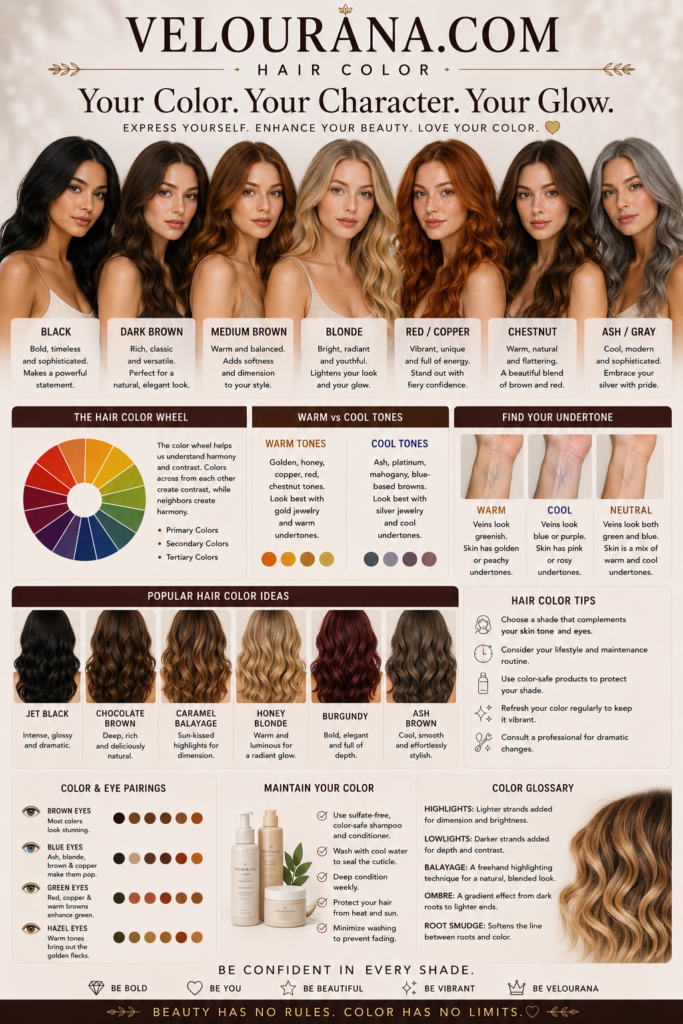
CATEGORY: Demi-Permanent Hair Color
There is a particular kind of hair color that does not announce itself through obvious roots, extreme lightening, or a completely new identity. Instead, the hair simply looks richer. Brunette appears deeper and more dimensional. Blonde looks more expensive and balanced. Copper regains its intensity. Gray strands seem to merge more naturally into the surrounding color. Highlights that once looked too bright become softer and more sophisticated.
Demi-permanent hair color is responsible for many transformations of this kind.
Its strength is not dramatic lift but controlled refinement. By depositing developed color with relatively low oxidative power, demi-permanent formulas can influence the visual character of hair while generally creating less structural alteration than color systems designed for significant permanent change.
This makes demi-permanent color particularly relevant to contemporary coloring, where the objective is often not a single opaque shade but a carefully designed relationship between natural depth, artificial lightness, tonal reflection, and movement.
Understanding demi-permanent color therefore requires looking beyond the familiar promise of color that “gradually washes out.” Its real significance lies in how effectively it can manipulate tone.
Hair Color Is More Than Light or Dark
When people describe a desired hair color, they frequently begin with depth. They want to be blonde, brunette, dark brunette, copper, or something between two familiar levels. Yet depth alone rarely determines whether a color looks beautiful.
Tone gives depth its personality.
Two heads of hair can possess almost identical lightness while looking completely different because one reflects gold and the other reflects ash. A medium brunette may appear chestnut, chocolate, mocha, caramel, neutral brown, smoky brown, mahogany, or copper-brown depending on the pigments influencing its reflection.
Demi-permanent color is particularly effective in this tonal territory because it can place new pigment over an existing foundation without necessarily needing to reconstruct that foundation completely.
Imagine hair that has become slightly orange after previous coloring. Making it dramatically darker may hide the warmth, but it also changes the depth. Lightening it again may be unnecessary and damaging if the existing level is already correct. A carefully formulated demi-permanent color can instead modify the unwanted warmth while preserving much of the existing depth.
The same reasoning applies when blonde appears too yellow, brunette looks faded, copper has lost vibrancy, or highlights appear disconnected from the base.
The solution is not always more chemical alteration. Sometimes it is more intelligent color placement.
The Relationship Between the Starting Canvas and the Final Shade
No demi-permanent formula exists independently from the hair beneath it.
This principle is fundamental because deposited color combines visually with existing pigment. A shade shown on a swatch represents the formula under controlled conditions, not a guarantee of how that formula will appear on every head of hair.
Warm underlying pigment changes the interpretation of cool color. Pale porous blonde can magnify deposited pigments. Dark natural hair may reveal only subtle tonal reflection from a shade that appears vivid on a lighter base.
This is why a demi-permanent color cannot simply be selected according to the photograph on a box or a digital shade reference.
Suppose two people use the same beige-blonde toner. One begins with very pale yellow highlights; the other begins with deeper golden-orange hair. Their results cannot be expected to match because the toner is interacting with two different foundations.
The same phenomenon occurs in brunette coloring. A neutral brown deposited over faded warm hair may produce a balanced brunette, while the identical formula applied over very cool porous hair could appear flatter or darker.
Color formulation is therefore relational.
The desired result must be considered alongside the current depth, undertone, porosity, previous color history, percentage of gray, and distribution of light and dark sections throughout the hair.
Demi-permanent color rewards this kind of analysis because subtle adjustments can have substantial visual consequences.
Why Glossing Has Become Central to Modern Hair Color
The language of hair coloring has increasingly embraced words such as gloss, glaze, toner, refresh, melt, and refinement. Although these terms are not always technically interchangeable and formulations differ among professional systems, they reflect a broader change in aesthetic priorities.
Modern color often aims to preserve dimension.
Traditional all-over coloring can create beautiful results, but repeated opaque application may gradually reduce natural variation, particularly when the same permanent formula is continually pulled through previously colored lengths. Over time, ends can become unnecessarily dark, dense, or saturated.
Demi-permanent color offers another strategy.
Instead of repeatedly treating the entire head as though every section requires the same degree of chemical intervention, permanent color may be reserved for areas that genuinely require its capabilities while demi-permanent formulas refresh previously colored lengths.
This approach recognizes that new growth and older hair are different canvases.
Roots may contain natural pigment and resistant gray. Mid-lengths may contain previous artificial color. Ends may be older, more porous, sun-exposed, heat-styled, or previously highlighted. Treating all three zones identically ignores their structural and color history.
A demi-permanent gloss through the lengths can restore tonal continuity while preserving more of the hair's existing dimension. The result may appear freshly colored without looking heavily recolored.
The visual effect can be especially striking under movement. Hair does not behave like a flat painted surface. Curves, layers, waves, and individual strands reflect light from different angles. When subtle variations of depth remain present, these movements create greater visual richness.
Glossing supports that effect by refining the color without necessarily making every strand identical.
Brunette Hair and the Power of Subtle Tonal Change
Demi-permanent color is particularly expressive on brunette hair because brown is not a single pigment family. Brunette shades contain complex combinations of red, orange, yellow, blue, violet, and neutralizing influences that determine whether the final result appears warm, cool, neutral, rich, muted, golden, smoky, or red-based.
A brunette that feels ordinary may not need to become lighter or darker. Its tonal balance may simply lack definition.
Warmth can create luminosity when deliberately controlled. Chocolate and chestnut shades can give brown hair depth without making it appear black. Caramel and amber reflections can create movement around highlighted sections. Copper-brown can make brunette appear vivid without becoming conventionally red.
Cooler demi-permanent formulations can create an entirely different atmosphere. Ash, mushroom, taupe, mocha, and neutral-cool influences can reduce visible orange or red warmth and produce a more subdued finish.
Yet cool brunette requires restraint.
Over-neutralization can remove the warmth necessary for brown hair to look dimensional and alive. Extremely porous sections can absorb cool pigment disproportionately, producing a result that appears darker or duller than intended. Successful neutralization does not necessarily mean eliminating every warm reflection.
Beautiful brunette often depends on equilibrium.
Demi-permanent color is well suited to finding that equilibrium because it allows the colorist to adjust tonal character without automatically pursuing significant lift.
Red and Copper Reveal the Importance of Maintenance
Red and copper hair demonstrate another strength of demi-permanent coloring: restoration.
Warm artificial pigments can be visually brilliant, but maintaining that brilliance requires attention because vivid red and copper tones often lose intensity as the hair is washed and exposed to environmental stress. A permanent formula applied repeatedly through the lengths is not always necessary simply because the color has faded.
The underlying depth may remain correct while the tonal intensity has diminished.
A demi-permanent refresh can restore warmth and saturation, allowing the color to regain its character without approaching the entire process as a new permanent-color transformation.
This distinction is important because color maintenance and color creation are not always the same procedure.
When natural roots require permanent alteration but the lengths merely need their tone refreshed, different areas can be treated according to different needs. The finished result may look uniform in intention while being technically customized underneath.
Copper especially benefits from nuanced formulation. It can range from delicate strawberry and golden copper to intense orange-copper, auburn, cinnamon, rust, and deep copper-brown. The desired result depends not only on how much red or orange pigment is added but also on the depth and warmth already present.
A translucent refresh can preserve the multidimensional nature of these colors rather than making them excessively dense.
Blonde Toning Is a Study in Precision
Few areas demonstrate the sophistication of demi-permanent color as clearly as blonde toning.
Lightening exposes underlying pigment. The darker the starting hair and the further it is lifted, the more stages of warmth may become visible during the process. A colorist does not simply remove “brown” and discover perfect blonde underneath. The journey through red, orange, gold, yellow, and pale yellow foundations is part of the chemistry of lightening.
Once the correct degree of lightness has been achieved, tone determines the final identity.
A pale yellow foundation can become icy, pearl, creamy, neutral, beige, champagne, or softly golden depending on what is deposited over it. A deeper golden foundation can be transformed toward honey, caramel, beige-gold, or warmer dimensional blonde.
This is why toner cannot compensate indefinitely for insufficient lift.
If the foundation remains strongly orange, applying a very pale icy formula does not magically produce platinum blonde. Neutralization can modify visible warmth, but it cannot create lightness that does not exist.
Conversely, hair can sometimes be light enough but aesthetically disappointing because the tone is wrong. In that situation, additional bleaching may be unnecessary. A tonal adjustment can produce the transformation that further lightening cannot.
Demi-permanent color becomes especially valuable here because it separates two different objectives: creating lightness and designing the final shade.
That separation is one of the foundations of sophisticated blonde work.
Gray Hair Can Be Integrated Rather Than Simply Covered
The conventional approach to gray hair has often focused on coverage. Yet modern coloring increasingly recognizes that gray can be blended, enhanced, softened, highlighted, or incorporated into a dimensional design.
Demi-permanent color expands those possibilities.
Gray hair lacks the same melanin pattern as pigmented hair, which changes both its appearance and its response to artificial color. Some gray strands are fine and receptive, while others can be resistant. The percentage and distribution of gray also vary enormously.
When complete opaque coverage is not necessary, a demi-permanent formula can soften the visual contrast between gray and naturally pigmented strands. Rather than making every hair identical, it can tint the lighter strands enough to create greater harmony.
This can be especially attractive when gray is scattered rather than concentrated.
The lighter strands may take on a translucent tonal effect, behaving almost like naturally occurring highlights. Against a brunette base, they can create dimension rather than appearing as isolated white hairs. Against lighter hair, they may blend even more subtly.
The maintenance experience can also differ from traditional full coverage. Because the original color effect is softer, emerging gray may not create such an abrupt visual boundary.
For people who are gradually embracing natural silver, demi-permanent color can sometimes serve as a transitional tool. Instead of repeatedly restoring an opaque former shade, the color strategy can evolve toward softer blending while natural gray becomes increasingly integrated.
This is less about hiding age and more about controlling contrast.
The Myth That Demi-Permanent Always Means Risk-Free
Because demi-permanent color is commonly described as gentler than permanent color, it can acquire an undeserved reputation for being consequence-free.
It is still hair color.
Oxidative demi-permanent systems involve chemical processing, and hair that has been previously bleached, chemically treated, or heavily damaged can respond unpredictably. Pigment may stain porous areas. A shade can become darker than expected. Cool tones may cling to lightened ends. Repeated darkening can create accumulated artificial pigment that complicates future lightening.
This becomes particularly relevant when someone frequently alternates between dark and light hair.
Depositing brunette over blonde may seem like a low-commitment experiment because the product is labeled demi-permanent. Yet lightened hair can absorb and retain darker pigments strongly. Returning immediately to clean blonde may require professional correction and additional chemical processing.
The degree of commitment therefore depends partly on the starting canvas.
Applying a subtle neutral gloss to healthy medium-brown hair is very different from depositing deep brown over highly porous platinum blonde. Both may technically involve demi-permanent color, but their future implications are not identical.
Allergy considerations also remain relevant. A lower developer strength does not eliminate the possibility of sensitivity to ingredients in oxidative hair color. Manufacturer instructions, patch-testing requirements, and professional safety practices remain important.
“Demi” describes a category of coloring behavior. It does not mean that chemistry has disappeared.
How Hair Condition Shapes Shine and Color Quality
Demi-permanent color is frequently associated with exceptionally glossy results, but the relationship between color and shine deserves closer examination.
Hair appears shiny when its surface reflects light relatively evenly. A smoother cuticle creates more coherent reflection, while rough, damaged surfaces scatter light and can make hair appear dull.
Color influences this perception because richer pigment can create greater visual depth and more defined reflection. A faded, uneven brunette may appear dull even when the hair is not severely damaged; restoring tonal density can immediately make it look more polished.
However, color cannot permanently repair structural damage.
A glossing formula may temporarily improve the appearance and feel of the hair, depending on its conditioning ingredients and the way pigment fills porous areas, but severely compromised hair remains compromised beneath the cosmetic improvement.
This distinction matters because extremely damaged hair should not be repeatedly colored simply in pursuit of shine.
The most luxurious demi-permanent results occur when color design and hair condition support each other. Healthy or carefully maintained hair provides a better surface for reflective color, while appropriate tonal deposition makes that healthy surface visually richer.
The effect is not merely “shiny hair.” It is dimensional reflection.
Demi-Permanent Color as Part of a Long-Term Hair Strategy
The most intelligent way to think about demi-permanent color is not as an isolated appointment but as one component of a longer color journey.
Hair grows continuously while the lengths preserve a record of previous decisions. A section near the ends may have been highlighted years earlier, colored darker later, toned several times, exposed to sun, and subjected to hundreds of washes and heat-styling sessions. New growth at the scalp has none of that history.
Every future color decision interacts with this timeline.
Demi-permanent formulas can help manage the transition between these different generations of hair. They can refresh older pigment, refine recently lightened sections, soften regrowth contrast, or adjust tone as preferences change.
They are particularly useful in color plans designed around flexibility. Someone may maintain a natural brunette base while changing seasonal tonal direction, moving from warmer caramel in one period to more neutral beige-brown later. Blonde can shift from summer brightness toward deeper autumnal beige without necessarily abandoning the underlying highlights. Copper can become richer or softer as desired.
The possibilities are broad because tonal change does not always require structural reinvention.
That flexibility is one reason demi-permanent color has become so central to modern salon work. Contemporary hair color is increasingly customized rather than binary. A person does not have to choose only between untouched natural hair and permanent all-over dye. Different areas can receive different treatments according to what they actually need.
The Quiet Sophistication of Color That Works With the Hair
Demi-permanent hair color represents a broader change in the philosophy of beauty: transformation does not have to mean maximum intervention.
Sometimes the most successful color is the one that preserves what is already beautiful while correcting what has become unbalanced.
A brunette does not always need lighter highlights to gain dimension; richer tonal reflection may be enough. Blonde does not always need another bleaching session; its existing lightness may simply need refinement. Gray does not always require complete concealment; reduced contrast may create a more elegant result. Copper does not need to be recreated from the beginning every time it fades; its tonal intensity can be restored.
These are subtle distinctions, but subtlety is precisely where demi-permanent color excels.
Its limitations are also part of its identity. Because it is primarily a depositing technology, it asks the colorist and wearer to respect the existing canvas. It cannot create every transformation, and it should not be expected to. When substantial lightening, strong resistant-gray coverage, or major corrective work is required, other techniques may be necessary.
Used for the purpose it performs best, however, demi-permanent color becomes remarkably sophisticated.
It can deepen without making the result look unnecessarily heavy, cool without stripping away every trace of warmth, warm without automatically becoming brassy, blend gray without making the hair look uniformly painted, and refine blonde without treating lightening and toning as the same process.
The final beauty is often difficult to identify as “color” at all.
The hair simply appears more harmonious: richer where it had faded, softer where contrast had become harsh, more dimensional where the shade had become flat, and more intentional in the way it responds to light.
That is the distinctive power of demi-permanent hair color. It does not need to dominate the hair to transform it. Its artistry lies in changing tone, depth, and reflection with enough restraint that the finished color still looks as though it belongs to the person wearing it.
THE END VELOURANA
 Discover More From Our Family of Websites
 ZodiacBearing (Astrology, Tarot, Numerology, Angel Numbers & Spiritual Guidance)
 Velourana (Beauty, Makeup, Hair Care, Skincare & Beauty Tips)
 HavenBearing (Home, Living, Organization, Décor & Everyday Inspiration)
 PawBearing (Pet Care, Dog Breeds, Animal Health, Training & Pet Products)
 PsyCatherine (Notes From the Journal of a Psychologist on Real Life)

