
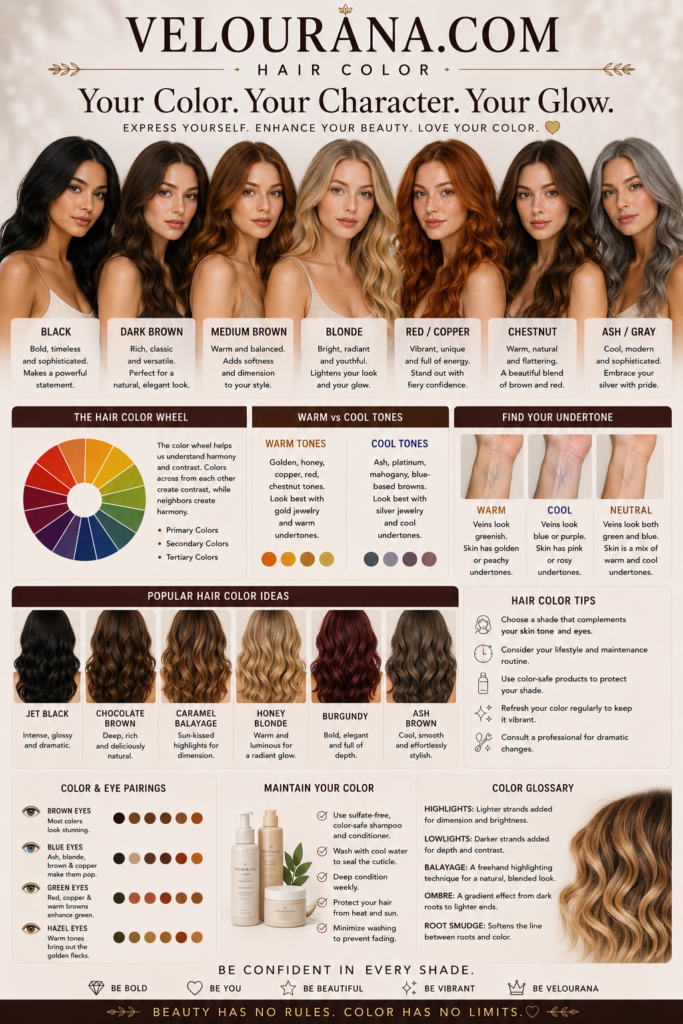
CATEGORY: Color Maintenance
Freshly colored hair has a particular kind of visual clarity. The shade looks deliberate, highlights seem precisely placed, darker tones have dimension rather than heaviness, and the surface of the hair reflects light in a way that makes the entire color appear more sophisticated. Yet permanent, demi-permanent, semi-permanent, and lightened hair are not static materials. From the moment a color service is completed, the hair begins interacting with water, cleansing agents, heat, ultraviolet radiation, minerals, styling products, environmental pollution, and the natural oils produced by the scalp. Color maintenance is therefore less about trying to freeze hair at the exact appearance it had on coloring day and more about managing the gradual changes that determine how beautifully it evolves.
The most successful maintenance routines begin with an understanding of what is actually changing. Some colors lose artificial pigment. Others expose increasingly warm underlying tones. Blondes may become dull because of mineral deposits rather than because their toner has simply disappeared. Brunettes can gradually look warmer, flatter, or less reflective. Reds may remain attractive while becoming noticeably less saturated. Fashion shades can change character after only a few washes because their pigments often sit relatively close to the hair's surface.
Maintaining color well requires a balance between preservation and proper hair care. Avoiding shampoo indefinitely is not the answer, nor is continuously depositing more pigment. Hair still needs appropriate cleansing, conditioning, protection, and occasional removal of buildup. The goal is to create conditions in which the chosen shade remains visually coherent while the fiber itself stays smooth enough to display that color beautifully.
Why Beautiful Color Depends on More Than Pigment
Hair color is perceived through a combination of hue, depth, saturation, contrast, and reflection. This is why two heads of hair containing similar pigments can look dramatically different. When the cuticle lies relatively smoothly and the hair is adequately conditioned, light reflects from the surface more evenly. The result is often interpreted as gloss, richness, and dimensional color. When the surface becomes rough, dehydrated, coated with residue, or heavily weathered, the same basic shade may appear duller or less refined.
Chemical coloring can alter this surface. Permanent color generally involves opening the cuticle sufficiently for oxidative processes to occur within the fiber, while lightening removes natural pigment and can leave hair considerably more porous. Repeated chemical services, especially when combined with frequent heat styling or mechanical stress, may create sections of hair that absorb and release substances differently from healthier areas. Ends are often the clearest example because they are older and have accumulated more exposure.
Porosity becomes particularly important in color maintenance because porous hair can accept pigment rapidly while also losing certain color molecules more readily. This explains why damaged or highly lightened hair sometimes appears intensely toned immediately after a service but changes quickly afterward. It can also explain uneven fading, with some sections retaining a muddy or overly cool cast while others reveal warmth.
A maintenance routine therefore has two interconnected responsibilities. It should minimize unnecessary pigment loss, but it should also support the physical condition of the hair. Protecting color while allowing the fiber to become increasingly dry and fragile eventually defeats the purpose. Healthy-looking color requires a surface capable of reflecting light and enough structural integrity for the hair to move naturally.
This is also why gloss treatments, conditioning masks, leave-in products, and thoughtful styling can make color appear refreshed even when they do not dramatically alter its pigment. Improving smoothness and reflection can restore visual richness. Color maintenance is partly chemistry, but it is equally an exercise in preserving the optical qualities that make a shade look expensive and intentional.
Washing Without Accelerating the Life Cycle of the Color
Water is one of the most underestimated influences on colored hair. Every wash causes the fiber to swell to some degree, and repeated wetting and drying contributes to the gradual weathering of the hair. Cleansing then adds another variable because shampoos differ considerably in their detergent systems, concentration, pH, and ability to remove oils, styling polymers, mineral residue, and loosely held color.
For this reason, successful color maintenance does not depend on a simplistic rule that colored hair should rarely be washed. Scalp hygiene, lifestyle, hair texture, oil production, exercise, product use, and environmental exposure all affect an appropriate cleansing rhythm. Someone with an oily scalp who exercises daily has different needs from someone with dry, coily, chemically treated hair. Forcing both into the same wash schedule makes little sense.
What matters is avoiding unnecessary cleansing while making the cleansing that is necessary as efficient and gentle as possible. A well-formulated shampoo intended for color-treated hair can remove scalp oils and ordinary residue without producing the excessively stripped sensation associated with harsher cleansing. Concentrating shampoo primarily where oil and buildup accumulate rather than aggressively scrubbing the full length can also reduce friction on vulnerable ends.
Water temperature deserves similar perspective. Very hot water can increase the sensation of dryness and may contribute to greater swelling and surface disruption, particularly in already porous hair. Comfortable lukewarm water is generally a more practical choice. There is little benefit in turning hair washing into an endurance test with extremely cold water. Sustainable maintenance habits are more valuable than dramatic rituals that are abandoned after several days.
Immediately after cleansing, conditioning becomes part of color preservation rather than an optional cosmetic extra. Conditioners reduce friction, improve manageability, and help smooth the surface. This matters when detangling because wet hair can be vulnerable to mechanical damage. Repeated rough handling gradually compromises the ends, and damaged ends rarely display color with the same richness as smoother sections.
Dry shampoo can sometimes extend the interval between wet washes, but it should not become a substitute for cleansing the scalp indefinitely. Powders, starches, oils, hairspray, texture products, and environmental debris can accumulate. When excessive residue eventually requires a much stronger cleansing session, the supposed color-preservation strategy may become counterproductive. Maintenance works best when it is moderate rather than extreme.
The ideal wash routine is therefore responsive. Hair should be cleansed when it needs cleansing, using products and techniques appropriate to its condition. The objective is not to avoid water at all costs. It is to prevent unnecessary pigment loss while keeping both scalp and hair in a condition that supports attractive color over time.
Moisture, Conditioning, and the Difference Between Soft Hair and Coated Hair
Colored hair frequently benefits from increased conditioning, especially when the service involved substantial lightening. However, more product does not automatically create healthier-looking hair. The purpose of conditioning is to improve lubrication, softness, flexibility, detangling, and surface smoothness. When products accumulate beyond what the hair needs, they can instead reduce movement and brightness.
A useful color-maintenance routine distinguishes between genuine conditioning needs and the temptation to continuously layer treatments. Fine colored hair may become limp when subjected to rich masks at every wash, while coarse or highly porous hair may respond beautifully to more substantial formulas. Hair density, texture, damage level, climate, and styling habits all influence how much conditioning is appropriate.
Deep-conditioning treatments can be particularly valuable after lightening because bleached hair often experiences increased porosity and roughness. A mask that improves slip can reduce the force required during detangling, indirectly protecting fragile colored lengths from breakage. Some formulas emphasize emollients and conditioning agents, while others include hydrolyzed proteins or bond-supporting technologies intended to improve the feel or resilience of compromised hair.
Protein-containing products require nuance. Damaged hair can benefit from certain protein-based formulas, but repeatedly adding highly protein-focused treatments is not universally necessary. Hair that becomes stiff, rough, or difficult to manipulate may need a different balance. Color maintenance should respond to the hair's behavior rather than to the assumption that every chemically treated strand requires the strongest available reconstruction treatment.
Leave-in conditioners can provide another protective layer, particularly on mid-lengths and ends. They may improve combability and reduce friction from clothing, brushing, and styling. When combined with heat protection, they can also simplify the routine by addressing several sources of daily stress simultaneously.
The key is preserving movement. Beautiful color should not appear buried beneath layers of waxy residue or heavy oils. Excessive coating can make highlights look less distinct and darker shades less reflective. If hair becomes strangely dull despite extensive conditioning, buildup may be contributing to the problem.
Occasional deeper cleansing may therefore be necessary even for colored hair. The frequency depends on product use and water conditions, and aggressive clarifying immediately after a delicate toning service may accelerate unwanted fading. Nevertheless, permanent avoidance of effective cleansing is not a sensible solution. A clean, conditioned surface often reflects light better than one covered with weeks of residue.
Heat Styling and the Gradual Erosion of Color Quality
Heat can influence both the physical condition of colored hair and the appearance of its shade. Blow-dryers, straighteners, curling irons, hot brushes, and other thermal tools expose the fiber to temperatures far beyond ordinary environmental conditions. When heat styling is frequent and intense, the resulting dryness and surface damage can make color look progressively less polished.
This effect is especially visible on lightened hair. Bleached fibers may already have reduced structural resilience, and repeated high-temperature styling can increase brittleness. Even when the pigment itself remains relatively stable, split ends and roughened lengths scatter light irregularly, making blondes appear less luminous and brunettes less glossy.
Heat protection should therefore be viewed as a routine component of color maintenance. These products cannot make unlimited heat harmless, but well-designed thermal protectants can reduce some of the stress associated with styling. Their effectiveness is greatest when accompanied by sensible temperature control.
The highest temperature setting is rarely automatically the best setting. Fine, damaged, or highly lightened hair generally does not require the same temperature that might be used on very resistant, coarse hair. Styling in smaller, controlled sections and allowing the tool to work efficiently can be preferable to repeatedly passing extreme heat over the same strands.
Blow-drying technique matters as well. Removing excess water gently before introducing concentrated heat can shorten drying time. Allowing hair to partially air-dry may be useful for some textures, although leaving vulnerable hair wet for extremely long periods is not necessarily ideal either because prolonged swelling has its own implications. Again, the most useful approach is balanced rather than absolute.
Repeated heat also interacts with temporary color-depositing products. Some toners and vivid shades can shift more quickly when hair is subjected to frequent high-temperature styling. A color that initially seemed stable may appear warmer or less saturated after several weeks of intensive heat use. When unexplained fading occurs, the styling routine deserves examination alongside the shampoo.
Reducing unnecessary thermal exposure often produces a surprisingly visible improvement. Hair retains more flexibility, the ends remain smoother, and the overall color appears more coherent. In this sense, heat management extends the life of the color service by protecting the canvas on which that color is seen.
Sunlight, Swimming, Water Quality, and the Environment Around the Hair
Hair color does not fade only in the shower. Ultraviolet exposure can contribute to changes in both natural and artificial pigments, while prolonged sun exposure can weather the hair fiber itself. During periods of intense outdoor activity, color may gradually lose saturation or develop a drier appearance even when the home-care routine has not changed.
Physical protection can be particularly effective because it reduces direct exposure rather than attempting to repair its consequences later. Hats, scarves, and shade are practical options during prolonged periods outdoors. Hair products marketed with UV-protective claims may also form part of a broader strategy, but they should not encourage the assumption that hair has become completely immune to sunlight.
Swimming introduces different challenges. Chlorinated pools can leave hair feeling dry and may contribute to undesirable color changes, while seawater combines salt exposure with sun and repeated wetting. Light blondes are especially associated with the possibility of greenish discoloration after pool exposure, although the mechanism often involves metals such as copper in the water rather than chlorine simply "turning hair green."
Pre-wetting the hair with clean water before swimming can reduce the amount of pool or seawater it immediately absorbs. Applying an appropriate leave-in conditioner may provide additional lubrication and protection. After swimming, rinsing thoroughly helps remove residues before they remain on the hair for extended periods.
Water quality at home can be equally influential. Hard water contains dissolved minerals that may accumulate on the hair over time. This buildup can interfere with shine, alter the apparent tone, make hair feel rough, and complicate the performance of shampoos and conditioners. Blondes may notice dullness or unusual warmth, while darker colors can lose some of their reflective clarity.
When mineral accumulation is significant, simply adding more toner may not solve the problem. In some cases, deposits should be addressed with a product formulated to remove mineral or metal buildup. Because heavily lightened hair can be delicate, particularly strong treatments should be selected and used carefully.
Environmental pollution and airborne particles can also accumulate on the hair, especially when styling products create a surface to which debris can adhere. Urban exposure, frequent exercise, and heavy product use may therefore change cleansing requirements. Color maintenance cannot be separated entirely from lifestyle. The routine needs to account for what the hair encounters every day.
Toners, Glosses, and Color-Depositing Products as Maintenance Tools
Eventually, most artificial colors change. This does not mean the original service failed. Pigment loss and tonal evolution are normal parts of wearing colored hair. The important question is how to correct those changes without unnecessarily repeating a more aggressive chemical process.
Toners and glosses are valuable because they can adjust the visible tone and refresh shine without always requiring the same degree of alteration involved in the original coloring service. A blonde that has become too yellow may benefit from a carefully chosen violet-based toning approach. A brunette that has developed excessive orange warmth may require a different corrective tone. Red hair can be refreshed with compatible red or copper pigments when saturation declines.
Color-depositing shampoos, conditioners, and masks bring some of this maintenance into the home, but they require restraint. Pigment is not intelligent. It deposits according to the formula and the condition of the hair, and porous areas may absorb considerably more than healthier sections. This is why an apparently simple purple conditioner can produce uneven lavender or gray patches on very porous blonde ends when overused.
The purpose of toning is balance, not maximum coolness. Constantly neutralizing every trace of warmth can leave hair looking flat, murky, or darker than intended. Natural-looking dimensional color usually contains a controlled relationship between warm and cool elements. Even platinum shades need enough clarity and luminosity to avoid appearing lifeless.
Home pigment products are most useful when chosen according to the actual problem. Yellow and orange are not interchangeable forms of brassiness, and a product designed to counter one may be poorly suited to the other. Likewise, a faded copper shade does not necessarily need neutralization; it may need restoration of the very warmth that gives the color its identity.
Professional gloss appointments can be useful when the overall color remains structurally correct but needs tonal refinement and renewed shine. Rather than repeatedly applying permanent color through previously colored lengths, a stylist may use a gentler approach appropriate to the desired result and the condition of the hair.
This distinction is central to sophisticated color maintenance. Refresh only what has actually changed. Roots, mid-lengths, and ends may have completely different needs. Treating the entire head identically at every appointment can create unnecessary buildup or damage.
Root Growth, Fading, and Learning to Maintain Different Zones Differently
One of the most important developments in modern color care is the recognition that hair is not uniform from scalp to ends. New growth is relatively young and may contain untouched natural pigment. Mid-lengths have experienced previous chemical services and months or years of environmental exposure. Ends are the oldest and frequently the most porous.
When roots grow in, the instinct may be to recolor everything. Yet if the lengths remain close to the desired shade, repeatedly applying permanent color through them may be unnecessary. This is particularly relevant to darker permanent colors, where repeated overlap can produce excessive pigment accumulation and make the ends appear increasingly dense or opaque.
Blonde maintenance presents a different challenge. Lightening new growth requires careful placement to avoid repeatedly bleaching already lightened hair. Overlap can contribute to breakage, especially around delicate areas such as the hairline. Professional retouching is valuable not simply because of color matching but because precise application protects the integrity of previously processed sections.
Highlights, balayage, and dimensional techniques often allow more graceful regrowth because the color does not begin at one perfectly solid line. Their maintenance can therefore focus on tonal refreshes and strategic lightening rather than frequent complete services. The ideal schedule depends on the technique, contrast level, natural base, and personal tolerance for visible regrowth.
Gray coverage creates another maintenance pattern. When the contrast between natural regrowth and artificial color is strong, roots may become noticeable relatively quickly. Some people prefer frequent professional retouches, while others use temporary root concealers between appointments. These cosmetic products can reduce visible contrast without requiring permanent chemical processing every time a few millimeters of regrowth appear.
Understanding zones also improves home care. Fragile ends may require richer conditioning than the roots. The scalp may need thorough cleansing while the lengths need minimal manipulation. Pigment-depositing treatments may be required primarily through faded mid-lengths rather than on freshly colored roots.
The more precisely each area is treated, the easier it becomes to maintain sophisticated color without accumulating unnecessary damage.
When Color Maintenance Becomes Hair-Health Maintenance
There is a point at which adding more pigment cannot solve the visual problem. If the hair has become severely dry, fragile, gummy when wet, excessively tangled, or prone to snapping, the priority should shift from preserving the exact shade to protecting the fiber.
This can be difficult when someone is committed to a very light blonde or another high-maintenance transformation. The desired color may require repeated processing, but the hair has finite tolerance. Continuing to lighten compromised sections simply because the calendar says it is time for another appointment can lead to a result that is technically lighter yet visually poorer.
Haircuts and trims become part of color maintenance for the same reason. Transparent, splitting, heavily weathered ends can make otherwise beautiful color appear unfinished. Removing damaged ends may increase the visual density of the hair and allow the remaining color to look richer.
Breakage can also alter color distribution. Highlights that were once continuous may disappear through the lower lengths as damaged strands snap. Dimensional patterns become less visible, and the hair may appear uneven. Protecting structural integrity therefore preserves not only length but the architecture of the color itself.
Chemical services should also be considered together. Permanent color, bleach, relaxers, perms, keratin-type smoothing services, and other treatments can interact with the hair's existing condition. A complete service history helps a competent professional determine what is reasonable. Unknown previous treatments or home experimentation can make future processing less predictable.
Maintenance becomes especially important during major color transitions. Moving from very dark artificial color to blonde, for example, is rarely a simple matter of applying a lighter shade. Existing artificial pigment must be managed, and multiple stages may be necessary. Trying to compress a long corrective process into one aggressive session can compromise the hair.
Patience is therefore an aesthetic tool. Allowing color to evolve through carefully planned stages often produces a better final result than pursuing immediate perfection at the expense of the fiber.
Building a Color Routine That Can Actually Be Maintained
The most effective color-care routine is not necessarily the one containing the greatest number of products. It is the one that addresses the genuine causes of fading and damage without becoming so complicated that it cannot be followed consistently.
A person who washes frequently may benefit most from concentrating on a suitable cleanser, effective conditioner, and heat protection. Someone with highly lightened hair may need more intensive conditioning and particularly careful thermal styling. A vivid-color wearer may prioritize reduced unnecessary washing and strategic pigment refreshes. Someone living with hard water may find that managing mineral buildup changes the appearance of the color more dramatically than buying another shine serum.
Consistency matters because most color deterioration is cumulative. One excessively hot styling session may not destroy a color, just as one careful wash will not preserve it forever. The visible result comes from repeated habits over weeks and months.
It is equally useful to know when not to intervene. Color can change slightly without becoming unattractive. A beige blonde may gradually become warmer and still remain flattering. A copper shade may soften into a natural strawberry tone. A brunette gloss may lose some initial intensity while retaining beautiful dimension. Constant correction can become a cycle of unnecessary processing.
Maintenance should preserve the intention of the color rather than demand that it remain frozen in its first-day state. Hair is a living part of personal appearance even though the visible fiber itself is biologically nonliving. It moves, grows, weathers, reflects different light, and changes with seasons and routines.
When maintenance respects that reality, color can remain attractive far beyond the immediate post-salon period. Cleanse according to genuine need, condition according to the fiber's condition, manage heat intelligently, protect against environmental stress, refresh pigment selectively, and avoid unnecessary chemical overlap. These principles create something more valuable than temporary color perfection: hair that continues to look deliberate, healthy, and beautifully cared for as the shade evolves.
THE END VELOURANA
 Discover More From Our Family of Websites
 ZodiacBearing (Astrology, Tarot, Numerology, Angel Numbers & Spiritual Guidance)
 Velourana (Beauty, Makeup, Hair Care, Skincare & Beauty Tips)
 HavenBearing (Home, Living, Organization, Décor & Everyday Inspiration)
 PawBearing (Pet Care, Dog Breeds, Animal Health, Training & Pet Products)
 PsyCatherine (Notes From the Journal of a Psychologist on Real Life)

