
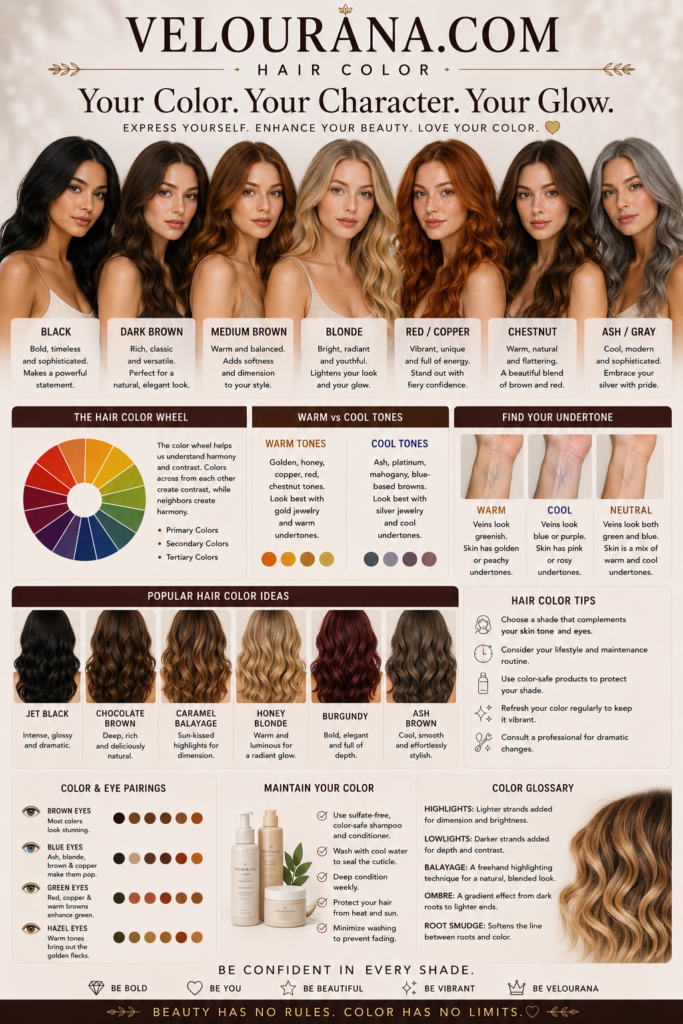
CATEGORY: Color Fading
Hair color rarely vanishes in a single obvious moment. More often, the change appears gradually in the mirror. The brunette that once looked cool and polished begins reflecting more warmth. A copper loses some of its luminous intensity. Blonde remains light but no longer has the same clean tonal balance. Burgundy becomes softer, while a pastel shade seems to disappear almost between washes.
This gradual transformation is color fading, but the term can be misleading because it suggests one simple process with one simple solution. In reality, fading can involve loss of deposited pigment, oxidation, exposure of underlying warmth, changes in surface condition, mineral accumulation, ultraviolet damage, repeated wetting, cleansing, and the cumulative effects of styling.
For this reason, the best anti-fade routine is not necessarily the one containing the greatest number of products labeled "color safe." It is the one that understands why a particular person's color is changing and addresses the relevant causes without creating new problems.
Hair color maintenance begins with an important reality: artificial color lives on a changing biological fiber. The visible lengths are exposed every day to water, friction, heat, light, cosmetics, and the environment. The longer those lengths remain on the head, the greater their history of accumulated wear. Preserving color therefore requires care not only for pigment but also for the structure carrying that pigment.
Color Retention Begins Before the First Shampoo
When people experience rapid fading, the shampoo is often blamed immediately. Sometimes cleansing habits are contributing, but color retention begins much earlier than the first wash after coloring.
The condition of the hair before the color is applied has enormous influence over the result. Virgin hair, previously colored hair, bleached sections, weathered ends, and areas damaged by repeated heat can all respond differently to the same formula. This is why professional color correction often requires more than simply choosing the desired shade from a chart.
A strand that has been repeatedly lightened may be considerably more porous than newer growth. When color is applied, that porous area can take pigment differently. It may initially look darker, brighter, cooler, or more saturated. Yet because the fiber is compromised, its ability to maintain an even appearance can also be reduced.
This creates the paradox of porous hair: it can sometimes appear to "grab" color exceptionally well while still fading poorly.
The starting base matters just as much. Artificial color is perceived in combination with the pigments and undertones already present in the hair. If a cool result depends on blue, violet, or other balancing tones to control underlying warmth, losing part of that artificial tone can dramatically alter the final appearance even when considerable dye remains.
A person may describe this as the brown "turning orange," but the process may be better understood as warm underlying tones becoming more visually dominant as the cosmetic balance changes.
The same principle is especially important in blonde hair. Lightening does not create a perfectly neutral white canvas at every level. Warm undertones are encountered as natural melanin is oxidized. Toners and color formulas refine those undertones into the desired blonde. When that tonal refinement fades, warmth can become visible again.
A durable color strategy therefore begins with realistic expectations about the canvas. Very compromised hair may not be able to support endless dramatic transformations while maintaining excellent feel, shine, and predictable pigment retention. Sometimes improving longevity requires reducing chemical intensity rather than adding more maintenance afterward.
The Wash Routine Is About More Than Choosing a Color-Safe Shampoo
Because shampooing is closely associated with visible dye running down the drain, washing receives enormous attention in discussions about fading. It certainly matters, but focusing only on the words printed on the shampoo bottle misses much of the picture.
Every wetting cycle affects hair physically. Hair absorbs water and swells, then contracts as it dries. Repeated cycles contribute to weathering over time. Cleansing also removes oils and residues from the scalp and fiber. Depending on the type of artificial color and the hair's condition, pigment loss can accompany this process.
The practical response is not to fear washing. Scalp cleanliness still matters, and washing frequency should reflect oil production, exercise, styling habits, texture, density, and personal comfort. A person whose scalp becomes oily quickly may need a different schedule from someone with very dry, tightly curled hair.
What can often be reduced is unnecessary washing of the lengths themselves. Shampoo generally needs its greatest cleansing action at the scalp, where sebum, sweat, skin debris, and styling residue accumulate. Vigorously rubbing fragile colored ends during every shampoo can increase tangling and friction without significantly improving scalp cleansing.
Water temperature deserves similar moderation. Very hot showers may feel pleasant, but processed hair frequently benefits from avoiding excessive heat during cleansing. Lukewarm water provides a sensible balance between comfort and gentleness. Extremely cold rinses are not required to preserve color, and the idea that cold water permanently locks the cuticle closed oversimplifies hair structure.
Conditioning after shampooing is not merely about softness. A good conditioner improves lubrication and reduces friction between fibers. Colored hair that detangles easily requires less aggressive combing, pulling, and repeated manipulation. Over months, those seemingly small mechanical differences can influence how polished the hair remains.
Drying technique also belongs to the wash routine. Roughly rubbing wet hair with a towel creates friction at a time when the fiber is swollen and vulnerable. Blotting or gently wrapping the hair is generally less abrasive. The objective is not ritualistic delicacy but reducing repeated stresses that offer no styling or cleansing benefit.
The Hidden Relationship Between Shine and Perceived Fading
Not every complaint about faded color represents the same amount of actual pigment loss. Sometimes hair appears faded because its surface no longer reflects light as effectively.
Freshly colored hair often looks exceptionally shiny. Professional finishing, conditioning agents in the color service, smoother styling, and newly deposited tone can create strong visual depth. As the weeks pass, product buildup, mineral deposits, dryness, cuticle wear, and mechanical damage can reduce that reflective quality.
A dark brunette illustrates this clearly. Rich brown hair depends heavily on shine for visual depth. When the surface becomes rough and matte, the shade can look lighter and less saturated even if a significant amount of artificial pigment remains.
The same effect occurs with reds. Copper and auburn shades come alive through reflected light. When the fiber becomes dull, the color may appear less vibrant before it has actually lost all of its chromatic intensity.
This is why conditioning belongs at the center of anti-fade care. It does not preserve color simply by attempting to trap pigment. It improves the optical and tactile properties of the hair itself.
Leave-in conditioners and smoothing products may also be useful when appropriate to the texture. Fine hair may need very lightweight formulas, while coarse or curly hair can often tolerate richer products. The ideal amount is enough to improve manageability and reduce friction without leaving the hair coated, limp, or difficult to style.
Occasional buildup removal can also improve appearance when residue has become substantial. The contradiction is that stronger cleansing may temporarily increase pigment loss in some colored hair. Therefore clarifying should solve an actual problem rather than become an automatic ritual performed according to a rigid calendar.
If hair feels coated, unusually dull, heavy, or resistant to normal styling, buildup may be contributing. If the hair is clean, soft, and behaving well, aggressive cleansing merely because a certain number of weeks have passed may provide little benefit.
A good color routine distinguishes between pigment fading and loss of brilliance. Sometimes the solution is tonal refreshment. Sometimes it is better conditioning. Sometimes it is removing deposits. Treating all three situations as though they were identical encourages unnecessary products and potentially unnecessary chemical processing.
Heat Styling Can Change the Way Color Ages
A sophisticated anti-fade routine cannot ignore heat. Hair may be washed two or three times during a week but exposed to a blow-dryer, straightener, curling iron, or heated brush far more often. For someone who styles daily, thermal exposure can become one of the dominant stresses in the routine.
High temperatures affect the physical condition of hair, particularly when tools are used excessively or repeatedly on the same sections. Chemically processed hair may already have reduced tolerance for additional stress. Over time, increasing roughness, split ends, breakage, and loss of flexibility can make the color look progressively less refined.
The correct response is not necessarily abandoning heat styling. For many people, heat is an important part of achieving the hairstyle they actually want to wear. A routine that preserves pigment but makes the desired style impossible is unlikely to be sustainable.
Instead, thermal styling should become more efficient.
Heat protectants can reduce certain forms of thermal damage and improve slip, but they should not be interpreted as permission to use the maximum temperature available. The appropriate tool temperature depends on the hair's condition, texture, thickness, and the styling task. Fragile, bleached, or highly processed hair generally warrants greater caution.
Repeated passes are another overlooked problem. A tool used at a moderate temperature efficiently can sometimes be less stressful than repeatedly passing high heat over the same strand because the sectioning or technique is poor.
Blow-drying also benefits from controlled technique. Holding concentrated heat against one small area for prolonged periods is unnecessary. Keeping the airflow moving and avoiding excessive temperature can achieve a polished result with less stress.
For colored hair, thermal management serves two aesthetic purposes simultaneously. It helps protect the structural quality of the fiber, and it helps preserve the smooth reflective surface that makes color appear saturated and expensive.
Sun, Swimming, and the Seasons of Color Fading
Many people discover that their hair color behaves differently in summer. This is not imagination. Increased ultraviolet exposure, swimming, frequent washing, heat, humidity, salt water, and outdoor activity can create a very different environment for colored hair.
Ultraviolet radiation contributes to photochemical changes in hair. Natural and artificial pigments can be affected, while the structural components of the fiber can also experience degradation. Prolonged exposure may therefore alter both shade and texture.
The visual consequences vary. Dark shades may appear lighter or warmer. Reds can lose intensity. Blonde can become warmer or duller. Already porous hair may feel increasingly dry, making whatever color remains look less luminous.
Physical sun protection is particularly valuable because it does not depend on repeatedly coating the hair with more cosmetics. A hat can reduce direct exposure substantially while also protecting the scalp from sunlight. Hair products promoted for UV protection can form part of a broader routine, but they should not create false confidence about protecting exposed skin.
Swimming creates another distinctive environment. Pool chemicals, dissolved metals, and repeated wetting can influence lightened or porous hair. The well-known greenish cast that can sometimes develop in light hair around swimming pools is associated particularly with metals such as copper rather than simply with chlorine functioning as a green dye.
Salt water presents different challenges, especially when combined with strong sunlight and repeated drying. Hair may feel increasingly rough and tangled after long beach days, making conditioning and gentle detangling particularly important.
Seasonal color care therefore benefits from adaptation. Someone who spends winter mostly indoors may need relatively little environmental protection, while the same person spending August swimming daily in intense sun has completely different exposure.
Anti-fade care works best when it changes with real life rather than remaining identical throughout the year.
Toners, Pigmented Conditioners, and the Art of Refreshing Rather Than Recoloring
One of the most useful developments in modern color maintenance is the availability of products that refresh tone between full coloring services. Pigmented conditioners, masks, glosses, and toning products can modify the visible shade without necessarily repeating the entire original coloring process.
Used intelligently, these products can extend the attractive phase of a color considerably.
The important word is intelligently.
A toning product should have a clear purpose. Purple pigments are commonly used to reduce the visual impression of yellow in appropriate blonde, silver, or lightened hair. Blue-toned products can be useful against certain orange appearances. Copper and red depositing products can replenish warmth and saturation. Brunette glosses can add tonal depth.
But color theory does not mean that every person with blonde hair needs purple shampoo constantly or every brunette experiencing warmth should saturate the hair with blue pigment.
Hair color exists on a continuum. A small amount of warmth can make a complexion look vibrant and a color dimensional. Excessive neutralization can make some shades look flat, gray, murky, or darker than intended. Porous sections can also absorb corrective pigment more intensely than healthier areas, producing unevenness.
Pigmented shampoo can be especially potent because cleansing and pigment deposition occur simultaneously. Some people obtain better control by using a toning product only when the unwanted tone actually becomes visible rather than incorporating it into every wash automatically.
Color-depositing conditioners and masks can offer a more conditioning-focused way to refresh certain shades, but they still contain pigment. Gloves, careful application, and attention to staining may be necessary depending on the formula. More importantly, repeated use can create pigment accumulation that influences future coloring.
A professional colorist should know about home-depositing products before performing major color changes. Hair that appears faded may still contain artificial pigment capable of affecting lightening or corrective work.
The goal of refreshing is to extend the life of a successful color, not to create layers of uncontrolled pigment that eventually make the shade harder to manage.
When Rapid Fading Signals a Larger Problem
Some fading is normal. Extremely rapid, uneven, or unpredictable fading deserves closer attention.
If a shade loses most of its character after only a few washes, the explanation may involve the coloring system itself, extreme porosity, incompatible expectations, very frequent cleansing, aggressive clarifying, high heat, heavy environmental exposure, or a combination of several factors.
Patchiness is particularly informative. When roots, mid-lengths, and ends fade at dramatically different rates, the hair may have different structural histories in each area. Applying more color uniformly across the entire head can sometimes intensify that unevenness rather than correct it.
The ends of long hair are naturally older than the roots. They may have experienced years of ultraviolet exposure, brushing, washing, styling, and chemical treatments. Treating them as though they were structurally identical to new growth is rarely realistic.
Repeatedly coloring already saturated lengths can also contribute to unnecessary stress. In permanent color maintenance, root regrowth and faded lengths do not always require identical treatment. Professional colorists often adjust formulas and application strategies according to the condition and needs of different sections.
This is one reason home color can become increasingly complicated after many applications. The first application begins on a relatively uniform canvas. Months or years later, the hair may contain natural roots, multiple bands of previous color, older porous ends, highlights, toners, and areas affected by different styling habits.
At that stage, rapid or strange fading may not be solvable with another box of the same shade. The underlying color history has become part of the problem.
Recognizing this can prevent a damaging cycle in which fading leads to more aggressive coloring, which increases porosity, which contributes to less predictable color retention, which then encourages even more frequent coloring.
A Sustainable Relationship With Colored Hair
The most successful color routine is one that can be maintained for months and years without demanding constant correction.
That requires deciding which part of the color matters most. For one person, maintaining a perfectly cool brunette may justify regular glossing. Another may be comfortable allowing some warmth to emerge. Someone wearing vivid red may consider frequent pigment refreshment part of the aesthetic, while another person may deliberately choose a softer balayage because graceful grow-out matters more than maximum saturation.
There is no single correct level of maintenance.
What matters is understanding the cost of the chosen aesthetic in time, products, chemical processing, and fiber condition. Platinum blonde created from a naturally dark base generally demands a different level of commitment from a subtle tonal change close to the natural color. Pastel pink on heavily lightened hair behaves differently from permanent dark brown. Comparing their maintenance as though they should perform identically is unrealistic.
Good colorists often design shades not only for the first photograph but also for the weeks that follow. Dimension, root blending, appropriate tonal choices, and respect for the existing condition of the hair can make fading less visually disruptive.
Home care should continue that philosophy. Clean the scalp as needed. Condition the lengths according to their texture and porosity. Limit unnecessary friction. Use heat deliberately rather than automatically. Protect hair during significant sun and swimming exposure. Introduce corrective pigments when the visible tone calls for them, not simply because marketing suggests every colored head needs constant toning.
Most importantly, allow the condition of the hair to influence decisions about future chemical services.
Color is most convincing when the fiber carrying it still moves, reflects light, and feels manageable. A technically precise shade on severely compromised hair rarely creates the luxurious appearance people were pursuing in the first place.
Fading, viewed this way, is not an enemy that must be defeated at any cost. It is part of the life cycle of cosmetic color. The skill lies in slowing the changes that are avoidable, managing the changes that are inevitable, and refreshing the shade at the point where intervention provides more benefit than stress.
Beautiful color is therefore not defined by absolute permanence. It is defined by controlled evolution. The shade remains harmonious as it softens, the hair remains cared for as weeks pass, and maintenance supports the next color service rather than making it more difficult.
When color care achieves that balance, fading becomes less frustrating. Instead of watching a salon result simply disappear, the wearer experiences a gradual transition that can be managed through cleansing, conditioning, protection, and thoughtful tonal refreshment. That is a more realistic—and ultimately more sophisticated—definition of long-lasting hair color.
THE END VELOURANA
 Discover More From Our Family of Websites
 ZodiacBearing (Astrology, Tarot, Numerology, Angel Numbers & Spiritual Guidance)
 Velourana (Beauty, Makeup, Hair Care, Skincare & Beauty Tips)
 HavenBearing (Home, Living, Organization, Décor & Everyday Inspiration)
 PawBearing (Pet Care, Dog Breeds, Animal Health, Training & Pet Products)
 PsyCatherine (Notes From the Journal of a Psychologist on Real Life)

