
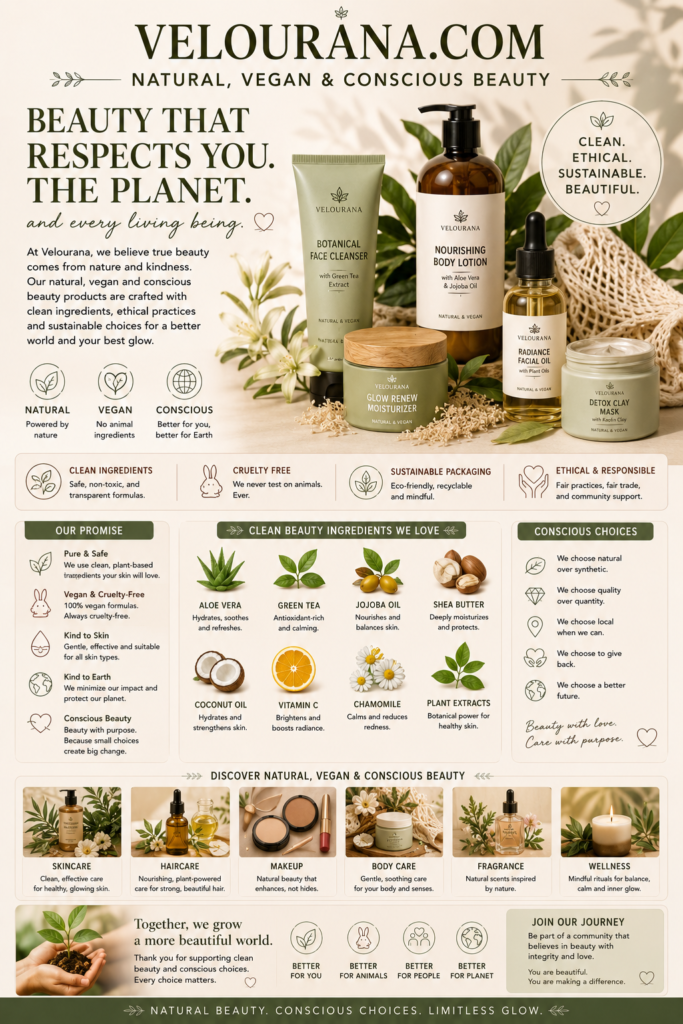
CATEGORY: Natural Skincare
Natural skincare is often presented as a return to simplicity: botanical oils, plant extracts, floral waters, herbs, clays, butters, and formulas inspired by traditional beauty practices. The appeal is understandable. Many people want products that feel closer to nature, contain recognizable ingredients, and fit comfortably within a more deliberate approach to personal care.
Yet natural skincare becomes much more useful when it is separated from the idea that everything natural is automatically gentle, safe, sustainable, or superior.
Plants are chemically complex.
Essential oils contain concentrated aromatic compounds. Fruit acids can affect the skin. Botanical extracts can contain active substances. Plant oils differ considerably in texture and composition. Even ingredients with long histories of cosmetic use can be unsuitable for a particular complexion.
Modern natural skincare therefore works best when botanical ingredients and cosmetic science cooperate rather than compete.
A moisturizer can contain shea butter and modern humectants.
A botanical cleanser can use carefully selected surfactants.
A serum can combine green tea extract with laboratory-developed stabilizers.
An aloe gel still needs an appropriate preservation system.
A plant-based cream still needs emulsifiers to keep oil and water together.
None of these technical components makes a formula less meaningful.
They help transform natural raw materials into stable, practical skincare.
The strongest natural skincare routine is therefore not the one containing the greatest number of plants. It is the routine that uses suitable products consistently, avoids unnecessary irritation, respects the limitations of cosmetics, and allows natural ingredients to perform realistic functions.
Natural Skincare Should Begin With Skin Type
A natural label cannot determine whether a product suits the skin.
Dry skin and oily skin may need completely different textures.
Sensitive skin may react to highly aromatic botanical formulas.
Combination skin can require different amounts of moisturizer across different areas.
Blemish-prone skin may need targeted treatments rather than layers of heavy plant oils.
Mature skin may benefit from richer moisturizing support while still requiring sunscreen and carefully selected treatments.
The starting point should therefore be the complexion itself.
How does the skin feel after cleansing?
Does it become oily quickly?
Does it feel tight?
Are certain areas consistently dry?
Does fragrance cause discomfort?
Does the skin tolerate exfoliation?
Does a rich cream improve comfort or create excessive heaviness?
These observations provide more useful information than choosing products simply because their ingredients sound natural.
Natural Does Not Have One Universal Cosmetic Definition
The word natural can mean different things across brands and product categories.
One company may use it to describe a formula dominated by plant-derived ingredients.
Another may use botanical extracts alongside conventional cosmetic ingredients.
Another may emphasize naturally derived ingredients that have undergone substantial processing.
This variation does not automatically make one approach dishonest or another superior.
Plants frequently require processing before they become practical cosmetic ingredients.
Seeds are pressed.
Extracts are created.
Oils may be refined.
Waxes are purified.
Plant-derived materials can be chemically modified to improve their usefulness.
The important question is not whether every ingredient remains physically close to the original plant.
It is whether the complete formula is appropriate, stable, safe for its intended use, and aligned with the consumer's preferences.
Cleansing Remains the Foundation
Natural skincare still needs effective cleansing.
Oil, sunscreen, makeup, sweat, environmental debris, and cosmetic residue accumulate on the skin.
A cleanser should remove an appropriate amount of this material without repeatedly leaving the face uncomfortable.
Natural cleansers can use oils, creams, gels, balms, botanical extracts, clays, or plant-derived surfactants.
The format matters less than the result.
Dry skin may prefer a creamier cleanser.
Oilier complexions may enjoy a gel.
Heavy makeup or resistant sunscreen may require an initial oil-based cleansing step.
Sensitive skin may prefer simpler formulas with less fragrance.
The natural identity of the cleanser should never distract from its primary responsibility.
It needs to cleanse.
Oil Cleansing Can Be Useful When Used Appropriately
Plant oils and oil-based balms can dissolve makeup, sunscreen, and oil-soluble residue.
This makes oil cleansing particularly useful as an evening removal step.
The method does not necessarily mean applying pure kitchen oil directly to the face.
Commercial cleansing oils are generally designed to emulsify when water is added, allowing the product and dissolved residue to rinse away more easily.
Pure oils behave differently.
Some people enjoy them, while others dislike the remaining film.
A properly formulated cleansing balm or oil can provide the botanical experience of plant lipids while maintaining the practical advantages of modern formulation.
Double Cleansing Is Optional
Natural skincare routines sometimes become complicated because techniques are treated as requirements.
Double cleansing is useful when one cleansing step does not remove the day's products adequately.
It is unnecessary when a single cleanser already performs the job comfortably.
Someone wearing substantial makeup may benefit from an oil cleanser followed by a gentle water-based cleanser.
Someone wearing little on the face may need only one step.
More cleansing is not automatically cleaner or healthier.
The objective is sufficient cleansing with minimal unnecessary disruption.
Plant Oils Are Emollients, Not Complete Skincare Routines
Natural skincare often places facial oils at the center of the routine.
Plant oils can be excellent emollients.
They can soften rough skin, reduce friction, improve surface smoothness, and help limit moisture loss.
They do not contain water.
They therefore should not automatically be treated as complete replacements for every moisturizer.
A water-containing moisturizer can provide humectants, emollients, occlusive ingredients, and other components within one formula.
An oil can be layered over moisturizer when additional richness is desired.
It can also be used alone by people who genuinely prefer that approach.
The key is understanding what the oil actually contributes.
Jojoba Offers a Distinctive Botanical Texture
Jojoba is commonly described as an oil, although chemically it is primarily a liquid wax.
Its texture and stability have made it popular in facial oils, cleansers, lip products, moisturizers, and body care.
Some people appreciate it because it can feel lighter than richer botanical oils.
That does not make jojoba universally ideal for every complexion.
A few drops may work beautifully.
Another person may prefer a complete moisturizer without additional oil.
Natural skincare should preserve this flexibility.
Rosehip Oil Is Popular for Facial Care
Rosehip seed oil has become closely associated with natural facial skincare.
It is used in facial oils, serums, moisturizers, and treatment-oriented formulas.
Its botanical identity can sometimes lead to confusion with rose fragrance ingredients.
Rosehip seed oil is fundamentally a lipid material obtained from the fruit and seeds associated with rose plants.
Rose essential oil and rose water are different materials.
Understanding these distinctions makes natural skincare easier to evaluate and prevents one familiar plant name from being treated as though it describes one ingredient.
Argan Oil Can Provide Lightweight Emollience
Argan oil appears in both skincare and hair care.
Within facial products, it can contribute softness and emollience.
Some consumers enjoy it directly in small quantities, while others encounter it within creams and serums.
As with other oils, the amount matters.
Natural skincare does not improve automatically when more oil is applied.
The correct amount is the quantity that leaves the complexion comfortable without producing unwanted heaviness.
Sunflower Oil Shows That Useful Botanicals Do Not Need to Be Exotic
Natural beauty marketing often highlights rare plants.
Common botanical ingredients can be equally valuable.
Sunflower seed oil is widely used in moisturizers, cleansers, body lotions, and other formulas.
Its familiarity may make it less glamorous than an oil sourced from a remote location, but rarity is not a measure of skincare performance.
A simple, well-formulated product containing common plant lipids can be more suitable than an expensive formula filled with exotic extracts.
Shea Butter Provides Richer Support
Shea butter is a familiar natural ingredient used extensively in creams, balms, body butters, lip products, and intensive moisturizers.
Its richness makes it particularly attractive for dry areas.
A dense shea-containing cream may provide welcome comfort during cold weather or on dry hands and body skin.
The same texture can feel excessive on an oily face.
Natural skincare should not assume that richer always means more nourishing.
The ideal texture depends on the skin and the area where the product is used.
Aloe Vera Fits Naturally Into Lightweight Skincare
Aloe is strongly associated with cooling, refreshing, and soothing cosmetic products.
It appears in gels, moisturizers, masks, after-sun formulas, cleansers, and body products.
Commercial aloe products are more complex than fresh aloe gel removed directly from a plant.
They need preservation, texture control, stability, and appropriate formulation.
This difference is valuable.
A professionally formulated aloe gel can provide a predictable product rather than requiring the consumer to handle fresh biological material.
Natural skincare does not become less authentic because formulation technology makes a botanical ingredient safer and easier to use.
Green Tea Can Support Antioxidant-Focused Formulas
Green tea extracts have become common in modern skincare because tea contains compounds of cosmetic and scientific interest.
They appear in serums, moisturizers, eye products, cleansers, and masks.
The presence of green tea alone does not establish the quality of the product.
Extraction, concentration, stability, packaging, and the rest of the formulation matter.
This is an important principle across natural skincare.
A recognizable plant name is not a substitute for a well-designed formula.
Centella Has Become a Major Botanical Skincare Ingredient
Centella asiatica has gained considerable popularity in contemporary skincare, particularly in products positioned around comfort and barrier-conscious routines.
It may appear as a general extract or through specific components derived from the plant.
Its popularity demonstrates how natural skincare evolves through global beauty influences.
Botanical ingredients from different regional traditions increasingly appear in international products.
This creates more choice but also more trends.
No ingredient becomes essential simply because it becomes fashionable.
The skin should determine whether the product deserves a place.
Oat-Derived Ingredients Can Suit Comfort-Focused Formulas
Oat ingredients appear frequently in skincare designed for dryness and sensitivity.
They can be incorporated into cleansers, creams, lotions, bath products, and specialized treatments.
A product containing oat-derived ingredients can be particularly appealing when a consumer wants a simple, comfort-oriented routine.
The complete formulation still matters.
Fragrance, preservatives, cleansing agents, and other ingredients can influence how the product behaves.
One botanical cannot define the entire experience.
Chamomile Has a Gentle Reputation but Is Not a Guarantee
Chamomile is widely associated with calming beauty rituals.
Its extracts and related materials appear in cleansers, moisturizers, masks, eye products, and body care.
The plant's reputation can make consumers assume that every chamomile product must be suitable for sensitive skin.
That conclusion is too broad.
Botanical ingredients contain naturally occurring compounds, and individuals can react differently.
A chamomile formula can also contain fragrance or other ingredients that do not suit a particular person.
Natural skincare requires the same attention to individual tolerance as any other skincare category.
Calendula Is Common in Rich Comforting Products
Calendula appears in oils, balms, creams, and products designed for dry or delicate-feeling skin.
Its warm botanical identity makes it particularly common in traditional-looking natural formulas.
An oil infusion and a calendula cream are not the same product.
The first is predominantly lipid-based.
The second may contain water, emulsifiers, humectants, preservatives, and other ingredients.
The botanical ingredient contributes to both, but the surrounding formulation determines how each behaves.
Licorice Root Can Appear in Tone-Focused Skincare
Licorice-derived ingredients are often incorporated into formulas designed around visible brightness and uneven tone.
This illustrates how botanical skincare can move beyond simple oils and herbal waters.
Modern cosmetic science can process plants to obtain standardized extracts or particular compounds useful within sophisticated formulas.
Natural skincare can therefore be technically advanced.
Plant origin and laboratory formulation are not opposites.
Botanical Hydration Requires More Than Plants Alone
Hydration is frequently described vaguely in natural beauty.
Water itself is central.
Humectants help attract and retain water within a formulation and at the skin surface.
Emollients improve softness.
Occlusive ingredients can help reduce water loss.
A good moisturizer may combine all of these functions.
Plant oils contribute primarily to the lipid side of the equation.
Aloe-containing products can provide a water-based format.
Glycerin may be plant-derived or produced through other processes and can contribute substantial humectant functionality.
Natural moisturization is therefore usually a system rather than a single botanical ingredient.
Dry Skin Often Benefits From Simple Richness
Dry skin can respond well to natural skincare when the routine emphasizes gentle cleansing and sufficient moisturization.
Plant oils and butters can contribute valuable emollience.
A richer cream can reduce the rough, tight feeling associated with dryness.
Constant exfoliation is not always necessary.
Dry flakes can tempt people to scrub repeatedly, but excessive exfoliation may make the skin increasingly uncomfortable.
Sometimes the most effective natural routine is remarkably simple.
Cleanse gently.
Moisturize adequately.
Use sun protection.
Add treatments only when there is a clear reason.
Oily Skin Does Not Need to Avoid Natural Skincare
Natural skincare is sometimes associated with heavy oils and rich balms, which can make it seem unsuitable for oily complexions.
Botanical formulas can also be lightweight.
Gel moisturizers, fluid lotions, water-based serums, light cleansers, and carefully formulated treatments can all fit within a natural-inspired routine.
Oily skin should not be smothered in oils merely because plant lipids are popular.
Neither should it be stripped aggressively.
The goal is comfortable cleansing and appropriate hydration without unnecessary heaviness.
Combination Skin Benefits From Flexible Application
Combination skin can have oily areas and dry areas simultaneously.
One universal layer does not always need to be applied equally across the entire face.
A moisturizer can be used more generously on dry cheeks and more lightly through an oily center.
Facial oil can be limited to areas that actually need it.
Clarifying treatments can be localized.
Natural skincare becomes more efficient when products are applied strategically rather than uniformly.
Sensitive Skin Should Be Careful With Highly Aromatic Natural Products
Natural skincare often uses essential oils, floral extracts, fragrant herbs, and aromatic plant materials to create a sensory experience.
Sensitive skin may not appreciate this complexity.
Fragrance-free natural-inspired products can provide botanical ingredients without an intense aromatic profile.
A short ingredient list is not automatically safer, but reducing unnecessary fragrance can simplify the routine for people who know they react to it.
The word natural should never pressure sensitive-skin consumers into tolerating products that repeatedly cause discomfort.
Essential Oils Are Concentrated Ingredients
Essential oils are not equivalent to ordinary plant oils.
They contain concentrated volatile aromatic substances.
Lavender essential oil, peppermint essential oil, tea tree oil, and citrus essential oils should therefore not be handled as though they were simply gentle plant juices.
Concentration matters.
Dilution matters.
Application area matters.
Individual sensitivity matters.
A properly formulated cosmetic containing an essential oil is different from applying concentrated essential oil directly to the skin.
Natural skincare becomes safer when potency is acknowledged.
Fragrance-Free and Natural Can Coexist
Natural skincare does not have to smell strongly of flowers or herbs.
A fragrance-free moisturizer can still contain botanical oils or non-aromatic plant extracts.
Someone who prefers an unscented routine does not need to abandon natural beauty.
Likewise, someone who enjoys aromatic skincare can choose fragranced botanical products when their skin tolerates them.
Natural skincare should provide choices rather than impose one sensory identity.
Floral Waters Offer a Lighter Botanical Experience
Rose water, orange blossom water, and other hydrosol-type ingredients can contribute aroma and sensory character to mists, toners, creams, and cleansers.
They are different from concentrated essential oils.
They still need appropriate preservation when used in water-based cosmetics.
A bottle containing botanical water is not automatically protected from microbial contamination simply because the material was obtained through a natural process.
Preservation remains part of responsible skincare.
Toners Are Optional
Natural beauty routines frequently include botanical toners and facial mists.
They can be pleasant.
They can provide hydration or deliver specific ingredients depending on the formula.
They are not mandatory.
If a cleanser and moisturizer already provide everything the skin needs, a toner may add little.
A natural routine should not become complicated simply because every product category has a botanical version.
Optional products should remain optional.
Facial Mists Are Primarily Useful When They Serve a Purpose
A botanical mist can feel refreshing during warm weather or provide a pleasant layer before moisturizer.
It may also be useful as part of a particular hydration routine.
Repeatedly spraying water-based mist without following with an appropriate moisturizer may not solve persistent dryness.
The product should be evaluated according to what it contributes rather than the freshness of the experience alone.
Natural Exfoliation Still Requires Restraint
Fruit enzymes, botanical acids, plant powders, scrubs, and other naturally inspired exfoliating products can affect the skin significantly.
Natural exfoliation is still exfoliation.
Overuse can lead to irritation, dryness, or increased sensitivity.
A rough botanical scrub is not automatically gentler than a carefully formulated chemical exfoliant.
Physical particle shape, pressure, frequency, and skin sensitivity all matter.
The objective should be controlled improvement in texture rather than maximum exfoliation.
Sugar and Salt Scrubs Are Better Suited to Some Areas Than Others
Sugar and salt are popular ingredients in homemade and commercial body scrubs.
They can provide substantial physical exfoliation.
Facial skin may not require the same intensity as elbows, legs, or feet.
A scrub appropriate for the body can be too abrasive for a sensitive face.
Natural skincare should recognize differences between body areas instead of treating one recipe as universally suitable.
Clay Masks Can Be Useful for Oil Absorption
Clays are mineral rather than botanical ingredients, but they are commonly included within natural skincare.
Clay masks can absorb oil and create a temporarily cleaner, less greasy surface feel.
They do not need to remain on the skin until the face feels extremely tight.
Excessive use can be uncomfortable, particularly for dry or sensitive complexions.
A natural mask should improve the skincare experience rather than become an endurance exercise.
Honey Has a Traditional Place in Beauty but Requires Context
Honey has been used in personal care traditions and appears in modern masks, cleansers, and moisturizers.
A professionally formulated honey-containing cosmetic differs from applying food directly from a kitchen container.
Preservation, concentration, texture, stability, and supporting ingredients change the product.
Honey is also animal-derived, making it unsuitable for consumers who require vegan skincare.
Natural, botanical, vegan, and cruelty-free are separate concepts.
Vegan Does Not Automatically Mean Natural
A vegan skincare product contains no animal-derived ingredients according to the standard being used.
It can still contain synthetic ingredients.
Likewise, a highly natural formula can contain beeswax, honey, lanolin, or other animal-derived materials.
Consumers interested in both natural and vegan skincare need to evaluate both criteria.
Neither term guarantees the other.
Cruelty-Free Does Not Automatically Mean Natural
Cruelty-free status concerns animal-testing practices according to the relevant definition or certification.
A cruelty-free product can be highly technical and contain mostly synthetic ingredients.
A natural product can require separate cruelty-free verification.
Ethical beauty becomes clearer when these categories are not treated as interchangeable.
Organic Is Another Separate Standard
Organic beauty generally relates to ingredients produced according to particular agricultural and certification requirements.
A natural botanical ingredient is not automatically organically grown.
An organic ingredient is not automatically vegan or cruelty-free.
A product containing several organic ingredients may still contain other ingredients that are not organic.
Consumers interested in certification should understand exactly what the certification covers.
Natural Sunscreen Requires Particular Care With Terminology
Sunscreen is one area where romantic natural language should never replace functional performance.
The important considerations include appropriate sun protection, correct use, tolerability, and consistent application.
A sunscreen should not be selected merely because its packaging emphasizes plants.
Botanical extracts can exist within sunscreen formulas, but they do not replace approved ultraviolet-filter systems.
Plant oils should not be used as homemade substitutes for properly formulated sunscreen.
Natural skincare remains compatible with effective sun protection.
It simply needs to recognize that protection requires specialized formulation.
Homemade Sunscreen Is Not a Reliable Natural Alternative
DIY sunscreen recipes are particularly problematic because effective sun protection depends on controlled formulation, dispersion, film formation, stability, and validated performance.
Mixing zinc-containing materials, oils, or butters at home does not provide reliable information about the resulting protection.
Natural skincare should never require sacrificing predictable sun protection.
A professionally formulated sunscreen is the appropriate choice.
Botanical ingredients can be enjoyed elsewhere in the routine.
Antioxidant Botanicals Can Complement a Routine
Green tea, licorice-derived ingredients, various fruit extracts, and other botanical materials may contribute antioxidant or appearance-focused properties depending on formulation.
These products can complement a routine.
They should not replace sunscreen.
Antioxidants and ultraviolet filters perform different functions.
Natural skincare becomes more technically sound when complementary ingredients are not asked to substitute for essential protective products.
Natural Skincare for Blemish-Prone Skin Should Avoid Overcorrection
Blemishes can encourage increasingly aggressive routines.
Clay masks become more frequent.
Essential oils are added.
Scrubs become stronger.
The skin is cleansed repeatedly.
This can produce substantial irritation without solving the original problem.
A natural approach to blemish-prone skin should remain controlled.
Gentle cleansing, suitable moisturizer, sunscreen, and evidence-informed treatments can coexist with botanical ingredients.
The routine does not need to become harsh in order to feel active.
Tea Tree Oil Should Not Be Applied Carelessly
Tea tree oil is commonly associated with blemish-focused natural skincare.
As an essential oil, it is concentrated.
Direct application can be irritating.
A properly formulated product containing tea tree-derived material offers more controlled exposure.
Natural does not mean concentration is irrelevant.
This is particularly important when treating already irritated skin.
Lemon Juice Is Not a Sensible Facial Brightening Treatment
Kitchen ingredients are frequently promoted through homemade natural beauty advice.
Lemon juice is one of the most persistent examples.
Its acidity and variable composition make direct facial use difficult to control, and citrus components can create additional concerns depending on the material and exposure.
A professionally formulated brightening product provides a much more predictable approach.
The fact that lemon is natural and edible does not make raw juice an ideal facial treatment.
Baking Soda Is Not a Gentle Natural Cleanser
Baking soda is another household ingredient frequently incorporated into DIY beauty.
Its alkaline nature can make it unsuitable for routine facial cleansing or exfoliation.
Familiarity does not equal cosmetic compatibility.
A product being available in the kitchen says nothing about whether its pH or concentration is appropriate for facial skin.
Natural skincare should not confuse household ingredients with cosmetic ingredients.
Raw Plant Material Can Be Difficult to Control
Fresh herbs, fruits, vegetables, and plant gels vary naturally.
Their composition changes according to variety, cultivation, ripeness, storage, and preparation.
Commercial cosmetic ingredients can be purified, standardized, preserved, and tested for more predictable performance.
Processing can therefore improve natural skincare rather than diminish it.
The goal should not be maximum rawness.
It should be appropriate use.
Water-Based DIY Products Need Preservation
Homemade toners, aloe mixtures, herbal waters, and facial sprays can become contaminated.
Water creates an environment in which microorganisms may grow.
Fresh botanical materials can increase the complexity.
Keeping a mixture in the refrigerator does not provide the same protection as a validated cosmetic preservation system.
Essential oils are not universal preservatives.
Natural skincare should take microbial safety seriously.
Preservatives Protect the Consumer
Preservatives sometimes receive negative attention because their names sound technical.
Their purpose in water-containing cosmetics is important.
They help prevent bacteria, yeast, and mold from multiplying during normal storage and use.
A natural moisturizer repeatedly touched by fingers still needs protection.
A botanical toner stored in a warm bathroom still needs stability.
A product is not more wholesome because it spoils quickly.
Effective preservation is part of responsible natural skincare.
Emulsifiers Make Natural Creams Possible
Oil and water do not remain evenly mixed simply because both ingredients are natural.
Emulsifiers allow creams and lotions to maintain a stable structure.
Without them, many familiar moisturizers would separate.
Natural-derived and conventional emulsifying systems can both be used depending on the formulation philosophy.
Technical ingredients often perform essential jobs that make botanical skincare practical.
Thickeners and Stabilizers Are Not Empty Ingredients
Natural beauty marketing sometimes implies that every ingredient should have an obvious direct benefit to the skin.
Cosmetics also need ingredients that create texture, stabilize emulsions, control viscosity, improve spreadability, or keep ingredients evenly distributed.
These functions matter.
A cream that separates in the jar is less useful.
A serum that cannot maintain its ingredients evenly may perform unpredictably.
Formulation ingredients support the product as a whole.
Packaging Matters for Botanical Ingredients
Plant oils and extracts can be affected by oxygen, light, heat, and repeated exposure.
Appropriate packaging can improve stability.
Opaque bottles can reduce light exposure.
Pumps can limit contamination.
Air-restrictive packaging can protect certain formulas.
Dark glass is sometimes used for oils, although the complete packaging system and storage conditions still matter.
Natural ingredients deserve the same stability considerations as any other cosmetic raw materials.
Fresh Is Not Automatically Better
A freshly blended mask can feel appealing because it seems closer to the original ingredients.
Freshness can also mean a product has no tested preservation system or established stability.
Commercial products are designed to remain usable throughout a defined period under normal conditions.
Longevity does not automatically indicate excessive processing.
It can reflect good formulation.
Natural Skincare Can Be Minimalist
A complete routine does not need an oil, mist, essence, botanical toner, serum, balm, mask, exfoliant, and facial roller.
A cleanser, moisturizer, sunscreen, and one purposeful treatment may provide everything necessary.
Botanical ingredients can be incorporated within those products.
A natural routine becomes more sustainable when each step has a function.
Minimalism also makes skin reactions easier to interpret.
More Plant Extracts Do Not Automatically Mean More Benefits
A product containing twenty botanical extracts can look impressive on the ingredient list.
The concentration of each may be small.
The complexity may also increase the number of substances the skin encounters.
One carefully selected botanical ingredient within a well-designed formula can be more useful than an enormous botanical blend.
Natural skincare quality should not be measured by counting plants.
Natural Skincare Can Be Luxurious
Natural beauty does not need to be rustic.
Botanical oils, floral extracts, sophisticated textures, aromatic materials, elegant packaging, and carefully developed formulations can create a luxurious skincare experience.
Someone may value the scent and ritual as much as the functional moisturizing effect.
That is legitimate.
Beauty products can provide pleasure.
The distinction should simply remain clear between sensory luxury and extraordinary treatment claims.
Affordable Natural Skincare Can Be Equally Valuable
A simple moisturizer containing common plant oils can perform beautifully.
An inexpensive aloe gel may suit someone better than an elaborate luxury botanical serum.
Price can reflect packaging, marketing, sourcing, distribution, formulation complexity, or brand positioning.
It does not automatically measure skin compatibility.
Natural skincare should remain accessible enough that consumers can choose according to performance rather than prestige.
Seasonal Changes Can Alter the Ideal Natural Routine
Skin rarely behaves identically throughout the year.
Cold weather may increase dryness.
Warm humid conditions may make rich creams uncomfortable.
Indoor heating and air conditioning can affect moisture balance.
A heavier botanical moisturizer can be useful in winter and unnecessary in summer.
Facial oils may be used seasonally rather than permanently.
Natural skincare should adapt instead of demanding loyalty to one texture throughout the year.
Travel Can Reveal Which Products Are Actually Essential
Packing skincare for travel often exposes unnecessary complexity.
A gentle cleanser, moisturizer, sunscreen, and essential treatment may cover the routine.
If the skin remains comfortable without several optional products, those steps may not be as necessary as expected.
Natural skincare can become more efficient when occasional simplification is used to evaluate the routine.
Patch Testing Can Be Useful With Botanical Products
People sometimes approach powerful synthetic treatments cautiously while applying botanical products freely.
Natural ingredients can also cause reactions.
Essential oils, fragrances, extracts, and other plant materials can be problematic for susceptible individuals.
Introducing new products gradually makes reactions easier to identify.
The skin responds to chemistry rather than to whether the ingredient came from a flower or a laboratory.
Natural Skincare Should Respect Medical Boundaries
Cosmetics can improve dryness, texture, appearance, softness, and comfort.
They cannot appropriately manage every skin condition.
Persistent inflammation, severe acne, unusual lesions, infection, or significant reactions can require professional evaluation.
Natural preferences can still be discussed when selecting supportive products.
They should not delay appropriate care.
Natural skincare is a cosmetic philosophy, not a substitute for medicine.
Sustainability Requires More Than Plant Ingredients
A botanical ingredient still requires resources.
Plants require land and water.
Harvesting and processing consume energy.
Ingredients may travel considerable distances.
Packaging can generate waste.
A rare plant ingredient is not automatically environmentally preferable to an abundant conventional material.
Sustainable natural beauty requires broader thinking about sourcing, manufacturing, packaging, transportation, and consumption.
Responsible Sourcing Matters
Popular botanical ingredients can create intense demand.
Responsible cultivation and harvesting become especially important when plants are geographically limited, slow-growing, or traditionally wild-harvested.
Brands can improve transparency by explaining sourcing relationships and agricultural practices.
Consumers do not need perfect knowledge of every supply chain, but botanical origin should not automatically be treated as proof of sustainability.
Local Ingredients Can Be Worth Exploring
Natural skincare does not need to depend entirely on exotic plants.
Olive-derived ingredients, grape materials, sunflower oil, herbs, and other locally or regionally available resources can have legitimate cosmetic value.
Local botanical traditions can also create a meaningful connection between beauty and place.
The ingredient should still be selected for formulation quality rather than geography alone.
Finishing Products Reduces Waste
Natural beauty can become surprisingly wasteful when every new botanical trend produces another purchase.
A half-used rosehip oil is replaced by marula oil.
Then squalane becomes fashionable.
Then another botanical serum appears.
The routine grows while products expire.
Using products completely when they work is one of the simplest forms of responsible beauty.
A smaller collection can be more sustainable than an overflowing shelf of natural products.
Natural Skincare Should Avoid Purity Anxiety
Trying to eliminate every ingredient that sounds synthetic can turn skincare into an exhausting exercise.
Technical ingredients can preserve products, stabilize formulas, improve texture, enhance cleansing, support delivery, and make cosmetics more pleasant to use.
Plant-derived ingredients themselves are composed of chemicals.
Water is a chemical substance.
Natural oils contain complex mixtures of molecules.
The meaningful distinction is not chemical versus natural.
Everything in skincare is chemistry.
The more useful distinction is appropriate versus inappropriate formulation.
Science and Nature Can Work Together
Modern cosmetic science allows plant ingredients to be extracted, purified, standardized, preserved, stabilized, and incorporated into elegant formulas.
This partnership can make botanical skincare more reliable.
Traditional plant knowledge can inspire ingredient selection.
Scientific investigation can clarify composition and potential uses.
Formulators can then create products that are easier and safer to use than raw materials alone.
Natural skincare does not need to choose between ancestral knowledge and modern laboratories.
Both can contribute.
A Natural Routine Should Become Easier Over Time
At first, someone exploring natural skincare may try many products.
Different oils are tested.
Botanical cleansers are compared.
Masks are introduced.
Fragrance preferences become clearer.
Eventually, successful routines usually become simpler.
The skin reveals what works.
A dependable cleanser remains.
A suitable moisturizer is repurchased.
An oil stays only if it adds something useful.
Unnecessary products disappear.
This process creates a routine based on experience rather than ideology.
The Best Natural Skincare Is Practical Enough to Continue
A skincare philosophy only becomes meaningful when it can be maintained.
Products need to fit the budget.
Textures need to feel pleasant.
The routine needs to fit everyday life.
The skin needs to remain comfortable.
Natural ingredients should enhance this process rather than make it more complicated.
A person does not need to make every product at home.
There is no requirement to avoid laboratories.
There is no benefit in tolerating irritating essential oils simply because they come from plants.
There is no reason to replace an effective moisturizer with pure oil if the moisturizer works better.
Natural skincare succeeds when botanical inspiration and practical performance align.
Natural Beauty Is Strongest When It Remains Realistic
Plants have an extraordinary place in skincare.
They provide oils, butters, waxes, extracts, aromas, colors, gums, and compounds with diverse cosmetic functions.
They connect modern beauty with agriculture, geography, traditional practices, and cultural history.
Their value does not depend on pretending that they are perfect.
A botanical ingredient can irritate.
An oil can be too heavy.
An essential oil can be too concentrated.
A natural formula can require preservatives.
A plant-derived product can still have an environmental footprint.
Recognizing these realities does not weaken natural skincare.
It makes it more credible.
The best natural routine respects both the complexity of plants and the complexity of skin.
It uses botanical ingredients because they contribute something useful.
It accepts cosmetic technology when that technology improves safety, stability, or performance.
It avoids unnecessary products.
It treats sunscreen as essential protection rather than attempting to replace it with homemade alternatives.
It responds to the complexion rather than to trends.
When approached this way, natural skincare becomes neither a rejection of science nor an endless search for purity.
It becomes a thoughtful way of combining nature, formulation, personal preference, and consistent care.
THE END VELOURANA
 Discover More From Our Family of Websites
 ZodiacBearing (Astrology, Tarot, Numerology, Angel Numbers & Spiritual Guidance)
 Velourana (Beauty, Makeup, Hair Care, Skincare & Beauty Tips)
 HavenBearing (Home, Living, Organization, Décor & Everyday Inspiration)
 PawBearing (Pet Care, Dog Breeds, Animal Health, Training & Pet Products)
 PsyCatherine (Notes From the Journal of a Psychologist on Real Life)

