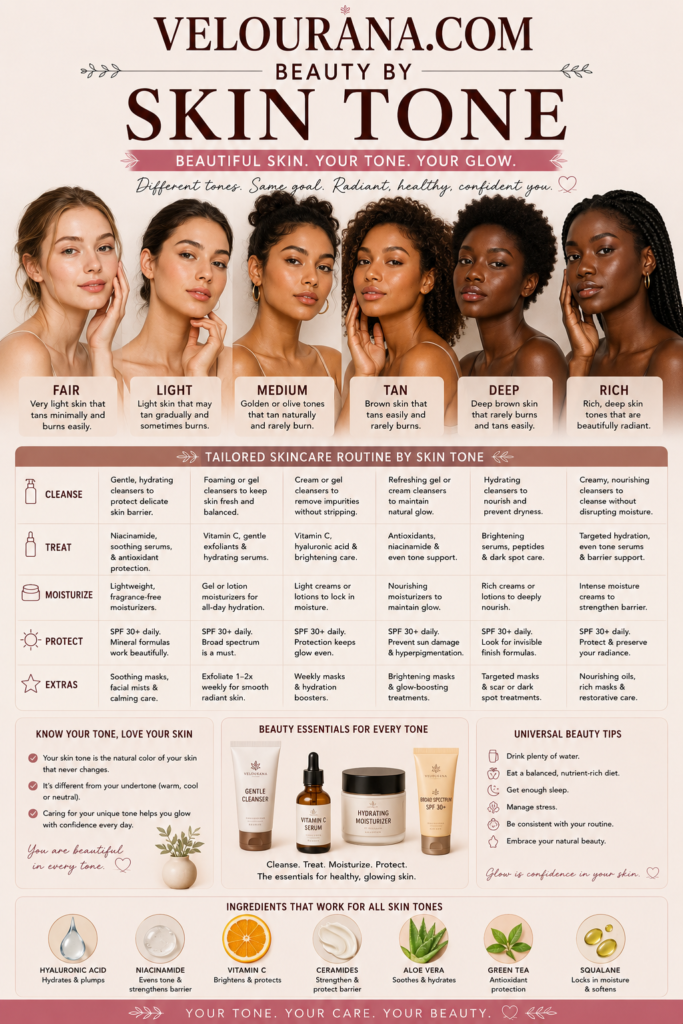
CATEGORY: Light Skin Foundation
Foundation for light skin is most successful when it becomes almost visually anonymous. It should refine the complexion without announcing where the makeup begins, preserve the natural character of the skin without exaggerating its color, and create enough uniformity for the rest of the makeup to sit comfortably above it. Achieving that apparently simple result can require considerable precision because light complexions reveal relatively small differences in depth and undertone.
A foundation may look convincing in its packaging yet appear unexpectedly yellow once spread across the face. Another may seem appropriately light but develop a pink cast beside the neck. A shade that looks perfect immediately after application can deepen as it settles, while a formula with the correct color may still appear unnatural because its coverage or finish is incompatible with the skin beneath it.
These difficulties are sometimes treated as evidence that light skin has a particularly narrow range of foundation possibilities. The real issue is different. Light skin contains many variations, and broad shade descriptions cannot fully represent them. Some light complexions are creamy and warm, others rosy and cool, while neutral, peach, golden, muted, and olive undertones create additional distinctions. Surface redness, freckles, seasonal color changes, and differences between the face and neck can complicate the picture further.
The objective is therefore not simply to find a product labeled light. It is to understand what the complexion actually requires and how foundation behaves once it becomes part of that complexion.
The Difference Between Lightness and Undertone
Skin depth is the first visible dimension of foundation matching, but it is only the beginning. Light skin describes where the complexion sits within the broader range from very pale to very deep. Undertone describes the quieter color influences that exist within that depth.
This distinction becomes especially important when several foundations appear similarly light in their bottles. One may contain considerably more yellow pigment, another may lean pink, another may have a peach influence, and another may appear relatively balanced. Once applied across a larger area, these differences become much easier to see.
Cool light skin can contain rosy, pink, reddish, bluish, or occasionally violet characteristics. Warm light skin may reveal cream, peach, yellow, or golden influences. Neutral complexions tend to balance warm and cool qualities without leaning strongly in either direction. Light olive skin can contain a muted green, gray-green, or golden-olive character that conventional warm and cool foundation classifications do not always represent successfully.
These categories are useful descriptions rather than rigid identities. Real complexions often sit between them. Someone may be neutral with a slight golden tendency, peach-neutral, muted warm, or olive with enough yellow to appear conventionally warm until a strongly yellow foundation is applied.
Foundation matching becomes more accurate when these subtleties are accepted rather than forcing the complexion into a simple label.
Surface color must also be distinguished from undertone. Light skin often reveals flushing and redness clearly because there is less depth to conceal them. Rosy cheeks or redness around the nose do not necessarily mean the entire complexion requires a pink foundation. Matching foundation to temporary or localized redness can make the whole face considerably pinker than the neck.
The more useful question is what color remains relatively consistent across the jaw, less-flushed areas of the face, and nearby skin. That underlying relationship usually provides a better foundation reference than the most visibly colored area.
Why the Correct Shade Is Often Found at the Jaw
Foundation is commonly tested on the hand because it is convenient, but the hand is not necessarily representative of the face. It may receive more sunlight, contain more redness, or simply possess a different depth and undertone.
The jawline offers a more meaningful transition because it allows the face and neck to be considered together.
This does not mean the foundation must disappear perfectly into both areas under every circumstance. The face, neck, and chest can naturally differ. Facial skincare, sun exposure, circulation, pigmentation, and redness can all create legitimate variation.
The aim is visual continuity rather than absolute uniformity.
When several candidate shades are placed beside one another along the lower cheek and jaw, their differences often become clearer. A shade that looked neutral in isolation may suddenly appear yellow beside a pinker formula. A supposedly warm option may reveal an orange quality. A shade that seemed slightly dull in the bottle may disappear most naturally once it is surrounded by the actual complexion.
Comparison is particularly valuable because human vision evaluates color relationally. It can be difficult to determine whether one isolated foundation is too warm, but placing it beside a cooler alternative often makes the answer immediately visible.
Natural daylight is equally important. Warm artificial lighting can disguise yellow or orange foundation, while cool lighting can alter the appearance of pink and neutral shades. Indirect daylight generally gives a more dependable impression of whether the foundation truly connects the face with the surrounding skin.
The final judgment should also be made after the product has settled. Foundation is a film-forming cosmetic, and its appearance can change as moisture evaporates, oils interact with it, and the finish develops. Evaluating only the first minute can therefore produce an inaccurate decision.
A convincing match is one that remains convincing after application rather than one that merely begins well.
When Undertone Becomes the Real Challenge
Light foundation ranges may contain several shades at similar depths, yet undertone can still become the obstacle that prevents a seamless match.
A warm foundation does not simply mean a darker or more tanned foundation. Warmth exists independently of depth. A light complexion can be distinctly golden while remaining genuinely light. The correct foundation should preserve that lightness while reproducing only the amount of warmth naturally present.
Excessive warmth is one of the most noticeable problems. Yellow pigment can become conspicuous, while peach may shift toward orange once distributed across the face. The solution is not necessarily to move toward a cool shade. A less saturated warm or more balanced neutral foundation may be more appropriate.
Cool complexions present the opposite difficulty. Some products interpret cool as strongly pink, even though the actual skin may have only subtle rosy characteristics. If the foundation contains more red pigment than the complexion, the entire face can appear flushed.
Neutral foundations can solve some of these problems, but the word neutral is not standardized. One company's neutral may be peach-beige, another's may be slightly yellow, and another may contain enough muted pigment to appear gray on clear skin.
Olive undertones introduce another layer of complexity. Light olive complexions can appear surprisingly neutral until ordinary foundation is applied. Pink formulas may become obviously rosy, while peach and golden formulas can turn orange. The problem is not necessarily the foundation depth. It is the absence of the muted green or olive component naturally present in the skin.
When a foundation repeatedly looks wrong despite apparently correct depth, undertone deserves closer examination.
The most useful match is not the foundation whose label seems theoretically correct. It is the one that becomes least distinguishable from the complexion.
Coverage Changes the Meaning of a Foundation Match
Foundation shade cannot be considered independently of coverage because the amount of pigment deposited on the skin changes how strongly the product controls the visible complexion.
A sheer skin tint allows natural undertones, freckles, redness, and tonal variation to remain visible through the product. This transparency can make a slightly imperfect shade more forgiving. The foundation contributes to the complexion without completely replacing it.
As coverage increases, the formula's own pigment becomes more dominant.
Medium coverage begins to establish a more uniform color while still allowing some natural variation to remain. Full coverage can replace much of the visible complexion with the foundation shade itself. At that point, even a relatively small undertone error can become obvious because the natural skin is no longer moderating the product.
This explains why a foundation may appear satisfactory when applied lightly but wrong when layered.
If building coverage suddenly makes the face look too yellow, pink, peach, or dark, the formula may have been relying on the natural skin showing through to disguise the mismatch.
Coverage should therefore be selected not only according to what needs concealing but also according to how much of the natural complexion should remain part of the finished appearance.
Light skin can have beautiful natural variation. Freckles, subtle flushing, translucent areas, and differences in pigmentation create dimension. Some people want to preserve these characteristics; others prefer a more perfected canvas. Both approaches are legitimate.
The foundation should support that intention rather than automatically attempting to eliminate every visible variation.
Targeted concealer can be especially useful when only certain areas require significant coverage. Instead of applying a heavy layer over the entire face because of redness around the nose or a few blemishes, a lighter overall foundation can establish continuity while concealer provides precision.
The result often preserves more of the complexion while still achieving the desired refinement.
Texture and Finish Are Part of the Foundation Match
A foundation can match perfectly in color and still look wrong if its finish is incompatible with the skin.
Natural skin reflects light unevenly. The forehead, cheeks, nose, and areas around facial structure do not all possess identical luminosity. Foundation changes those reflections, which means finish influences how believable the final complexion appears.
Matte foundation can create a controlled, polished surface, particularly when excess oil is a concern. On light skin, however, an extremely flat finish may remove some of the natural dimension that helps the complexion look alive. This does not make matte foundation unsuitable. It simply means the rest of the makeup may need to restore dimension through blush, subtle sculpting, or carefully controlled luminosity.
Dryness can complicate matte finishes further. When foundation gathers around flakes or dehydrated areas, pigment accumulates unevenly. Those concentrated areas may look darker and more textured even though the shade itself is correct.
Luminous foundation creates a different effect. Reflected light can make light skin appear fresh and dimensional, particularly when the formula remains thin and flexible. Yet excessive shine can emphasize texture or create the impression that certain areas are lighter than they actually are.
Satin and natural finishes occupy a useful middle ground, preserving some reflection without producing either complete flatness or pronounced dewiness.
Skin type provides guidance, but it should not become another rigid rule. Oily skin does not automatically require an intensely matte formula, and dry skin does not necessarily need a visibly dewy one. The best finish is the one that remains stable, comfortable, and visually integrated over the hours it is expected to be worn.
Foundation is not static. Its success should be evaluated at the end of wear as well as at the beginning.
Oxidation and the Foundation That Changes After Application
Few foundation problems are more frustrating than discovering that a seemingly accurate shade no longer matches after it has been worn for a while.
Color change can happen for several reasons. Some formulas become deeper or warmer through oxidation. Others simply look different once the wet application has dried and the foundation film has fully formed. Skin oils, skincare, primer, and environmental conditions can also affect the final appearance.
On light skin, these changes can become highly visible.
A small shift toward orange may be enough to separate the face from the neck. A modest increase in depth can create an artificial tanned effect. A formula that becomes duller may make the complexion appear gray or muted.
This is why foundation should not be purchased solely on the basis of a fresh swatch whenever testing over time is possible.
The product needs an opportunity to reveal its final behavior.
It is also important not to confuse every color change with true oxidation. Some foundations naturally dry slightly darker because the liquid medium changes as it evaporates. The practical consequence is similar: the settled shade, not the wet shade, is what matters.
Skincare beneath the foundation can influence this process. Rich emollient products may change how foundation sits or wears. Certain primers can alter oil interaction or create a different surface for the pigment. Even powder applied later can modify the apparent color.
Foundation matching is therefore ultimately a complete-system test rather than a bottle-to-skin comparison.
Freckles, Redness, and Natural Variation Should Not Dictate the Wrong Shade
Light skin frequently contains visible features that complicate the idea of one uniform skin color.
Freckles can introduce brown, golden, reddish, or muted points of pigmentation. Cheeks may contain natural pink. The nose can appear redder. Under-eye areas may show blue or violet. The forehead may be slightly deeper because of sun exposure.
Foundation cannot simultaneously match all of these colors, nor should it attempt to.
Freckles provide a particularly useful example. Matching foundation to the darker freckle color would usually make the surrounding skin too deep. The foundation should correspond primarily with the underlying complexion, allowing the freckles to remain naturally darker if they are left visible.
Coverage then determines how strongly they appear.
A sheer base can preserve them almost completely. Medium coverage softens them. Full coverage can reduce them substantially.
The same principle applies to redness.
Choosing a pink foundation because the cheeks are flushed may make the entire face too rosy. A better match can establish the underlying complexion while concealer or subtle color correction addresses areas where redness is unwanted.
This separation between foundation and correction gives much greater control.
Foundation establishes the canvas.
Corrective products address specific variations.
The entire face does not need to be shifted in color because one area differs from another.
Mixing Can Solve Problems That Shade Ranges Cannot
Commercial shade ranges cannot represent every human complexion perfectly.
Sometimes the most accurate foundation sits between two shades. In other cases, the depth is correct but the undertone is slightly wrong. Seasonal changes may also make one shade too light for part of the year and another too deep.
Mixing can provide a practical solution.
Two neighboring shades from the same formula can be combined in different proportions to create a more precise depth. This is particularly useful when the complexion changes modestly throughout the year.
Undertone adjustment requires greater care because concentrated pigments can alter light foundation quickly.
A small amount of an appropriate mixer can reduce excessive orange, pink, or another unwanted tendency. The adjustment should remain subtle. The purpose is to bring an almost-correct foundation closer to the complexion rather than completely reconstruct an unsuitable shade.
Light olive skin can benefit particularly from careful adjustment when a foundation has the right depth but contains too much pink or peach.
Mixing also reveals an important principle about foundation selection: the complexion does not need to fit neatly into the manufacturer's shade architecture.
Products are tools.
If two products together reproduce the complexion more accurately than either does alone, the mixture may be the better foundation.
Foundation Must Work With the Rest of the Complexion Makeup
Foundation is the first major color layer, but it does not exist independently from concealer, powder, bronzer, contour, blush, and highlighter.
An inaccurate foundation can distort every color applied afterward.
If the base is too yellow, a pink blush may appear unusually bright. If the foundation is too pink, peach and coral may look warmer than expected. A foundation that is too dark reduces the contrast of bronzer and contour while creating a visible difference from the neck.
Powder can also change the base. Some powders marketed as translucent contain enough tint to become noticeable on light skin. Yellow powder can warm the complexion, while beige powder may deepen it. Heavy application can also alter the foundation's finish and opacity.
Concealer should generally cooperate with the foundation rather than create separate pale zones. For blemishes, a shade close to the foundation usually integrates more naturally. Under the eyes, controlled brightening may be desirable, but dramatically lighter concealer can produce an obvious contrast against an otherwise accurate base.
Bronzer should not compensate for foundation that is intentionally too pale, just as foundation should not be selected too dark to create an artificial tan. Each product performs a different visual function.
Foundation establishes the actual complexion.
Bronzer adds warmth.
Contour introduces shadow.
Blush restores or enhances color.
Highlighter manipulates reflected light.
When the foundation begins from an accurate place, every later decision becomes easier.
Seasonal Change Without Losing the Foundation Match
Light skin may change throughout the year without moving into an entirely different complexion category.
Summer can bring additional freckles, subtle tanning, or increased warmth. Winter may reveal greater pallor, dryness, or redness. These changes can affect foundation depth and performance.
A single shade may therefore not remain perfect throughout the year.
This does not necessarily require maintaining an extensive collection. Two compatible shades can provide considerable flexibility when mixed according to seasonal depth.
The important distinction is between changing surface color and changing undertone.
A complexion that becomes slightly deeper after sun exposure may still retain the same fundamental undertone. Choosing a dramatically warmer foundation simply because the skin has tanned can introduce unnecessary orange or yellow pigment.
Seasonal skin condition also affects formula choice.
A foundation that performs beautifully during humid weather may become uncomfortable during a dry winter. A luminous formula that works well in cold conditions may become excessively reflective when oil production increases.
Foundation should therefore be considered both a color product and a skin-surface product.
The best match is not merely the correct shade. It is the formula that continues to behave convincingly under the conditions in which it is worn.
When Foundation Truly Fits Light Skin
The most successful light-skin foundation rarely looks impressive because of its own color.
It becomes impressive because its color disappears.
The face remains recognizably connected to the neck and body. Warmth does not suddenly appear where none existed. Pinkness is not spread uniformly across the complexion simply because the cheeks contain redness. Freckles can remain visible or be covered according to preference without determining the foundation shade.
The finish complements the skin rather than fighting it.
Coverage creates the desired level of refinement without unnecessarily replacing natural dimension.
The foundation remains stable enough that the shade selected in the morning still makes sense later in the day.
Most importantly, the complexion continues to look like itself.
Light skin does not need foundation to make it darker, warmer, cooler, or more conventionally colorful. It needs foundation capable of recognizing the subtlety already present in it.
Once that relationship is achieved, foundation stops behaving like a layer of color and begins functioning as part of the complexion.
That is the point at which the base becomes truly seamless.
THE END VELOURANA
 Discover More From Our Family of Websites
 ZodiacBearing (Astrology, Tarot, Numerology, Angel Numbers & Spiritual Guidance)
 Velourana (Beauty, Makeup, Hair Care, Skincare & Beauty Tips)
 HavenBearing (Home, Living, Organization, Décor & Everyday Inspiration)
 PawBearing (Pet Care, Dog Breeds, Animal Health, Training & Pet Products)
 PsyCatherine (Notes From the Journal of a Psychologist on Real Life)