
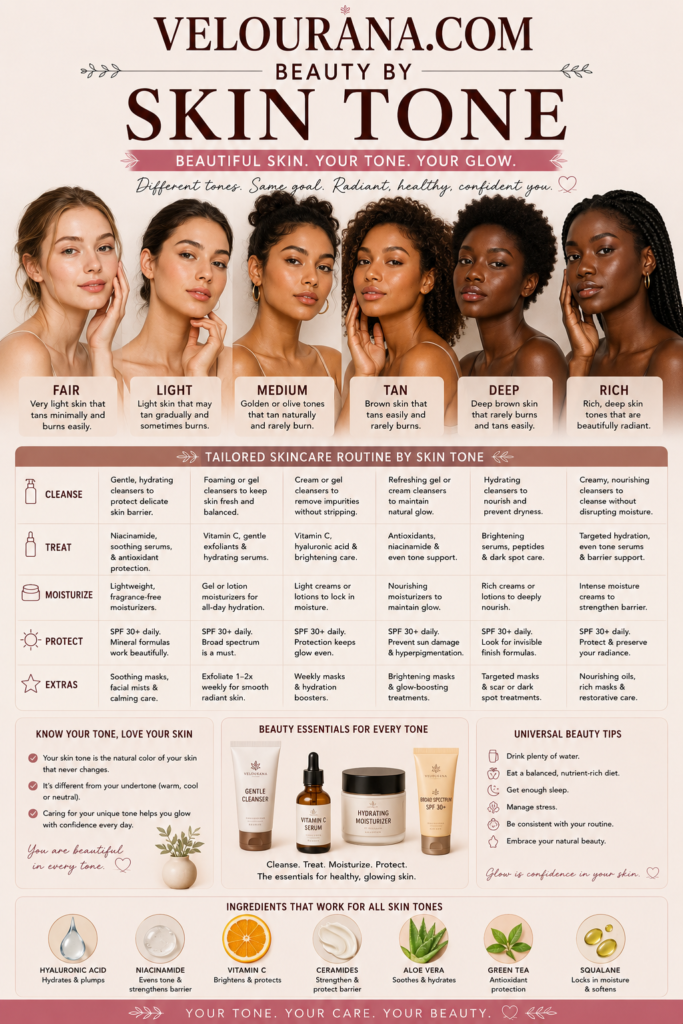
CATEGORY: Fair Skin Foundation
Finding foundation for fair skin can seem deceptively simple. At first glance, the task appears to involve choosing one of the palest shades in a range. In practice, lightness is only one part of the equation. A foundation can be pale enough and still look completely wrong because its undertone, saturation, texture, or final settled color does not correspond with the complexion.
Fair skin often reveals foundation errors with unusual clarity. Excessive yellow becomes obvious. Peach can turn orange. Pink may intensify redness. A shade only slightly too deep can make the face look separate from the neck. Even a product labeled neutral can appear unexpectedly warm or cool once spread across a large area.
The search for a successful foundation therefore requires more than identifying a shade name.
It requires understanding the complexion itself, observing how formulas behave after application, and recognizing that coverage and finish can alter the perception of color.
Foundation should ultimately make the skin look more consistent without replacing its identity.
For fair complexions, that means allowing fairness to remain visible rather than attempting to disguise it beneath unnecessary depth or warmth.
Why Very Light Foundation Is Difficult to Formulate
Creating extremely light foundation shades involves more than simply adding white pigment.
Human skin contains complex combinations of red, yellow, brown, olive, peach, and other subtle color influences. When a foundation becomes very pale, balancing those pigments accurately becomes increasingly important.
Too much white can make the shade appear chalky.
Too much yellow can create an artificial golden cast.
Too much red may produce obvious pinkness.
Excessive neutralization can result in grayness.
This is one reason two foundations described with similar names such as porcelain, ivory, fair, or alabaster may look completely different.
Shade names have no universal standard.
Porcelain in one range might be strongly pink. Another brand's porcelain may be neutral. Ivory might be pale yellow in one formula and noticeably deeper in another.
The complexion itself is therefore a better reference than the product name.
Fairness and Undertone Must Be Separated
Skin depth and undertone describe different characteristics.
Fairness indicates that the complexion is light.
Undertone describes the color influence beneath or within that lightness.
Cool fair skin may contain pink, rosy, blue, or violet characteristics. Warm fair skin can have cream, peach, yellow, or golden qualities. Neutral fair skin balances warmer and cooler influences. Fair olive skin may contain subtle green, gray-green, or muted yellow characteristics.
A foundation needs to respect both dimensions.
If the depth is correct but the undertone is wrong, the face can appear discolored.
If the undertone is correct but the foundation is too deep, the complexion may look artificially tanned.
Accurate foundation requires both conditions to work together.
Fair Skin With Pink and Rosy Undertones
Rosy fair skin can appear naturally flushed even without makeup.
The challenge is determining how much of that visible pink represents the true undertone and how much comes from surface redness.
If the neck and less-flushed areas of the face are distinctly rosy, a cool or pink-based foundation may integrate naturally.
If redness is concentrated mainly around the cheeks and nose while the neck appears neutral or warm, choosing a strongly pink foundation may exaggerate the difference.
Foundation should generally correspond with the stable complexion rather than temporary flushing.
Localized redness can then be managed with concealer or correction.
A good cool fair foundation should not make the entire face visibly pink.
It should simply contain enough cool pigment to prevent the base from turning yellow or orange.
Fair Skin With Peach Undertones
Peach undertones combine warm yellow or golden qualities with a subtle pink or red influence.
They can be difficult to classify because they sit between conventional warm and neutral categories.
A purely yellow foundation may look too golden.
A pink foundation can appear too rosy.
A balanced peach foundation may integrate much more naturally.
However, peach pigment can become orange when it is too saturated or too deep.
Fair peach skin generally requires delicacy.
The warmth should remain pale and controlled rather than resembling a tan.
Fair Skin With Golden or Yellow Undertones
Some fair complexions are distinctly warm despite their lightness.
They may have creamy, yellow, or pale golden undertones.
These complexions can look unnatural in pink-based foundations, which may create a visible rosy mask.
Warm foundations can work beautifully when their depth is sufficiently light.
The challenge is that some warm foundation ranges become progressively more golden as they deepen. The palest warm option may still contain excessive yellow.
The correct foundation should reproduce the natural warmth without exaggerating it.
Warm fair skin should still look fair after foundation.
Neutral Fair Skin and the Search for Balance
Neutral fair complexions often reject extremes.
Strong yellow can appear artificial. Strong pink can look equally wrong.
Balanced beige or neutral foundations may provide a better match, although product labeling remains inconsistent.
Some neutral foundations lean peach. Others lean slightly golden or pink. A few contain muted pigments that can look gray on clearer complexions.
Testing remains essential.
Neutral skin can also appear different according to surrounding colors.
Beside warm clothing, it may seem cooler. Beside blue or gray, subtle warmth may become more visible.
Foundation should be selected according to the skin itself rather than temporary visual comparisons.
Fair Olive Skin and Conventional Foundation Problems
Fair olive skin can experience persistent foundation mismatch even when the depth seems correct.
This happens because many pale foundation ranges are built primarily around pink, yellow, peach, and neutral undertones.
Olive may be missing entirely.
Fair olive skin can therefore make conventional foundations behave unexpectedly.
Pink formulas become rosy.
Peach formulas become orange.
Strong yellow can appear artificial.
Some neutral shades turn pink because they still contain more red pigment than the complexion.
A muted olive or green-influenced foundation can provide a better balance.
When an appropriate commercial shade is unavailable, a subtle mixer may help modify a close foundation.
Only a very small amount may be required.
The objective is to remove excess redness or peachiness, not create visibly green foundation.
The Face Does Not Need to Match Every Red Area
Foundation matching becomes confusing when different parts of the face display different colors.
Fair skin may have rosy cheeks, a red nose, pale temples, freckles, under-eye darkness, and a neck that appears more yellow or neutral.
Trying to match every area simultaneously is impossible.
The foundation should establish a believable underlying complexion.
Localized variations can then remain visible or be corrected according to preference.
This is one reason matching the jaw and neck transition is so useful.
It provides a broader reference than choosing the shade according to the center of the face alone.
Why Matching the Neck Can Be Complicated
The neck is often recommended as the definitive reference for foundation matching, but it can also differ naturally from the face and chest.
The face may be redder because of circulation or skincare.
The neck may receive less sunlight and appear lighter.
The chest may be more sun-exposed and therefore deeper.
There may be no single shade identical to every visible area.
The objective is to create continuity.
A foundation that sits naturally between the relevant areas can often look more convincing than one that perfectly matches only the face or only the neck.
Visual balance is more useful than rigid mathematical matching.
Undertone Is Easier to See When Several Shades Are Compared
A single foundation swatch can be difficult to judge.
Placing several similar-depth shades beside one another often reveals their undertones more clearly.
One may suddenly appear distinctly yellow.
Another may look pink.
A third may appear peach.
The shade that initially seemed dull in the bottle may disappear most naturally into the skin.
Comparison provides context.
This is particularly valuable for fair complexions because differences between neighboring shades can be subtle in packaging but obvious after application.
The best match is often the swatch that seems to disappear rather than the one that looks most attractive as an isolated color.
Oxidation Can Destroy an Initially Perfect Match
Foundation oxidation is especially frustrating for fair skin.
A shade may look excellent during application and become noticeably darker or warmer later.
Oxidation can result from interactions among pigment, air, oils, skincare, primer, and skin chemistry.
The amount of change varies by formula and individual.
Testing foundation therefore requires patience.
A candidate shade should be allowed to remain on the skin long enough to reveal its settled color.
If it consistently becomes too dark, choosing an initially lighter shade may seem tempting, but this does not always solve the problem because the undertone may also shift.
A more stable formula may provide a better solution.
Wet Foundation and Dry Foundation Can Look Different
Liquid foundation can change slightly as volatile ingredients evaporate and the film sets.
The freshly applied product may appear lighter, deeper, more luminous, or more saturated than the finished layer.
This is not always oxidation.
Sometimes it is simply the difference between wet and dry appearance.
Fair skin makes these small changes easier to notice.
The final match should therefore be judged after the foundation has reached its normal finish.
Sheer Foundation and Skin Tint
Sheer bases are valuable for fair skin when the natural complexion is relatively even or when preserving freckles and variation is desired.
Because less pigment is deposited, the natural undertone remains visible through the product.
This can make slight mismatches more forgiving.
A skin tint can soften redness and create overall consistency without producing a uniform mask.
The tradeoff is that discoloration, blemishes, and stronger redness remain more visible.
These areas can be addressed individually with concealer.
Sheer coverage can therefore create an efficient division between general complexion enhancement and targeted correction.
Medium Coverage as an Everyday Foundation
Medium coverage provides enough pigment to noticeably even the complexion while retaining some natural skin character.
It can be layered where additional coverage is required and left thinner elsewhere.
This flexibility is useful for fair skin because it allows the foundation's intensity to vary according to the face.
Areas with freckles or clear skin can remain more translucent.
Redness or uneven pigmentation can receive another thin layer.
The final result can appear polished without becoming completely opaque.
Medium coverage also reduces the need to find a foundation capable of concealing every imperfection in one application.
Full Coverage and the Risk of a Foundation Mask
Full-coverage foundation can create a smooth, highly perfected complexion.
It can also make shade mismatch much more obvious.
When natural skin is largely concealed, the foundation color becomes the new visible complexion.
Every undertone error is therefore amplified.
Full coverage may also eliminate natural variations such as freckles, subtle redness, and shadows that normally create dimension.
Blush, bronzer, contour, and highlighter can restore structure afterward.
The result can be beautiful, but it is a more constructed complexion.
There is nothing inherently unnatural or undesirable about this approach when it is intentional.
The important requirement is accurate color.
Choosing Foundation for Dry Fair Skin
Dry skin can change how foundation pigment appears.
When foundation catches on flakes or dehydrated areas, the product accumulates unevenly and can look darker or more textured in those locations.
Hydrating skin preparation can improve the surface before makeup.
Flexible liquid or cream foundations often move more naturally with dry skin than highly absorbent formulas, although individual products vary.
A luminous or satin finish may help preserve the appearance of dimension.
Heavy powder can emphasize dryness and alter the foundation finish.
The correct shade still matters, but formula compatibility becomes equally important.
Choosing Foundation for Oily Fair Skin
Oily skin can affect foundation longevity and color.
As oils emerge, some foundations darken or change tone. Others separate around the nose, forehead, or chin.
Long-wearing or oil-controlling formulas can improve stability.
Primer and powder may also help, although adding multiple layers can change texture.
A matte foundation may be useful, but it should not automatically be assumed that oily skin requires the flattest possible finish.
Natural-matte and satin formulas can also perform well depending on the individual.
Testing how the foundation looks several hours after application is more informative than evaluating only the first few minutes.
Combination Skin and Variable Foundation Behavior
Combination skin presents different conditions across the face.
The center may become oily while the cheeks remain dry.
A single foundation can therefore behave differently in separate areas.
It may darken around oily regions while catching on dryness elsewhere.
Skin preparation can be adjusted locally rather than applying identical products across the entire face.
Light moisturizer may be sufficient in oily areas while drier sections receive additional hydration.
Powder can similarly be concentrated where necessary.
This targeted approach helps the foundation maintain a more consistent appearance.
Foundation Texture and Mature Fair Skin
Foundation texture becomes increasingly important when the skin contains fine lines or changes in surface texture.
Heavy product can settle into lines and create visible accumulation.
Very dry matte formulas may emphasize texture, while extremely dewy formulas can reflect strongly from raised areas.
Lightweight, flexible coverage often allows the foundation to move more naturally.
Application in thin layers can provide greater control than applying a large amount at once.
Fair skin makes accumulated pigment easy to see, so careful layering can improve both color and texture.
Foundation With Freckles and Pigmentation
Freckles, sun spots, and other pigmentation create areas of additional depth.
Foundation should generally match the underlying complexion rather than these darker areas.
Selecting a shade according to freckles can make the rest of the face too deep.
Sheer coverage can allow freckles to remain visible.
Medium foundation can soften them.
Full coverage can conceal more of them if desired.
Localized pigmentation can also be addressed with concealer rather than increasing foundation coverage everywhere.
This preserves flexibility and prevents unnecessary layers.
Color Correcting Beneath Foundation
Color correction can reduce the amount of foundation required.
Green can neutralize redness.
Peach or pink may help with certain blue or purple under-eye tones.
Other corrective colors can address specific discoloration.
Fair skin requires particular restraint because corrective pigments are highly visible.
A thick green layer may create grayness.
A strong orange corrector can remain visible beneath concealer.
The corrector should generally be subtle enough to reduce the unwanted color without becoming a new discoloration.
Foundation can then sit over a more balanced surface.
Foundation Mixing for a Better Depth Match
Fair complexions sometimes sit lighter than the palest shade in a preferred formula.
A foundation lightener can reduce depth without necessarily changing the formula dramatically, although the effect varies by product.
Two neighboring foundation shades can also be mixed.
This is particularly useful during seasonal changes.
The lighter shade can dominate in winter, while a slightly deeper shade can be introduced gradually as the complexion changes.
Mixing offers more precision than accepting a shade that is consistently too dark.
Undertone Mixers and Fair Foundation
Undertone adjusters can be useful when foundation depth is accurate but the color direction is wrong.
A tiny amount of blue can reduce excessive orange.
Green can counter strong red or pink influences.
Yellow can increase warmth.
Other mixers can modify specific formulas.
Because fair foundation contains relatively little dark pigment, adjustment can happen quickly.
A very small quantity may be sufficient.
The mixture should be evaluated on the skin rather than only on a palette because the natural complexion influences the final appearance.
Foundation and Flash Photography
Some foundations behave differently under flash photography.
Certain ingredients or highly reflective powders can create a lighter-looking face in photographs even when the foundation appears accurate in person.
This phenomenon should be distinguished from an actual shade mismatch.
A face that looks natural in daylight but unusually pale under direct flash may be reacting to the photographic conditions rather than wearing the wrong foundation depth.
Testing makeup under the lighting conditions in which it will be photographed can be useful for special occasions.
The Relationship Between Foundation and Bronzer
Foundation should establish the actual complexion.
Bronzer should add warmth afterward.
Selecting foundation too dark in order to create a bronzed appearance removes this separation and can produce an unnatural transition to the neck.
A precise fair foundation provides a clean starting point.
Bronzer can then be applied selectively where warmth is desired.
This maintains dimension and makes the final complexion easier to control.
If more warmth is wanted, it can be added.
Removing excessive foundation depth after the entire face has been covered is considerably more difficult.
The Relationship Between Foundation and Blush
Foundation coverage changes how blush behaves.
When natural redness remains visible through sheer foundation, less blush may be necessary.
Full coverage removes much of the natural flush, so blush can become important for restoring color and dimension.
Foundation undertone also influences blush perception.
A base that is too yellow can make cool pink blush appear unusually bright.
A foundation that is too pink can alter the appearance of peach and coral.
Accurate foundation therefore improves the reliability of every color product applied afterward.
Setting Foundation Without Changing It
Powder, setting spray, and finishing products should preserve the foundation match rather than alter it unexpectedly.
Tinted powders can deepen or warm very fair foundation.
Some yellow powders are visibly colored on pale complexions.
A genuinely translucent powder can reduce this risk.
Setting spray may help powder layers merge with the complexion and reduce an overly dry appearance.
The amount of setting required depends on skin type, foundation formula, climate, and desired longevity.
Fair skin does not inherently require more or less setting than other complexions.
The objective is simply to maintain the chosen finish and color.
Foundation in Different Seasons and Environments
Climate can alter both the skin and foundation performance.
Heat and humidity may increase oil production and affect longevity.
Cold weather can increase dryness and make matte formulas less comfortable.
Seasonal sun exposure may slightly deepen the complexion or increase freckles.
A foundation wardrobe can therefore be more practical than expecting one exact shade and formula to perform identically throughout the year.
This does not require numerous products.
A lighter and slightly deeper shade, or different formulas for changing skin conditions, may provide sufficient flexibility.
The Value of Natural Daylight
Natural daylight remains one of the most useful tools in foundation matching.
Indoor lighting can distort both depth and undertone.
Warm bulbs can make a foundation appear more harmonious than it really is by disguising yellow or orange tones.
Cool lighting can exaggerate pinkness.
Daylight provides a more neutral environment for comparison, although direct sunlight can create harsh shadows.
Looking at the foundation near a window or outdoors in indirect daylight can reveal discrepancies that were invisible indoors.
When the Perfect Shade Does Not Exist
Sometimes a commercial foundation range simply does not contain the required combination of depth and undertone.
This is particularly common for extremely fair, fair olive, or unusually muted complexions.
The absence of an exact match does not mean the complexion has been incorrectly identified.
Mixing neighboring shades, using an undertone adjuster, choosing a sheerer formula, or exploring a different range may solve the problem.
The most important principle is not to force the skin to fit the foundation.
The foundation should fit the skin.
Foundation Should Become Visually Quiet
The ultimate sign of a successful foundation is that its color stops demanding attention.
The complexion may look smoother, more even, more luminous, or more perfected, but the observer should not immediately notice that the face has been changed to a different skin color.
The jaw should transition naturally.
The neck should remain visually connected.
The face should not suddenly appear orange, yellow, pink, gray, or artificially tanned.
Blush, eyes, lips, and other makeup can then become the expressive elements.
Foundation performs its role quietly beneath them.
For fair skin, achieving that quietness requires precision because small color differences can become highly visible.
Yet once the correct combination of depth, undertone, coverage, finish, and formula is found, foundation no longer needs to fight against the complexion.
It becomes what it was intended to be: a refined extension of the skin itself.
THE END VELOURANA
 Discover More From Our Family of Websites
 ZodiacBearing (Astrology, Tarot, Numerology, Angel Numbers & Spiritual Guidance)
 Velourana (Beauty, Makeup, Hair Care, Skincare & Beauty Tips)
 HavenBearing (Home, Living, Organization, Décor & Everyday Inspiration)
 PawBearing (Pet Care, Dog Breeds, Animal Health, Training & Pet Products)
 PsyCatherine (Notes From the Journal of a Psychologist on Real Life)

