
CATEGORY: Fair Skin Foundation
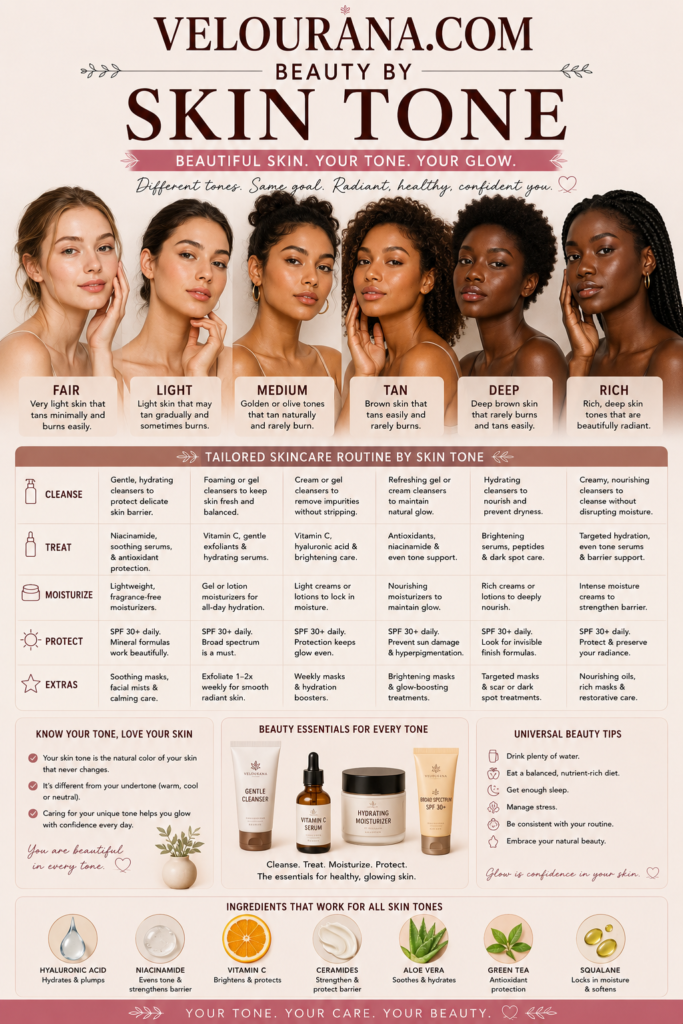
Foundation can be one of the most demanding makeup products to select for fair skin. When the complexion is light, differences that appear minor in a bottle or compact can become surprisingly obvious after application. A shade that is only slightly too deep may create a visible boundary around the jaw. A little too much yellow can look golden or orange. Excessive pink can exaggerate redness, while a poorly balanced neutral shade may leave the complexion looking gray or disconnected from the neck.
The challenge is not simply finding the lightest foundation available. Fair skin exists in many undertones and degrees of lightness, and an accurate match depends on understanding both. A foundation can be sufficiently pale and still be completely wrong because its undertone does not correspond with the complexion.
Coverage, texture, finish, oxidation, lighting, and application technique further influence the result. The same shade can appear different when applied sheerly instead of at full coverage. A luminous formula reflects light differently from a matte one. A foundation that initially looks accurate may become darker or warmer as it settles.
For fair skin, successful foundation is therefore less about covering the face with a uniform color and more about creating a believable continuation of the natural complexion.
Fair Skin Is Not One Foundation Shade
The term fair describes a general level of skin depth rather than a single color.
Within fair foundation ranges there can be considerable variation. Some complexions are extremely pale, while others sit closer to the boundary between fair and light. More importantly, fair skin can have cool, warm, neutral, olive, peach, golden, rosy, or mixed undertones.
Two people may appear similarly fair from a distance but require foundations that look completely different beside one another.
Cool fair skin may contain pink, rosy, bluish, or violet influences. Warm fair skin can contain cream, peach, yellow, or golden characteristics. Neutral fair skin often has a more balanced combination of warm and cool tones. Fair olive skin may contain subtle green, gray-green, or muted golden influences.
These undertones determine whether a foundation integrates naturally or sits visibly on top of the complexion.
A foundation does not become suitable merely because the depth is correct.
If its underlying color is wrong, the mismatch may remain visible even when the shade is extremely pale.
Why Foundation Mismatches Show So Easily
Fair skin creates relatively little visual tolerance for excess depth.
On medium or deep complexions, a small numerical difference between neighboring foundation shades may sometimes be less obvious depending on formulation and coverage. On very fair skin, even a modest increase in depth can create a noticeable difference between the face, neck, ears, and chest.
Undertone errors can be equally visible.
A foundation with excessive yellow pigment can make the face appear warmer than the body. Peach may become orange. Pink can make the complexion appear flushed. Grayness can appear when the formula is too muted or when an undertone has been neutralized excessively.
The greater the coverage, the more obvious these discrepancies can become.
A sheer foundation allows some of the natural complexion to show through, which can soften a small mismatch. Full coverage replaces more of the visible skin color with the foundation's pigment, making accuracy increasingly important.
This is why a shade that seems acceptable when lightly swatched may look very different once applied across the entire face.
Understanding Cool Fair Foundation
Cool fair skin is commonly associated with pink or rosy undertones, but coolness can be more complex.
Some cool complexions contain a subtle bluish or violet quality rather than obvious pink. Others have visible facial redness that makes the skin appear cooler than its underlying tone actually is.
This distinction matters.
Choosing foundation purely according to surface redness can result in a base that is too pink. The foundation may then amplify rather than balance the complexion.
A suitable cool foundation should correspond with the underlying skin rather than simply imitate every area of visible redness.
Cool foundation shades may be labeled rose, pink, cool, porcelain cool, or similar terms, but shade names are not standardized across brands. One company's cool foundation may be considerably pinker than another's.
Direct comparison against the skin remains more reliable than the name printed on the packaging.
The correct shade should appear integrated across the jaw and into the neck without creating an obvious rosy mask.
Warm Fair Foundation Is More Than Yellow
Warm fair skin may contain cream, peach, yellow, or subtle golden qualities.
Foundation ranges sometimes interpret warmth as strongly yellow, which can create problems for very fair complexions. A foundation can technically belong to the warm family while still containing far more yellow pigment than the skin requires.
Fair warmth is often delicate.
A creamy ivory complexion may need only a small amount of yellow. Peachy fair skin may require a balance of yellow and pink rather than pure golden pigment. Light golden skin may tolerate more obvious warmth while still requiring a very pale depth.
When foundation becomes too warm, the result may look orange or artificially tanned.
The objective is not to make warm fair skin look more golden.
It is to reproduce the warmth that is already present.
A successful match should maintain the natural lightness of the complexion while respecting its underlying temperature.
Neutral Fair Foundation and Balanced Undertones
Neutral fair skin can be difficult to match because strongly warm and strongly cool foundations may both look wrong.
A yellow-based foundation can appear too golden. A pink-based formula can look overly rosy. Even some products labeled neutral may lean noticeably toward one direction.
True neutrality does not necessarily mean the skin contains no undertone.
It usually means warm and cool characteristics are relatively balanced.
Neutral fair foundations may contain carefully controlled combinations of beige, pink, yellow, peach, or muted pigments. The result should appear neither conspicuously warm nor obviously cool once applied.
Neutral complexions can also change appearance according to lighting and surrounding colors. Warm indoor lighting may make the skin seem more golden, while cool daylight can reveal pink or muted characteristics.
Testing in natural daylight is therefore especially valuable.
Fair Olive Foundation and the Missing Undertone
Fair olive skin is one of the most frequently misunderstood complexion categories in foundation matching.
Olive undertones are often associated with medium, tan, or deep skin, yet they can occur at very fair depths.
Fair olive skin may contain subtle green, gray-green, yellow-green, or muted golden characteristics. The complexion can sometimes look neutral until conventional foundation is applied.
Then the mismatch becomes obvious.
Pink foundations may turn noticeably rosy. Warm foundations may become orange or yellow. Peach shades can appear too saturated. Some neutral formulas may look unexpectedly pink or gray.
A foundation with an olive or muted neutral undertone may integrate far more naturally.
Unfortunately, very fair olive foundation shades have historically been less common than conventional pink, yellow, and neutral options.
Mixing may therefore become useful when a near-perfect depth lacks the appropriate undertone.
The goal is not to make the face visibly green. Olive adjustment should be subtle enough to neutralize excess pink or peach while maintaining a believable skin color.
Surface Redness Can Mislead Foundation Matching
Fair skin frequently displays redness clearly.
The cheeks, nose, chin, and areas around blemishes may look pink or red even when the underlying complexion is warm, neutral, or olive.
Matching foundation directly to this redness can create an inaccurate result.
The neck, jawline, upper chest, and areas of the face with less inflammation may provide better information about the underlying complexion.
Foundation is usually more successful when it matches the stable skin tone while concealer or targeted correction addresses localized redness.
This prevents the entire face from being shifted toward pink simply because certain areas are flushed.
It also preserves a more natural relationship between the face and body.
The Jawline Is More Useful Than the Hand
Foundation is frequently swatched on the hand or wrist for convenience.
These areas can be useful for comparing texture and approximate color, but they are not always reliable for selecting the final shade.
Hands may be darker, redder, more sun-exposed, or otherwise different from the face and neck.
Testing several candidate shades along the lower cheek and jawline provides a more meaningful comparison.
The ideal shade should connect the face with the neck rather than matching one isolated area perfectly while conflicting with another.
When the face and neck differ naturally, the objective is usually to create a believable transition rather than forcing one area to imitate the other exactly.
Natural daylight remains important because artificial lighting can conceal or exaggerate undertone differences.
Foundation Should Be Allowed to Settle
A freshly applied foundation does not always represent its final color.
Some formulas oxidize after contact with air, skin oils, skincare, or other products. Oxidation can cause the foundation to deepen, become warmer, or occasionally shift in another direction.
On fair skin, even a modest change can be noticeable.
A foundation that looks perfect immediately after application may become too dark twenty minutes later.
This is why foundation should ideally be evaluated after it has had time to settle.
Observing the shade at initial application and again later provides a more accurate picture of its performance.
Oxidation is not identical across everyone. Skin chemistry, skincare products, primers, and environmental conditions can influence the result.
A formula that oxidizes significantly on one person may remain relatively stable on another.
Sheer Coverage Can Increase Shade Flexibility
Sheer foundation, skin tint, and tinted moisturizer allow more of the natural complexion to remain visible.
This transparency can make slight shade differences less obvious because the product combines visually with the skin rather than replacing its color completely.
For fair complexions that struggle to find exact undertone matches, this can be useful.
A slightly warm sheer tint may blend acceptably where the same shade in full coverage would look clearly yellow.
Sheer coverage also allows freckles, natural flushing, and subtle variations in skin tone to remain part of the finished appearance.
This can create dimension without relying heavily on contour, bronzer, or blush.
However, transparency does not make undertone irrelevant.
A strongly mismatched sheer product can still alter the complexion noticeably.
The advantage is flexibility, not immunity from color mismatch.
Medium Coverage and Controlled Correction
Medium-coverage foundation occupies a versatile position.
It can reduce redness, uneven pigmentation, and discoloration while preserving some natural variation.
For fair skin, this can create a polished result without completely replacing the complexion.
Medium coverage also allows targeted concealer to handle areas requiring additional correction.
Instead of applying heavy foundation everywhere because of a few blemishes or patches of redness, a moderate layer can establish overall consistency while concealer adds precision.
This approach often preserves a more realistic skin appearance.
The foundation remains responsible for creating continuity rather than becoming the sole product used to hide every imperfection.
Full Coverage Requires Greater Shade Accuracy
Full-coverage foundation contains enough pigment to replace much of the visible natural skin color.
This can create a highly perfected finish, but it also makes matching errors more apparent.
When a full-coverage shade is slightly too dark, the entire face may appear separated from the neck. When the undertone is wrong, the complexion can look uniformly yellow, pink, peach, or gray.
Very fair skin therefore benefits from particularly careful matching when high coverage is desired.
Application should also consider the ears, jawline, and visible areas of the neck when necessary for visual continuity.
This does not mean foundation should routinely be spread far down the neck.
An accurate shade should minimize the need for that.
Full coverage can look elegant and seamless when the color is correct and the texture suits the skin.
The issue is precision rather than the amount of coverage itself.
Matte Foundation on Fair Skin
Matte foundation can create a smooth, controlled appearance and may be particularly useful for skin that becomes oily throughout the day.
On fair skin, however, a completely flat finish can sometimes remove visible dimension.
Natural skin contains variations in light reflection. When foundation eliminates all of them, the face may appear more uniform than the surrounding neck and body.
This can be balanced with blush, subtle bronzer, highlighter, or strategic areas of natural sheen.
Matte formulas can also emphasize dryness or texture if the skin is not adequately prepared.
Because fair skin often makes shadows around flakes and texture visible, a heavy matte layer may increase their appearance.
The success of matte foundation therefore depends not only on shade but also on skin condition and application.
Luminous and Dewy Foundations
Luminous foundation reflects more light and can create a fresh, dimensional appearance.
Fair skin can respond beautifully to this finish because luminosity emphasizes the natural brightness of a light complexion.
However, luminosity should not be confused with a lighter foundation shade.
Reflective formulas can sometimes appear paler under direct lighting even when the pigment itself matches correctly.
Dewy foundation may also emphasize texture differently from matte foundation. Strong shine can draw attention to raised areas, pores, or uneven surfaces.
A satin or natural finish can provide a middle ground between completely matte and strongly dewy.
The ideal finish depends on skin type, desired aesthetic, and environmental conditions rather than fairness alone.
Foundation and Freckles
Fair skin frequently includes freckles, and foundation coverage determines how visible they remain.
Sheer bases allow freckles to show clearly. Medium coverage may soften them while preserving their pattern. Full coverage can conceal them almost entirely.
None of these outcomes is inherently preferable.
The choice is aesthetic.
When freckles remain visible, they contribute warmth, depth, and natural variation to the complexion. Foundation should integrate with the base skin rather than attempt to match the darker freckle color.
Matching foundation to freckles can make the entire face too dark.
The foundation should generally correspond with the surrounding skin while allowing the freckles to remain naturally deeper.
Foundation and Concealer Should Work Together
Foundation does not need to perform every complexion-correcting task.
A precise foundation match can establish the overall skin tone while concealer handles blemishes, redness, under-eye darkness, or localized pigmentation.
This division of labor is particularly useful for fair skin because excessive foundation can make the complexion look unnecessarily uniform.
Spot concealing allows coverage to remain concentrated where it is actually required.
The concealer used for blemishes should usually remain close to the foundation depth.
An extremely light concealer can highlight rather than hide a blemish.
Under-eye concealer may be slightly brighter if desired, but excessive lightness can create obvious pale patches.
The relationship among foundation, concealer, and natural skin should remain coherent.
Mixing Foundation Shades
Sometimes the correct foundation exists between two commercial shades.
Mixing can solve both depth and undertone problems.
A very fair person may need to lighten an otherwise accurate foundation. Someone between fair and light may combine neighboring depths. A neutral complexion may mix warm and cool formulas to achieve better balance.
Undertone adjusters can also modify a nearly correct foundation.
Small amounts of blue, green, yellow, or other mixers can change the behavior of a formula, although these pigments should be used carefully.
Fair skin requires especially small quantities because strong adjustment colors can alter the foundation quickly.
Mixing is most useful when the starting formula is already close.
Attempting to transform a dramatically incorrect shade usually creates unnecessary complexity.
Seasonal Foundation Changes
Fair skin does not necessarily remain identical throughout the year.
Some complexions deepen slightly during summer. Freckles may become more pronounced. Warmth may increase after sun exposure. Winter can bring greater pallor or visible redness.
A foundation that matches perfectly in one season may therefore require adjustment later.
This does not always require purchasing an entirely different formula.
Two neighboring shades can sometimes be mixed in different proportions as the complexion changes.
Undertone should also be observed.
A summer complexion may appear warmer because of surface tanning while retaining the same fundamental undertone.
Matching only the temporary warmth can create problems when the tan begins to fade.
Neck and Chest Color Matter
The face may naturally differ from the neck and chest.
Skincare, sun exposure, redness, pigmentation, and circulation can all create variation.
Foundation should create a believable relationship among these areas.
Matching exclusively to the reddest part of the face can make the result too pink. Matching a deeply sun-exposed chest can make the face too dark.
The jawline provides a useful transition point because it allows both face and neck to be considered simultaneously.
The aim is visual continuity.
Perfect uniformity across the entire body is neither necessary nor realistic.
Lighting Can Completely Change a Foundation Match
Foundation should be evaluated under more than one lighting condition.
Warm indoor light can disguise yellow or orange undertones. Cool artificial light may exaggerate pinkness. Strong overhead lighting can alter the perception of depth.
Natural daylight usually provides the clearest reference for color matching.
Photographs can also reveal differences between face and neck, although camera processing, white balance, and screens may distort color.
A foundation that appears accurate in several environments is generally more dependable than one that works only under a particular bathroom light.
Application Tools Affect Coverage and Color
Foundation color can appear slightly different depending on application.
A dense brush may create fuller coverage and therefore reveal more of the foundation's true pigment.
A damp sponge often sheers the product slightly and can create a softer finish.
Fingers can warm certain formulas and help them merge with skincare beneath.
None of these methods is universally best.
The important point is that increased coverage makes the foundation color more dominant.
If a shade seems perfect when applied lightly but becomes too yellow or too dark when built up, the undertone or depth may not be sufficiently accurate for full coverage.
Primer and Skincare Can Influence Foundation
Foundation sits on top of skincare and primer, so the products beneath it affect its appearance and longevity.
Very rich skincare can cause foundation to separate. Extremely dry skin preparation can make foundation cling. Certain primers may alter the way pigment spreads or how quickly oils interact with the formula.
Fair skin can make separation particularly visible because uneven foundation creates areas of differing color and coverage.
Allowing skincare to settle before foundation can improve consistency.
The foundation formula and base products should also be compatible in texture.
A beautiful shade cannot compensate for a formula that repeatedly breaks apart on the skin.
Powder Can Change Foundation Color
Setting powder is another potential source of color shift.
Some translucent powders are not truly colorless. They may contain yellow, pink, peach, or beige pigments that alter very fair foundation.
Tinted powder can deepen the base enough to become noticeable.
Using a genuinely translucent formula or a powder designed for very light skin can preserve the original match more accurately.
Powder application should also be controlled.
Heavy powder can change the finish, reduce luminosity, and make foundation appear more opaque.
Strategic setting can maintain longevity without unnecessarily flattening the complexion.
Foundation Should Preserve the Identity of Fair Skin
A common temptation is to select foundation slightly darker because the natural complexion seems too pale.
This usually creates a less convincing result.
Foundation is not bronzer.
Its primary role is to create an even base that corresponds with the actual skin.
Warmth and dimension can be added afterward through blush, bronzer, contour, and other cosmetics.
Choosing foundation darker than the complexion can create obvious differences around the hairline, ears, neck, and chest.
Fairness itself does not require correction.
A well-matched foundation allows the complexion to remain fair while improving uniformity and creating the desired finish.
Recognizing a Successful Match
A successful foundation does not draw attention to its own color.
It should blend into the complexion and create continuity across the jaw.
The face should still belong naturally to the neck and body.
The undertone should not suddenly appear yellow, orange, pink, peach, or gray.
After the formula settles, the depth should remain believable.
Once blush, bronzer, contour, and other makeup are applied, the foundation should function as a quiet base rather than an obvious layer beneath them.
This is especially important for fair skin because color discrepancies are so easily visible.
The best foundation is not necessarily the palest, most expensive, or most heavily pigmented.
It is the one whose depth, undertone, texture, coverage, and finish work convincingly with the individual complexion.
Fair skin does not need to be transformed before makeup begins.
It needs a foundation that understands its actual color.
THE END VELOURANA
 Discover More From Our Family of Websites
 ZodiacBearing (Astrology, Tarot, Numerology, Angel Numbers & Spiritual Guidance)
 Velourana (Beauty, Makeup, Hair Care, Skincare & Beauty Tips)
 HavenBearing (Home, Living, Organization, Décor & Everyday Inspiration)
 PawBearing (Pet Care, Dog Breeds, Animal Health, Training & Pet Products)
 PsyCatherine (Notes From the Journal of a Psychologist on Real Life)

