
CATEGORY: Dark Skin Makeup
Makeup on dark skin is not simply a matter of taking colors developed for lighter complexions and making them deeper. Richly melanated skin has its own relationships with pigment, contrast, reflection, undertone, and light. Colors that seem intense in a palette may become beautifully balanced against a deep complexion, while shades marketed as universal can disappear, turn gray, or create an unwanted pale cast.
Understanding these relationships transforms makeup from correction into expression.
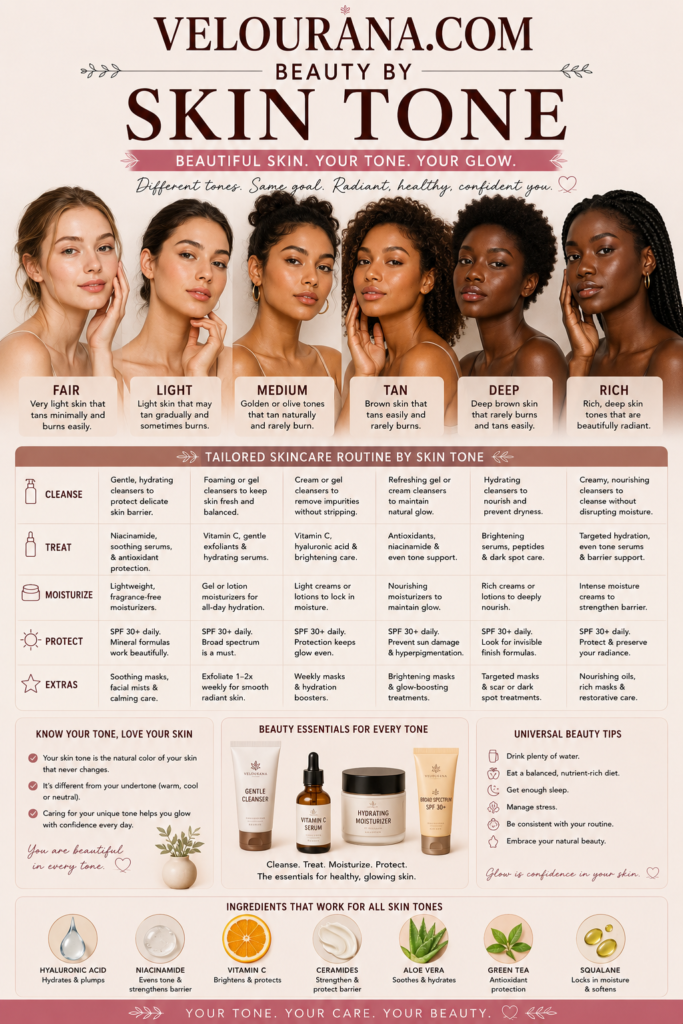
Dark skin encompasses an enormous spectrum. Some complexions are golden or bronze, others are copper-red, neutral cocoa, deep olive, cool espresso, violet-brown, or exceptionally deep with blue-black dimensions. These differences influence how foundation, blush, bronzer, lipstick, eyeshadow, highlighter, and powder appear after application.
The most successful makeup therefore begins with the complexion itself. Rather than covering natural depth, the objective is to work with it. Natural variation around the forehead, mouth, eyes, and jaw can remain part of the finished look. Strategic color can enhance facial structure without creating a mask.
Modern makeup offers extraordinary possibilities for dark skin because highly pigmented formulas, broader complexion ranges, richer blushes, deeper bronzers, and sophisticated lip colors make it increasingly possible to create everything from almost invisible makeup to dramatic editorial looks without compromising the integrity of the complexion.
Understanding Color Against Deep Complexions
Every makeup color is influenced by the skin beneath and around it.
A blush is not perceived independently. Its visible effect depends partly on the depth and undertone of the complexion. The same coral blush can appear vivid on lighter skin, softly warm on medium-deep skin, and nearly invisible on an exceptionally deep complexion if its pigment concentration is insufficient.
This does not mean dark skin always requires brighter makeup. It means cosmetic pigments need enough strength to remain visually present.
Rich berry, plum, terracotta, brick, wine, orange, red, and deep rose tones can produce beautifully nuanced effects. Some appear surprisingly natural because the depth of the complexion balances their intensity.
Pastels can also work on dark skin, but formulation becomes important. A pastel created largely from white pigment may appear chalky. A highly pigmented version with sufficient color can create striking intentional contrast.
Color theory becomes especially useful when choosing products. Warm colors can harmonize with golden, copper, and red undertones, while cool shades can interact dramatically with neutral and cool complexions.
There are no absolute restrictions. Makeup can create harmony or deliberate contrast.
Preparing Dark Skin for Makeup
Beautiful makeup begins with the surface beneath it.
Dryness can appear particularly visible on dark skin because flaky areas may create a pale or gray cast against the deeper complexion. Applying foundation directly over these areas can emphasize texture.
Skin preparation should therefore focus on comfort and balance.
A gentle cleansing routine can help preserve the skin barrier. Moisturizer can soften dry areas and improve foundation application. During daytime wear, appropriate sunscreen remains important.
Sunscreen formulation deserves special attention because products leaving a noticeable white cast can interfere with makeup color. A pale residue beneath foundation may cause even an accurate foundation shade to appear gray.
Allowing skincare products to settle before makeup can reduce pilling and uneven application.
Primer can be useful when a specific need exists. Hydrating primers can support dry areas, while oil-controlling formulas can help where shine becomes excessive. Smoothing primers may alter the appearance of pores and texture.
Primer is not compulsory. The best preparation is simply one that creates a comfortable surface compatible with the makeup being applied.
Creating a Natural Complexion Base
Foundation for dark skin should preserve richness rather than dilute it.
Depth and undertone must both be considered. A foundation can be sufficiently dark yet still look incorrect because it contains too much orange, red, yellow, or gray.
Dark complexions can possess warm, cool, neutral, or olive undertones. Assumptions based on skin depth alone frequently lead to mismatches.
The face itself may contain multiple depths. The forehead can be darker than the center, while pigmentation around the mouth may add another dimension.
These variations are normal.
A lightweight foundation or skin tint can soften unevenness while allowing natural color differences to remain visible. Medium coverage offers additional refinement, while full coverage can create a highly perfected finish.
Coverage should reflect preference rather than an assumption that dark skin requires extensive correction.
Foundation is most convincing when it visually belongs to the face, neck, and surrounding skin.
Concealing Without Creating Ashiness
Concealer is frequently used beneath the eyes, around pigmentation, and over blemishes.
On dark skin, concealer that is substantially lighter than the complexion can create a gray or chalky effect. This becomes especially noticeable when the underlying area contains deep blue, purple, or brown pigmentation.
For spot concealing, a shade close to the natural complexion generally integrates most seamlessly.
Under-eye concealer can be slightly brighter when a highlighted effect is desired, but the undertone should remain compatible with the skin.
Color correction can be useful for deeper discoloration.
Warm peach, orange, red-orange, or reddish-brown correctors can help neutralize certain dark or cool-toned areas before concealer is applied. The appropriate corrector depends on complexion depth and the color of the discoloration.
The objective is not to create a visible orange layer. A small amount can balance the area so that less concealer is required afterward.
Careful correction often produces a more natural result than repeatedly layering pale concealer.
Powder That Disappears Into Dark Skin
Setting powder can control shine and improve makeup longevity, but pale residue is particularly visible on richly pigmented complexions.
Not every product labeled translucent becomes invisible on dark skin.
Some formulas contain white or light-reflective particles that can create a gray veil, particularly when applied heavily. The effect may become even more obvious in flash photography.
Tinted powders developed for deeper complexions can offer an alternative.
Application quantity is equally important.
Powder does not necessarily need to cover the entire face. Applying it primarily to areas where makeup tends to move or shine can maintain longevity without eliminating all natural reflection.
A small amount beneath the eyes can set concealer, while the forehead, nose, and chin can be selectively controlled according to skin type.
Dark skin does not need to be completely matte to look polished.
Natural highlights across the face contribute to dimension.
Blush on Dark Skin
Blush can be one of the most transformative products for dark complexions.
The key is sufficient pigment.
Very pale blush formulas may disappear or leave a powdery film. Richer colors can interact more naturally with deep skin.
Berry, plum, wine, brick, burnt orange, terracotta, deep coral, warm red, raisin, and saturated rose shades can create a wide range of effects.
Some colors that appear intimidatingly bright in their packaging become remarkably wearable once blended into dark skin.
Undertone influences the result. Warm complexions may harmonize naturally with terracotta, orange-red, coral, and warm berry shades. Cool complexions can interact beautifully with plum, wine, cool rose, and berry tones.
Neutral complexions often accommodate an especially broad range.
Placement can also transform the effect. Blush concentrated on the apples creates a different impression from blush swept upward toward the temples.
The objective can be freshness, warmth, structure, drama, or simply color.
Bronzer That Actually Bronzes
Bronzer should introduce warmth.
For dark skin, the product must be deep enough to remain visible while still differing meaningfully from the natural complexion.
A bronzer that is lighter than the skin cannot create convincing warmth. Likewise, a product that is merely darker but lacks warmth may function more like contour.
Deep bronzers can contain red-brown, golden-brown, copper, or warm neutral characteristics.
The ideal choice depends on undertone and desired intensity.
Bronzer can be applied around areas where warmth would naturally appear, such as the forehead, temples, upper cheeks, and perimeter of the face.
The effect should merge with the complexion rather than sit visibly on top of it.
Richly pigmented bronzers require controlled application. Beginning with a small amount and gradually building intensity usually provides greater precision.
Contouring Deep Complexions
Contour is intended to imitate shadow rather than warmth.
For this reason, contour shades are generally more neutral or cool than bronzers.
On deep skin, contour needs enough depth to remain visible, but simply choosing an extremely dark product is not sufficient. The undertone must resemble believable shadow.
A contour that is excessively gray can appear unnatural. One that is too warm may look like bronzer.
Natural facial structure should guide placement.
Contour can emphasize the cheek area, jaw, forehead, or other features, but it does not need to reshape the entire face.
Subtle contouring can be particularly elegant on dark skin because natural facial depth already creates strong relationships between light and shadow.
Makeup can reinforce those relationships rather than attempting to manufacture entirely new ones.
Highlighting Melanated Skin
Highlighter manipulates reflection.
Against dark skin, reflected light can create extraordinary contrast and luminosity.
Gold, bronze, copper, rose gold, warm champagne, and richly toned metallic shades can integrate beautifully with many deep complexions.
Cooler metallics can create equally striking effects on cool or neutral undertones.
The desired finish determines the appropriate product.
A finely milled highlighter can create subtle radiance, while intense metallic formulas produce a more dramatic effect.
Very pale highlighters can create a visible stripe if they do not blend into the complexion. This may be intentional in editorial makeup but less suitable when natural luminosity is desired.
Highlighter should not be used to make dark skin appear lighter.
Its role is to emphasize the places where light naturally meets the face.
Eye Makeup and the Power of Saturated Color
Dark skin provides a remarkable background for eye color.
Gold, bronze, copper, emerald, sapphire, cobalt, violet, burgundy, plum, teal, and rich metallic shades can appear exceptionally vibrant.
Neutral eyeshadow can be equally sophisticated.
Chocolate brown, deep taupe, caramel, warm bronze, espresso, terracotta, and muted plum can create subtle definition without disappearing into the complexion.
Pigment quality matters.
Eyeshadows containing large amounts of pale filler can become chalky or require extensive layering. Highly pigmented formulas generally reveal their intended color more effectively.
An eyeshadow base can intensify certain shades, particularly vivid colors and pastels.
Deep eyeliner shades such as black, espresso, navy, plum, and dark green can create definition while offering alternatives to conventional black.
The depth of the complexion makes both subtle and dramatic eye makeup possible without requiring rigid rules about which colors are acceptable.
Nude Lipstick Is Not Beige
Few makeup categories demonstrate the limitations of universal color terminology as clearly as nude lipstick.
Nude should relate to the wearer's complexion and natural lip color.
For dark skin, a convincing nude can be cocoa, caramel, cinnamon, rose-brown, mauve, terracotta, plum-brown, warm chestnut, or deep neutral brown.
A pale beige lipstick may create intentional contrast, but it should not be treated as the universal definition of nude.
Natural lip pigmentation also varies considerably.
The upper and lower lips may have different depths. The border can be more pigmented than the center.
Lip liner can help integrate lighter lipstick shades with the surrounding complexion. A deep brown liner, for example, can create a gradual transition between a lighter central lip color and dark skin.
The result can range from almost invisible enhancement to strongly sculpted definition.
Bold Lip Colors on Dark Skin
Deep complexions can support extraordinary lip color.
Classic red can take many forms, from warm orange-red to deep blue-red. Burgundy, wine, blackberry, plum, magenta, coral, orange, violet, and nearly black shades can create dramatic effects.
Brightness should not be feared simply because the complexion is deep.
Highly saturated lipstick can appear balanced because the richness of the skin provides visual depth around it.
Undertone can guide color selection when harmony is desired, but makeup does not have to obey undertone rules.
A cool lipstick on warm skin can create striking contrast. An orange lip against a cool complexion can become an intentional focal point.
The most important considerations are pigment quality, even application, and personal preference.
Brows and Facial Balance
Brows frame the face and influence the balance of the entire makeup look.
Dark skin does not automatically require black brow products.
Natural brow hair color, density, and desired intensity should guide selection.
Deep brown, espresso, neutral brown, soft black, and other shades can create different effects.
A product significantly darker than the natural brow may appear severe, while one that is too warm can become conspicuous.
Texture matters as much as color.
Pencils can create precise hair-like definition. Powders offer softer shading. Pomades can provide stronger structure, while gels can emphasize existing hairs.
The most convincing brow makeup usually preserves some natural variation rather than creating one solid block of color.
Makeup for Deep Olive Complexions
Deep olive skin deserves particular attention because its undertones are frequently misunderstood.
Olive coloration can contain greenish, muted golden, or gray-golden dimensions. It is not limited to medium skin depths.
Foundations that are strongly orange can conflict with deep olive complexions. Excessively red products may also look disconnected.
Neutral or olive-balanced complexion products can create greater harmony.
Color cosmetics can behave unexpectedly as well. Certain pinks may appear cooler, while earthy shades can merge closely with the complexion.
Experimentation becomes especially valuable because product labels do not always describe undertones consistently.
The actual interaction between pigment and skin remains the most reliable guide.
Makeup for Very Deep Skin
At the deepest end of the complexion spectrum, pigment strength becomes particularly important.
Products that appear richly colored in their packaging can become subtle once applied.
Foundation ranges must offer sufficient depth without relying on excessive red or orange pigment.
Blushes and bronzers require enough saturation to remain visible. Highlighters should complement the complexion rather than leave a pale stripe.
Powders must disappear without creating ashiness.
Very deep skin can carry vivid color magnificently, but it can also support exceptionally refined monochromatic makeup using espresso, plum-brown, burgundy, bronze, and other rich tones.
There is no requirement for makeup to be bright simply because the complexion is deep.
The essential requirement is that formulas contain enough pigment to provide genuine choice.
Natural Makeup on Dark Skin
Natural makeup does not mean using pale colors.
It means creating an effect that integrates with the complexion.
A lightweight base can allow natural pigmentation to remain visible. Spot concealing can address individual marks. Soft brown or plum tones can define the eyes.
Blush can mimic natural warmth or flush. A subtle bronzer can enhance existing depth, while lip color can remain close to natural pigmentation.
The final result may involve several products, yet appear almost effortless because every color belongs naturally with the skin.
Texture plays an important role.
Skin-like finishes, carefully blended edges, and restrained powder help maintain realism.
Natural makeup celebrates the complexion rather than attempting to neutralize it.
Dramatic Makeup and Creative Freedom
Dark skin also provides an exceptional canvas for dramatic makeup.
Graphic eyeliner, saturated eyeshadow, metallic finishes, intense blush, unconventional lip colors, and high-contrast highlights can all create powerful effects.
Beauty rules should not restrict creativity.
Traditional advice sometimes suggests that certain colors are unsuitable for darker complexions. In practice, formulation and intention matter far more than outdated restrictions.
White eyeliner can create dramatic contrast. Neon shades can become extraordinarily vivid. Pastels can produce editorial effects when pigmentation is strong enough.
Deep jewel tones can amplify the richness of melanated skin, while monochromatic brown looks can emphasize sophistication through subtle tonal variation.
Makeup can be understated one day and experimental the next.
The complexion does not determine the permitted style.
Maintaining Dimension Throughout the Makeup Look
One of the greatest strengths of dark skin is its natural dimensionality.
Light reflects from high points while deeper areas create beautiful structural contrast.
Heavy foundation, pale concealer, excessive powder, and aggressive correction can unintentionally remove these dimensions.
A thoughtful makeup application restores them.
Foundation establishes balance. Concealer refines selected areas. Blush returns color. Bronzer adds warmth. Contour can reinforce shadow. Highlighter introduces controlled reflection.
Not every step is necessary.
The purpose is not to follow a fixed sequence but to decide what the finished complexion needs.
Sometimes the most sophisticated choice is to leave an area untouched.
Makeup That Celebrates Rather Than Corrects
Dark skin makeup reaches its greatest potential when the complexion itself remains the central feature.
Melanin does not need to be muted. Natural depth does not need to be brightened away. Pigmentation differences do not automatically need complete concealment.
Makeup can refine, emphasize, transform, dramatize, or simply decorate.
The expanding availability of deep foundation shades, richly pigmented blushes, bronzers with genuine depth, sophisticated powders, and inclusive lip colors has opened creative possibilities that should always have existed.
Dark skin is not one shade and does not require one makeup philosophy.
It includes countless combinations of depth and undertone, each interacting differently with cosmetic color.
Understanding those relationships provides freedom rather than restriction.
Once makeup is selected for the complexion that actually exists, color becomes more expressive, foundation becomes more seamless, dimension remains visible, and the richness of dark skin is not hidden beneath the finished look.
It becomes the foundation of the beauty itself.
The End Velourana
 Discover More From Our Family of Websites
 ZodiacBearing (Astrology, Tarot, Numerology, Angel Numbers & Spiritual Guidance)
 Velourana (Beauty, Makeup, Hair Care, Skincare & Beauty Tips)
 HavenBearing (Home, Living, Organization, Décor & Everyday Inspiration)
 PawBearing (Pet Care, Dog Breeds, Animal Health, Training & Pet Products)
 PsyCatherine (Notes From the Journal of a Psychologist on Real Life)

