
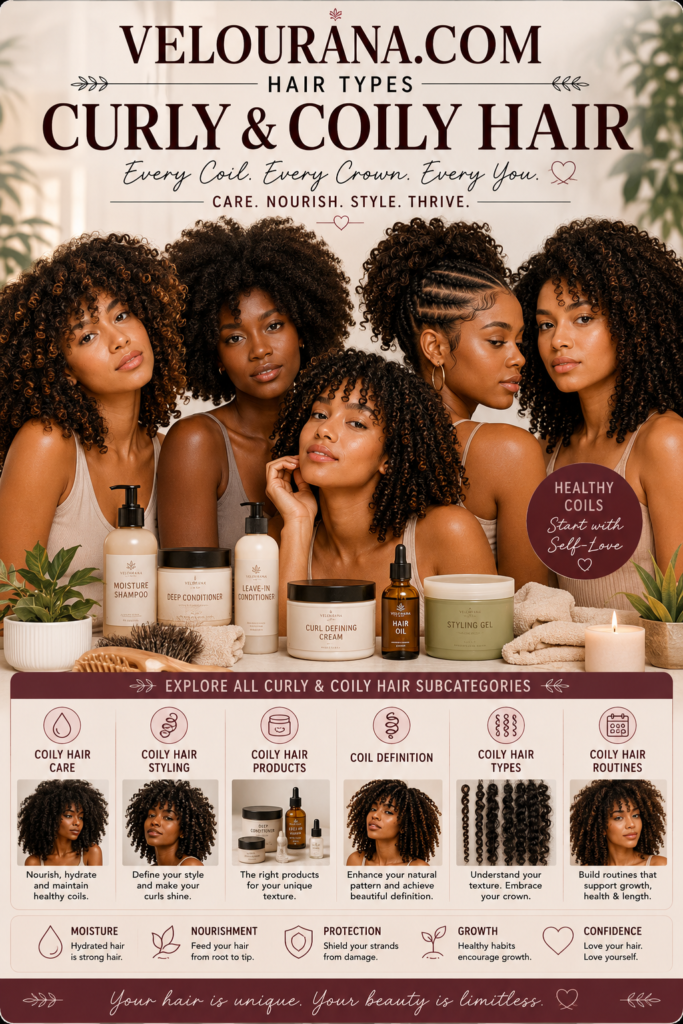
CATEGORY: High-Porosity Hair
Few hair experiences are as confusing as watching freshly conditioned hair become dry again with surprising speed. Immediately after washing, the lengths may feel soft, flexible, and saturated. Curls may appear plump and defined. Straight or wavy hair may feel smooth under the fingers. A carefully chosen mask seems to have worked. Then the transformation begins to fade. The ends roughen, frizz returns, tangles develop, and the hair seems to demand another round of moisture.
For high-porosity hair, this cycle is familiar because the central problem is often not access to water. It is retention.
That distinction changes the logic of hair care. If dryness is interpreted simply as evidence that the hair needs more water, the routine can become an endless sequence of wetting, misting, masking, and layering. Temporary softness follows, but the underlying instability remains. In some cases, excessive manipulation and repeated wetting can add their own stresses.
A more effective approach considers hydration as one part of a larger system. Water changes the physical state of the hair. Conditioning ingredients influence friction and surface behavior. Film-forming stylers can improve environmental stability. Oils and serums can increase lubrication. Protein-containing or specialized repair treatments may temporarily reinforce damaged fibers. Drying methods, heat, chemical processing, and everyday friction determine how quickly those improvements are lost.
High-porosity hair therefore benefits from a shift in emphasis: from repeatedly putting something into the hair to creating conditions that help the hair remain manageable after wash day is over.
The Difference Between Wet Hair and Moisturized Hair
In everyday beauty language, “wet” and “moisturized” are sometimes treated as though they mean the same thing. They do not.
Hair can contain a large amount of water and still be in poor condition. Anyone who has handled severely bleached hair in the shower may recognize this immediately. The strand is saturated, yet it can feel rough, gummy, excessively elastic, tangled, or fragile. Water is present, but the fiber's structure and surface are compromised.
Conversely, hair that is completely dry in the literal sense can feel supple and well conditioned because cosmetic ingredients have improved lubrication, flexibility, and surface smoothness.
This is why evaluating a moisturizer solely by how wet or slippery the hair feels at application can be misleading. The more meaningful question is what happens later. Does the hair remain manageable once fully dry? Is friction reduced? Does it tangle less? Does the style remain stable? Does the hair preserve flexibility without becoming excessively coated?
Water plays an indispensable role in washing and conditioning, but water alone is not a complete treatment. High-porosity hair needs the benefits created around water: cleansing that does not unnecessarily worsen roughness, conditioners that deposit effectively, leave-ins that maintain lubrication, and styling methods that reduce the damage accumulated between washes.
Understanding this prevents a common cycle in which dry-feeling hair is repeatedly sprayed with water throughout the day without addressing why it becomes rough again. Rewetting may temporarily restore flexibility or reactivate a styling product, particularly for curls, but it is not automatically equivalent to repairing the condition that produced the dryness.
Why Moisture Escapes So Readily
Hair continuously interacts with its environment. Water can move into and out of the fiber depending on its condition and surrounding humidity. High porosity makes these exchanges comparatively rapid.
When the protective characteristics of the outer fiber are compromised, the strand becomes less resistant to penetration. During washing, this can create the impression that the hair is exceptionally thirsty. It saturates quickly, and products seem to vanish into it. Yet the same permeability that facilitates entry can make retention more difficult.
This is particularly noticeable in damaged hair. Bleaching, repeated chemical treatments, excessive heat, ultraviolet exposure, mechanical wear, and the ordinary aging of long lengths can all contribute to a fiber that behaves differently from newly grown hair.
The result is not simply “dryness” in the everyday sense. The fiber can become more environmentally reactive. Humid air may encourage swelling and changes in shape. Dry air may accelerate the sensation of roughness. Repeated transitions between wet and dry states impose additional physical changes on the strand.
This helps explain why high-porosity hair can seem unpredictable. A routine that produces beautiful results during one season may feel insufficient during another. A style that remains controlled in an air-conditioned environment may expand outdoors. Hair that feels rich and soft after a mask may become coarse after sleeping on a rough pillowcase or spending hours in wind and sun.
Porosity is therefore connected not only to product absorption but to the stability of the fiber after treatment.
The Hidden Cost of Repeated Swelling and Drying
Every wash cycle changes hair physically. Water enters, the fiber swells, and drying reverses much of that swelling. Hair is designed to tolerate ordinary exposure to water, but damaged fibers have less structural resilience than intact ones.
This matters because the intuitive response to high porosity is often to add more water whenever dryness appears. Some routines involve frequent misting throughout the day, repeated soaking between formal wash days, or sleeping with damp hair as a habitual moisturizing strategy.
There are situations in which rewetting is useful. Curly hair may need water to refresh its pattern. A small amount of moisture can make restyling easier. The problem arises when water itself is treated as a complete conditioning system.
Frequent wetting means frequent swelling and drying. If each cycle also includes manipulation, brushing, scrunching, tying, or sleeping while the hair is vulnerable, the mechanical burden can become substantial. The hair may feel temporarily refreshed while gradually accumulating additional wear.
A better question is therefore not “How often can I add moisture?” but “How can I preserve manageability so that constant intervention becomes unnecessary?”
For some people, that means using a more effective conditioner on wash day. For others, it means improving the leave-in layer, reducing friction overnight, changing the styling product, lowering heat, or clarifying occasionally so accumulated residue does not interfere with the desired finish. High-porosity routines become more efficient when the causes of rapid decline are identified rather than answered automatically with more water.
Conditioning as a Strategy for Reducing Friction
When high-porosity hair becomes rough, friction becomes one of its greatest practical enemies. Individual strands catch against one another. Small tangles combine into larger ones. Detangling requires more force. More force increases the risk of breakage. Broken and split fibers create even more irregularity, continuing the cycle.
Conditioning interrupts that process.
A well-formulated conditioner improves slip and reduces the force needed to separate strands. This can sound cosmetic and superficial, but friction management has significant implications for length retention. Every combing session is a mechanical event. If the same knot can be removed with substantially less force because the fibers are better lubricated, the difference accumulates across hundreds of grooming sessions.
Highly porous hair often benefits from generous conditioning through the most damaged sections, but generosity should not be confused with indiscriminate heaviness. Fine porous hair may become limp under products that work beautifully on coarse curls. A conditioner needs to provide sufficient lubrication without creating an undesirable finish for the particular texture and density.
Application technique can improve results without adding more product. Dividing dense hair into sections helps ensure that the inner layers receive conditioner rather than leaving most of it on the outer surface. Adding a little water while distributing conditioner can sometimes improve spread. Gentle detangling while the hair has maximum slip reduces the temptation to fight knots later when the fiber is less protected.
Rinsing does not necessarily remove every beneficial conditioning ingredient. Many conditioners are specifically designed to deposit useful materials onto the hair during application and rinsing. The goal is not to leave ordinary rinse-out conditioner visibly coating the strand unless the product is designed for that purpose. It is to allow the formulation to perform as intended.
Deep Conditioning Without Turning Wash Day Into an Arms Race
Masks occupy an almost ceremonial position in high-porosity hair care. When ordinary conditioner seems insufficient, the natural escalation is to choose something richer, leave it on longer, add heat, use more, and repeat the treatment more frequently.
Sometimes this works extremely well. A richer formula may genuinely provide better lubrication and a more substantial conditioned feel. But deep conditioning should be judged by results rather than intensity.
The immediate sensation after rinsing is only one measure. A useful mask should make subsequent detangling, drying, and styling easier. Ideally, the improvement remains perceptible beyond the first few hours. If the hair feels spectacular while wet but becomes just as rough as before once dry, another part of the routine may be limiting retention.
Leaving a treatment on dramatically longer than instructed does not guarantee proportionally greater benefit. Cosmetic formulations are designed around particular usage conditions. Once useful deposition has occurred, additional hours may offer little advantage.
Heat with conditioning treatments is another area where moderation matters. Gentle warmth can influence how certain formulations spread and interact with hair, but very high heat is not necessary. The objective is conditioning, not forcing the fiber open through aggressive temperature exposure.
The most successful mask is not necessarily the richest or most expensive. It is the one that improves the behavior of the hair without creating buildup, stiffness, excessive weight, or a dependence on increasingly elaborate rescue sessions.
Protein and Porous Hair: Useful Support Without Dogma
Protein has become almost synonymous with high porosity. The reasoning is understandable. Hair is primarily proteinaceous material, and damaged hair has undergone structural changes. Hydrolyzed proteins and other film-forming ingredients can improve the cosmetic behavior of compromised fibers, sometimes producing a noticeable increase in body, resilience, or smoothness.
But the language surrounding protein often becomes more absolute than the evidence warrants.
The idea that every high-porosity routine must follow a strict calendar of protein treatments ignores differences in texture, damage level, formulation, and individual response. Hair that has been extensively bleached may benefit greatly from certain strengthening treatments. Naturally porous but minimally processed hair may require something different. Fine hair may respond beautifully to a lightweight protein-containing conditioner while becoming unpleasantly rigid after repeated intensive masks.
The concept commonly called “protein overload” is also frequently used as a catch-all explanation for any episode of dryness or stiffness. The more useful approach is observational. If repeated use of a strengthening product consistently improves the hair, it has a place in the routine. If the hair becomes increasingly stiff, tangled, or difficult to style, the frequency or product can be reconsidered.
Protein should not be viewed as food that the hair consumes because it is hungry. The visible fiber is not living tissue. Cosmetic proteins function through physical and chemical interactions with the hair, not biological nourishment.
That distinction helps create realistic expectations. A protein-containing treatment can improve damaged hair without permanently rebuilding it into untouched hair. The improvement can still be extremely valuable.
Leave-In Conditioning and the Transition From Wet to Dry
Rinse-out conditioning protects hair during one stage. Leave-in conditioning extends that support into the hours and days that follow.
This transition is especially important for high-porosity hair because the drying period is when the temporary abundance of water begins to disappear. Without sufficient surface conditioning, the fiber may become increasingly rough as it dries.
Leave-in products vary enormously. Some are watery sprays designed for fine hair. Others are creamy emulsions suitable for thicker, curlier, or more damaged textures. Some combine conditioning with heat protection. Others emphasize detangling, smoothing, or curl definition.
The best product is the lightest formulation that delivers the required result without leaving the hair underconditioned. That principle prevents the assumption that high porosity automatically requires very heavy products.
Application matters as well. A leave-in distributed unevenly can produce greasy patches alongside rough, untreated sections. Working through sections, particularly on dense or curly hair, helps create more consistent coverage. The most porous ends may need a slightly greater amount than healthier areas.
Hair should then be handled with the intended final style in mind. Constantly combing, brushing, or rearranging the fiber while it dries can interfere with curl formation and create friction. Once styling products have been distributed, reducing unnecessary manipulation often produces a smoother result.
Leave-in conditioner is therefore not merely an extra moisturizing step. It is part of the bridge between the controlled environment of the shower and the uncontrolled environment the hair will encounter afterward.
Oils, Serums and What “Sealing” Can Realistically Accomplish
The idea of sealing moisture is attractive because it provides a simple solution to rapid moisture loss: apply something over hydrated hair and trap the water inside.
Real hair does not behave like a sealed container, but surface treatments can influence its behavior significantly.
Oils can improve lubrication, softness, flexibility of styling, and shine. Different oils have different chemical compositions and therefore do not interact with hair identically. Some are primarily useful as surface lubricants, while certain oils can penetrate the fiber to some degree under appropriate conditions.
Serums often contain silicones or related smoothing materials that can be particularly valuable for damaged, porous hair. They can reduce friction, enhance gloss, improve combing, and help protect the surface during styling. Some formulas also offer thermal protection.
Silicones have acquired an undeservedly simplistic reputation in some hair communities. They are neither universally essential nor inherently harmful. Their usefulness depends on the ingredient, formulation, amount applied, desired style, and cleansing routine. For someone with bleached, porous lengths that tangle constantly, a silicone-rich serum may provide exactly the reduction in friction the hair needs.
Heavy oils are similarly not automatically superior. Coating fine hair in a large amount of oil may create greasy, separated strands without solving the underlying structural problem. If excessive oil then requires harsh or repeated shampooing to remove, the routine can become self-defeating.
“Sealing” is therefore best understood as surface management. The aim is to slow undesirable changes, improve lubrication, and protect the hair—not to create a waterproof barrier.
Styling Products as Environmental Protection
Styling products are often considered separately from hair health, as though conditioners care for the hair while gels and mousses merely change its appearance. For high-porosity hair, that division is artificial.
A well-chosen styling product can help organize fibers, reduce movement between strands, limit frizz, and create a film that improves resistance to environmental changes. For curls, a gel cast can hold groups of strands together while they dry, reducing the disruption that creates undefined expansion. For wavy or straight hair, smoothing products can reduce flyaways and friction while supporting the desired shape.
Humidity resistance is especially relevant. Because porous hair responds readily to environmental moisture, humid weather can alter a carefully arranged style. Film-forming polymers used in styling products can help improve stability, although no product can guarantee complete immunity under extreme conditions.
The amount of hold required depends on the goal. Someone seeking soft, touchable waves may prefer moderate hold. Someone with highly porous curls in a humid climate may find that stronger hold produces better longevity and ultimately requires less daily manipulation.
This illustrates an important principle: a product that initially feels slightly more structured may sometimes be gentler over the complete styling cycle if it allows the hair to remain undisturbed for several days.
Appearance and preservation are not opposing objectives. A durable style can reduce the need to repeatedly wet, brush, heat, or restyle fragile hair.
Heat Management and the Limits of Protection
Heat styling can transform porous hair quickly because it temporarily creates the smoothness and alignment that weathered fibers struggle to maintain naturally. That immediate improvement can make frequent heat difficult to resist.
The long-term calculation is different.
High temperatures can further damage hair, particularly when exposure is repeated, concentrated, or applied to already compromised fibers. Chemically lightened hair generally has less tolerance for additional thermal stress than untreated hair. A heat protectant can reduce damage under appropriate conditions, but it cannot make any temperature or technique safe.
Temperature should therefore be matched to what is actually required. Using the maximum setting by default offers no advantage if a lower setting achieves the same result. Repeatedly passing a flat iron over one section because the first pass was poorly executed increases cumulative exposure. Straightening hair that is not fully dry can create additional problems.
Blow-drying deserves similar nuance. It is not automatically destructive. Controlled airflow, reasonable heat, appropriate distance, continuous movement, and suitable protection can make blow-drying compatible with a careful routine. For some people, efficient controlled drying may be preferable to leaving dense hair wet for many hours.
The key is cumulative exposure. High-porosity hair does not remember that heat was used for a special occasion; physical damage accumulates regardless of intention. Reducing frequency, temperature, and repeated passes preserves more of the fiber's remaining integrity.
Chemical Processing and the Porosity Gradient
One of the clearest examples of variable porosity appears in color-treated hair.
Imagine long hair with several centimeters of untreated new growth, previously colored mid-lengths, and repeatedly lightened ends. Describing the entire head simply as “high porosity” misses the most useful information. The ends may need substantial conditioning and careful handling, while the roots may become oily or weighed down under the same products.
This gradient should influence product placement.
Shampoo may be concentrated primarily on the scalp. Rich conditioner can begin lower on the lengths. A strengthening treatment may be applied especially to processed sections. Leave-in cream can be used sparingly near healthier roots and more generously on fragile ends. Oil or serum may be needed only through the final portion of the hair.
Chemical services themselves should also respect this history. Repeatedly overlapping bleach onto previously lightened hair can create severe damage. Corrective coloring can be particularly demanding because different sections may require different treatment.
Professional assessment can be valuable when significant chemical changes are planned, especially if the hair is already fragile. No home porosity test can replace a careful evaluation of elasticity, breakage, previous processing, and the intended chemical service.
The objective should not be to achieve a color result at any cost. A beautiful shade on hair that subsequently breaks extensively is not a successful long-term outcome.
Protecting High-Porosity Hair Between Washes
Much of hair care happens when no product is being applied.
During sleep, hair moves against fabric for hours. During the day, long lengths rub against clothing, chair backs, scarves, coats, and bags. Wind creates tangles. Tight hairstyles concentrate tension. Fingers repeatedly running through the hair add manipulation. None of these events seems dramatic in isolation, yet together they contribute to weathering.
High-porosity hair benefits from reducing this background friction.
Night protection can be simple. A smooth pillowcase, bonnet, scarf, or loose protective arrangement may reduce tangling. Hair does not need to be immobilized completely. The objective is merely to prevent unnecessary abrasion and compression.
Daytime styles can serve a similar purpose. Loosely contained hair may experience less environmental friction than lengths left to tangle freely in strong wind. However, a so-called protective style becomes counterproductive if it creates excessive tension, requires aggressive brushing, or repeatedly stresses the same areas.
Elastics and accessories should also be considered. Rough seams, exposed metal, and extremely tight fastenings can contribute to localized breakage. Changing the position of ponytails or buns avoids concentrating stress in exactly the same place every day.
These practices are rarely as exciting as a new treatment, but they address the cumulative mechanics of damage. For someone trying to retain length, that can make them more important than another jar on the bathroom shelf.
When the Routine Feels as Though It Has Stopped Working
High-porosity hair routines often work beautifully for a period and then seem to fail. The conditioner no longer feels as effective. Curls become heavy. The hair looks dull despite using more oil. Drying takes longer, or the roots appear coated while the ends remain rough.
The immediate assumption is often that the hair has become even more porous and needs richer treatment. Sometimes the opposite is true: the routine has accumulated too much material.
Conditioners, oils, butters, styling polymers, dry shampoos, and serums can leave residues. This is not inherently harmful; deposition is part of how many products work. But accumulation can eventually interfere with the desired appearance and feel.
Appropriate cleansing can restore balance. This does not require aggressively stripping the hair every wash. It means recognizing that conditioning and cleansing are complementary rather than opposing forces.
The hair itself may also have changed. Seasonal humidity shifts alter behavior. A haircut removes the most damaged ends. New chemical processing creates different needs. Hormonal or physiological changes can influence new growth. A person may move from one climate to another.
A routine should therefore be periodically reassessed rather than defended because it once worked. Hair care is not a loyalty test. Products are tools, and their usefulness lasts only as long as they continue producing the desired result.
Length Retention as the Long-Term Measure
For people growing high-porosity hair, progress is often judged at the scalp. New growth is measured, supplements are considered, and attention focuses on how quickly follicles produce length.
Yet visible length depends equally on what survives at the ends.
If hair grows while the oldest sections continually split and break, total length changes very little. This can create the impression of slow growth when the real problem is poor retention.
High-porosity care supports retention by reducing the small losses that occur during everyday life. Better conditioning reduces detangling force. Better styling reduces repeated manipulation. Controlled heat limits additional structural damage. Night protection reduces friction. Timely trims remove severely compromised ends before splitting becomes increasingly difficult to manage.
This does not mean every broken strand represents failure. Hair naturally sheds from the follicle as part of its growth cycle, and some mechanical loss is inevitable. The objective is to prevent avoidable breakage from becoming the dominant pattern.
Photographs taken under similar conditions over several months can sometimes reveal progress more accurately than daily observation. Healthy retention is gradual. It is built through hundreds of ordinary decisions rather than one dramatic treatment.
Knowing When Hair Needs More Than Cosmetic Care
Not every hair concern is simply porosity.
Sudden changes in shedding, substantial thinning, patchy hair loss, scalp inflammation, persistent itching, pain, scaling, or unexplained breakage close to the scalp deserve appropriate professional evaluation rather than endless experimentation with porosity products.
A dermatologist can assess medical causes of hair and scalp changes. A skilled hair professional can also be useful for evaluating chemical damage, planning color services, identifying severely compromised sections, and developing a realistic cutting strategy.
This distinction protects consumers from trying to solve every problem cosmetically. A mask can improve rough lengths. It cannot diagnose a scalp disorder. An oil can reduce friction. It cannot correct an underlying medical cause of excessive shedding.
High porosity is a characteristic of the hair fiber, not an explanation for every change involving hair.
From Constant Rescue to Sustainable Maintenance
The most successful high-porosity routine eventually becomes less dramatic.
Instead of waiting for the hair to become desperately rough and then attempting to rescue it with an intensive treatment, conditioning is built into every wash. Instead of using extreme heat and repairing afterward, styling temperatures are controlled from the beginning. Instead of allowing severe tangling and then spending an hour detangling, friction is reduced throughout the week.
This shift from rescue to maintenance is important because damaged hair cannot repeatedly return to an untouched starting point. Every avoidable stress that is prevented preserves a little more structural integrity.
A sustainable routine may still include masks, strengthening treatments, leave-ins, oils, serums, gels, or bond-focused products. The difference is that each has a defined function. Products are no longer piled onto the hair because high porosity supposedly requires everything.
The routine becomes simpler conceptually even if several products remain physically present: cleanse adequately, condition thoroughly, reduce friction, support damaged regions, style with controlled stress, protect between washes, and adjust when the hair changes.
Most importantly, moisture retention stops being understood as a contest to keep the maximum possible quantity of water trapped inside the fiber. The real objective is stable, flexible, manageable hair.
High-porosity hair may always respond to water and weather more readily than less porous hair. Processed ends may never behave exactly like new growth. That does not prevent them from looking polished, feeling soft, holding a style, or remaining intact long enough to support meaningful length.
The difference comes from respecting what porosity reveals. A highly permeable fiber needs more than repeated hydration. It needs protection from the conditions that made retention difficult in the first place.
Once care is organized around that principle, the familiar cycle of wet, soft, dry, rough, and rescue can begin to change. Moisture becomes only the beginning of the routine. Preservation becomes its real purpose.
The End Velourana
 Discover More From Our Family of Websites
 ZodiacBearing (Astrology, Tarot, Numerology, Angel Numbers & Spiritual Guidance)
 Velourana (Beauty, Makeup, Hair Care, Skincare & Beauty Tips)
 HavenBearing (Home, Living, Organization, Décor & Everyday Inspiration)
 PawBearing (Pet Care, Dog Breeds, Animal Health, Training & Pet Products)
 PsyCatherine (Notes From the Journal of a Psychologist on Real Life)

