
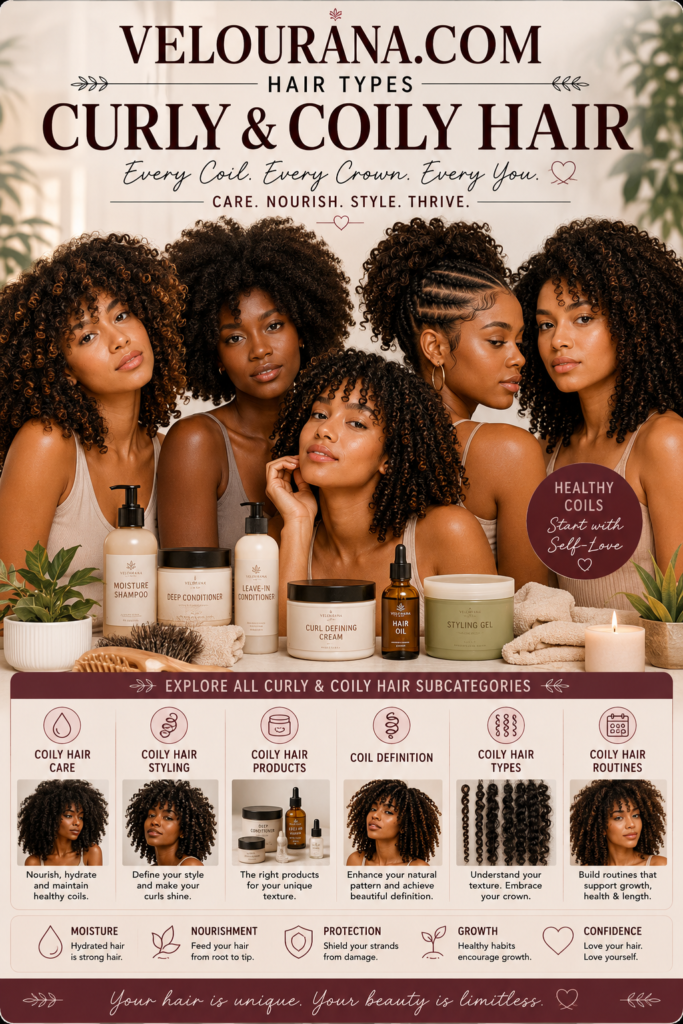
CATEGORY: Curly Hair Products
A curly hair routine can become complicated with surprising speed. One product is introduced to combat dryness, another for definition, another for hold, then an oil for shine, a mask for repair and a spray for refreshing. Before long, wash day begins to resemble laboratory work.
The irony is that many disappointing curly-hair routines are not suffering from too few products. They are suffering from too many variables.
Curly hair responds to water, cleansing, conditioning, friction, product weight, hold, drying technique and the environment. When several new products are layered at once, it becomes difficult to understand which element created the result.
A more intelligent routine begins by assigning each product a job.
Cleansers remove what should not remain. Conditioners improve manageability. Leave-ins extend conditioning. Creams contribute softness and shape. Foams create lightweight support. Gels preserve structure. Oils alter the surface finish. Treatments address particular forms of weathering or damage.
Once those roles are understood, the routine becomes easier to build and easier to modify.
Start With the Scalp, Not the Curl Pattern
Product selection often begins with curl type, but the scalp should come first when choosing a cleanser.
Curly hair can grow from an oily scalp, a dry-feeling scalp or something in between. Texture alone does not determine how frequently cleansing is needed.
Someone who exercises daily may need more frequent washing than someone with a similar curl pattern and less sweat exposure. Heavy styling products may also increase the need for effective cleansing.
The correct cleanser should leave the scalp comfortable and the hair prepared for conditioning.
If the scalp remains persistently greasy or coated after washing, the cleanser may be too mild for the routine. If the hair becomes extremely rough and difficult to detangle every time, cleansing strength or frequency may need reconsideration.
The aim is not to avoid cleansing but to use enough cleansing for the conditions present.
Clarifying Products Are Maintenance Tools
Clarifying shampoos have developed an unnecessarily intimidating reputation.
Their purpose is simply to remove residue more thoroughly.
The need becomes more obvious when hair begins behaving differently without an apparent reason. Curls may lose bounce. Water may seem slow to penetrate. Styling products may stop producing the usual result.
These signs do not prove buildup, but they can suggest it.
A clarifying wash can restore a cleaner surface and make subsequent conditioning more effective.
How often this is useful depends on the routine.
Frequent use of heavy creams and oils may create more residue than a lightweight mousse-and-gel routine. Water quality and environmental exposure can also matter.
The important point is that clarifying should be available as a maintenance option rather than treated as an emergency measure.
Conditioner Should Match Fibre, Not Marketing
Curly hair products are frequently labelled according to broad categories such as dry curls, damaged curls or intense moisture.
These labels can be useful, but texture and density matter just as much.
Fine curls generally tolerate less weight than coarse curls. Dense hair may require more product simply because there is more surface area to cover. Chemically processed ends can need different conditioning from healthier roots.
A conditioner should therefore be judged by distribution, detangling and the finished feel.
If a small amount spreads easily and the hair detangles without substantial force, the product is performing an important function.
If the hair still feels rough and resistant, richer conditioning may help.
If curls become flat before styling has even begun, the formula may be heavier than necessary.
Leave-Ins Extend Conditioning Into Styling
Leave-in conditioner serves as the bridge between wash care and styling.
It can improve slip, reduce roughness and make the hair easier to manipulate before holding products are applied.
Its usefulness is particularly noticeable in hair that loses softness quickly after rinse-out conditioner is removed.
But leave-in is not compulsory.
If the hair is already well conditioned and styling products provide sufficient slip, another layer may contribute little.
This is especially relevant for fine curls.
A lightweight leave-in spray may provide enough support without coating the hair heavily. Rich creams may suit denser or more weathered textures.
The amount matters as much as the formula.
A product that performs perfectly in a small quantity can become disastrous when applied generously.
Curl Cream Is About Control Through Softness
Curl creams often create a polished, conditioned appearance because they improve clumping and reduce surface roughness.
They can make curls feel more substantial and less dry.
Their greatest strength is often softness rather than durability.
For people who prefer touchable curls and do not require several days of highly structured definition, a cream may be enough.
For those who need longer-lasting shape, cream may work better beneath a holding product.
This distinction prevents disappointment.
A cream should not automatically be blamed for poor performance when it was never designed to provide strong hold.
Gel Is the Structural Product
If curl cream is associated with softness, gel is associated with architecture.
A gel supports the form created while the hair is wet.
As curls dry, they are vulnerable to movement, humidity and separation. Film-forming ingredients help stabilize those groups.
The strength of that film varies.
Flexible gels provide softer movement. Stronger gels create firmer casts and may improve longevity.
A cast can appear unattractive during drying because the hair feels stiff, but the stiffness is temporary.
Once completely dry, curls can be gently scrunched until they soften.
This process allows structure during drying and flexibility afterward.
For many curly-haired people, understanding this step changes the entire routine.
Foam and Mousse Are Ideal When Weight Is the Enemy
When curls are easily flattened, lightweight stylers become especially valuable.
Mousses and foams distribute quickly and can create volume without the density of many creams.
They are useful for looser curls and waves but can also perform well on tighter textures when the desired result is airy rather than heavily defined.
Some foams contain enough hold to function alone. Others benefit from being paired with a gel.
Root application can create additional lift.
The main advantage is that they provide structure without adding substantial heaviness.
Stronger Hold Does Not Necessarily Mean Hard Hair
Many people avoid strong-hold products because they expect the final hair to remain stiff.
This misunderstands the difference between drying state and finished state.
A strong cast can be useful precisely because it prevents the curls from moving while they are vulnerable.
Once the hair is fully dry, that cast can be softened.
The result may be surprisingly flexible.
This makes strong gel particularly valuable in humid weather or when curls need to last for several days.
The important requirement is complete drying before the cast is disturbed.
Oils Should Be Used With Precision
Hair oils are excellent examples of products whose popularity often exceeds their necessity.
A small amount can improve shine and make dry ends feel smoother. Oil can also help reduce friction during finishing.
But oils can accumulate quickly.
Fine curls may lose volume when even moderate amounts are used. Heavy oils layered beneath gels can also interfere with the desired hold in some routines.
The best approach is precision.
Use oil because the hair needs surface smoothing, not because every curl routine supposedly requires a sealing step.
Refresh Sprays Are Convenience Products
Refresh sprays can be useful between wash days, particularly for curls that become slightly distorted after sleep.
They typically add light moisture or styling support without requiring complete washing.
The risk is repeated layering.
A spray used every morning over several days can gradually contribute to buildup, especially when combined with creams and oils.
Sometimes plain water or targeted reshaping is enough.
Refresh products are therefore most useful when they solve a specific maintenance problem rather than becoming automatic daily additions.
Deep Treatments Should Respond to History
Hair that has been bleached, coloured, frequently heated or mechanically stressed carries a different structural history from untreated hair.
Richer conditioning masks or strengthening treatments can help improve manageability.
Protein-containing treatments may also be useful for some compromised fibres.
The key word is some.
Healthy hair does not necessarily need intensive repair products simply because it is curly.
A treatment should address a condition.
If the hair becomes stiff after frequent strengthening products, reducing them may improve flexibility. If chemically processed ends feel weak and rough, periodic treatment may be valuable.
Routine sophistication comes from matching treatment to history.
Layering Should Be Strategic
The familiar sequence of leave-in, cream and gel works beautifully for many curls, but it can also become a source of product overload.
Every layer adds something.
Conditioning layers add softness and weight. Holding layers add structure. Oils change the surface feel.
If a routine produces limp curls, removing one conditioning layer is often more logical than purchasing a stronger gel to overcome the weight.
If the curls feel rough but hold well, reducing the gel may not be necessary; improving conditioning may be the better adjustment.
The sequence should respond to the result.
This is where understanding product function becomes genuinely useful.
Wetness Changes Product Performance
The amount of water in the hair during application can dramatically change how a product behaves.
On very wet hair, creams and gels often spread more easily and form larger curl groups.
On damp hair, products become more concentrated and may create greater volume or more separated curls.
There is no universally correct level.
Dense hair may benefit from generous water during styling because it helps distribute product throughout the interior. Fine curls may prefer slightly less water to avoid excessive elongation.
Testing the same product at different water levels can sometimes produce more improvement than replacing it.
Climate Influences Product Choice
Curly hair products do not perform independently of the environment.
Humidity can affect how curls expand and how long definition lasts. Dry air can change the feel of the fibre and influence comfort.
A routine that works perfectly in winter may behave differently in summer.
Stronger hold may become useful in humid conditions. Rich creams may feel excessive during warm weather but comfortable during colder months.
Seasonal adjustment should therefore be considered normal.
The hair has not necessarily become inconsistent. Its environment has changed.
Product Buildup Can Masquerade as Product Failure
When curls stop responding, the immediate conclusion is often that the products no longer work.
Sometimes they are simply being applied over too much residue.
Buildup can reduce bounce, alter absorption and make the hair feel coated.
Using more of the same products rarely solves this.
A more thorough cleanse can reveal whether residue was interfering.
This is why a good curly hair product routine should always include both addition and removal.
Products are useful because they remain on the hair long enough to perform a function. Eventually, many of them also need to be washed away.
Expensive Does Not Automatically Mean Better
Curly hair products range from inexpensive drugstore formulas to luxury treatments costing several times more.
Price can reflect formulation, packaging, fragrance, branding, ingredient sourcing and marketing.
It does not guarantee compatibility.
An inexpensive gel that provides ideal hold may outperform a luxury cream that overwhelms fine curls.
Likewise, a premium conditioner may genuinely feel exceptional on some hair.
The useful question is performance per use.
Does the product improve the routine enough to justify its cost?
A product should be evaluated by results, not by prestige.
The Best Routine Is the One You Can Explain
A strong curly hair routine should make sense when described.
The shampoo cleanses sufficiently. The conditioner reduces friction. The leave-in is present because the hair needs additional softness. The mousse creates lift. The gel preserves structure.
If a product has no clear role, it may not be necessary.
This does not mean every routine must be minimal.
It means every step should have purpose.
Once that principle is adopted, curly hair products become less confusing. Marketing categories lose some of their power, and the hair itself becomes the guide.
If the curls need more softness, increase conditioning. If they need more structure, increase hold. If they become flat, reduce weight. If they feel coated, cleanse more thoroughly. If they are behaving well, resist the urge to keep adding things.
Curly hair does not need a crowded shelf to look beautiful.
It needs products that understand their place.
The End Velourana
 Discover More From Our Family of Websites
 ZodiacBearing (Astrology, Tarot, Numerology, Angel Numbers & Spiritual Guidance)
 Velourana (Beauty, Makeup, Hair Care, Skincare & Beauty Tips)
 HavenBearing (Home, Living, Organization, Décor & Everyday Inspiration)
 PawBearing (Pet Care, Dog Breeds, Animal Health, Training & Pet Products)
 PsyCatherine (Notes From the Journal of a Psychologist on Real Life)

