
CATEGORY: Cleaning Makeup
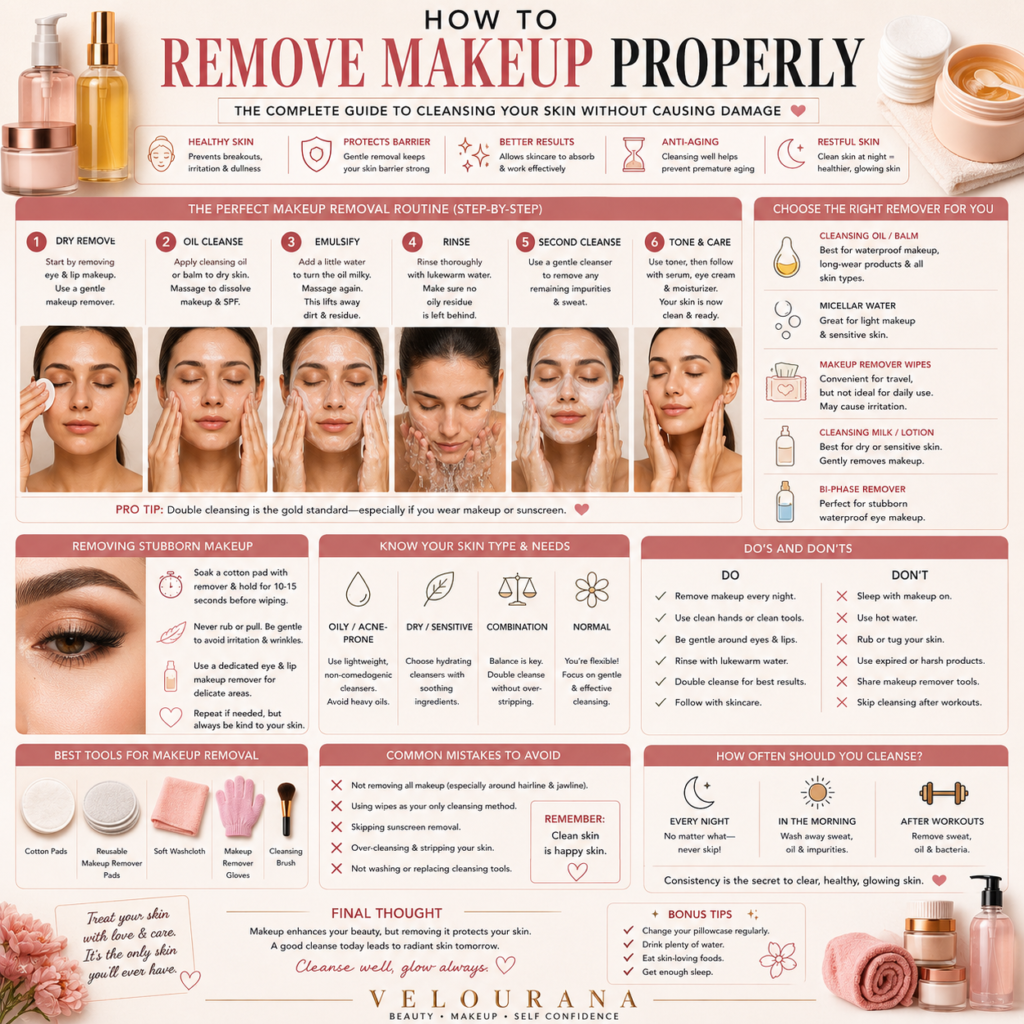
Removing makeup at the end of the day is one of the most important steps in any beauty routine. Even the highest-quality cosmetics can contribute to clogged pores, dull-looking skin, or irritation if they are not removed thoroughly. Sleeping in makeup also allows oil, sweat, and environmental pollutants to remain on the skin for hours, increasing the likelihood of breakouts and compromising the skin’s natural barrier.
Fortunately, proper makeup removal does not need to be complicated. By using the right products, following a gentle cleansing routine, and paying special attention to delicate areas such as the eyes and lips, you can keep your skin clean, healthy, and ready for your next makeup application.
This comprehensive guide explains how to remove every type of makeup safely, which products work best for different skin types, and the common mistakes to avoid.
—
Why Removing Makeup Is So Important
Throughout the day, your skin collects much more than foundation and lipstick.
It also accumulates:
- Natural oils.
- Sweat.
- Sunscreen.
- Dust.
- Pollution.
- Dead skin cells.
- Bacteria.
Leaving these on the skin overnight may contribute to:
- Clogged pores.
- Acne breakouts.
- Skin irritation.
- Dull complexion.
- Dryness.
- Premature signs of aging.
Proper cleansing helps maintain a healthy skin barrier and prepares the skin for nighttime skincare products.
—
Is Makeup Wipe Alone Enough?
Makeup wipes are convenient, especially while traveling, but they should not usually replace proper cleansing.
While they can remove a large portion of makeup, they often leave behind residue.
Whenever possible, follow makeup wipes with a suitable facial cleanser.
—
Understanding Double Cleansing
Double cleansing has become one of the most popular cleansing methods.
It involves two steps:
Step One
Use an oil-based cleanser or cleansing balm to dissolve makeup, sunscreen, and excess oil.
Step Two
Follow with a water-based facial cleanser to remove remaining impurities.
This method is especially effective for long-wearing or waterproof makeup.
—
Makeup Removers
Several different types of makeup removers are available.
Choosing the right one depends on your skin type and the cosmetics you wear.
—
Cleansing Balm
Cleansing balms begin as a solid and melt into an oil-like texture.
Benefits include:
- Removes heavy makeup.
- Dissolves waterproof products.
- Gentle on the skin.
- Leaves skin feeling soft.
Suitable for most skin types.
—
Cleansing Oil
Cleansing oils dissolve oil-based makeup exceptionally well.
They work effectively on:
- Foundation.
- Waterproof mascara.
- Long-wear lipstick.
- Sunscreen.
Despite the name, cleansing oils are often suitable for oily skin because they rinse away with water after emulsifying.
—
Micellar Water
Micellar water contains tiny cleansing molecules called micelles that attract makeup, oil, and dirt.
Advantages include:
- Lightweight.
- Gentle.
- Convenient.
- Suitable for sensitive skin.
- No harsh rubbing required.
Many people use micellar water as the first step before washing their face.
—
Cream Cleansers
Cream cleansers provide gentle cleansing while maintaining skin hydration.
They are especially suitable for:
- Dry skin.
- Mature skin.
- Sensitive skin.
—
Gel Cleansers
Gel cleansers create a fresh, clean feeling.
Often recommended for:
- Oily skin.
- Combination skin.
- Acne-prone skin.
—
Removing Foundation
Foundation should be removed gently rather than scrubbed away.
A simple approach includes:
- Apply cleansing balm or cleansing oil.
- Massage gently using circular motions.
- Add a small amount of water if instructed by the product.
- Rinse thoroughly.
- Follow with a facial cleanser.
This process removes foundation without excessive friction.
—
Removing Waterproof Makeup
Waterproof cosmetics require additional attention.
Products such as waterproof mascara and eyeliner are designed to resist tears, sweat, and humidity.
Oil-based removers are usually the most effective option.
Avoid rubbing aggressively, especially around the eyes.
—
Removing Eye Makeup Safely
The skin around the eyes is much thinner than the rest of the face.
To remove eye makeup:
- Soak a cotton pad with makeup remover.
- Hold it gently against the closed eyelid for several seconds.
- Allow the product to dissolve the makeup.
- Wipe softly downward.
- Repeat if necessary.
Patience is usually more effective than rubbing.
—
Removing Mascara
Mascara often requires extra care.
Instead of pulling at the lashes:
- Saturate them with remover.
- Wait several seconds.
- Wipe gently.
This helps reduce lash breakage.
—
Removing Lipstick
Long-wearing lipsticks may require an oil-based remover.
Apply the remover to a cotton pad and hold it on the lips briefly before wiping.
Finish by applying a nourishing lip balm to restore moisture.
—
Should You Wash Your Face After Makeup Remover?
In most cases, yes.
Even if a makeup remover dissolves cosmetics effectively, washing with a gentle facial cleanser helps remove:
- Remaining residue.
- Excess oil.
- Dirt.
- Cleansing product residue.
This leaves the skin cleaner and better prepared for skincare.
—
Cleansing by Skin Type
Dry Skin
Choose:
- Cleansing balm.
- Cleansing oil.
- Cream cleanser.
Avoid overly harsh cleansers that leave the skin feeling tight.
—
Oily Skin
Consider:
- Oil cleanser followed by gel cleanser.
- Lightweight foaming cleanser.
Proper cleansing removes excess oil without stripping the skin.
—
Combination Skin
Use balanced cleansers that remove makeup effectively while maintaining hydration.
Double cleansing often works well.
—
Sensitive Skin
Look for:
- Fragrance-free formulas.
- Gentle cleansers.
- Minimal rubbing.
Patch testing new products can also be helpful.
—
After Cleansing
Once makeup has been removed, continue with your evening skincare routine.
Many people follow cleansing with:
- Toner (optional).
- Serum.
- Moisturizer.
- Eye cream.
- Lip balm.
Nighttime is an ideal opportunity to support the skin’s natural renewal process.
—
Common Makeup Removal Mistakes
Avoid these habits:
- Sleeping in makeup.
- Scrubbing aggressively.
- Forgetting the hairline or jawline.
- Ignoring waterproof mascara.
- Skipping the second cleanse after heavy makeup.
- Using very hot water.
- Reusing dirty cleansing cloths.
Gentle, consistent cleansing is generally more effective than harsh scrubbing.
—
Cleaning Makeup Removal Tools
If you use reusable cleansing cloths or pads:
- Wash them regularly.
- Allow them to dry completely.
- Replace them when worn.
Clean tools help reduce the buildup of bacteria.
—
How Long Should Makeup Removal Take?
A complete evening routine usually takes only a few minutes.
Spending a little extra time removing makeup thoroughly can help maintain clearer skin and improve the effectiveness of the skincare products applied afterward.
—
Final Thoughts
Proper makeup removal is an essential part of every beauty routine. Removing cosmetics gently and thoroughly helps protect the skin barrier, reduce the risk of clogged pores and irritation, and create the ideal foundation for healthy, radiant skin.
Whether you prefer cleansing balms, micellar water, cleansing oils, or traditional facial cleansers, choosing products suited to your skin type and following a consistent cleansing routine will help keep your complexion fresh, comfortable, and ready for makeup—or beautifully natural—every day.
The End,
Velourana
 Discover More From Our Family of Websites
 ZodiacBearing (Astrology, Tarot, Numerology, Angel Numbers & Spiritual Guidance)
 Velourana (Beauty, Makeup, Hair Care, Skincare & Beauty Tips)
 HavenBearing (Home, Living, Organization, Décor & Everyday Inspiration)
 PawBearing (Pet Care, Dog Breeds, Animal Health, Training & Pet Products)
 PsyCatherine (Notes From the Journal of a Psychologist on Real Life)

