
CATEGORY: Makeup Techniques
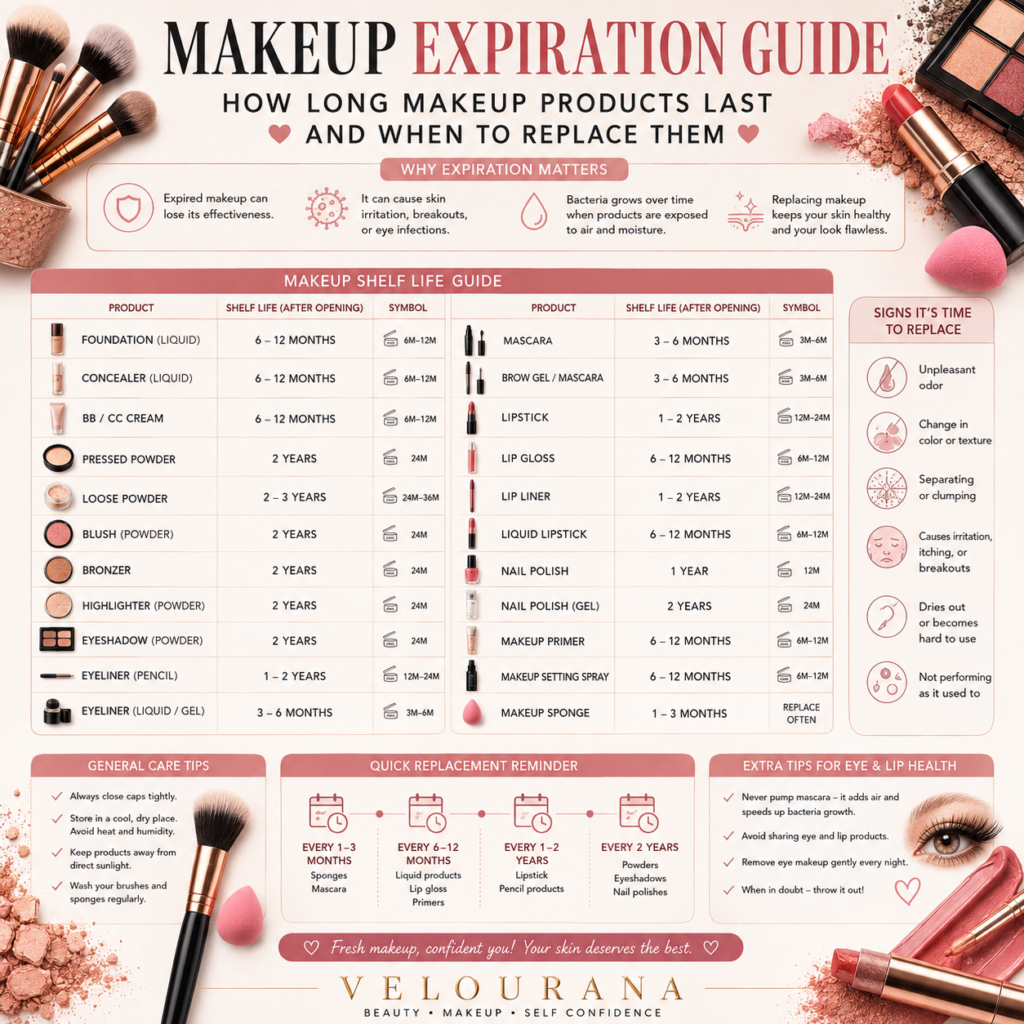
Every makeup product has a lifespan. While a favorite lipstick or expensive eyeshadow palette may seem perfectly usable for years, cosmetics do not last forever. Over time, exposure to air, light, moisture, oils from the skin, and bacteria gradually affects the quality, performance, and safety of makeup products.
Using expired cosmetics may not only reduce makeup performance but can also increase the risk of skin irritation, acne breakouts, eye infections, and allergic reactions. Understanding how long different makeup products typically last—and learning how to recognize the signs that they should be replaced—is an important part of every beauty routine.
This comprehensive guide explains makeup shelf life, proper storage, hygiene practices, and how to extend the lifespan of your favorite beauty products safely.
—
Why Makeup Expires
Unlike many household products, cosmetics contain ingredients that naturally break down over time.
Several factors contribute to product deterioration:
- Exposure to air.
- Heat.
- Sunlight.
- Moisture.
- Skin oils.
- Bacteria.
- Frequent handling.
- Packaging wear.
Every time you open a product, tiny amounts of air and microorganisms enter the container. Over months or years, these gradually affect the product’s stability.
—
Understanding the Period After Opening (PAO) Symbol
Most cosmetics include a small open-jar symbol on their packaging.
Inside the jar is a number followed by the letter “M.”
Examples include:
- 6M
- 12M
- 18M
- 24M
- 36M
This indicates the recommended number of months the product should be used after opening, assuming it has been stored correctly.
It is different from the manufacturing date or expiration date.
—
Foundation Shelf Life
Most liquid foundations remain usable for approximately 12 to 24 months after opening.
Signs it should be replaced include:
- Separation that will not remix.
- Sour or unusual odor.
- Thickened texture.
- Changes in color.
- Skin irritation.
Pump bottles generally remain cleaner than open jars because they reduce exposure to air and fingers.
—
Concealer Shelf Life
Liquid concealers usually last 12 to 24 months.
Cream concealers may have slightly shorter lifespans if frequently exposed to fingers.
Discard concealer if you notice:
- Drying around the applicator.
- Separation.
- Strange smell.
- Eye irritation.
- Texture changes.
Because concealer is commonly used around the eyes, maintaining freshness is especially important.
—
Primer Shelf Life
Most primers remain usable for 12 to 24 months.
Replace primer if:
- It separates permanently.
- The texture becomes grainy.
- It develops an unpleasant odor.
- Performance changes significantly.
—
Powder Products
Powder cosmetics generally last longer than liquid or cream formulas because they contain less moisture.
Examples include:
- Setting powder.
- Finishing powder.
- Bronzer.
- Blush.
- Highlighter.
- Powder contour.
Most powder products remain usable for approximately 24 to 36 months.
However, cleanliness still matters.
Dirty brushes can introduce oils and bacteria that shorten product life.
—
Eyeshadow Shelf Life
Powder eyeshadows often remain in good condition for two to three years.
Cream eyeshadows usually last 12 to 18 months.
Liquid eyeshadows generally remain fresh for approximately 6 to 12 months depending on the formula.
Replace eyeshadow if you notice:
- Mold.
- Cracking unrelated to impact.
- Changes in smell.
- Loss of performance.
—
Eyeliner Shelf Life
Different eyeliner formulas have different lifespans.
Pencil Eyeliner
Approximately 24 months when sharpened regularly.
Sharpening removes the outer layer, helping maintain hygiene.
—
Liquid Eyeliner
Usually 3 to 6 months after opening.
Because liquid eyeliner is repeatedly exposed to the eye area, replacing it regularly reduces the risk of bacterial contamination.
—
Gel Eyeliner
Typically lasts 6 to 12 months.
Always close the lid tightly to prevent drying.
—
Mascara Shelf Life
Mascara has one of the shortest lifespans of any cosmetic product.
Most experts recommend replacing mascara every 3 to 6 months after opening.
Because the wand repeatedly touches the eyelashes and returns to the tube, bacteria can accumulate quickly.
Never share mascara with others.
Signs mascara should be replaced include:
- Dry texture.
- Clumping.
- Flaking.
- Strong odor.
- Eye irritation.
Eye health should always take priority over finishing a tube of mascara.
—
Eyebrow Products
Shelf life varies according to formula.
Brow Pencil
Approximately 24 months.
Regular sharpening helps maintain cleanliness.
—
Brow Gel
Approximately 6 to 12 months.
Replace if it develops an unpleasant odor or becomes excessively thick.
—
Brow Pomade
Generally lasts 12 to 24 months when kept tightly closed.
—
Lip Products
Lip products come into direct contact with the mouth, making hygiene especially important.
—
Lipstick
Most traditional lipsticks remain usable for approximately 12 to 24 months.
Replace lipstick if you notice:
- Sweating or oil separation.
- Crayon-like odor.
- Texture changes.
- Mold.
—
Liquid Lipstick
Usually lasts 12 to 18 months.
Because of repeated contact with the lips, keeping the applicator clean helps maintain freshness.
—
Lip Gloss
Generally lasts 6 to 12 months.
Gloss applicators should never be shared.
—
Lip Balm
Most lip balms remain effective for approximately 12 months after opening.
Discard any balm that changes in smell, texture, or appearance.
—
Makeup Sponges
Beauty sponges should be replaced much more frequently than many people realize.
Even with regular cleaning, most sponges should be replaced every one to three months, depending on use.
Replace immediately if you notice:
- Tears.
- Persistent staining.
- Mold.
- Lingering odor.
- Loss of elasticity.
—
Makeup Brushes
Unlike makeup itself, quality brushes can last for many years with proper care.
Replace brushes only if:
- Bristles fall out excessively.
- Ferrules loosen.
- Bristles permanently lose their shape.
- Handles crack.
Regular cleaning is the key to longevity.
—
Nail Products
Although technically separate from makeup, nail cosmetics also have limited lifespans.
Nail Polish
Typically lasts 18 to 24 months.
Replace if:
- It becomes extremely thick.
- Pigments separate permanently.
- Application becomes uneven.
—
Can Refrigeration Extend Makeup Life?
Generally, cosmetics do not require refrigeration.
However, storing products in a consistently cool, dry environment helps preserve their quality.
Avoid:
- Direct sunlight.
- Bathrooms with excessive humidity.
- Hot cars.
- Windowsills.
Heat accelerates ingredient breakdown.
—
Signs Makeup Has Gone Bad
Regardless of the recommended shelf life, discard products immediately if you notice:
- Unpleasant odor.
- Color changes.
- Separation that cannot be mixed.
- Mold.
- Drying or hardening.
- Unusual texture.
- Skin irritation.
- Eye irritation.
- Burning sensation.
When in doubt, replacing the product is usually the safest choice.
—
How to Make Makeup Last Longer
Simple habits can extend the usable life of cosmetics.
These include:
- Washing hands before applying makeup.
- Cleaning brushes regularly.
- Cleaning makeup sponges frequently.
- Closing product lids tightly.
- Avoiding direct sunlight.
- Keeping products dry.
- Not adding water to dried-out cosmetics.
- Avoiding pumping mascara wands repeatedly, which pushes extra air into the tube.
Proper hygiene protects both your products and your skin.
—
Should You Share Makeup?
Sharing makeup is generally discouraged, particularly products used around the eyes or lips.
Avoid sharing:
- Mascara.
- Liquid eyeliner.
- Lipstick.
- Lip gloss.
- Concealer applicators.
If makeup is being used professionally, disposable applicators and strict hygiene practices should always be followed.
—
Organizing Makeup by Age
A practical habit is to label cosmetics with the date they were first opened.
Small stickers or labels can help you keep track of:
- Opening date.
- Expected replacement date.
- Products needing priority use.
This simple system reduces waste while improving safety.
—
Final Thoughts
Understanding makeup expiration dates is an essential part of maintaining both healthy skin and high-performing cosmetics. Every product has a limited lifespan, and using makeup beyond its recommended period can affect not only its appearance but also your skin and eye health.
By storing cosmetics properly, maintaining clean tools, replacing products at appropriate intervals, and recognizing the warning signs of expired makeup, you can enjoy safer, more effective beauty routines while protecting your investment in quality cosmetics. Good makeup hygiene is just as important as choosing the right products, ensuring that every application is as fresh, beautiful, and safe as possible.
The End,
Velourana
 Discover More From Our Family of Websites
 ZodiacBearing (Astrology, Tarot, Numerology, Angel Numbers & Spiritual Guidance)
 Velourana (Beauty, Makeup, Hair Care, Skincare & Beauty Tips)
 HavenBearing (Home, Living, Organization, Décor & Everyday Inspiration)
 PawBearing (Pet Care, Dog Breeds, Animal Health, Training & Pet Products)
 PsyCatherine (Notes From the Journal of a Psychologist on Real Life)

